Eden Hazard celebrating at the end of the Russia 2018 World Cup play-off for third place between Belgium and England. AFP

Eden Hazard's retirement signals end of an era for Belgium's golden generation


Ian Hawkey
  • English
  • Arabic

At the end of his 126th and last international for Belgium, Eden Hazard looked around the Ahmad bin Alli stadium in Al Rayyan and saw too many farewell signs. His team, bronze medallists at the World Cup four years earlier, had just been knocked out in the group phase of Qatar 2022. Hazard had been given just three minutes off the bench to try and launch a late rescue of the campaign.

Romelu Lukaku had come on at half time with a similar mission, Belgium’s all-time record scorer asked for the one goal that would, with the score 0-0 against Croatia, have pushed the so-called Red Devils into the knockouts. On came Youri Tielemans to add guile. On came Thorgan Hazard, who in recent years has become a better guarantee of zipping past a marker than his fading, more gifted elder brother.

None could break the deadlock that day, and at the final whistle players and staff prepared for repeated goodbyes. It was the last sighting together of those twin defensive pillars, Toby Alderweireld and Jan Vertonghen, a pairing first brought together more than a dozen years earlier and veterans of 366 senior matches together for their clubs or for Belgium, where they were so often blessed with the towering Thibaut Courtois as their backstop and by Axel Witsel as the formidable midfield sentry just in front of them.

Great hopes had been invested in these totems of Belgium’s so-called “golden generation”. But within the camp in Qatar, there had been doubts and disagreements. Kevin de Bruyne, the captain, had voiced concerns this was a side that might already be past its peak. “Too old,” De Bruyne had told an interviewer asking whether his cohort could win the 2022 World Cup.

The announcement on Monday that Eden Hazard has retired from all football at the relatively young age of 32 draws a significant curtain on what is widely held to be the finest concentration of talent within an age-group in Belgium’s football history. The sad retreat from activity of Hazard, after four injury-disrupted and minimum-impact years at Real Madrid, from a sport he once made so watchable, echoes a wider sense of loss.

Belgium’s golden generation have not all stepped aside in a single, choreographed moment, but it is not just Hazard, their leading star for much of the last decade, who is off stage.

Aldeweireld, 34, has retired from internationals. So has his contemporary Witsel, some of whose authority in midfield would naturally pass to Tielemans, 26. But Tielemans, who suffered relegation from the Premier League last May with Leicester City, is yet to start a game for his new club, Aston Villa, amid reports he has fallen out with head coach Unai Emery.

Belgium's Jan Vertonghen, left, and Toby Alderweireld, right, formed a rock-solid partnership at the back for an entire generation. AFP

Another flag-bearer for the next generation, attacking midfielder Charles de Ketelaere, is also coming off a difficult year. He joined AC Milan amid great expectations in 2022. After a season of just nine starts in Serie A, he has been loaned to Atalanta.

The squad named by Belgium’s head coach Domenico Tedesco for the European Championship qualifiers in Austria Friday and Sweden next week is also missing important generals; 32-year-old De Bruyne being is recovery from a hamstring issue aggravated early in Manchester City’s opening match of the Premier League season, and Courtois, 31, having been ruled out until well into the new year with a cruciate ligament injury.

Courtois’s absence denies him the chance to mend fences as well as set his usual high standards of goalkeeping. He left Belgian practice in June citing an injury ahead of a 1-1 draw with Austria amid reports he had been unhappy not to be given the national captaincy.

In an interview published in Le Soir newspaper, the full-back Timothy Castagne reported anger within the squad at Courtois. “Thibaut is the best Belgian keeper,” he said. “But we do have to ask if we want to sacrifice the unity of the group for the sake of one player?"

Castagne later added that he regretted speaking publicly about the issue.

It is not the first sign of internal division. There were raised voices in the dressing room during the World Cup. And the sense that a unique, once-in-a-century opportunity has been passed up shadows the senior players still involved with the Red Devils.

Belgium, who have never won a major tournament, is a relatively small country, with a population barely a sixth of France’s and almost eight times smaller than Germany’s. It may wait a very long time before such a rich flow of talent as there was in the Hazard-De Bruyne-Courtois era comes around again.

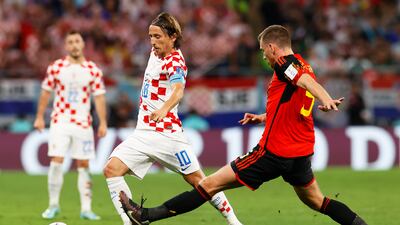
  • Luka Modric of Croatia vies for the ball with Jan Vertonghen of Belgium during their World Cup match at the Ahmad bin Ali Stadium on Thursday, December 1, 2022. EPA
    Luka Modric of Croatia vies for the ball with Jan Vertonghen of Belgium during their World Cup match at the Ahmad bin Ali Stadium on Thursday, December 1, 2022. EPA
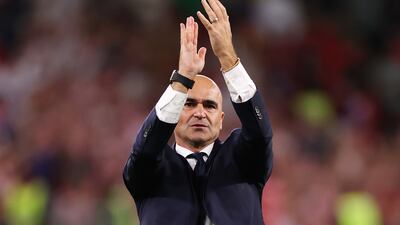
  • Roberto Martinez applauds Belgium's fans after their sides' elimination from the tournament during the FIFA World Cup Qatar 2022 Group F match between Croatia and Belgium at Ahmad Bin Ali Stadium. Getty Images
    Roberto Martinez applauds Belgium's fans after their sides' elimination from the tournament during the FIFA World Cup Qatar 2022 Group F match between Croatia and Belgium at Ahmad Bin Ali Stadium. Getty Images
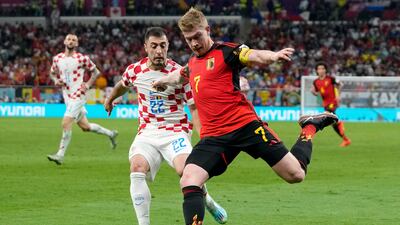
  • Belgium's Kevin De Bruyne, right, and Croatia's Josip Juranovic, left, fight for the ball. AP
    Belgium's Kevin De Bruyne, right, and Croatia's Josip Juranovic, left, fight for the ball. AP
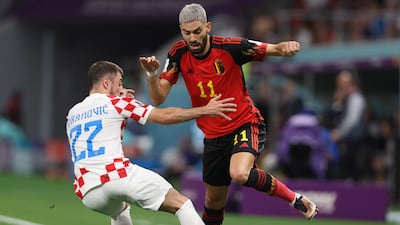
  • Josip Juranovic, left, of Croatia battles for possession with Yannick Carrasco of Belgium. EPA
    Josip Juranovic, left, of Croatia battles for possession with Yannick Carrasco of Belgium. EPA
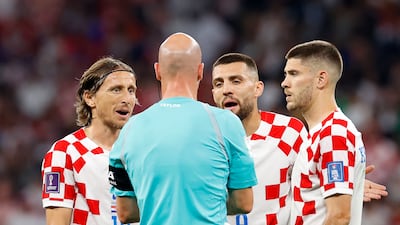
  • From left, Croatian players Luka Modric, Mateo Kovacic, and Andrej Kramaric argue with referee Anthony Taylor. EPA
    From left, Croatian players Luka Modric, Mateo Kovacic, and Andrej Kramaric argue with referee Anthony Taylor. EPA
  • Croatia's defender Borna Sosa fights for the ball against Belgium at the Ahmad Bin Ali Stadium. AFP
    Croatia's defender Borna Sosa fights for the ball against Belgium at the Ahmad Bin Ali Stadium. AFP
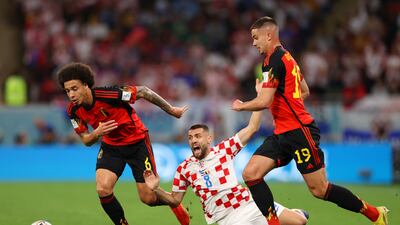
  • Mateo Kovacic of Croatia is challenged by Axel Witsel and Leander Dendoncker of Belgium. Getty
    Mateo Kovacic of Croatia is challenged by Axel Witsel and Leander Dendoncker of Belgium. Getty
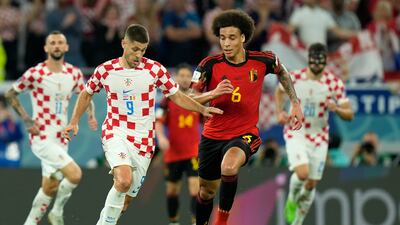
  • Croatia's Andrej Kramaric, left, duels for the ball with Belgium's Axel Witsel. AP
    Croatia's Andrej Kramaric, left, duels for the ball with Belgium's Axel Witsel. AP
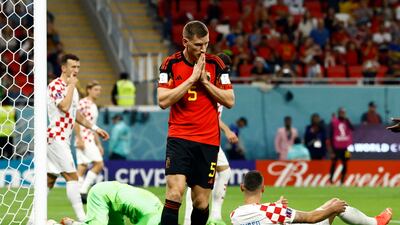
  • Belgium's Jan Vertonghen reacts. Reuters
    Belgium's Jan Vertonghen reacts. Reuters
Mobile phone packages comparison
MATCH INFO

Uefa Champions League last-16, second leg:

Real Madrid 1 (Asensio 70'), Ajax 4 (Ziyech 7', Neres 18', Tadic 62', Schone 72')

Ajax win 5-3 on aggregate

Ten tax points to be aware of in 2026

1. Domestic VAT refund amendments: request your refund within five years

If a business does not apply for the refund on time, they lose their credit.

2. E-invoicing in the UAE

Businesses should continue preparing for the implementation of e-invoicing in the UAE, with 2026 a preparation and transition period ahead of phased mandatory adoption. 

3. More tax audits

Tax authorities are increasingly using data already available across multiple filings to identify audit risks. 

4. More beneficial VAT and excise tax penalty regime

Tax disputes are expected to become more frequent and more structured, with clearer administrative objection and appeal processes. The UAE has adopted a new penalty regime for VAT and excise disputes, which now mirrors the penalty regime for corporate tax.

5. Greater emphasis on statutory audit

There is a greater need for the accuracy of financial statements. The International Financial Reporting Standards standards need to be strictly adhered to and, as a result, the quality of the audits will need to increase.

6. Further transfer pricing enforcement

Transfer pricing enforcement, which refers to the practice of establishing prices for internal transactions between related entities, is expected to broaden in scope. The UAE will shortly open the possibility to negotiate advance pricing agreements, or essentially rulings for transfer pricing purposes. 

7. Limited time periods for audits

Recent amendments also introduce a default five-year limitation period for tax audits and assessments, subject to specific statutory exceptions. While the standard audit and assessment period is five years, this may be extended to up to 15 years in cases involving fraud or tax evasion. 

8. Pillar 2 implementation 

Many multinational groups will begin to feel the practical effect of the Domestic Minimum Top-Up Tax (DMTT), the UAE's implementation of the OECD’s global minimum tax under Pillar 2. While the rules apply for financial years starting on or after January 1, 2025, it is 2026 that marks the transition to an operational phase.

9. Reduced compliance obligations for imported goods and services

Businesses that apply the reverse-charge mechanism for VAT purposes in the UAE may benefit from reduced compliance obligations. 

10. Substance and CbC reporting focus

Tax authorities are expected to continue strengthening the enforcement of economic substance and Country-by-Country (CbC) reporting frameworks. In the UAE, these regimes are increasingly being used as risk-assessment tools, providing tax authorities with a comprehensive view of multinational groups’ global footprints and enabling them to assess whether profits are aligned with real economic activity. 

Contributed by Thomas Vanhee and Hend Rashwan, Aurifer

Company%20profile
%3Cp%3E%3Cstrong%3ECompany%20name%3A%20%3C%2Fstrong%3EHakbah%0D%3Cbr%3E%3Cstrong%3EStarted%3A%20%3C%2Fstrong%3E2018%0D%3Cbr%3E%3Cstrong%3EFounder%3A%20%3C%2Fstrong%3ENaif%20AbuSaida%0D%3Cbr%3E%3Cstrong%3EBased%3A%20%3C%2Fstrong%3ESaudi%20Arabia%0D%3Cbr%3E%3Cstrong%3ESector%3A%20%3C%2Fstrong%3EFinTech%0D%3Cbr%3E%3Cstrong%3ECurrent%20number%20of%20staff%3A%20%3C%2Fstrong%3E22%20%0D%3Cbr%3E%3Cstrong%3EInitial%20investment%3A%20%3C%2Fstrong%3E%24200%2C000%0D%3Cbr%3E%3Cstrong%3EInvestment%20stage%3A%20%3C%2Fstrong%3Epre-Series%20A%0D%3Cbr%3E%3Cstrong%3EInvestors%3A%20%3C%2Fstrong%3EGlobal%20Ventures%20and%20Aditum%20Investment%20Management%0D%3Cbr%3E%3Cbr%3E%3C%2Fp%3E%0A
Company%20profile%20
%3Cp%3E%3Cstrong%3EName%3A%20%3C%2Fstrong%3EYodawy%3Cbr%3E%3Cstrong%3EBased%3A%3C%2Fstrong%3E%20Egypt%3Cbr%3E%3Cstrong%3EFounders%3A%20%3C%2Fstrong%3EKarim%20Khashaba%2C%20Sherief%20El-Feky%20and%20Yasser%20AbdelGawad%3Cstrong%3E%3Cbr%3ESector%3A%20%3C%2Fstrong%3EHealthTech%3Cbr%3E%3Cstrong%3ETotal%20funding%3A%20%3C%2Fstrong%3E%2424.5%20million%3Cbr%3E%3Cstrong%3EInvestors%3A%20%3C%2Fstrong%3EAlgebra%20Ventures%2C%20Global%20Ventures%2C%20MEVP%20and%20Delivery%20Hero%20Ventures%2C%20among%20others%3Cstrong%3E%3Cbr%3ENumber%20of%20employees%3A%3C%2Fstrong%3E%20500%3Cbr%3E%3C%2Fp%3E%0A

Mercer, the investment consulting arm of US services company Marsh & McLennan, expects its wealth division to at least double its assets under management (AUM) in the Middle East as wealth in the region continues to grow despite economic headwinds, a company official said.

Mercer Wealth, which globally has $160 billion in AUM, plans to boost its AUM in the region to $2-$3bn in the next 2-3 years from the present $1bn, said Yasir AbuShaban, a Dubai-based principal with Mercer Wealth.

Within the next two to three years, we are looking at reaching $2 to $3 billion as a conservative estimate and we do see an opportunity to do so,” said Mr AbuShaban.

Mercer does not directly make investments, but allocates clients’ money they have discretion to, to professional asset managers. They also provide advice to clients.

“We have buying power. We can negotiate on their (client’s) behalf with asset managers to provide them lower fees than they otherwise would have to get on their own,” he added.

Mercer Wealth’s clients include sovereign wealth funds, family offices, and insurance companies among others.

From its office in Dubai, Mercer also looks after Africa, India and Turkey, where they also see opportunity for growth.

Wealth creation in Middle East and Africa (MEA) grew 8.5 per cent to $8.1 trillion last year from $7.5tn in 2015, higher than last year’s global average of 6 per cent and the second-highest growth in a region after Asia-Pacific which grew 9.9 per cent, according to consultancy Boston Consulting Group (BCG). In the region, where wealth grew just 1.9 per cent in 2015 compared with 2014, a pickup in oil prices has helped in wealth generation.

BCG is forecasting MEA wealth will rise to $12tn by 2021, growing at an annual average of 8 per cent.

Drivers of wealth generation in the region will be split evenly between new wealth creation and growth of performance of existing assets, according to BCG.

Another general trend in the region is clients’ looking for a comprehensive approach to investing, according to Mr AbuShaban.

“Institutional investors or some of the families are seeing a slowdown in the available capital they have to invest and in that sense they are looking at optimizing the way they manage their portfolios and making sure they are not investing haphazardly and different parts of their investment are working together,” said Mr AbuShaban.

Some clients also have a higher appetite for risk, given the low interest-rate environment that does not provide enough yield for some institutional investors. These clients are keen to invest in illiquid assets, such as private equity and infrastructure.

“What we have seen is a desire for higher returns in what has been a low-return environment specifically in various fixed income or bonds,” he said.

“In this environment, we have seen a de facto increase in the risk that clients are taking in things like illiquid investments, private equity investments, infrastructure and private debt, those kind of investments were higher illiquidity results in incrementally higher returns.”

The Abu Dhabi Investment Authority, one of the largest sovereign wealth funds, said in its 2016 report that has gradually increased its exposure in direct private equity and private credit transactions, mainly in Asian markets and especially in China and India. The authority’s private equity department focused on structured equities owing to “their defensive characteristics.”

How to help

Send “thenational” to the following numbers or call the hotline on: 0502955999
2289 – Dh10
2252 – Dh 50
6025 – Dh20
6027 – Dh 100
6026 – Dh 200

England World Cup squad

Eoin Morgan (capt), Moeen Ali, Jofra Archer, Jonny Bairstow, Jos Buttler (wkt), Tom Curran, Liam Dawson, Liam Plunkett, Adil Rashid, Joe Root, Jason Roy, Ben Stokes, James Vince, Chris Woakes, Mark Wood

Updated: October 12, 2023, 3:02 AM