

Goalkeeper Yassine Bounou, one of the heroes of Morocco's historic World Cup run in Qatar, has completed a move to Al Hilal from Sevilla, days after Neymar joined the Saudi Pro League giants.
The 32-year-old stopper, more commonly known as 'Bono', has cost Hilal a reported €21 million and has signed a three-year contract.
"The board of directors of Al-Hilal Club Company has signed 'Yassine Bono', goalkeeper of Morocco national team and Spain's Sevilla," Al Hilal posted on social media. "Bono's contract lasts for three seasons, until 2026. The signing ceremony was taking place at Four Seasons George V hotel in Paris, France.
"The board of directors has offered sincere gratitude and appreciation to the golden member HRH Prince Alwaleed Bin Talal for funding this deal."
Bounou's arrival continues a stunning summer transfer window for Hilal, whose transfer business would be the envy of many top European clubs. Earlier this week, the Riyadh club shattered their own Saudi Pro League (SPL) transfer record to sign Brazilian superstar Neymar for a reported €90m.
Hilal had earlier twice broken the SPL transfer record, first with the signing of Portuguese midfielder Ruben Neves from Wolves and again when they recruited Brazilian winger Malcom from Zenit St Petersburg. They have also signed Serbian midfielder Sergej Milinkovic-Savic from Lazio and Senegalese defender Kalidou Koulibaly from Chelsea.
Bounou moves to Hilal after a successful spell with Sevilla, where he made 142 appearances, kept 58 clean sheets and even scored a goal. He twice won the Uefa Europa League, including last season when he made two penalty shoot-out saves in the final against Roma.
Bounou was also named as the third-best goalkeeper in the world at The Best Fifa Football Awards, recognition in no small part due to his superb performances for Morocco at the 2022 World Cup in Qatar, where he played a key role in the Atlas Lions becoming the first African team to reach a World Cup semi-final.
Bounou started his career at Wydad Casablanca, where he came through the youth system, before joining Atletico Madrid in 2012. He was part of their La Liga title triumph in 2014 but did not make a league appearance.
After a two-year loan spell at Zaragoza between 2014 and 2016, he joined Girona on a permanent deal and spent four years at the club, the last of which was on loan at Sevilla.
Bounou joined Sevilla permanently ahead of the 2020/21 season and soon established himself as their first-choice goalkeeper. He became the first player in the club's history to win the Zamora Trophy, which is awarded to the goalkeeper who concedes the fewest goals per match in La Liga, with a minimum of 28 appearances.
"Sevilla FC thanks Bono for his hard work and effort during his four-year spell, and wishes him the very best of luck in the future," Sevilla wrote in a statement.
Hilal, the most decorated club in Asian football with 66 major trophies, are next in Saudi Pro League action on Saturday when they play their first home game of the season against Al Feiha. Bono is expected to be presented to the crowd at the King Fahd International Stadium, as is Neymar.
Hilal won their opening game of the season 3-1 at Abha, with new signing Malcom scoring a hat-trick.
Bounou stars as Sevilla win Europa League - in pictures
-
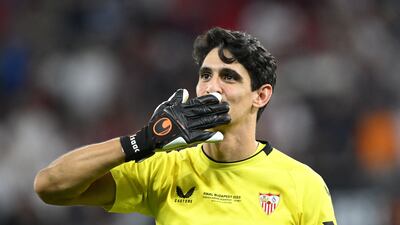
Sevilla's Moroccan goalkeeper Bono celebrates after saving two spot kicks in the shootout to win the Europa League final 4-1 on penalties against Roma at the Puskas Arena in Budapest, on May 31, 2023. Reuters -
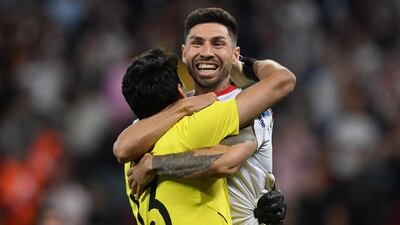
Bono celebrates with Gonzalo Montiel, who struck the winning penalty for Sevilla. AFP -

Sevilla's players celebrate with fans. Getty -
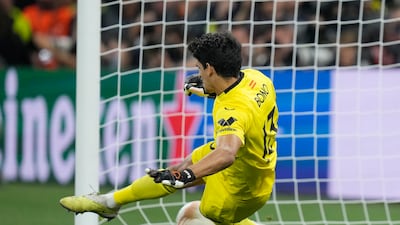
Sevilla's goalkeeper Bono saves a penalty by Gianluca Mancini in the penalty shootout. AP -

Sevilla's Gonzalo Montiel scores the winning penalty. AP -
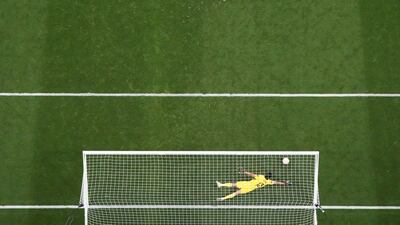
Sevilla's Bono saves a penalty from Roma's Roger Ibanez during the shoot-out. Reuters -
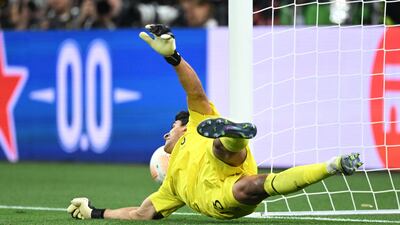
Sevilla's Bono in action during the penalty shoot-out. Reuters -

Sevilla's Youssef En-Nesyri and Lucas Ocampos celebrate after AS Roma's Gianluca Mancini scored an own goal. Reuters -
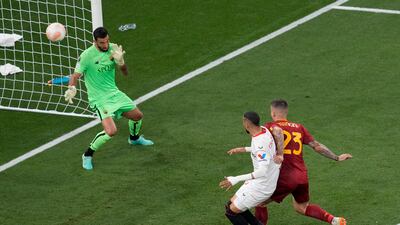
Roma's Gianluca Mancini, right, scores an own goal to level the scores. AP -
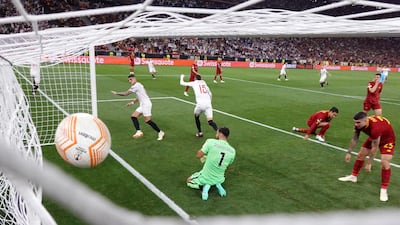
Gianluca Mancini of AS Roma reacts after scoring an own goal. Getty -
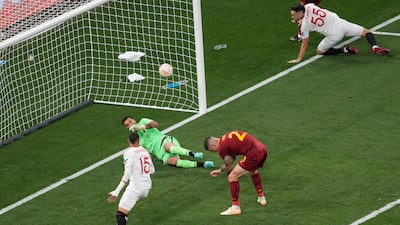
Roma's Gianluca Mancini, centre, reacts after scoring an own goal. AP -

Roma's Paulo Dybala celebrates after scoring their first goal against Sevilla. AP -
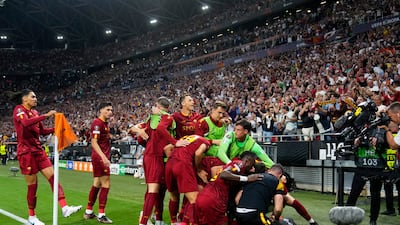
Paulo Dybala is mobbed by Roma teammates after scoring their first goal. AP P -

Roma's Paulo Dybala scores their first goal. Reuters -
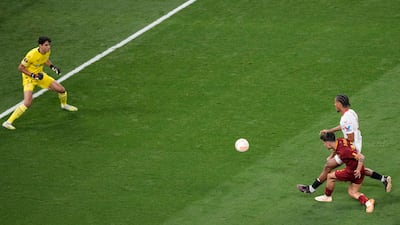
Roma's Paulo Dybala scores their opening goal. AP -
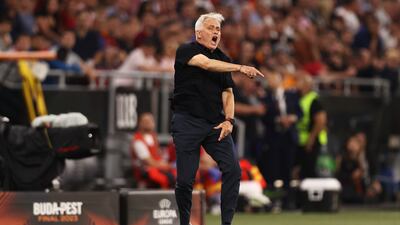
Roma manager Jose Mourinho reacts on the touchline. Getty -

Roma manager Jose Mourinho confronts fourth official Michael Oliver after referee Anthony Taylor awarded a penalty to Sevilla that was later overturned following a VAR check. Getty -
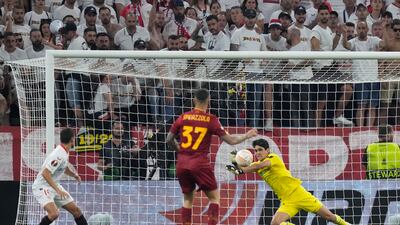
Sevilla goalkeeper Bono makes a save from Roma's Leonardo Spinazzola. AP -
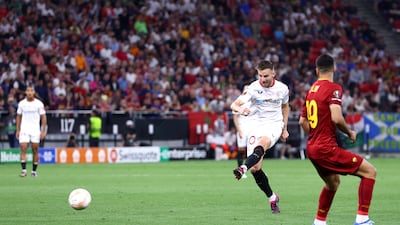
Ivan Rakitic of Sevilla shoots and hits the post. Getty -
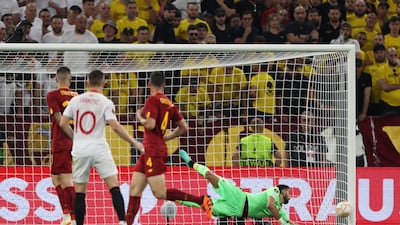
Sevilla's Ivan Rakitic hits the post as Roma's Rui Patricio dives. Reuters -
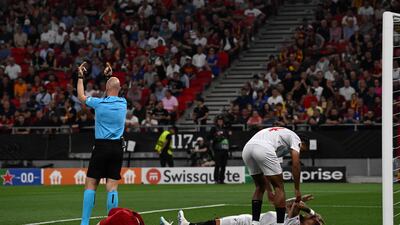
Referee Anthony Taylor calls for medics after a clash of heads between Sevilla's Nemanja Gudelj and Roma's Roger Ibanez. AFP -

Roma manager Jose Mourinho embraces Sevilla's Jose Luis Mendilibar before kick-off. AFP



