



A week after suffering a fourth elimination from a European competition in a single year, probably the last thing Barcelona would want is a trip to the home of their fiercest rivals.
Even worse, this evening’s clasico, the Bernabeu leg of Real Madrid and Barca’s Copa del Rey semi-final, coincides with a spate of injuries to their most potent attacking players.
There will be no Ousmane Dembele or Pedri because of injury and almost certainly no Robert Lewandowski, who withdrew from last weekend’s dispiriting 1-0 defeat at Almeria with a thigh problem. That trio have been the club’s three highest scorers so far in a season that has lurched suddenly, since giving away a lead against Manchester United and losing their Europa League qualifying tie, into uncertainty.
Barca remain cushioned at the top of La Liga, but confidence at Camp Nou is notoriously brittle: this is a club that has conspicuously failed in most of its high-stakes matches in the last 18 months.
They have been twice knocked out of the Champions League at the group phase by the combined might of Bayern Munich, Benfica and Inter Milan; they have exited the Europa League to Eintracht Frankfurt and United.
And the recent record in clasicos is ominous. Madrid have won five of the last six staged on Spanish soil, the exception a surprise 4-0 win at the Bernabeu last March when Madrid were already well on their way to wrapping up the Liga title.
Xavi Hernandez, the Barcelona manager, finds himself looking to avoid a run of three successive defeats, an unprecedented sequence in his 74-match period in charge.
But he spoke of tonight’s assignment as “a golden opportunity to win a trophy”. He may find himself saying the same ahead of clasicos again and again in the coming weeks.
The most fabled club fixture in the game will be on frequent repeat between now and early April. After tonight, Madrid, the defending Spanish champions, come to Camp Nou on March 19 in La Liga. Seventeen nights later, they are back there again for the second leg of the Cup semi-final.
At seven points ahead of Madrid in the table, the Liga meeting may well feel decisive for Barca’s pursuit of that prize. Whoever triumphs in the Copa del Rey clasicos, earning the right to meet Athletic Bilbao or Osasuna in the final, will become firm favourites for that trophy.
There is one promising precedent for Xavi. In the middle of January, in Riyadh, Barcelona waltzed to a 3-1 victory over Madrid in the final of the Spanish Super Cup.
An optimistic Xavi can view that as the start of a quartet of clasicos leading to a domestic Treble: Super Cup, Copa del Rey and Liga.

He is an optimist, he insisted. “Doubt only brings negatives with it. You can look at our last two matches and think we’re in the emergency room.
"But you see where we stand – we’re top of La Liga, seven points above second place; we’re out of Europe but we were competitive [United won 4-3 on aggregate]; and we’re in a Cup semi. The script looks good. We’re growing as a team and we aren’t going to focus on the last two games.”
Twelve years ago, Xavi was playing for Barcelona, their vice-captain and midfield strategist-in-chief, when four clasicos were crowded into 17 highly-charged spring days, with a Liga collision at the Bernabeu preceding a Copa del Rey final and two legs of a Champions League semi-final.
Madrid won the domestic knockout, but Barca went on to win the 2010-11 Liga and, eliminating Madrid, to claim the European Cup.
Xavi recalls the era as a glorious one, but the atmosphere around Madrid-Barca matches was horribly toxic. Jose Mourinho was Madrid manager then, Pep Guardiola in charge of Barca, their rivalry increasingly prickly.
As temperatures rose on the pitch and in the press conference auditoriums, Xavi and the Madrid captain Iker Casillas, old friends, spoke on the phone to try to defuse the crackling enmity around the clubs.
“In that period, an unnecessary tension was created,” remembered Xavi. “There’s respect and more fair play now. We mustn't set the bad example of that era.”
Which is not to say Xavi, appointed as Barcelona coach in November 2021, has yet earned himself the same reputation for a calm, measured approach as his opposite number at Madrid, Carlo Ancelotti.
Xavi picked up his fifth yellow card of the league season during the loss at Almeria and will be banned from his technical area for Sunday’s hosting of Valencia.
“I’m a Barcelona fan,” he said before setting off for the Spanish capital, “and I got angry the other day because we were in a position where we could have made things easier for ourselves.”
Man United 2 Barcelona 1: Player ratings
-
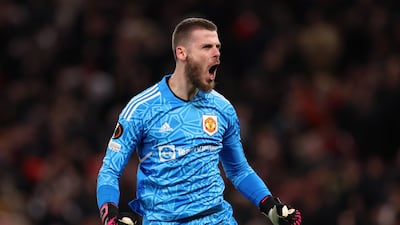
David De Gea 7 - Got his hand to Lewandowski’s penalty. Awful ball to Sergi Roberto after 44 minutes, but he got away with it. Dived to tip a Kounde header after 63 and made another save a minute later. Getty -
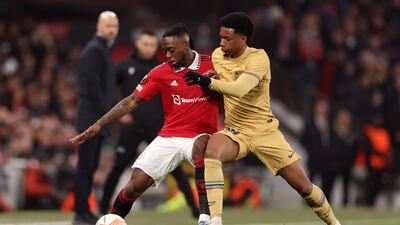
Aaron Wan-Bissaka 8 - Everywhere in the first 10 minutes – on the left and the right – and he even came inside to help midfield. His foul led to Fernandes being booked, but continued to be a threat from right back. Getty -

Lisandro Martinez 7 - Floored by a Sergi Roberto challenge in his own area after 12. Floored Lewandowski 14 minutes later. Hit long cross field passes forward. Fine tackle on Raphinha after 62. Aggressive, first to the ball so many times. Reuters -
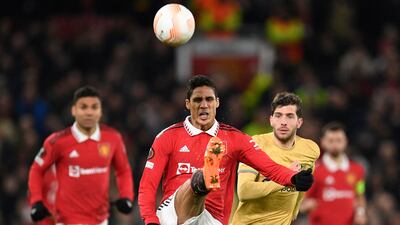
Raphael Varane 8 - Quick, cleans up well, peerless positioning. An clearance when the ball was running towards Lewandowski was vital. Blocked a 93rd minute Lewandowski shot. Top level performance for a top-level player. AFP -

Luke Shaw 7 - Incredible backheel helped create the Antony goal. Reuters -
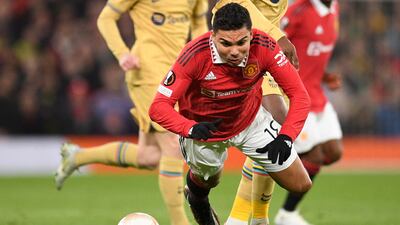
Casemiro 8 - Released Fernandes for United’s first attack after two minutes. Some of his passing was sublime. Badly fouled by Lewandowski after 71. Booked for a foul on the same player after 85. Big game for a big game player. AFP -
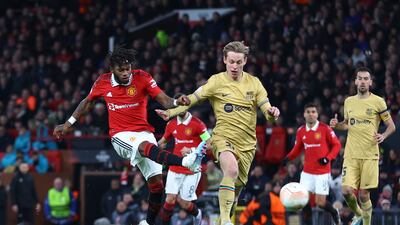
Fred 8 - Inadvertently volleyed just over on 36, then shinned the equaliser past Ter Stegen straight after half time. Yet another goal for him in front of the Stretford End – and involved for the second. Work rate unmatched. Reuters -
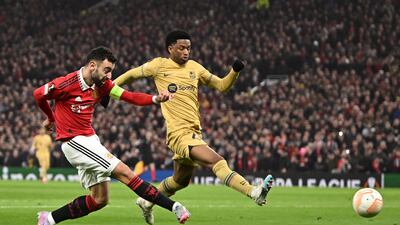
Bruno Fernandes 8 - Played on the right in the first half and had United’s first shot on goal, a big chance but he struck it straight at Ter Stegen. Conceded a penalty on 14, pulling on Balde. Weak volley on target on 22. Another assist – to set up Fred for the equaliser. Booked for smashing ball at De Jong. Won ball in lead up to winner. AFP -
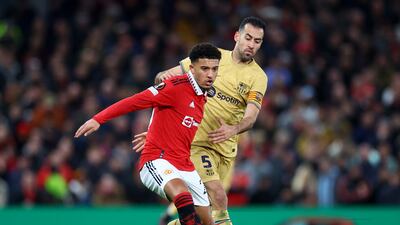
Jadon Sancho 6 - Quiet in a central role in the first half. Better when he moved wide in the second. Reuters -
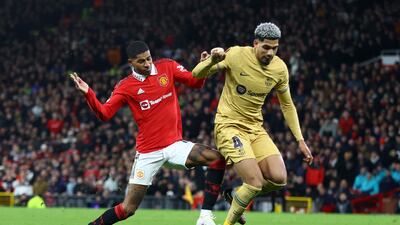
Marcus Rashford 7 - Difficult time against the outstanding Araujo in the first half, but livelier in the second. Closest he came to score was after 80 when he hit a shot wide. Looked tired when he came off. Reuters -

Wout Weghorst 5 - Played as a No 9 but his contribution to the team in the first half was minimal beyond working hard. Conceded fouls and no surprise when he was brought off at half time. AP -

SUBS: Antony 8 (On for Weghorst 46’) - Made an immediate impact, forcing Balde to defend. His speed allowed him to win a long ball from Casemiro. Shot on target from distance on 54. Defended well, scored the winner after 75. PA -
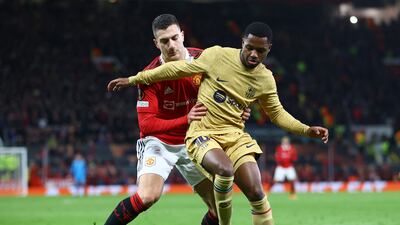
Diogo Dalot 7 (On for Wan-Bissaka 67’) Straight into a battle with Balde, stretching him with Antony. Reuters -
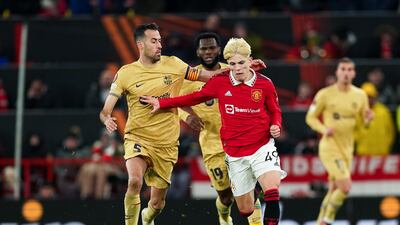
Alejandro Garnacho 8 (On for Sancho 67’) Had a shot in the lead up to the winner. Booked for a tackle on Kounde after 77. Exciting, mature on his decisions. Too hot for Busquets, who fouled him and was carded. PA -
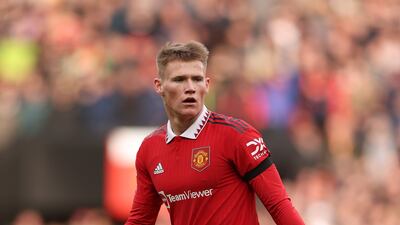
Scott McTominay N/A (On for Rashford after 87’). Brought as United tried to shut up shop and protect their lead. Getty Images -

BARCELONA RATINGS: Marc-Andre Ter Stegen 7: Good block with his leg to deny Fernandes very early goal. No chance with Fred or Antony finishes. EPA -
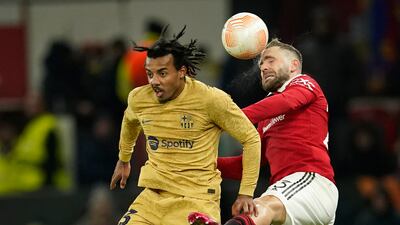
Jules Kounde 7: Poor pass led to United counter-attack that almost ended with Fernandes opening the scoring but, otherwise, he was excellent dealing with Rashford in first-half. Antony made his life more difficult in second. Denied first Barca goal when De Gea tipped header over bar. AP -
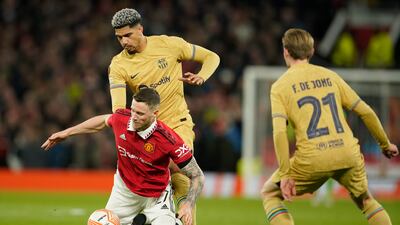
Ronald Araujo 6: A tale of two halves for Barca’s defence that looked rock solid in first-half but struggled after break as United targeted their high line with great success. AP -
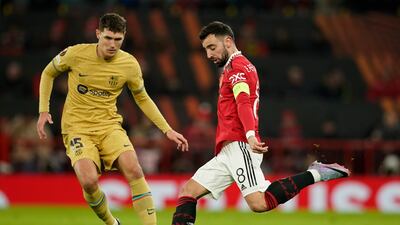
Andreas Christensen 7: Former Chelsea defender looked so assured in the opening 45 minutes but found United’s increased energy and pace problematic in second. Good block to stop Garnacho putting United in front, only for ball to eventually drop for Antony who did score. AP -
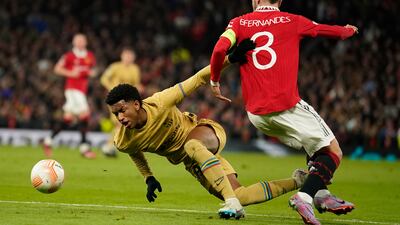
Alejandro Balde 7: Caught way out of position on left in first few minutes that allowed Fernandes free run and shot on goal. Pulled down by Fernandes to earn team a penalty. Certainly better going forward then defensively. AP -

Sergio Busquets 8: Veteran midfielder’s positioning and reading of game rescued Barca on a couple of occasions, sweeping up well in front and behind the defence. Booked for cynical pull back on a flying Garnacho. PA -
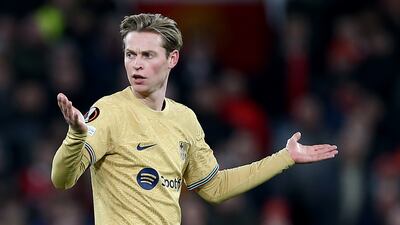
Frenkie De Jong 7: Long-term United transfer target was immense in first-half when he gave masterclass in box-to-box midfield work. But caught napping just after break allowing Fred to ghost in behind him and level the scores. EPA -
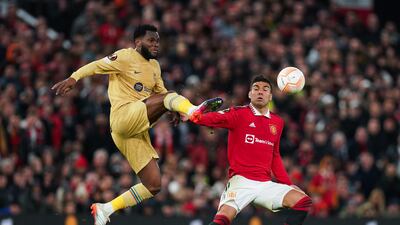
Franck Kessie 7: Looked like he might make it 2-0 just before half-time but shot blocked by Casemiro. Drilled strike from distance straight at De Gea in 64th mnute. PA -

Sergi Roberto 6: Almost gifted free shot on goal just before half-time after awful De Gea pass out from back but denied by Casemiro tackle. Booked for kicking-off with Fernades after Portuguese booted ball at De Jong. Not his usual influential self for Barca. AP -
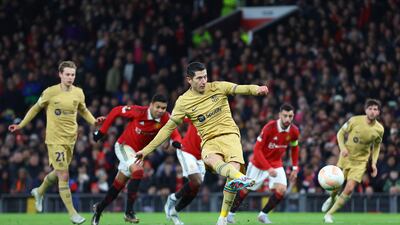
Robert Lewandowski 6: Scored from spot in first ever appearance at Old Trafford to put Barca into early lead, although De Gea almost kept it out. Booked for foul on Casemiro. Denied late goal by Varane goalline clearance. Reuters -

Raphinha 5: First-leg scorer curled shot over bar from edge of box in opening five minutes, blasted one way over bar five minutes before break. Disappointing game from former Leeds attacker. EPA -
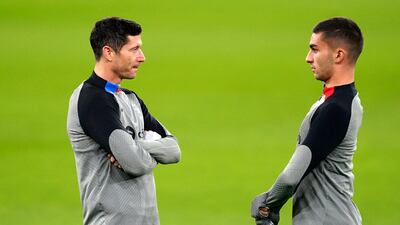
SUBS: Ferran Torres (On for Roberto 69’) 5: Former Man City player was booed by home fans on his introduction and couldn’t produce anything to help silence them after coming on. PA -
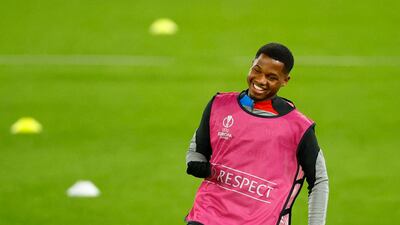
Ansu Fati (On for Raphinha 75’) 5: Dangerous player but made little impact. Reuters -
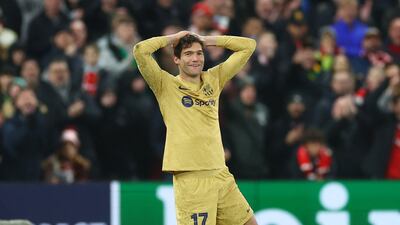
Marcos Alonso (On for Araujo 82’) N/A. Reuters



