



After providing one of the true highlights at the 2022 World Cup, Saudi Arabia are keen to build on their performance at the finals.
And, not only on the pitch, but also off it. Chiefly, by inspiring generations of future football stars alongside hosting the 2026 Women’s Asian Cup and the 2027 men’s event.
Shocking eventual champions Argentina
Last month, Saudi registered one of the most memorable victories in World Cup history when they opened their group account by defeating Argentina 2-1 at Lusail Stadium to the north of Doha. The win, against the side who would go on to secure the title, is considered among the greatest upsets registered at football’s marquee tournament.
Having secured that and won many new admirers at the World Cup even though they exited at the group stage, Saudi are envisaging a football boom in the near, and long-term, future.
“Having seen the tears from the Saudi fans - from almost everyone - that was one of the most historical moments for the Saudi nation,” Yasser Al Misehal, president of the Saudi Arabian Football Federation (SAFF), told The National. “Seeing our Crown Prince [Mohammed bin Salman] being very, very happy, it really touched our hearts.
“That game is something that we will build on, and we will take it as a good advantage also to inspire our youth. Unfortunately, we did not do very well in the second game and the third [losing 2-0 to Poland despite largely outplaying the Europeans, and 2-1 to Mexico]. But we were satisfied with the performance.
“We were hoping we can do something more in terms of the results, but that’s something that we can work harder to perform even better, with hopefully, better results in the 2026 World Cup.
“Still so many people are talking about that Argentina game, and it even proved to people who don't know the history of football in Saudi Arabia that the people of Saudi are very inspired about football; they are very passionate. And, from our end, we want to work harder to develop and promote the game.”
-

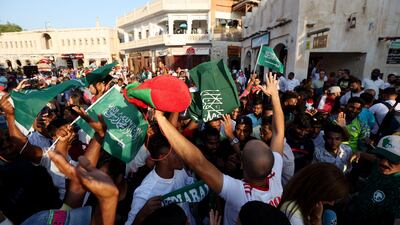
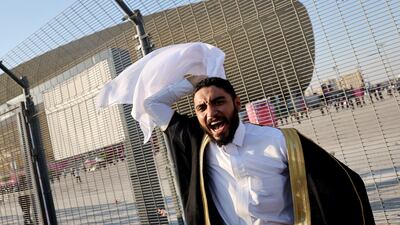
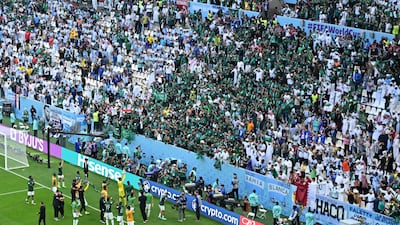
Saudi fans celebrate after their national team beat Argentina 2-1 in the World Cup at the Lusail Stadium in Qatar. PA -
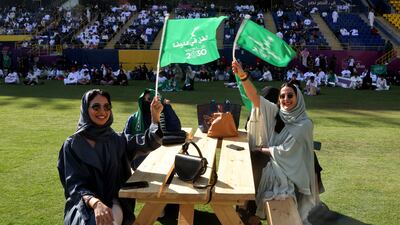
Saudi fans celebrate after their national team beat Argentina 2-1 in the World Cup at the Lusail Stadium in Qatar. Reuters -
Saudi fans celebrate after their national team beat Argentina 2-1 in the World Cup at the Lusail Stadium in Qatar. Getty Images -
Saudi fans celebrate after their national team beat Argentina 2-1 in the World Cup at the Lusail Stadium in Qatar. Reuters -
Saudi fans celebrate after their national team beat Argentina 2-1 in the World Cup at the Lusail Stadium in Qatar. AFP -
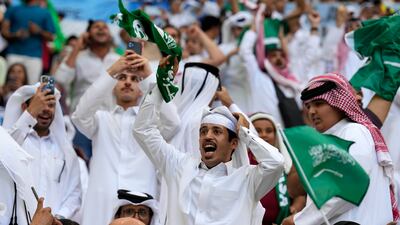
Saudi fans celebrate after their national team beat Argentina 2-1 in the World Cup at the Lusail Stadium in Qatar. AP Photo -

Saudi fans celebrate after their national team beat Argentina 2-1 in the World Cup at the Lusail Stadium in Qatar. EPA -
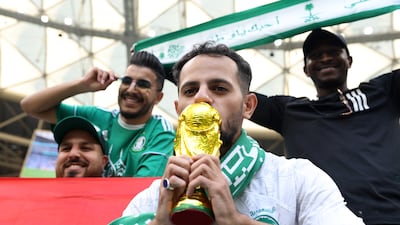
Saudi fans celebrate after their national team beat Argentina 2-1 in the World Cup at the Lusail Stadium in Qatar. Getty Images -
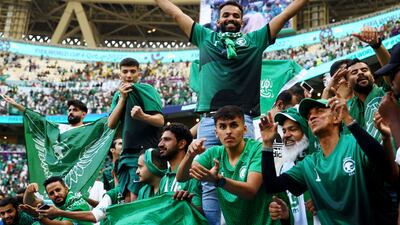
Saudi fans celebrate after their national team beat Argentina 2-1 in the World Cup at the Lusail Stadium in Qatar. Reuters -
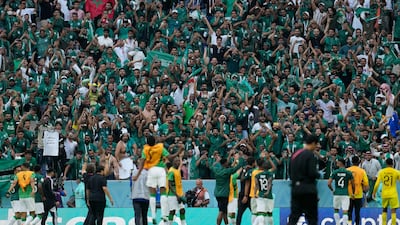
Saudi fans celebrate after their national team beat Argentina 2-1 in the World Cup at the Lusail Stadium in Qatar. AP Photo


Foundations for brighter future
Misehal points to the strength of the Saudi Pro League as reason for the national team’s improved performances at the World Cup (in 2018, they lost to Russia and Uruguay, although they did defeat Egypt to close out their group.)
“We've attracted some ex-Premier League and ex-Primera Liga stars who are playing now in the Saudi Premier League,” he said. “We have almost 150 foreign players, which is helping our league to become one of the strongest in Asia, with a Saudi club in Al Hilal being the winner of two of the most recent three Asian Champions Leagues.
“The World Cup was a golden opportunity to show people who did not know about our history that we have good standard of football; it's not only a normal league being played there. No, we have very good stars and very good talents from Saudi Arabia.”
Misehal emphasised the importance of using the national team’s campaign as another spark in a comprehensive, and already rewarding, football strategy. Saudi age-group sides have enjoyed recent success, with the Under-23s clinching the Asian Cup in Uzbekistan in June, and the U-20s triumphing at the Arab Cup on home soil in August.
“All these young players, when they watch the match we played against Argentina, with the best stars in the world, being one of the strongest candidates to win the World Cup, this will help them to break any psychological barriers that they may face,” Misehal said.
“Also inspiring these millions of kids - boys and girls - that, ‘Well, we beat Argentina, so we can do much more. So, let's take the opportunity to play and develop’. And, as a federation, we will of course facilitate their journey.
“Now it’s our work to really provide the youngsters with a good environment, with good facilities to play. And attract the quality technical people who have good experience and can help these boys and girls to develop their skills, and to facilitate their pathway to become the next generation of top stars.”

Trust in manager Herve Renard
“Quality technical people” applies obviously to Herve Renard, the senior team’s manager. The hugely popular Frenchman, 54, has been a considerable success since his appointment in 2019, guiding Saudi to qualification to the World Cup as group winners ahead of Japan and Australia.
The federation rewarded Renard in May with a contract through until 2027. It marked a departure from common practice: Saudi have had 18 different managers in 22 years.
“We really worked closely with [Herve] for the last three years; we know exactly that he has a lot of capabilities,” Misehal said. “He believes in Saudi football; he's been one of the coaches that’s been living and staying in the country for the whole time, and almost watching every round of the league, attending at least one or two matches every week. So, he knows the Saudi football very well.
“We've started our meetings and the plan for the next tournament, which will be [rescheduled 2023] Asian Cup in Qatar [dates to be confirmed, but next December has been mooted]. We already have the plans on how we're going to prepare for that, plus the qualification for the 2026 World Cup.
“We have a big belief in Herve and in his capabilities. And it’s the right time to have the stability and take the advantage of having such a good head coach to remain and develop these players, where we have also some young players coming from the Under-23s.”
Asked about Renard’s qualities as a coach – he led Morocco to the 2018 World Cup and has won the Africa Cup of Nations as a manager with Zambia and Ivory Coast – Misehal said: “Technically, he has very, very good experience, working with African teams and achieving very good results. Personally, he is very close to the players. He's very fair. He will always be transparent with the players.
“And also psychologically, he knows how to handle the emotions, how to deal with the players mentally. Plus, he is not working alone: he has good assistants that have vast experience and they have really prepared the squad to perform very well. As I said, we believe in him, and we feel that he is the right person to continue the exciting journey.”

Making the great leap to Europe
In Qatar, alongside Renard, several Saudi players impressed to such an extent that European clubs have reportedly taken notice. A few of the standouts included midfielder Mohammed Kano, winger Salem Al Dawsari and full-back Saul Abdulhamid.
Yet, typically, Saudi players have not moved to the game’s major leagues. In fact, Saudi Arabia were one of only two teams at the World Cup whose squad was made up entirely of home-based players. Qatar were the other.
“We’re already aware there are some European clubs trying to start a discussion with Saudi clubs regarding players,” Misehal said. “This is very good sign. Although we cannot interfere in any contract between any club and player, from our side as a federation, we will make sure to facilitate any discussions that could take place. We would love to see some of the Saudi players playing in the European leagues.
“But, at the same time, we are also working very hard to develop the Saudi league. As mentioned, we are attracting a lot of top foreign players, which is helping increase the level of the Saudi players there.”
On whether motivation exists among this current crop of Saudi national-team players to test their talent in Europe, Misehal said: “To be honest, in the past, there were very few that wanted to go abroad. Some of them feel they should stay in their comfort zone: they have their relatives, their families, their friends. It's an environment that everybody knows these players, where they won’t enjoy the same privilege if they go abroad.
“But lately, especially with some of the young players I was in discussion with during the [World Cup] camp, some said they would be willing to take this adventure and go abroad. With us, we will make sure that any player who goes to Europe, we will always be close to them, try helping their journey.
“Their appetite now has grown; some would love to go and have this experience, because they know this will bring a better future for them - and will increase their technical level.
“I would not be surprised to see some Saudi players in a year's time playing in some of these European leagues. Maybe not the top ones to begin with, but I think we will see some young players starting to play in Europe very soon.”
-

Morocco's Jawad El Yamiq celebrates after the 1-0 World Cup quarter-final win against Portugal at Al Thumama Stadium on December 10, 2022. Getty -
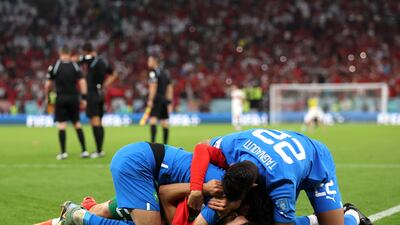
Yassine Bounou, Bilal El Khannouss, Reda Tagnaouti and Achraf Hakimi of Morocco celebrate the team's victory. Getty -
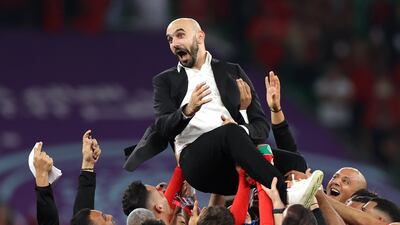
Walid Regragui, coach of Morocco, celebrates with the team. Getty -
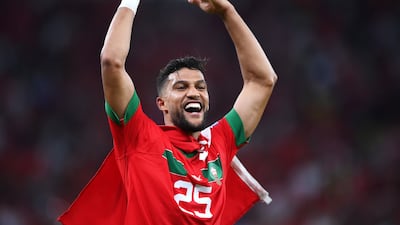
Yahya Attiat-Allah of Morocco celebrates. Getty -
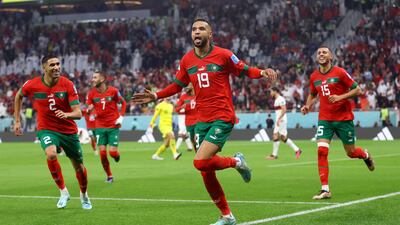
Morocco's Youssef En-Nesyri celebrates after scoring the only goal. Reuters -
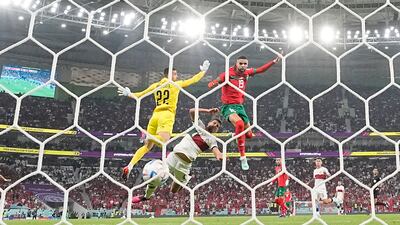
Morocco's Youssef En-Nesyri heads home in the first half. AP -
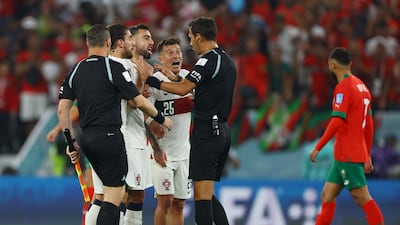
Portugal's Otavio, Bruno Fernandes and Ruben Neves argue with referee Facundo Tello. Reuters -
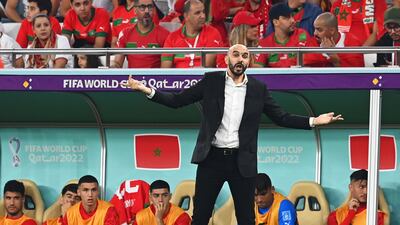
Morocco manager Walid Regragui. EPA -
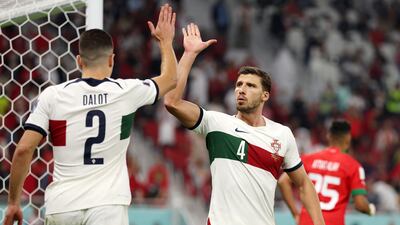
Portugal's Ruben Dias with Diogo Dalot. Getty -
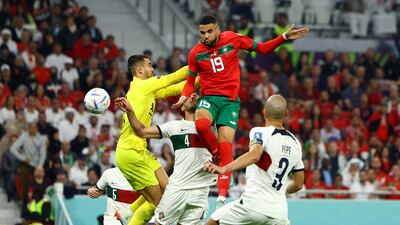
Moussef En-Nesyri scores for Morocco. Reuters -
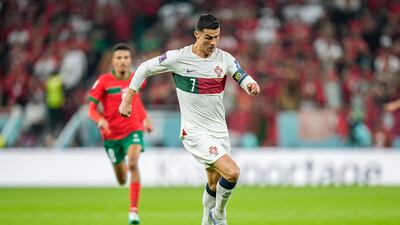
Portugal's Cristiano Ronaldo runs with the ball after coming on in the second half. AP -
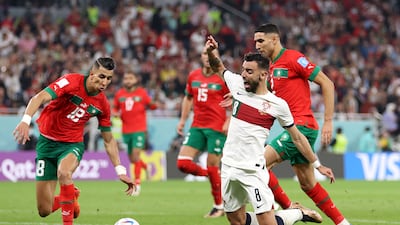
Portugal's Bruno Fernandes goes down in the box but no penalty was given. Getty -
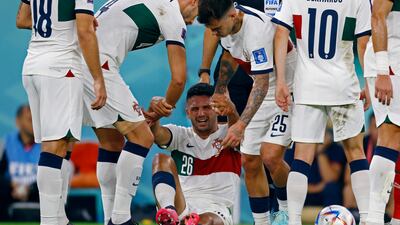
Portugal's Goncalo Ramos is helped up by Ruben Dias and Otavio. Reuters -

Morocco's Achraf Hakimi goes head-to-head with Otavio of Portugal. EPA -
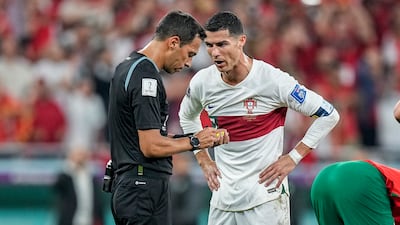
Portugal's Cristiano Ronaldo talks with the referee Facundo Tello. AP -
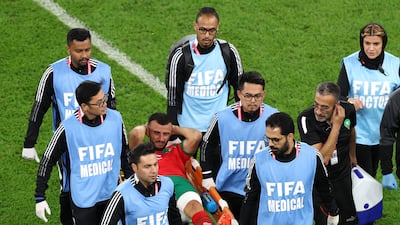
Morocco's Romain Saiss is carried off in the second half. Getty -
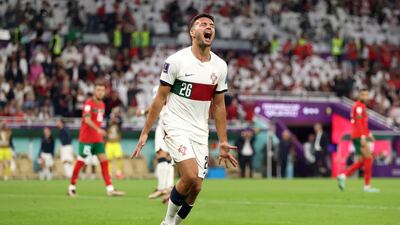
Goncalo Ramos of Portugal reacts after missing a chance. Getty -
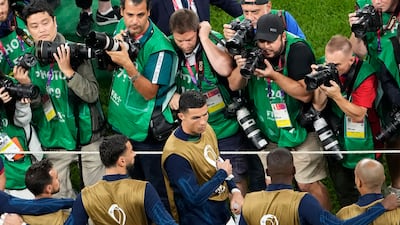
Phtographers surround Portugal subsitute Cristiano Ronaldo before the match. AP


Qatar and Morocco Arab trailblazers
Misehal praised Qatar for their hosting of the World Cup. The Gulf country, who had never competed at that level, became the first Arab and first Middle East nation to stage the tournament. Morocco, meanwhile, represented one of its success stories, becoming the first African and Arab country in history to reach the semi-finals.
“Qatar has hosted an amazing event,” Misehal said. “It proved to a lot of people that this area has a huge passion for football, and it has a great culture, great hospitality. That was a very good opportunity to show the rest of the world what this region can do.
“It inspired a lot of people from the Arab world, as well. The Saudi fans were great; they brought a very beautiful atmosphere. It was a great tournament, and really helped to unite people from different parts of the world.
“So, a great achievement for Qatar, for the Gulf region, for the Arab region in general. And watching the results, unbelievable to see. Saudi winning against Argentina created big news; Tunisia [1-0] against [then champions] France; what Morocco have done is unbelievable.
“We are very proud of the Moroccan team: it's broken a lot of barriers - a lot of psychological barriers - and it's proved that, today, nothing is impossible. That will inspire all national teams from this region to really believe and to work hard to reach what Morocco has reached. It's amazing.”

Dual Asian Cup bids
Saudi are intent, too, on hosting major football tournaments, with bids registered for the 2026 Women’s Asian Cup and the men’s event the following year. The proposal for 2026 was confirmed earlier this month, reinforcing the kingdom’s commitment to developing the woman’s game.
In the past three years, Saudi have invested significantly in women’s football, from grassroots player development through to the establishment last year of a first women’s national team, which next month will qualify for Fifa rankings for the first time.
Also, Saudi have introduced an inaugural women’s football league and girls’ school league.
“It's one of our priorities to work hard and increase our chances to host the 2026 Women’s Asian Cup,” Misehal said.
“We’re very excited to witness all these pioneering moments for our women’s football. And this will inspire young girls to have more participation and to compete more.”
For 2026, Saudi face competition from Australia, Jordan, and Uzbekistan, with the Asian Football Confederation (AFC) scheduled to announce the winning bid next year.
On how confident the federation are that Saudi will get the nod, Misehal said: “It's not easy, to be honest. Because we have three other federations bidding. But we have developed a very, very attractive bid.
“Maybe, hopefully, some of our competitors will understand how important it is for Asia and the Middle East to host the Women’s Asian Cup for the first time. Maybe they will understand our hunger for that. We have a real hope that we can be the host.”
Certainly, Saudi are expected to be successful in securing the 2027 Men’s Asian Cup – although three-time winners of the tournament, they have never previously staged it – having this month become the sole bidder after India withdrew their proposal. The AFC Congress will formally decide the host at their annual summit, which takes place on February 1 in Bahrain.
“We are very close,” Misehal said. “Again, we've put together a very attractive bid. We have a huge support from our leadership. And we are just waiting for February 1 for the Congress. Now we are the only candidates, so it means 90 per cent that we will be the host.
“And that's another great historical moment. Because winning this cup three times in the past, being runner-up three times, it's the time to host it. So that's big news. Hopefully, we will all celebrate this moment on February 1.”

