
Manchester United interim manager Ralf Rangnick revealed on Friday that his request to sign a striker in January was rejected by the club despite losing Anthony Martial and Mason Greenwood during that period.
France forward Martial joined Sevilla on loan while Greenwood was suspended by United over rape and assault allegations.
Rangnick said that Porto's Luis Diaz, Julian Alvarez of River Plate and Fiorentina's Dusan Vlahovic were on his wishlist but the German was told that "there was no player on the market that could really help us".
Diaz ultimately signed for rivals Liverpool and has been an immediate success, making vital contributions to the club's pursuit of an unprecedented quadruple. Alvarez also signed for one of United's rivals, completing a switch to Manchester City before remaining on loan at River, while Vlahovic joined Juventus and has hit the ground running in Turin, including scoring 33 seconds into his Champions League debut.
"We had four days off at the time and on the Sunday I was informed about the issues with Mason Greenwood and obviously Anthony Martial had already left," Rangnick said ahead of Saturday's Premier League trip to Brighton and Hove Albion.
"I was aware that within four days we had some strikers missing and it might make sense, we were still in three competitions - Champions League, FA Cup and fourth in the league. I spoke to the board ... but in the end the answer was no.
"I still believe that we should have at least tried, if we would've found and been able in 48 hours – 48 hours is short notice but it's still 48 hours, it might have been worth to try and internally discuss but we didn't."
United have been reliant on Cristiano Ronaldo for goals - 24 in all competitions - this season, with Edinson Cavani's game time limited due to injury and Marcus Rashford struggling for form.
United, who will welcome Erik ten Hag as their permanent manager in the summer, are currently sixth in the league, five points off the last Champions League spot with two games to play.
Man United's league points totals – with club on course for worst finish
-

Manchester United captain Steve Bruce and Bryan Robson hold aloft the FA Premier League trophy after the final home game of the 1992-93 season, when they finished as champions with 84 points. Getty -

Steve Bruce and Bryan Robson lift the trophy after winning the Premiership in the 1993-94 season with 92 points. Getty -
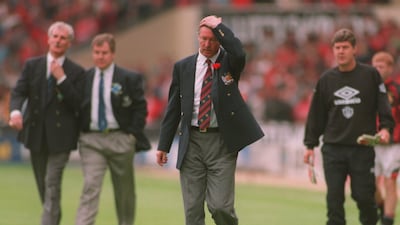
Alex Ferguson's Manchester United finished the 1994-95 season as runners-up with 88 points. Allsport -

Steve Bruce and goalkeeper Peter Schmeichel celebrate with the 1995-96 Premiership trophy after winning the title with 82 points. Getty -
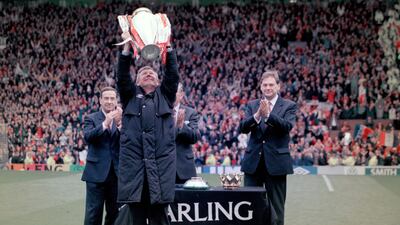
Alex Ferguson holds the Premier League trophy after the final home game of the 1996-97 season, which they won with 75 points. Getty -
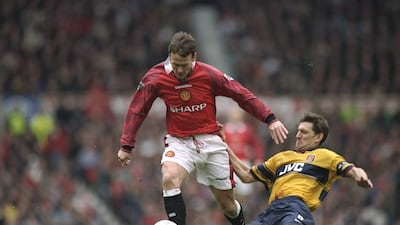
Arsenal's Tony Adams tackles United's Teddy Sheringham in the 1997-98 season. United were runners-up behind the Gunners, with 77 points. Allsport -

Manchester United players celebrate winning the title in the 1998-99 season with 79 points. Allsport -

Manchester United's Teddy Sheringham and Ole Gunnar Solskjaer lift the Premier League trophy after winning the title in the 1999-2000 season with 91 points. Allsport -

Manager Alex Ferguson and Roy Keane with the Premier League Premiership trophy in 2000-01, a season they won with 80 points. Allsport -

United's Luke Chadwick holds off John McGreal of Ipswich in the 2001-02 season. United finished third with 77 points. Getty -

Ole Gunnar Solskjaer and Roy Keane celebrate with the Premier League trophy in 2002-3, when 83 points was enough for the title. Getty -

Roy Keane shows his frustration during the 2003-4 season, when United finished third with 75 points. Getty -

Paul Scholes celebrates with Roy Keane and Cristiano Ronaldo during the 2004-05 season, when United finished third with 77 points. Getty -
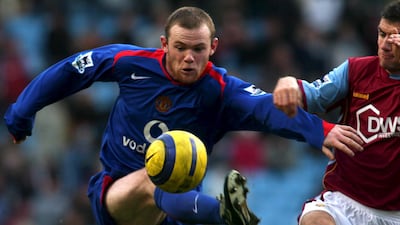
Striker Wayne Rooney in action during the 2005-6 season, when United finished second with 83 points. EPA -

United players celebrate winning the title in the 2006-7 season with 89 points. Getty -

Ryan Giggs lifts the trophy after United's win in the 2007-8 season with 87 points. Getty -

Cristiano Ronaldo celebrates with the Premier League trophy after their triumph in 2008-9 with 90 points. Getty -

Michael Owen shoots during the 2009-10 season, when United finished as runners-up with 85 points. EPA -

United celebrate with the Premier League trophy in 2010-11, when they won with 80 points. Getty -
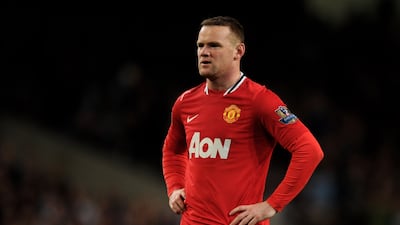
Wayne Rooney looks dejected in the 2011-12 season, when United were runners-up with 89 points. Getty -

Alex Ferguson lifts the Premier League trophy after the 2012-13 season, when they were crowned with 89 points - the last time Manchester United were champions of England. Getty -

Michael Carrick, Wayne Rooney and Juan Mata show their disappointment during the 2013-14 season, when United finished in seventh with 64 points, currently their lowest ever tally. Getty -
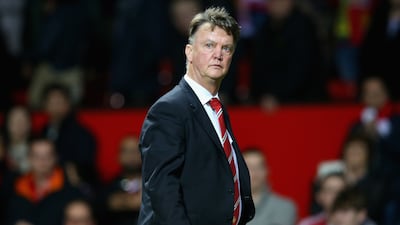
Manager Louis van Gaal leaves the pitch during the 2014-15 season, when United finished fourth with 70 points. Getty -

Wayne Rooney during the 2015-16 season, when United were fifth with 66 points. Getty -

Manchester United's Anthony Martial in 2016-17, when United were sixth with 69 points. Getty -

Jay Rodriguez of West Bromwich Albion celebrates after scoring against United in 2017-18, when they were runners-up with 81 points. Getty -

Marcus Rashford during the 2018-19 season, when United finished sixth with 66 points. Getty -
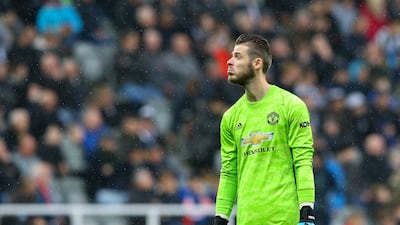
Goalkeeper David de Gea during the 2019-20 season, when United finished third with 66 points. Getty -

Marcus Rashford celebrates with Paul Pogba during the 2020-21 campaign, when United were runners-up with 74 points. EPA
While you're here
Gavin Esler: The Good Friday Agreement teaches us some important lessons
Damien McElroy: Boris must listen to Churchill's comments on Irish divisions
Janine di Giovanni: Track 2 diplomacy key to lasting peace in 21st century
While you're here
Ten tax points to be aware of in 2026
1. Domestic VAT refund amendments: request your refund within five years
If a business does not apply for the refund on time, they lose their credit.
2. E-invoicing in the UAE
Businesses should continue preparing for the implementation of e-invoicing in the UAE, with 2026 a preparation and transition period ahead of phased mandatory adoption.
3. More tax audits
Tax authorities are increasingly using data already available across multiple filings to identify audit risks.
4. More beneficial VAT and excise tax penalty regime
Tax disputes are expected to become more frequent and more structured, with clearer administrative objection and appeal processes. The UAE has adopted a new penalty regime for VAT and excise disputes, which now mirrors the penalty regime for corporate tax.
5. Greater emphasis on statutory audit
There is a greater need for the accuracy of financial statements. The International Financial Reporting Standards standards need to be strictly adhered to and, as a result, the quality of the audits will need to increase.
6. Further transfer pricing enforcement
Transfer pricing enforcement, which refers to the practice of establishing prices for internal transactions between related entities, is expected to broaden in scope. The UAE will shortly open the possibility to negotiate advance pricing agreements, or essentially rulings for transfer pricing purposes.
7. Limited time periods for audits
Recent amendments also introduce a default five-year limitation period for tax audits and assessments, subject to specific statutory exceptions. While the standard audit and assessment period is five years, this may be extended to up to 15 years in cases involving fraud or tax evasion.
8. Pillar 2 implementation
Many multinational groups will begin to feel the practical effect of the Domestic Minimum Top-Up Tax (DMTT), the UAE's implementation of the OECD’s global minimum tax under Pillar 2. While the rules apply for financial years starting on or after January 1, 2025, it is 2026 that marks the transition to an operational phase.
9. Reduced compliance obligations for imported goods and services
Businesses that apply the reverse-charge mechanism for VAT purposes in the UAE may benefit from reduced compliance obligations.
10. Substance and CbC reporting focus
Tax authorities are expected to continue strengthening the enforcement of economic substance and Country-by-Country (CbC) reporting frameworks. In the UAE, these regimes are increasingly being used as risk-assessment tools, providing tax authorities with a comprehensive view of multinational groups’ global footprints and enabling them to assess whether profits are aligned with real economic activity.
Contributed by Thomas Vanhee and Hend Rashwan, Aurifer
GAC GS8 Specs
Engine: 2.0-litre 4cyl turbo
Power: 248hp at 5,200rpm
Torque: 400Nm at 1,750-4,000rpm
Transmission: 8-speed auto
Fuel consumption: 9.1L/100km
On sale: Now
Price: From Dh149,900
Mercer, the investment consulting arm of US services company Marsh & McLennan, expects its wealth division to at least double its assets under management (AUM) in the Middle East as wealth in the region continues to grow despite economic headwinds, a company official said.
Mercer Wealth, which globally has $160 billion in AUM, plans to boost its AUM in the region to $2-$3bn in the next 2-3 years from the present $1bn, said Yasir AbuShaban, a Dubai-based principal with Mercer Wealth.
“Within the next two to three years, we are looking at reaching $2 to $3 billion as a conservative estimate and we do see an opportunity to do so,” said Mr AbuShaban.
Mercer does not directly make investments, but allocates clients’ money they have discretion to, to professional asset managers. They also provide advice to clients.
“We have buying power. We can negotiate on their (client’s) behalf with asset managers to provide them lower fees than they otherwise would have to get on their own,” he added.
Mercer Wealth’s clients include sovereign wealth funds, family offices, and insurance companies among others.
From its office in Dubai, Mercer also looks after Africa, India and Turkey, where they also see opportunity for growth.
Wealth creation in Middle East and Africa (MEA) grew 8.5 per cent to $8.1 trillion last year from $7.5tn in 2015, higher than last year’s global average of 6 per cent and the second-highest growth in a region after Asia-Pacific which grew 9.9 per cent, according to consultancy Boston Consulting Group (BCG). In the region, where wealth grew just 1.9 per cent in 2015 compared with 2014, a pickup in oil prices has helped in wealth generation.
BCG is forecasting MEA wealth will rise to $12tn by 2021, growing at an annual average of 8 per cent.
Drivers of wealth generation in the region will be split evenly between new wealth creation and growth of performance of existing assets, according to BCG.
Another general trend in the region is clients’ looking for a comprehensive approach to investing, according to Mr AbuShaban.
“Institutional investors or some of the families are seeing a slowdown in the available capital they have to invest and in that sense they are looking at optimizing the way they manage their portfolios and making sure they are not investing haphazardly and different parts of their investment are working together,” said Mr AbuShaban.
Some clients also have a higher appetite for risk, given the low interest-rate environment that does not provide enough yield for some institutional investors. These clients are keen to invest in illiquid assets, such as private equity and infrastructure.
“What we have seen is a desire for higher returns in what has been a low-return environment specifically in various fixed income or bonds,” he said.
“In this environment, we have seen a de facto increase in the risk that clients are taking in things like illiquid investments, private equity investments, infrastructure and private debt, those kind of investments were higher illiquidity results in incrementally higher returns.”
The Abu Dhabi Investment Authority, one of the largest sovereign wealth funds, said in its 2016 report that has gradually increased its exposure in direct private equity and private credit transactions, mainly in Asian markets and especially in China and India. The authority’s private equity department focused on structured equities owing to “their defensive characteristics.”
Company profile
Company: Eighty6
Date started: October 2021
Founders: Abdul Kader Saadi and Anwar Nusseibeh
Based: Dubai, UAE
Sector: Hospitality
Size: 25 employees
Funding stage: Pre-series A
Investment: $1 million
Investors: Seed funding, angel investors
GCC-UK%20Growth
Company%20profile
In-demand jobs and monthly salaries
- Technology expert in robotics and automation: Dh20,000 to Dh40,000
- Energy engineer: Dh25,000 to Dh30,000
- Production engineer: Dh30,000 to Dh40,000
- Data-driven supply chain management professional: Dh30,000 to Dh50,000
- HR leader: Dh40,000 to Dh60,000
- Engineering leader: Dh30,000 to Dh55,000
- Project manager: Dh55,000 to Dh65,000
- Senior reservoir engineer: Dh40,000 to Dh55,000
- Senior drilling engineer: Dh38,000 to Dh46,000
- Senior process engineer: Dh28,000 to Dh38,000
- Senior maintenance engineer: Dh22,000 to Dh34,000
- Field engineer: Dh6,500 to Dh7,500
- Field supervisor: Dh9,000 to Dh12,000
- Field operator: Dh5,000 to Dh7,000


