



Manchester United have announced the appointment of Erik ten Hag as their new manager, subject to work visa requirements, from the end of this season until June 2025, with the option to extend for a further year.
Ten Hag is the fifth permanent manager to be appointed by United since Alex Ferguson retired in 2013 following David Moyes, Louis van Gaal, Jose Mourinho and Ole Gunnar Solskjaer. Ralf Rangnick has been in interim charge since Solskjaer's sacking in November 2021.
John Murtough, United's Football Director, said: “During the past four years at Ajax, Erik has proved himself to be one of the most exciting and successful coaches in Europe, renowned for his team’s attractive, attacking football and commitment to youth.
“In our conversations with Erik leading up to this appointment, we were deeply impressed with his long-term vision for returning Manchester United to the level we want to be competing at, and his drive and determination to achieve that.
“We wish Erik the best of luck as he focuses on achieving a successful end to the season at Ajax and look forward to welcoming him to Manchester United this summer.”
Ten Hag said: “It is a great honour to be appointed manager of Manchester United and I am hugely excited by the challenge ahead. I know the history of this great club and the passion of the fans, and I am absolutely determined to develop a team capable of delivering the success they deserve.
“It will be difficult to leave Ajax after these incredible years, and I can assure our fans of my complete commitment and focus on bringing this season to a successful conclusion before I move to Manchester United.”
Liverpool vs Man United ratings
-
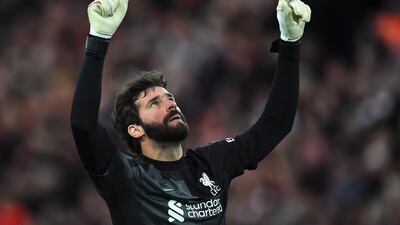
LIVERPOOL RATINGS: Alisson Becker – 7. The Brazilian made a double save from Rashford and Elanga during Liverpool’s flat period in the second half. He gave the team the wake-up call they needed. EPA -
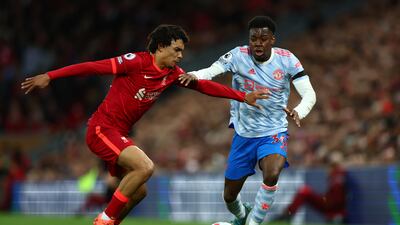
Trent Alexander-Arnold – 7. The 23-year-old rampaged forward in the first half. Sancho’s presence after the break meant he had to be more cautious, but he oozed class. Getty -
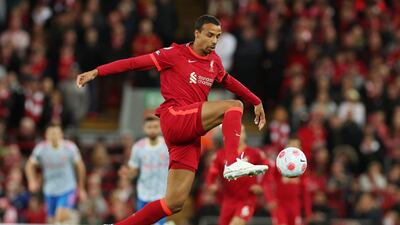
Joel Matip – 7. The 30-year-old was untroubled by United’s forwards. His contribution to the second goal showed how good he is with the ball at his feet. Reuters -

Virgil van Dijk – 7. The Dutchman seemed uncertain about Rashford’s positions at times in the first half but was strong in the air and in the tackle. His passing was effective. AP -

Andrew Robertson – 8. The Scot was in fine fettle down the left, defending with characteristic steeliness and attacking with intent. He was a catalyst for the third goal and set up the fourth. AFP -

Jordan Henderson – 7. The captain was the king of second balls in the first half, pouncing when possession was in question. He tired a little after the break but retained his appetite for work. EPA -
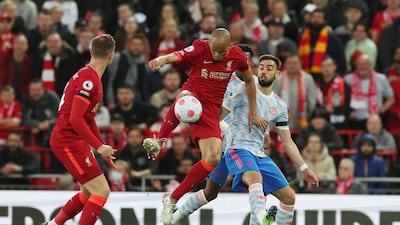
Fabinho – 8. The Brazilian choked off any United creativity and ensured Fernandes was kept out of the game. He also got into shooting areas before being withdrawn for Milner with four minutes left. Reuters -
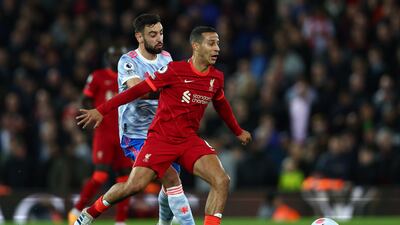
Thiago Alcantara – 9. The 31-year-old ran the match and was particularly dominant in the first half. His passing was outstanding until he made way for Keita with 10 minutes to go. Getty -
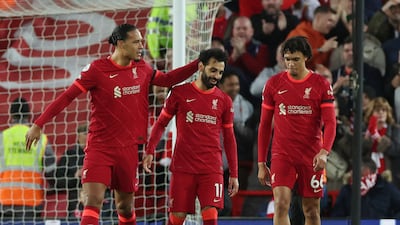
Mohamed Salah – 9. The Egyptian set up the opening goal and scored the second and the fourth. The United defence was reduced to chaos every time the ball came near the striker. Reuters -
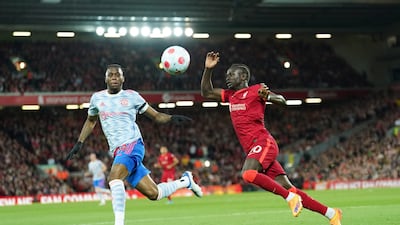
Sadio Mane – 9. The pass that the Senegalese sent to Salah for the second goal was a thing of beauty. He scored the third with a shot that looked almost casual but was wonderfully precise. AP -

Luis Diaz – 9. The Colombian scored the first goal, was involved in the second and made the third in another splendid outing. He gave way for Jota with 21 minutes left. EPA -

SUBS: Diogo Jota – 7. The Portuguese replaced Diaz in the 70th minute and his fresh legs brought new fear for the defence. He laid on Salah’s second goal. AP -
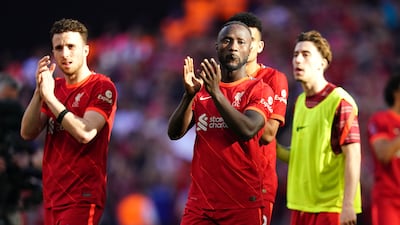
Naby Keita – 7. The Guinean joined the game in the 80th minute for Thiago. He was eager – perhaps too much so, as he could have seen red for a stamp on Lingard. PA -
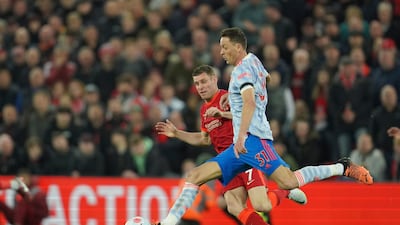
James Milner – 7. The 36-year-old entered the fray with four minutes to go for Fabinho. As usual, he crammed a lot of action into his cameo and put himself about. AP -
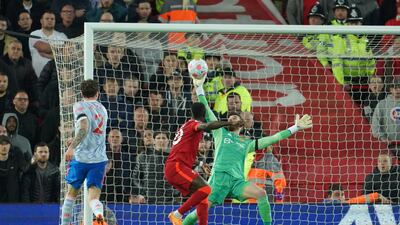
MANCHESTER UNITED RATINGS: David de Gea 5. It was always going to be a difficult night for the Spaniard. And how it came from Liverpool’s excellent front three, who all scored and assisted goals. AP -
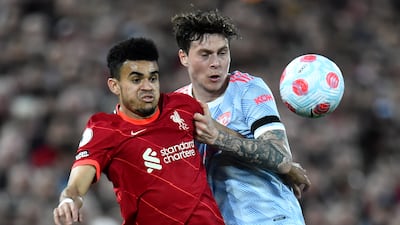
Victor Lindelof 4. Difficult night in a back three alongside Jones and Maguire. Hit some promising long balls. Way off the level of players he was up against. Diaz was faster than him. EPA -

Phil Jones 3. What could we expect from a player who doesn’t start and is then thrown in against a side chasing the quadruple this season? What we expected is what we saw. Withdrawn at half time. AFP -
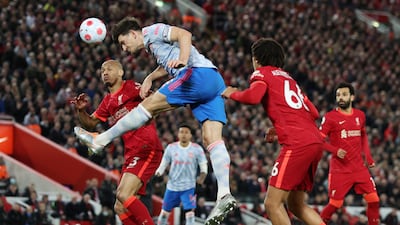
Harry Maguire 3. Another poor performance by the much-maligned United captain. Pulled out of position by a Liverpool side who drew United out of their deep formation. Reuters -
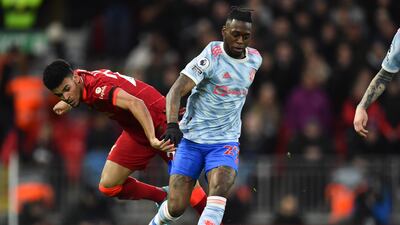
Aaron Wan-Bissaka 3. Back in the team in an ultra-defensive formation with five defenders, he was continually exploited by Liverpool and was no match for the superior players like Diaz and the superb Thiago. EPA -
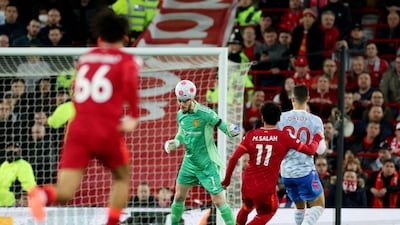
Diogo Dalot 3. Switched from the left to the right to try and get to grips with Liverpool. Couldn’t. Looked out of his depth. Reuters -
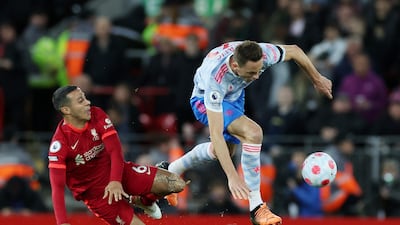
Nemanja Matic 3. When the Serb passed the ball back to concede a corner after 18 minutes, it summed up United’s inept start. Like asking a man to hold the sea back. He couldn’t have done it at his peak, he certainly can’t do it now. Reuters -

Paul Pogba NA. Walked off soon after Liverpool went ahead on four minutes. Not worthy of a mark. Most United fans would not be concerned if they never saw him wear the shirt of their team for years. AP -
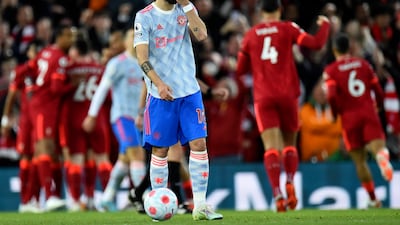
Bruno Fernandes 2. Gave the ball away too much. Hit a 58th minute free-kick over the wall to nobody. Booked. Deeply frustrated. Apologised to the fans after. It’s not good enough. EPA -
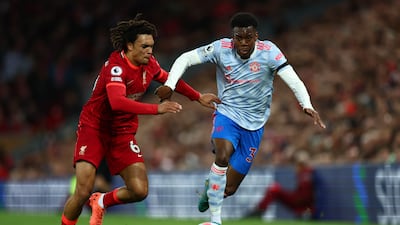
Anthony Elanga 3. Started up front before moving towards the right. A boy against men. Almost no threat at all to Liverpool. Getty -
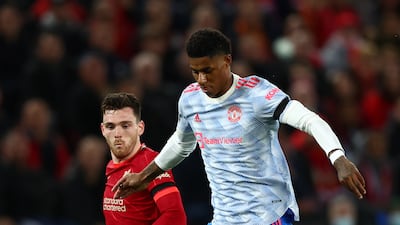
Marcus Rashford 2. Little service with such a defensive formation and struggled to read the balls which came his way. Ran at the Liverpool defenders with limited effect. Had a good chance when Liverpool were leading 2-0. Getty -

SUBS Jesse Lingard 4. On for Pogba. Battled but making a house from jelly would have been easier for him. Struggled to make the ball stick to his feet. One of many set to leave after this season. EPA -
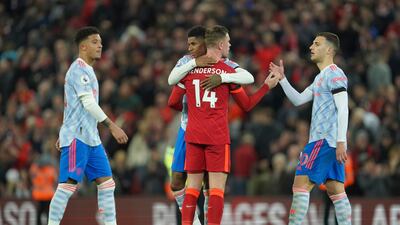
Jadon Sancho 5. On for Jones at half time. Saw more of the ball than his teammates as United enjoyed their best spell after the break. AP -
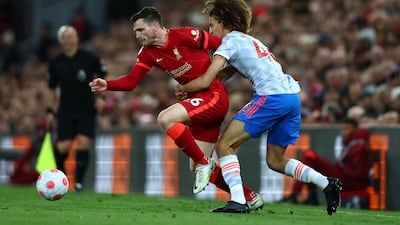
Hannibal Mejbri 6. Youngster gave more effort in the final minutes than most of his teammates did for the entire match. He’s entering the team at one of the lowest moments in their modern history. Getty


United, beaten 4-0 by Liverpool on Tuesday, are currently sixth in the Premier League and face the prospect of missing out on qualification to next season's Champions League.
The 52-year-old Ten Hag was appointed by Ajax during the 2017/18 campaign and led them to the Dutch league title in 2019 and 2021, as well as the Champions League semi-finals in 2019.
The Dutchman, who previously worked with the reserve team of Bayern Munich, had long been linked with a move to United.
The recruitment process had been led by Murtough and technical director Darren Fletcher with club chief executive Richard Arnold involved in the latter stages.
Although they spoke to a number of potential candidates, the trio believed that Ten Hag was the candidate most closely aligned with United's vision and strategy for getting back to the top level.
Rangnick said on Monday that United were "six years behind" Liverpool and said that there could be up to ten new players brought in as part of what he called a "rebuild".
When the German was hired as interim manager, the club said he had also agreed to a two-year consultancy with United.
Ajax had wanted to avoid any distractions in the final weeks of the season where they remain in a battle for the Eredivisie title with PSV Eindhoven.
Ajax chief executive Edwin van der Sar, the former United goalkeeper said they had wanted to keep Ten Hag in charge for longer.
"Four-and-a-half years is a good amount of time, but we would have liked to have kept Erik at Ajax for longer. He is going to make the step to one of the biggest clubs in the world, in a fantastic league," he told the club's official website.
"We owe Erik a lot of thanks for what he has achieved with Ajax so far but we are not done yet. At the end of the season, I will look back more extensively on his departure. For now, what matters is the final games of the season in which we all want to bring home the league title."

