

On Sunday, as the paddock at Shanghai's International Circuit prepared for the Chinese Grand Prix, Formula One delivered news that had been anticipated for days.
The Bahrain Grand Prix, scheduled for the weekend of April 12, and the Saudi Arabian Grand Prix, set to follow the week after, would not take place. The announcement, issued jointly by Formula One and its governing body, the FIA, came 15 days after the United States and Israel launched co-ordinated military strikes on Iran, triggering wide-ranging Iranian retaliation across the Gulf.
“While this was a difficult decision to take, it is unfortunately the right one at this stage considering the current situation in the Middle East,” said Stefano Domenicali, F1 president and chief executive.

The sport's 2026 calendar reduced from 24 rounds to 22, leaving an unscheduled void of 33 days between the Japanese Grand Prix on March 29 and the Miami Grand Prix on May 3.
The conflict had already reached the sport before any formal decision was taken. On February 28, a two-day Pirelli wet tyre test at the Bahrain International Circuit, due to run until March 1, was abandoned on security grounds as airspace and airport closures across the region left personnel stranded in Manama.
Impact on Formula One
When a circuit or country secures a place on the Grand Prix calendar, it pays an annual sanctioning fee directly to F1 for the right to host the event. These fees are negotiated individually, locked into multi-year contracts and typically increase annually by about five per cent, making them one of the sport's most reliable revenue streams. Across the full calendar, hosting fees contributed $824 million to F1's income in 2025, representing approximately 27 per cent of the sport's $3.87 billion total revenue.
Bahrain and Saudi Arabia together account for an estimated $115 million of that figure in hosting fees alone. The total commercial exposure is considerably broader. When a race takes place, it generates additional revenue across sponsorship, hospitality, freight and a range of ancillary income streams that only materialise on race weekends.
Analysis from Guggenheim Partners, accounting for all of these combined losses, placed the total cost of both cancellations at roughly $190 to $200m in revenue and approximately $80m earnings before interest, taxes, depreciation, and amortisation (Ebitda).
That projected loss equates to around eight per cent of the sport's $997m Ebidta – consequential, though well within the tolerance of an enterprise of this scale.
Haas team principal Ayao Komatsu offered a candid assessment of the consequences for the teams. “Even in the best case, it's not negligible,” he said. “The worst case, I wouldn't say a significant impact, but a notable impact.”

Teams had some protection already in place. F1 teams had earlier accepted $450m to welcome Cadillac on to the grid in 2026 – the highest entry fee in the sport's history.
That Cadillac dilution fee, which distributes at least $40 million to each existing team, provides insulation against the commercial shortfall.
F1 explored replacement races before concluding that with television commitments already satisfied by the remaining 22 rounds, any short-notice hosting fee would not be worth it, with the welfare of a large travelling workforce already at its limits.
The consequent five-week interlude also offers teams a well-earned pause in the calendar after the shortest of breaks this winter. Engineers with teams struggling with performance in the early rounds will welcome the additional time to diagnose and resolve issues away from the pressure of two race weekends.
The loss of Bahrain, however, is a blow to the teams. As the venue for preseason testing, it ordinarily provides the earliest competitive measure of whether winter development has translated into real-world performance gains. It is a reference point that simulation and wind tunnel data can only partially replicate.
What about Bahrain and Saudi Arabia?
Both nations have suffered the consequences of this war. Iranian strikes hit military installations, civilian infrastructure and hotels in central Manama while Saudi Arabia sustained attacks on military bases and oilfields, with repeated airspace closures rendering the logistical requirements of any major international event effectively unworkable.
The economic damage radiates far beyond the paddock. Consultancy Northbourne Advisory has catalogued over 100 events across the Gulf cancelled, postponed or suspended since hostilities commenced. For Bahrain, the Grand Prix occupied a singular position in the kingdom's economic landscape.
During a fireside chat at the launch of The Business Year: Bahrain 2026, circuit chief executive Sheikh Salman bin Isa Al Khalifa noted as recently as December that the race weekend generates approximately $100 million in economic activity across hotels, airlines and hospitality.

The Gulf Hotels Group, whose net profit surged 30 per cent in the second quarter of 2025 owing directly to Grand Prix demand, will find no comparable catalyst this April. The circuit had sold out for three consecutive years, welcoming over 37,000 spectators on race day alone.
Saudi Arabia's investment in international events as an instrument of economic transformation is equally measurable. Tourism minister Ahmed Al Khateeb noted early last year that 80 international events staged across the kingdom have materially reconfigured its economic landscape.
The Grand Prix, which debuted in Jeddah in 2021, has drawn audiences from 160 countries, generated around $240 million in economic impact and sustained 20,000 jobs through a single race weekend. Both nations retain long-term contracts with F1 – Bahrain through 2036 and Saudi Arabia through 2030.
Gulf region and beyond
The conflict has cast a longer shadow across the remainder of the 2026 calendar. Strikes attributed to Iran reached Azerbaijan, Qatar and the UAE during the war's opening weeks, though Tehran has denied responsibility for those on Azerbaijani soil. All three nations host grands prix before the season concludes: Azerbaijan on September 26, Qatar on November 29 and Abu Dhabi on December 6 – the last race of the season.
F1's global audience reached 827 million in 2025, representing 12 per cent growth year on year, and while Middle Eastern venues produce attendance figures below the sport's largest events, their financial contribution far outpaces their crowd volumes. Abu Dhabi drew 203,000 fans in 2025, Qatar 163,000 and Bahrain 105,000, yet the hosting fees these nations remit dwarf those of venues attracting far larger audiences.
-
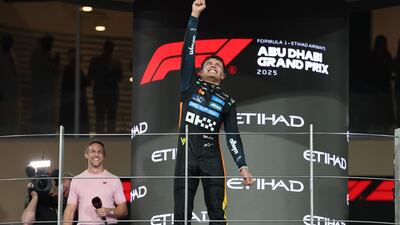
McLaren driver Lando Norris celebrates winning the world championship at the 2025 Abu Dhabi Grand Prix at Yas Marina Circuit. All images Chris Whiteoak / The National -
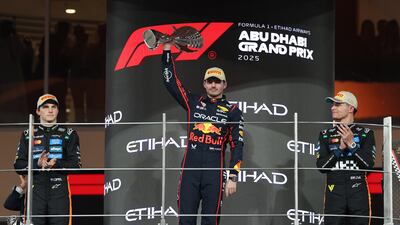
Red Bull driver Max Verstappen won the Abu Dhabi Grand Prix -
Red Bull driver Max Verstappen during the race at Yas Marina Circuit -
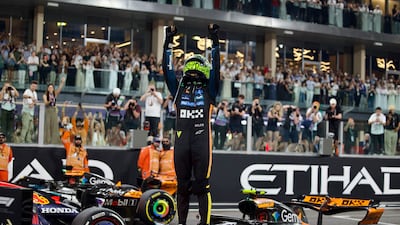
McLaren driver Lando Norris finished third in the Abu Dhabi Grand Prix to win the 2025 drivers' championship at the Yas Marina Circuit -
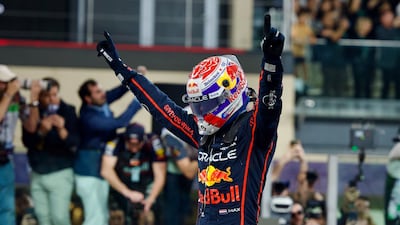
Red Bull driver Max Verstappen celebrates winning the Abu Dhabi Grand Prix -
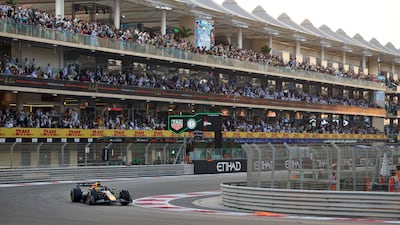
Max Verstappen en route to winning the Abu Dhabi Grand Prix at Yas Marina Circuit -
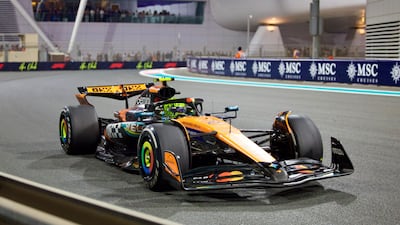
McLaren's Lando Norris during the 2025 Abu Dhabi Grand Prix at the Yas Marina Circuit. All images Chris Whiteoak / The National -
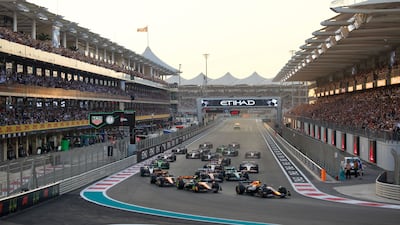
Start of the 2025 Abu Dhabi Grand Prix at Yas Marina Circuit -
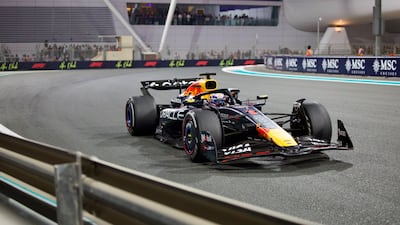
Max Verstappen at the Abu Dhabi Grand Prix -
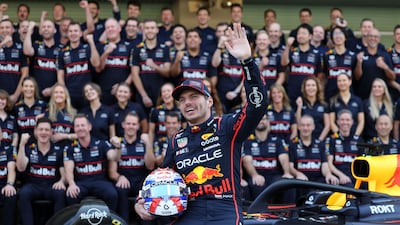
Red Bull driver Max Verstappen has his picture taken with the rest of the team at the Yas Marina Circuit ahead of the 2025 Abu Dhabi Grand Prix -
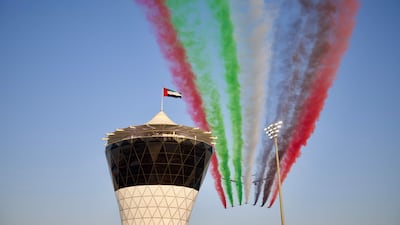
A flypast before the 2025 Abu Dhabi Grand Prix -
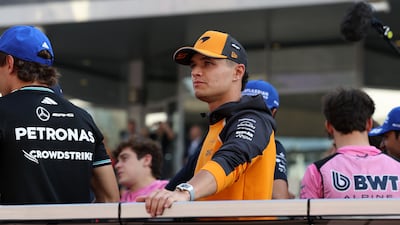
McLaren driver Lando Norris at the drivers' parade at Yas Marina Circuit -
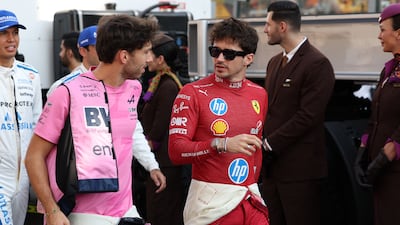
Alpine driver Pierre Gasly and Ferrari driver Charles Leclerc -
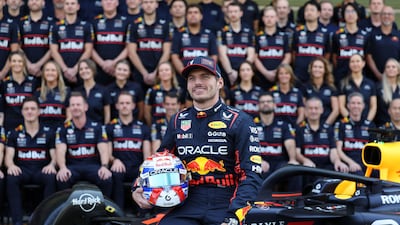
Red Bull driver Max Verstappen with the rest of the team in Abu Dhabi -
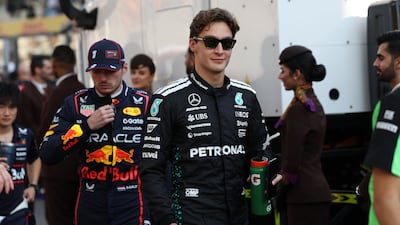
Mercedes driver George Russell before the drivers' parade -
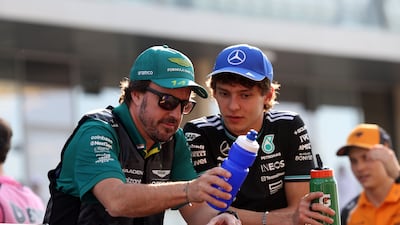
Aston Matin's Fernando Alonso and Mercedes driver Kimi Antonelli -

Sauber's Gabriel Bortoleto and Haas driver Oliver Bearman -
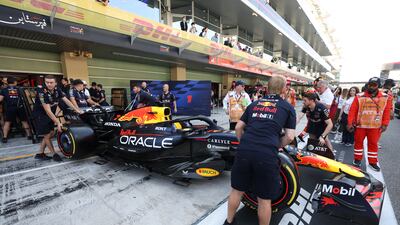
The Red Bull team move Max Verstappen's car on race day at Yas Marina Circuit -
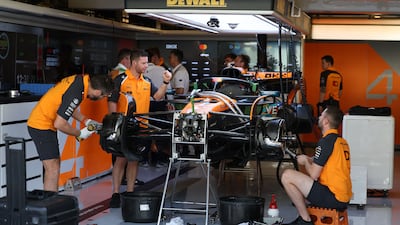
McLaren engineers work on the car on Sunday -
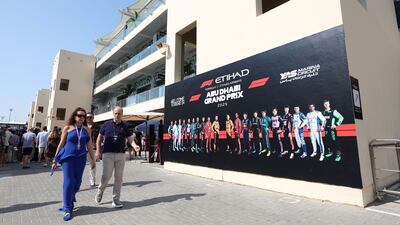
Visitors arrive for race day at the Yas Marina Circuit -

A fan looks at the world championship trophy at Yas Marina Circuit -
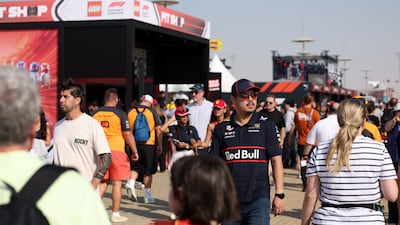
Fans arrive for the 2025 Abu Dhabi Grand Prix -
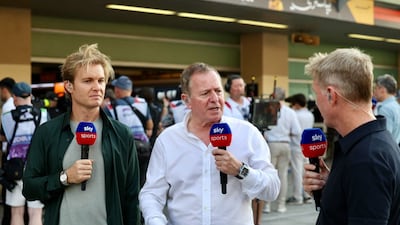
Nico Rosberg and Martin Brundle -
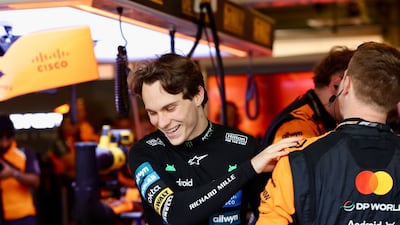
Oscar Piastri ahead of the race -

Social media creator Khaby Lame in the paddock at Yas Marina Circuit -

Terry Crews and Ronaldinho in Abu Dhabi


It is Abu Dhabi that carries the greatest symbolic and commercial weight of the three remaining Gulf rounds. Last December, a record 339,000 fans attended across the full race weekend, comprising 203,000 at Yas Marina Circuit and a further 136,000 at the Yasalam entertainment programme, headlined by Metallica, Katy Perry and Post Malone, all drawn by a three-way championship contest between Lando Norris, Oscar Piastri and Max Verstappen.
With the season finale nine months away, there is every reason to expect the Gulf to have stabilised well before the chequered flag falls in 2026.
Ticket refunds
For the tens of thousands of supporters who had committed financially to attending the races in Bahrain and Saudi Arabia, both organising bodies have acted swiftly. Bahrain GP ticket holders who purchased through the official website will be offered either a full monetary refund or a credit transferable to a future edition of the race, with instructions communicated directly by email.
For those who purchased through the official Saudi Arabian Grand Prix website, reimbursement will be processed automatically to the original payment method, with no action required from the ticket holder. Both processes are expected to conclude within 10 to 21 working days.

