
England's cricketers are set to return to formal training on an individual basis from next week following the publication of revised guidelines.
The season is yet to get underway, and the lengthy delay because of the coronavirus will have a huge impact on what unfolds next.
Here is a look at what that means, how it works and what other impact coronavirus has had on the sport.
Will there be live cricket in England soon?
England hope to squeeze in a near full international campaign despite the lengthy setbacks.
Government approval and the willingness of touring teams to travel are the key variables but if all goes to plan, the England and Wales Cricket Board hopes to host the delayed three-match Test series against the West Indies, with matches starting on July 8, 16 and 24.
A great deal of planning has gone into the issue of 'bio-security' and the all-in-one locations at the Ageas Bowl and Emirates Old Trafford (which both house training facilities and hotels) will be used for matches.
The England women's team are hoping to begin training towards the end of June but domestic cricket looks a long way off. The county season has been pushed back to August 1 at the earliest, with a variety of shortened-season models being assessed, including regionally divided competitions.
How will training work and who is involved?
A bumper group of 55 - the core squad members augmented by 14 uncapped players and a host of fringe options - have been chosen to resume training by England.
The initial cohort of 18 bowlers will work alongside a maximum support team of one coach, one physio and a strength and conditioning specialist.
Sessions will take place at up to 11 first-class venues, with players encouraged to visit only those closest to their homes.
Batsmen and wicketkeepers, followed by a selection of white-ball specialists, will follow as the ECB prepares for the possibility of format-specific squads this summer. Coaching staff from across the county network have been co-opted to assist.
What safety precautions are in place?
The ECB has set out a series of measures which it believes makes the environment as safe as possible.
Players and support staff must attend training in full kit, observe social distancing and take temperature checks on arrival. Any medical treatment will be delivered with the use of full personal protective equipment and will be outdoors where weather-conditions permit. Director of cricket Ashley Giles says the process should make it safer than a trip to the supermarket.
Why has The Hundred been postponed?
The decision was made for three primary reasons: the likely unavailability of overseas talent, the probability of empty stadiums should any cricket be possible this summer and the logistical challenges caused by the amount of operations staff currently on furlough at host venues.
For a competition explicitly designed to grow the profile of the sport and draw new fans - inside grounds and on television - the problems represented a perfect storm.
Will cricket be played behind closed doors?
The decision-makers began looking at this eventuality early on and determined it would be the only viable solution to get international cricket back.
Test captain Joe Root has already spoken about the wrench he would feel if fans were kept away, but needs must. At domestic level, the idea of a limited-number of fans attending has not been ruled out, and the matter will be reviewed by the Professional Game Group.
How different could cricket look?
The time honoured method of shining the ball using saliva has drawn the attention of the ICC's medical advisory committee. Both have recommended banning the practice for the time being.
Sweat will be allowed, as it is deemed to present a lesser risk, while Australian manufacturer Kookaburra's idea of a wax applicator appears to have fallen on deaf ears. On the field there will be no hugs, handshakes or close-up celebrations and umpires have been instructed not to take jumpers or caps from bowlers.
What about the World Test Championship?
After years of deliberation, the International Cricket Council finally pulled the trigger on a codified tournament for the most prestigious format. The first final is due to be played at Lord's in June 2021, but the prospect of completing all scheduled series in time seems a stretch. Behind the scenes, the ICC is currently engaged in contingency planning, but with no real time pressure the specifics do not need to be settled imminently.
And what of the Twenty20 World Cup in October?
The idea of inviting 16 teams to seven host cities in Australia in October seems a highly ambitious one and there is a growing acceptance, be it from England captain Eoin Morgan or Cricket Australia chief executive Kevin Roberts, that a delay is imminent.
The ICC board were due to debate the matter in depth this week but pushed the subject back to its next meeting after getting sidetracked by an internal row over 'confidentiality'.
-
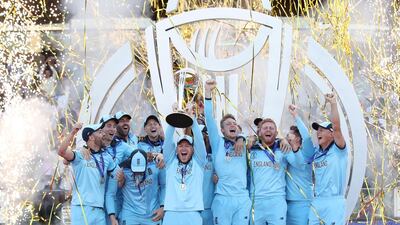
England's Eoin Morgan and teammates celebrate after beating New Zealand to win the 2019 World Cup. Reuters -
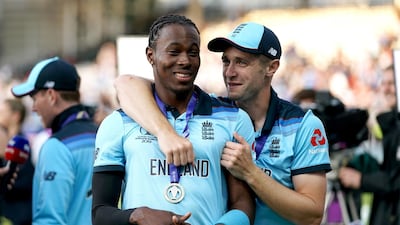
Jofra Archer, left, and Chris Woakes after England's triumph over New Zealand in the World Cup final at Lord's in July 2019. PA -

Liam Plunkett holds the World Cup trophy aloft alongside captain Eoin Morgan. Getty -
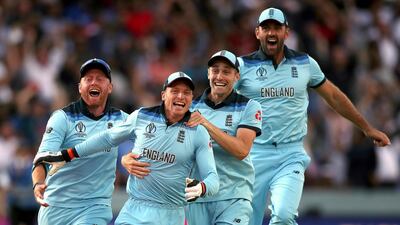
England's Jos Buttler, second left, celebrates with teammates after running out New Zealand batsman Martin Guptill to win the World Cup final on July 1, 2019. AP -
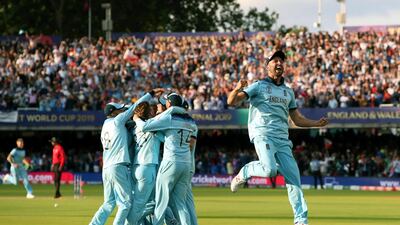
England players celebrate after winning the Cricket World Cup final at Lord's. AP -
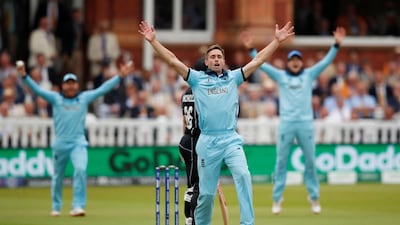
England's Chris Woakes celebrates taking the wicket of New Zealand's Henry Nicholls that was later overturned by DRS. Reuters -
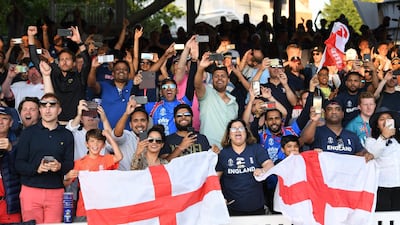
England fans during the World Cup final. Getty -
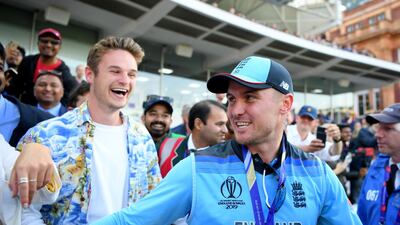
Jason Roy of England celebrates with fans after victory. Getty -
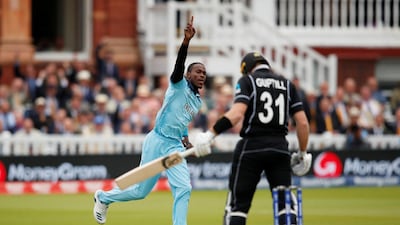
England's Jofra Archer appeals unsuccessfully for the wicket of New Zealand's Martin Guptill. Reuters -
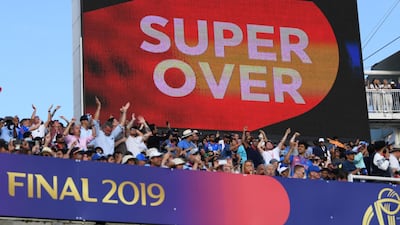
A screen at Lord's signals the game is going to a Super Over. Getty -
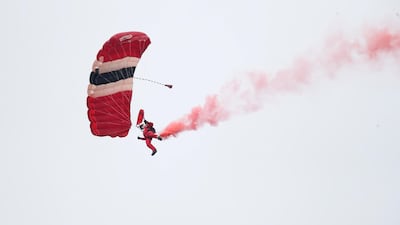
A member of The Red Devils parachute display team before the match. Reuters -
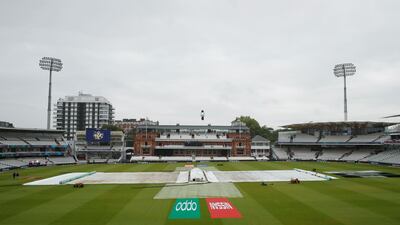
General view inside Lord's before the match. Early showers over London delayed the coin toss by 15 minutes. Reuters -

The Cricket World Cup trophy. Reuters -
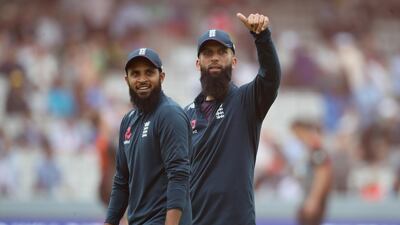
England's Adil Rashid and Moeen Ali before the match. Reuters -
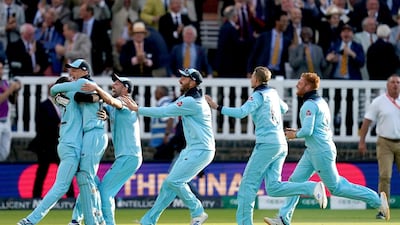
England players celebrate after clinching victory. PA -
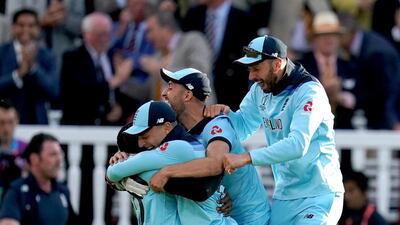
England players celebrate. PA -
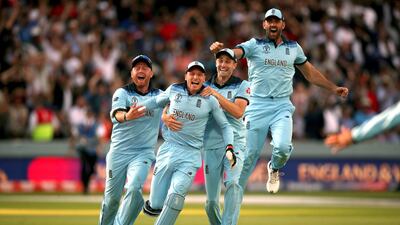
England celebrate victory. PA -
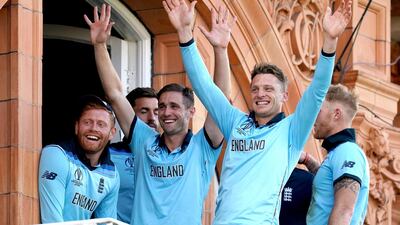
England players celebrate on the balcony at Lord's. PA -
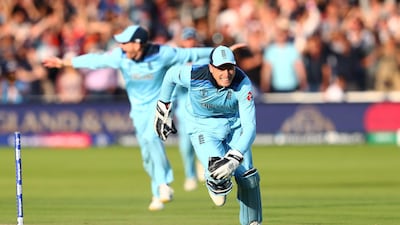
Jos Buttler of England celebrates running out Martin Guptill. Getty


What impact does all this have financially?
The ECB suggests the crisis could cost it an eye-watering £380million (Dh1722m), with a minimum loss of around £100m. Nevertheless it has approved a financial stimulus package worth £61m to support the game.
England's centrally contracted players have donated £500,000 back to the game, executives have taken pay cuts and a collective agreement has been thrashed out between the Professional Cricketers' Association, the ECB and the 18 first-class counties.
County cricketers accepted "maximum reductions" in their salaries during April and May while also agreeing to waive £1m in prize money this year.

