

The Asia Cup group stage meeting between India and Pakistan passed off without any flashpoints among the fans in Dubai on Sunday night. And yet the fixture still ended in acrimony.
Dubai Police had made three separate public safety announcements to supporters going to the game at Dubai International Stadium.
Despite the heightened political tensions between the neighbouring countries, there was a fine atmosphere in the stands – just as there always is when the two sides meet on neutral territory in the UAE.

The run of play in the game also made for a lack of tension: India dominated from the start and cruised to a seven-wicket win.
Once Suryakumar Yadav had hit the winning runs, though, he and batting partner Shivam Dube headed straight to the dressing room.
His team and their management then stayed there, rather than coming back onto the field for the handshakes which are a post-match custom in cricket.
Salman Agha, the Pakistan captain, made to lead his team over to the Indian dressing room. As soon as it was apparent their counterparts would not meet them, they headed off the field as well, and Agha did not attend the post-match captain’s duties.
This had been the first match between the sides since a four-day military conflict ended in a May ceasefire. The military escalation came after an April terrorist attack that killed 26 Indians in Pahalgam in Indian-controlled Kashmir.
After the match, Suryakumar dedicated the win to the Indian armed forces who had participated in the conflict.
The issue is likely to be a point of antagonism next time the sides meet, which could be as soon as Sunday, in the second phase of the tournament.
It seems highly likely the sides will meet again in the Super Four, but it is not entirely guaranteed.
Permutations
The UAE and Oman play in Abu Dhabi on Monday. Each side lost their opening game of the competition, and are seen as the makeweights in Group A, alongside India and Pakistan.
The draw is designed so that the sides that finish first and second in the group will meet again at the Dubai International Stadium on Sunday, September 21.
Either the UAE or Oman could yet upset the scheduling, though.
-
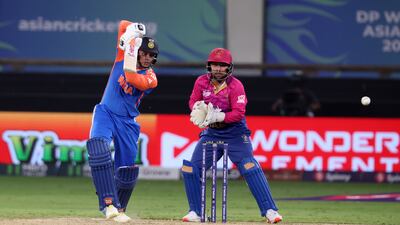
Abhishek Sharma of India plays a shot during their win over the UAE. All images by Chris Whiteoak / The National -
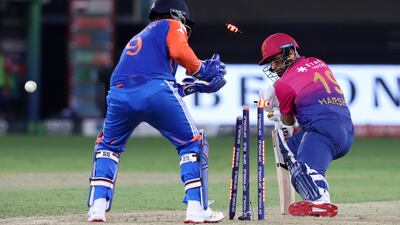
UAE batter Harshit Kaushik is bowled by India's Kuldeep Yadav in the Asia Cup match at Dubai International Stadium. India won the game by nine wickets. -

India bowler Shivam Dube celebrates after claiming the wicket of UAE's Dhruv Parashar for one -
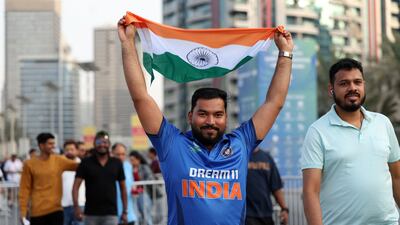
Fans before the game at Dubai International Stadium. -
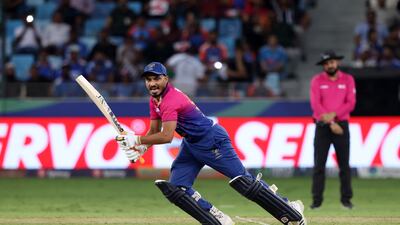
UAE batter Haider Ali was out for one -

India's Suryakumar Yadav cathces out UAE batter Junaid Siddique for a duck -
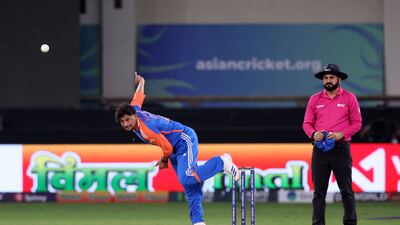
India bowler Kuldeep Yadav finished with figures of 4-7 -

Alishan Sharafu hit 22 off 17 ball for UAE, including three fours and one six -
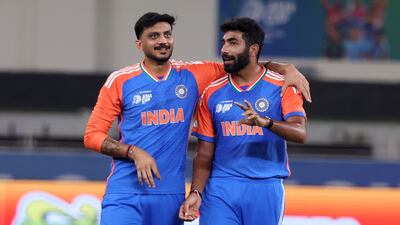
Axar Patel, left, with Jasprit Bumrah in the field during UAE's innings -

Fans before the game. -

UAE batter Asif Khan was out for two -

India's Varun Chakravarthy celebrates with teammates after claiming the wicket of UAE's Muhammad Zohaib for two -
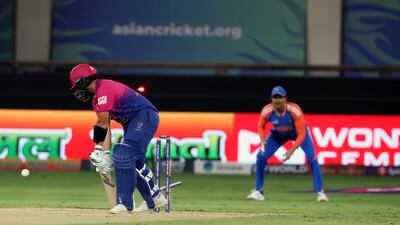
UAE batter Alishan Sharafu of the UAE is bowled by Jasprit Bumrah for 22.


UAE
Muhammad Waseem’s side were humbled in their opening game against India. Despite having a remarkable net run rate (NRR) of -10.483 after that thrashing, their destiny is still in their own hands.
If they beat Oman at Zayed Cricket Stadium, then a win against Pakistan on Wednesday evening in Dubai would take them through to the Super Four with India.
It feels a long shot, but they do at least know Pakistan well, having played them twice in a tri-series leading up to the Asia Cup.
If they lose to Oman, they are realistically out, given the massive net run rate disadvantage, even if they were to beat Pakistan in their last group game.
Oman
If Oman beat the UAE, they could still make it through – but it would take something extraordinary, as they play India in their last game.
That last game of the opening round takes place in Abu Dhabi on Friday.
If Oman beat the UAE but lose to India, then the side from the Emirates could do them a favour by beating Pakistan. That would mean the sides would all have one win each, and end on two points. A big enough run rate swing to send Oman through seems impossible, though.
Ahead of the game against UAE, their NRR is -4.65, while Pakistan’s is 1.649.
Pakistan
Mike Hesson, the Pakistan coach, is well aware of the permutations facing his side. Amid the drama of the post-match handshake furore in Dubai on Sunday, he pointed out that Wednesday’s game against the UAE is now “must-win”.
At least they can control their own future: if they beat the UAE – a side who they have eased past twice in recent weeks, and are far higher ranked than – then it will guarantee a rematch against India on Sunday.
If they lose, and the UAE have beaten Oman in their match in Abu Dhabi, then Pakistan would be out.

