

One of the greatest mixed martial artists of all time – some even say the greatest – Khabib Nurmagomedov is proving a dab hand at coaching, too.
Just consider the world’s two leading professional MMA organisations. In the foremost, the UFC, Islam Makhachev ranks as its pound-for-pound No 1, regarded by many to be the ultimate measure in combat sports.
In the other, the Professional Fighters League (PFL) that decamps to Dubai this week, Usman Nurmagomedov perches atop the overall standings, also. For his globally acclaimed cousin, himself once a pound-for-pound standout, it constitutes pretty concrete confirmation of Team Khabib’s credentials.

“You know, the PFL just announced their [first] pound-for-pound rankings: Usman is on top, he’s the best pound-for-pound fighter in PFL, and we have the best pound-for-pound fighter in UFC,” says Khabib Nurmagomedov, holding court at Buka Gym in Jumeirah Lakes Towers.
“From one team, two guys, and who grow up with me – Usman is my cousin and Islam is with me almost 25 years, we know each other all our life. And, honestly, it makes me proud.
“Because they’re coming up and, with them, other fighters are growing too. There is not only me and [celebrated striking coach] Javier Mendez – we lead the team, we coach them – but they are inside, they push each other, and they learn a lot from all of them. They compete against each other every day in gym.”
The competitive environment within the camp, controlled by Khabib and Mendez, will be clear to see at the Coca-Cola Arena on Saturday, where no fewer than seven members of the team will compete at the PFL’s latest event in the emirate.
“I'm very proud,” Khabib says. “We are the best in the world in such a unique and young sport, which is growing every year, and every year there’s a lot of prospects and wonderkids coming into this sport. And we're the best, or one of the best, in the world. This makes me very happy.”
Of course, Khabib was initially teammate rather than trainer. The former UFC lightweight champion, 37, honed his significant skillset alongside Makhachev and others under the tutelage of his father Abdulmanap.

It was Abdulmanap, and latterly striking coach Mendez, who chiselled Khabib and Makhachev into UFC superstars. After Abdulmanap’s sudden death in 2020, which precipitated his undefeated son’s emotional retirement three months later inside the octagon in Abu Dhabi, Khabib morphed from team member into mentor.
As coach, he has overseen Makhachev’s rise to both UFC lightweight and welterweight champion – he is only the 11th athlete in history to capture UFC belts in two weights – while Usman holds the PFL lightweight crown.
This Saturday, at the third instalment of the PFL Road to Dubai series, the unbeaten Dagestani will seek to retain his title against Englishman Alfie Davis at the top of the card. His second defence – he was also previously a Bellator champion – falls immediately after teammate Ramazan Kuramagomedov contests the vacant welterweight belt against fellow Russian Shamil Musaev.
Yet, look through the bill and it’s littered with fighters from the Team Khabib stable. Such a proliferation, not only in PFL but around the world in various MMA organisations, and the profile of their luminaries, fosters respect from their peers. Yet it can create jealously and jibes, as well.
“Honestly, I don't care about this,” Khabib says. “If people hate, they hate. If somebody doesn’t like you, it's very hard to become their friends. But the numbers talk, belts talk, and ranking. They talk by themselves.
“I don't have to change somebody's mind so they like our team. If they don't like, OK, who cares? That's why we love the sport. There is competition; there are a lot of different fighters and teams. People can choose whatever they want. But we [are] here [to] take everything.”
At times, it seems Khabib is giving his all in that quest. One of the most in-demand Muslim athletes in the world, he is still never far from his “brothers”, often splitting time between cornering fighters across the globe, from the United States to Australia to, now, the UAE.
Team Khabib in Dubai – in pictures
-
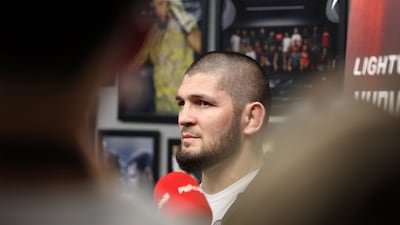
Khabib Nurmagomedov speaks to the media ahead of PFL Dubai. All pictures by Chris Whiteoak / The National. -
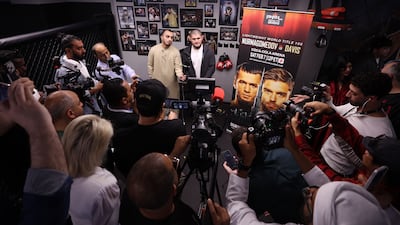
Khabib Nurmagomedov speaks to the media ahead of PFL Dubai. -
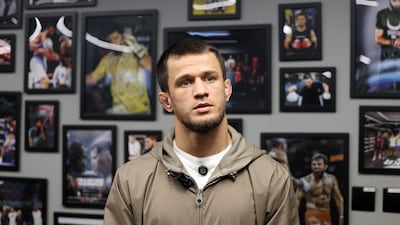
PFL lightweight champion Usman Nurmagomedov speaks to the media. -
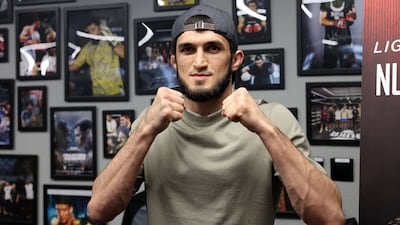
PFL lightweight Amru Magomedov fights on February 7. -
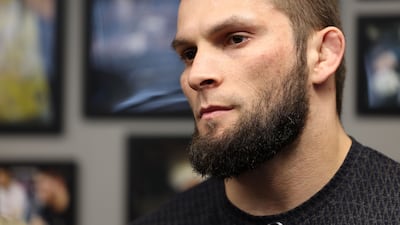
Light heavyweight Khabib Nabiev is also on the card at Coca-Cola Arena. -
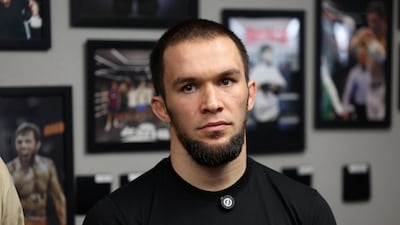
Team Khabib bantamweight Renat Khavalov speaks to the media. -
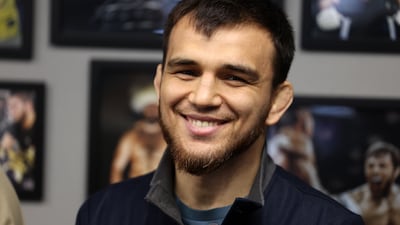
Lightweight Makkasharip Zaynukov is on the February 7 PFL show. -
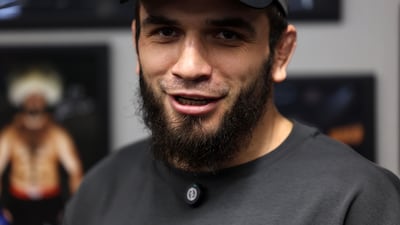
Bantamweight Kasum Kasumov smiles as he speaks to the media.


He describes his enjoyment of his current existence as coach as “50-50” – “sometimes I enjoy, sometimes no” – but underlines that his own competitive itch, even still some way short of turning 40, doesn’t need to be scratched. Anything but.
“Honestly, almost nothing,” he says when asked what he misses about competing inside the octagon. “I was there a long time, a professional fighter 12 years. I was on top. I was a champion. I felt all the energies.
“When I miss some competitive energy, I just can go to my gym and can fight some of best fighters in the world. And in my weight classes, even above. And for these kinds of things, I'm fully good.”
Not that those within the team would share the sentiment. Makkasharip Zaynukov, the lightweight who on Saturday faces Frenchman Amin Ayoub, says Khabib “almost broke” those competing at Road to Dubai during their preparatory camp.
Renat Khavalov, one of two fighters Khabib claims could steal the show on Saturday, only smiles sheepishly when it's put to him if he would ever ask his coach to go easy on them in training. Amru Magomedov, the other tipped to highlight this weekend, concurs.
“Every day is a hard day,” says the promising lightweight, who goes up against American Kolton Englund. “But now it’s just on us to perform.”
Khabib’s presence, he emphasises, needs to be embraced, used as fuel for the fire. “Big pressure, big responsibility,” Magomedov says. “Because he sacrifices his time that he could spend with his family and his kids. Instead, he spends it with us. So, of course, it’s a big a pressure as possible on us. But we don’t want to let him down.”
For Khabib, being taskmaster is not borne from some savage penchant for inflicting pain. It’s a necessity.
“They don't have choice,” he says. “If I sacrifice my time, energy, knowledge – so many things – of course they're going to listen – and most of them they are like my young brothers.
“Everybody talks about Usman going to fight [on Saturday], but there is Khabib Nabiev – he's my cousin too. Amru Magomedov – he's not my cousin, but he's my relative. He's from my village. We grew up together.
“There are so many people. They are very close to me, and I have to be here, and I have to support them. I have to give them good advice, to stay focused, to train right and to be the champion.
“That's why they are best, because we push limits. We're not here to just compete. I want everybody to become champions, that they take all belts. And if you want to become the best, you have to train like it’s your first fight. You don't have choice. When we have so many facilities, so many good opportunities, we just need to train, eat, train, eat, sleep, repeat. And that's it. That's why I push them to the gym.”
In a way, it pushes Khabib, too. “The best motivation for me is when they have … no … it's that I just want that they become happy,” he says. “That they become champions, they become successful in this life.
“I have this kind of opportunity, and I just want to share with them. This is what keeps me on track. That’s why I’m here.”

