Like many people during lockdown, I have found Netflix to be a useful escape from reality, which has now become a vast landscape of uncertainty.
In the last couple of weeks, I finished the third season of Fauda, an Israeli television series. But far from serving as a comforting balm, the series only left me even more agitated.
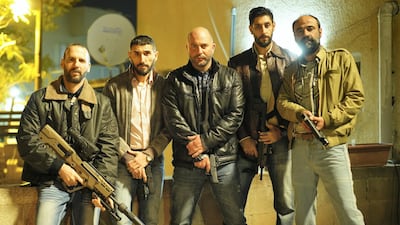
Fauda – chaos in English – has a storyline centred on the inner world of a tight-knit group of Israeli commandos known as the Mista'aravim, Arabic-speaking soldiers posing as Palestinians.
Fluent in the language and culture, they infiltrate Palestinian villages and families to root out militants. But their clumsy work often destroys innocent lives.
The level of gun violence is more akin to watching three solid hours of Call of Duty or Grand Theft Auto than a sophisticated thriller.
In one crucial scene, Nurit, the only woman in the commando unit, impersonates a French humanitarian worker to gain access to the Gaza Strip.
“Do you have children?” she innocently asks a crossing guard, handing over papers identifying her as an aid worker. “I’m delivering medication to children at Shifa Hospital.”
Nurit’s van bears the neutral emblem of humanitarians around the world: a red cross. But instead of bandages and medicine, it is loaded with an arsenal of weapons.
It is a violation of the Geneva Convention and international humanitarian law for members of the military to impersonate humanitarians or journalists.
In war, the offence is known as perfidy: a false promise of good faith.
So when Fauda, one of the most popular series on Netflix, promotes the use of the Red Cross symbol, which is explicitly protected under international humanitarian law, as a ploy to get into Gaza, it unnerves me deeply. Every time that emblem is abused, its power as a symbol of protection is eroded.
Israel is known to have used this tactic in real life; the scene in Fauda is most likely based on a botched 2018 operation of the Israel Defence Forces when soldiers dressed as humanitarian workers to enter Gaza.
In the early 1990s, during the First Intifada, the Israeli internal security service Shin Bet impersonated journalists in West Bank villages to gain information. On one occasion, they used the real name of a reporter for Israel's Channel 1, Yoram Cohen.
"The big problem for me now is to work in the territories," Cohen later told the Committee to Protect Journalists. "People there know me and now they are afraid of me … my life could be in danger.”
Israel is not alone in having deployed this tactic. It has happened in Pakistan, Nigeria, Sri Lanka and many other places. In Colombia, too, the government has admitted using soldiers to impersonate television journalists and humanitarian aid workers in order to reach the positions of The Revolutionary Armed Forces of Colombia.
By posing as journalists or humanitarians, security forces undermine the role of free press and relief workers, and bring a shadow of mistrust to our profession.
When one of the most popular series on Netflix, promotes the use of the Red Cross symbol, protected under international humanitarian law, as a ploy to get into Gaza, it unnerves me deeply
I remember being shocked after the fall of Grozny, Chechnya in January 2000, when the first Russians I saw were not soldiers, but doctors who set up emergency tents to cure the wounded that Moscow's forces had just bombed. The inconsistency stunned me.
As my late colleague Fred Cuny once pointed out, the lines between soldiers and humanitarians have often blurred since antiquity, though usually on the side of conducting genuine humanitarian work rather than using it as a cover.
“The assistance of armies to the populations they had conquered was seen as a humane gesture to the vanquished and, not inconsequentially, a means of winning some degree of loyalty to the new regime.”
Cuny was murdered in Chechnya in April, 1995. His killers were never caught; but Cuny the humanitarian remains legend. I first met him in Sarajevo, Bosnia, where he worked to restore the water and gas system to the battered and besieged city.
After Cuny’s death, my colleagues and I realised how precarious our work was. Journalists and relief workers are often thought to be spies working in hostile areas. The number of times I was detained and accused of being a spy was laughable.
This is entirely down to events of the kind casually depicted in Fauda: security forces crossing the line and pretending to be relief workers or reporters.
ISIS and other Islamist militant groups sometimes captured journalists for ransom, but there was also the underlying suspicion that these reporters were working for foreign governments gathering intelligence. Confessions were often forced through torture.
When two colleagues and I were captured in Kosovo in March 1999 by Serbian paramilitary forces, they stole our gear, marched us into an isolated forest, made us kneel and performed a mock execution before letting us go. They claimed to have thought we were spies when they held us.
According to the Committee to Protect Journalists, the real danger lies in jeopardising “the media's position as an independent body, especially those journalists working in conflict zones who rely on their civilian status, as established by the Geneva Conventions.”
I'm disappointed in the creators of Fauda for making light of international humanitarian law.
One of the series’ actors, Lior Raz was actually a member of one of the commando units and used his first-hand experience for his character. He should have known better. Human rights worldwide are experiencing a massive and dangerous backlash already. We don’t need Netflix to add to that mix.
Janine di Giovanni is a Senior Fellow at Yale’s Jackson Institute and the author, most recently, of 'The Morning They Came for Us: Dispatches from Syria'
The%C2%A0specs%20
%3Cp%3E%0D%3Cstrong%3EEngine%3A%20%3C%2Fstrong%3E6-cylinder%2C%204.8-litre%20%0D%3Cbr%3E%3Cstrong%3ETransmission%3A%20%3C%2Fstrong%3E5-speed%20automatic%20and%20manual%0D%3Cbr%3E%3Cstrong%3EPower%3A%20%3C%2Fstrong%3E280%20brake%20horsepower%20%0D%3Cbr%3E%3Cstrong%3ETorque%3A%20%3C%2Fstrong%3E451Nm%20%0D%3Cbr%3E%3Cstrong%3EPrice%3A%20%3C%2Fstrong%3Efrom%20Dh153%2C00%0D%3Cbr%3E%3Cstrong%3EOn%20sale%3A%20%3C%2Fstrong%3Enow%3C%2Fp%3E%0A
Credit Score explained
What is a credit score?
In the UAE your credit score is a number generated by the Al Etihad Credit Bureau (AECB), which represents your credit worthiness – in other words, your risk of defaulting on any debt repayments. In this country, the number is between 300 and 900. A low score indicates a higher risk of default, while a high score indicates you are a lower risk.
Why is it important?
Financial institutions will use it to decide whether or not you are a credit risk. Those with better scores may also receive preferential interest rates or terms on products such as loans, credit cards and mortgages.
How is it calculated?
The AECB collects information on your payment behaviour from banks as well as utilitiy and telecoms providers.
How can I improve my score?
By paying your bills on time and not missing any repayments, particularly your loan, credit card and mortgage payments. It is also wise to limit the number of credit card and loan applications you make and to reduce your outstanding balances.
How do I know if my score is low or high?
By checking it. Visit one of AECB’s Customer Happiness Centres with an original and valid Emirates ID, passport copy and valid email address. Liv. customers can also access the score directly from the banking app.
How much does it cost?
A credit report costs Dh100 while a report with the score included costs Dh150. Those only wanting the credit score pay Dh60. VAT is payable on top.
Star%20Wars%3A%20Episode%20I%20%E2%80%93%20The%20Phantom%20Menace
%3Cp%3E%3Cstrong%3EDeveloper%3A%3C%2Fstrong%3E%20Big%20Ape%20Productions%3Cbr%3E%3Cstrong%3EPublisher%3A%3C%2Fstrong%3E%20LucasArts%3Cbr%3E%3Cstrong%3EConsoles%3A%3C%2Fstrong%3E%20PC%2C%20PlayStation%3Cbr%3E%3Cstrong%3ERating%3A%3C%2Fstrong%3E%202%2F5%3C%2Fp%3E%0A
The%20specs
%3Cp%3E%3Cstrong%3EEngine%3A%3C%2Fstrong%3E%20Dual%20synchronous%20electric%20motors%0D%3Cbr%3E%3Cstrong%3EPower%3A%20%3C%2Fstrong%3E660hp%0D%3Cbr%3E%3Cstrong%3ETorque%3A%20%3C%2Fstrong%3E1%2C100Nm%0D%3Cbr%3E%3Cstrong%3ETransmission%3A%20%3C%2Fstrong%3ESingle-speed%20automatic%0D%3Cbr%3E%3Cstrong%3ETouring%20range%3A%20%3C%2Fstrong%3E488km-560km%0D%3Cbr%3E%3Cstrong%3EPrice%3A%20%3C%2Fstrong%3EFrom%20Dh850%2C000%20(estimate)%0D%3Cbr%3E%3Cstrong%3EOn%20sale%3A%20%3C%2Fstrong%3EOctober%3C%2Fp%3E%0A
Libya's Gold
UN Panel of Experts found regime secretly sold a fifth of the country's gold reserves.
The panel’s 2017 report followed a trail to West Africa where large sums of cash and gold were hidden by Abdullah Al Senussi, Qaddafi’s former intelligence chief, in 2011.
Cases filled with cash that was said to amount to $560m in 100 dollar notes, that was kept by a group of Libyans in Ouagadougou, Burkina Faso.
A second stash was said to have been held in Accra, Ghana, inside boxes at the local offices of an international human rights organisation based in France.
Barings Bank
Barings, one of Britain’s oldest investment banks, was
founded in 1762 and operated for 233 years before it went bust after a trading
scandal.
Barings Bank collapsed in February 1995 following colossal
losses caused by rogue trader Nick Lesson.
Leeson gambled more than $1 billion in speculative trades,
wiping out the venerable merchant bank’s cash reserves.
Lexus LX700h specs
Engine: 3.4-litre twin-turbo V6 plus supplementary electric motor
Power: 464hp at 5,200rpm
Torque: 790Nm from 2,000-3,600rpm
Transmission: 10-speed auto
Fuel consumption: 11.7L/100km
On sale: Now
Price: From Dh590,000
WHEN TO GO:
September to November or March to May; this is when visitors are most likely to see what they’ve come for.
WHERE TO STAY:
Meghauli Serai, A Taj Safari - Chitwan National Park resort (tajhotels.com) is a one-hour drive from Bharatpur Airport with stays costing from Dh1,396 per night, including taxes and breakfast. Return airport transfers cost from Dh661.
HOW TO GET THERE:
Etihad Airways regularly flies from Abu Dhabi to Kathmandu from around Dh1,500 per person return, including taxes. Buddha Air (buddhaair.com) and Yeti Airlines (yetiairlines.com) fly from Kathmandu to Bharatpur several times a day from about Dh660 return and the flight takes just 20 minutes. Driving is possible but the roads are hilly which means it will take you five or six hours to travel 148 kilometres.
MATCH INFO
Barcelona 5 (Lenglet 2', Vidal 29', Messi 34', 75', Suarez 77')
Valladolid 1 (Kiko 15')
SUE%20GRAY'S%20FINDINGS
%3Cp%3E%22Whatever%20the%20initial%20intent%2C%20what%20took%20place%20at%20many%20of%20these%20gatherings%20and%20the%3Cbr%3Eway%20in%20which%20they%20developed%20was%20not%20in%20line%20with%20Covid%20guidance%20at%20the%20time.%3C%2Fp%3E%0A%3Cp%3E%22Many%20of%20these%20events%20should%20not%20have%20been%20allowed%20to%20happen.%20It%20is%20also%20the%20case%20that%20some%20of%20the%3Cbr%3Emore%20junior%20civil%20servants%20believed%20that%20their%20involvement%20in%20some%20of%20these%20events%20was%20permitted%20given%20the%20attendance%20of%20senior%20leaders.%C2%A0%3C%2Fp%3E%0A%3Cp%3E%22The%20senior%20leadership%20at%20the%20centre%2C%20both%20political%20and%20official%2C%20must%20bear%20responsibility%20for%20this%20culture.%C2%A0%3C%2Fp%3E%0A%3Cp%3E%22I%20found%20that%20some%20staff%20had%20witnessed%20or%20been%20subjected%20to%20behaviours%20at%20work%20which%20they%20had%20felt%20concerned%20about%20but%20at%20times%20felt%20unable%20to%20raise%20properly.%3C%2Fp%3E%0A%3Cp%3E%22I%20was%20made%20aware%20of%20multiple%20examples%20of%20a%20lack%20of%20respect%20and%20poor%20treatment%20of%20security%20and%20cleaning%20staff.%20This%20was%20unacceptable.%22%C2%A0%3C%2Fp%3E%0A
Engine: 3.5-litre V6
Transmission: eight-speed automatic
Power: 290hp
Torque: 340Nm
Price: Dh155,800
On sale: now
Civil%20War
%3Cp%3E%3Cstrong%3EDirector%3A%3C%2Fstrong%3E%20Alex%20Garland%C2%A0%3C%2Fp%3E%0A%3Cp%3E%3Cstrong%3EStarring%3A%3C%2Fstrong%3E%20Kirsten%20Dunst%2C%20Cailee%20Spaeny%2C%20Wagner%20Moura%2C%20Nick%20Offerman%3C%2Fp%3E%0A%3Cp%3E%3Cstrong%3ERating%3A%3C%2Fstrong%3E%204%2F5%3C%2Fp%3E%0A
Engine: 5.6-litre V8
Transmission: seven-speed automatic
Power: 400hp
Torque: 560Nm
Price: Dh234,000 - Dh329,000
On sale: now
Mercer, the investment consulting arm of US services company Marsh & McLennan, expects its wealth division to at least double its assets under management (AUM) in the Middle East as wealth in the region continues to grow despite economic headwinds, a company official said.
Mercer Wealth, which globally has $160 billion in AUM, plans to boost its AUM in the region to $2-$3bn in the next 2-3 years from the present $1bn, said Yasir AbuShaban, a Dubai-based principal with Mercer Wealth.
“Within the next two to three years, we are looking at reaching $2 to $3 billion as a conservative estimate and we do see an opportunity to do so,” said Mr AbuShaban.
Mercer does not directly make investments, but allocates clients’ money they have discretion to, to professional asset managers. They also provide advice to clients.
“We have buying power. We can negotiate on their (client’s) behalf with asset managers to provide them lower fees than they otherwise would have to get on their own,” he added.
Mercer Wealth’s clients include sovereign wealth funds, family offices, and insurance companies among others.
From its office in Dubai, Mercer also looks after Africa, India and Turkey, where they also see opportunity for growth.
Wealth creation in Middle East and Africa (MEA) grew 8.5 per cent to $8.1 trillion last year from $7.5tn in 2015, higher than last year’s global average of 6 per cent and the second-highest growth in a region after Asia-Pacific which grew 9.9 per cent, according to consultancy Boston Consulting Group (BCG). In the region, where wealth grew just 1.9 per cent in 2015 compared with 2014, a pickup in oil prices has helped in wealth generation.
BCG is forecasting MEA wealth will rise to $12tn by 2021, growing at an annual average of 8 per cent.
Drivers of wealth generation in the region will be split evenly between new wealth creation and growth of performance of existing assets, according to BCG.
Another general trend in the region is clients’ looking for a comprehensive approach to investing, according to Mr AbuShaban.
“Institutional investors or some of the families are seeing a slowdown in the available capital they have to invest and in that sense they are looking at optimizing the way they manage their portfolios and making sure they are not investing haphazardly and different parts of their investment are working together,” said Mr AbuShaban.
Some clients also have a higher appetite for risk, given the low interest-rate environment that does not provide enough yield for some institutional investors. These clients are keen to invest in illiquid assets, such as private equity and infrastructure.
“What we have seen is a desire for higher returns in what has been a low-return environment specifically in various fixed income or bonds,” he said.
“In this environment, we have seen a de facto increase in the risk that clients are taking in things like illiquid investments, private equity investments, infrastructure and private debt, those kind of investments were higher illiquidity results in incrementally higher returns.”
The Abu Dhabi Investment Authority, one of the largest sovereign wealth funds, said in its 2016 report that has gradually increased its exposure in direct private equity and private credit transactions, mainly in Asian markets and especially in China and India. The authority’s private equity department focused on structured equities owing to “their defensive characteristics.”
How to help
Send “thenational” to the following numbers or call the hotline on: 0502955999
2289 – Dh10
2252 – Dh 50
6025 – Dh20
6027 – Dh 100
6026 – Dh 200