

This week, on the occasion of its Independence Day, Lebanon’s people were reminded of the significance of independence in the integrity of a country’s politics.
Scandals continue to lay bare the country’s malaise, including recently at Lebanon’s central bank.
Alvarez & Marsal, the auditing firm tasked with looking into the bank's records, last week terminated their contract. Lebanon's outgoing finance minister told The National this happened because the firm was not being given the access it needed. Many view this as an attempt to protect a corrupt cadre in the Lebanese elite.
It is another blow to the country’s recovery after a devastating year. A third-party audit of the once-independent bank is a condition for Lebanon securing desperately needed international financial aid.
Beyond the immediate need for aid, a non-politicised central bank is important in any country’s stability. In modern economies like Lebanon, they should contain independent experts that set a country’s monetary policy. While politicians still continue to design the general direction of an economic plan, independent central banks determine and implement specific policies.
Modern economies have favoured independent central banks since the late 20th century. Extracting them from politics prevented leaders manipulating monetary policy, which was both destabilising and unethical, especially in the run up to elections.
It is not just in Lebanon that the independence of central banks has been tested. For Turkish President Recep Tayyip Erdogan, his country’s central bank has served as a scapegoat for government failure, particularly as it struggles through today’s difficult economic environment and the impacts of economic mismanagement. To bring it in-line, Mr Erdogan issued a decree in 2018 allowing him to appoint its leadership. Unsurprisingly, before elections in 2019, the bank approved a well-timed $2 billion package to keep the lira afloat.
In Britain, pro-Brexit politician Jacob Rees-Mogg called the former governor of the Bank of England, Mark Carney, who is from Canada, an “enemy of Brexit” and a “failed second-tier Canadian politician”, after Mr Carney warned Brexit might cause a technical recession.
In the US, the world has become used to President Donald Trump frequently firing off tweets criticising Federal Reserve forecasts, policies and staff.
In India, opposition politicians have levelled accusations that the government pressured the central bank in New Delhi for funds to encourage poor rural Indians to vote.
In South Africa, the central bank is under intense political pressure to increase rate cuts in response to the pandemic.
Even in New Zealand’s thriving liberal democracy, some politicians are asserting themselves on issues previously entirely reserved for the central bank, as pressure builds in the country’s post-pandemic response.
The record of central banks has not been perfect. Policy has sometimes been over cautious, hampering the pace of growth. Forecasts have been, on occasion, too pessimistic and, of course, not enough was done to prevent the 2008 financial crisis.
-
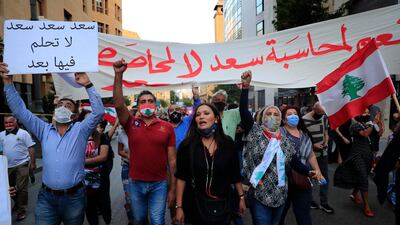
Anti-government protesters shout slogans during a protest to denounce the naming of former premier Saad Hariri as a potential candidate as the country's new prime minister, in downtown Beirut, Lebanon. AP Photo -
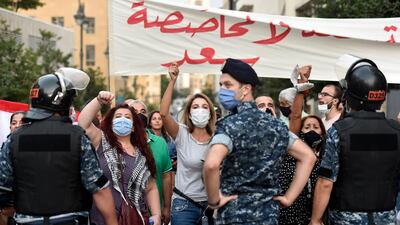
Anti-government protesters shout slogans during a protest against former Prime Minister Saad Hariri in downtown Beirut. EPA -

Anti-government protesters shout slogans during a protest against former Prime Minister Saad Hariri in downtown Beirut. EPA -
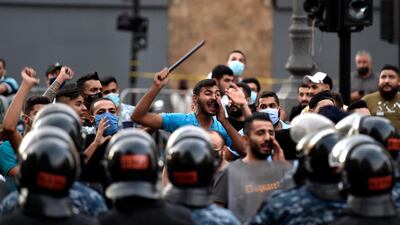
Supporters of former Lebanese Prime Minister Saad Hariri shout slogans against anti-government protesters during a protest against former Prime Minister Saad Hariri in downtown Beirut. EPA -
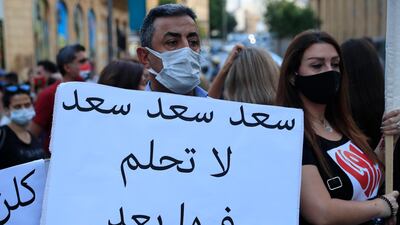
An anti-government protester holds an Arabic placard that reads: "Saad don't dream on it any more," during a protest to denounce the naming of former Prime minister Saad Hariri as a potential candidate as the country's new prime minister, in downtown Beirut. AP Photo -
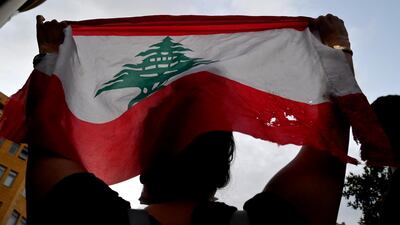
Anti-government protesters carry a national flag during a protest against former Prime Minister Saad Hariri in downtown Beirut. EPA -
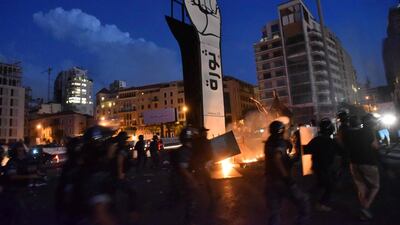
Members of the Lebanese security forces intervene after the ‘Revolution fist’, symbol of Lebanon’s October 2019 uprising, was set on fire during clashes between anti-government protesters and supporters of former prime minister Saad Hariri, in the capital Beirut's central Martyr's square. AFP -

The symbol of the October revolution is set on fire allegedly by supporters of former Prime Minister Saad Hariri at Martyr's square. EPA -

The ‘Revolution fist’, symbol of Lebanon’s October 2019 uprising, burns after it was set on fire during clashes between anti-government protesters and supporters of former prime minister Saad Hariri, in the capital Beirut's central Martyr's square. AFP -

A Lebanese man raises a national flag as the ‘Revolution fist’, symbol of Lebanon’s October 2019 uprising, burns after being torched during clashes between anti-government protesters and supporters of former prime minister Saad Hariri, in the capital Beirut's central Martyr's square. AFP


But their gradual politicisation in the long term benefits very few. Even in Turkey, figures like the country’s new finance minister are now adopting a strikingly emollient line, ordering officials at the central bank to do “what the law says”.
Perhaps an abandonment of the independence of institutions is beginning to backfire. It does not help that the effects of irresponsible monetary policy can take years to manifest. By this stage, there is a risk it will be too late to undo damage.
Stable and confident central banks are an ingredient to stable and confident countries. It is an ingredient in short supply in Lebanon, and so it was unsurprising that the atmosphere there during this year’s Independence Day was less than celebratory. Policymakers in Beirut, and elsewhere around the world, must be careful that independence does not apply only to leaders liberating themselves from accountability.

