


The start of Ramadan is a particularly inopportune time for food prices across most of the Middle East to be surging. But this was the case last year, compounded by the Covid-19 pandemic, and it is happening again this Ramadan, to an even greater degree in no small part due to the Ukraine conflict. On top of that, longer-term economic crises have not gone away, particularly in global supply chains.
Just the past week has seen a number of stories that highlight the complexity and scale of the problem. Prices are rising globally, including in richer countries. But in the Middle East, where many were already struggling, they are being felt acutely. Ahmed El Gizawy, a construction worker in Cairo, told The National: “This Ramadan, no one’s thinking about Covid ... What is on everyone’s minds are the rising prices nationwide. Even bread is expensive now. Many people, me included, are really struggling." In Lebanon, a shortage of sunflower oil has led to supermarkets rationing supplies, which they are also doing with flour and sugar. This is little surprise. Together, Ukraine and Russia supply 75 to 80 per cent of the world's sunflower oil.
It is not just food prices putting a strain on families preparing for celebrations, but energy ones as well. Lina, a Jordanian mother of two, said her family were also stocking up on increasingly expensive gas canisters for cooking.
-
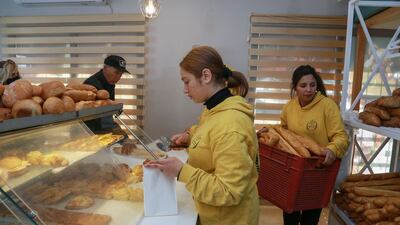
Workers at a bakery in the Tunisian capital, Tunis. The war between Russia and Ukraine, both wheat suppliers for Maghreb countries, has sent prices of flour and semolina soaring. All Photos: AFP -
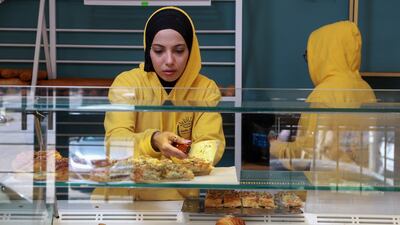
A staff member arranges baked goods at the bakery, which is not subsidised by the Tunisian state. -
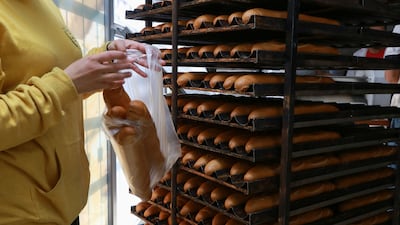
Flour prices have also risen as people stock up for the Muslim fasting month of Ramadan in April. -
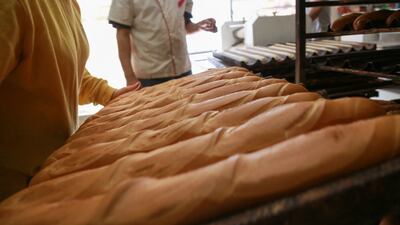
Tunisia imports almost half of the soft wheat used to make bread from Ukraine. -
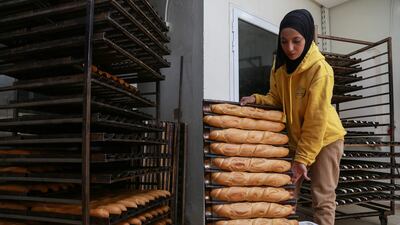
Authorities say the North African country has enough supplies to last three months. -
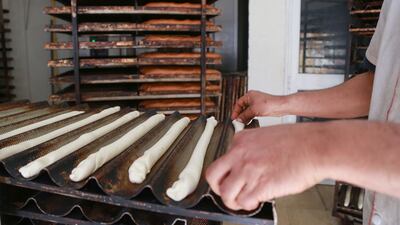
Food prices were on the rise in North Africa even before Russia invaded Ukraine more than two weeks ago. -
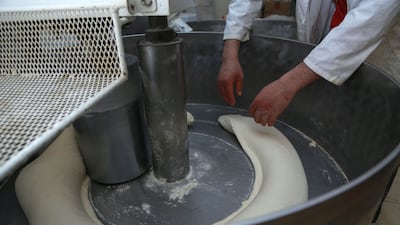
To keep prices affordable and avoid a repeat of bread riots that erupted in the 1980s, Tunisia subsidises staples like sugar, semolina and pasta. -
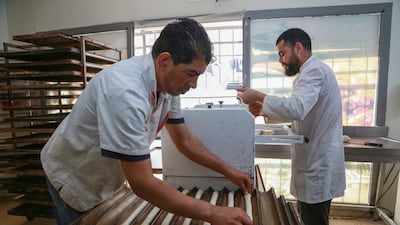
For the past decade, Tunisia has set the price of a baguette loaf of bread at six US cents. -
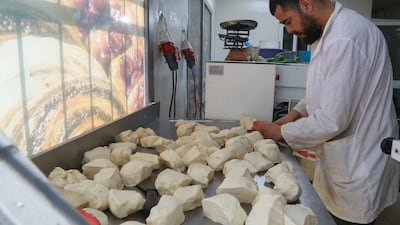
Some in the region fear the Russian invasion could lead to hunger and unrest, with memories of how rising food prices played a role in several Arab uprisings in the last decade. -
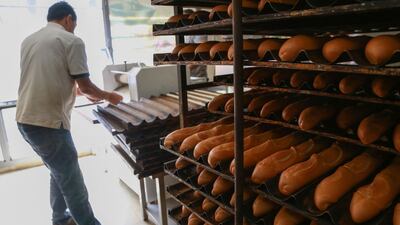
The price of sugar, which is also important in the baking industry, has also surged in Tunisia. -
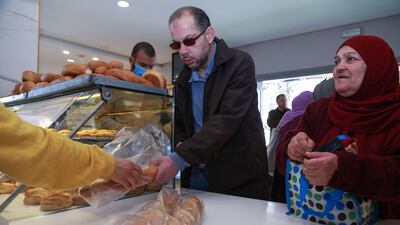
A staff member serves customers at the bakery. Libya, Morocco and Algeria are also facing wheat price increases.


For the least fortunate, the issue is reaching crisis levels. David Beasley, executive director of the UN's World Food Programme, recently told the UN Security Council that Yemen, Egypt and Lebanon are facing a food "catastrophe" as a result of the Ukraine conflict. This is despite 2 million Yemeni children already being acutely malnourished, according to Unicef, the UN's children agency, and 80 per cent of Lebanese people living under the poverty line. Mr Beasley has said the Ukraine conflict will increase the agency’s monthly expenses by $71m because of rising costs all round.
Fortunately, some governments are jumping into action. Egypt, which is often the largest importer of wheat globally, will send a delegation to India in early April to boost imports. It is in similar conversations with the US, France and Argentina. They are needed; as much as 85 per cent of the country's current supply comes from Russia and Ukraine. And even if talks are successful, the challenge will not end there. Opening a relatively novel trade route with, for example, Argentina will take time, particularly amid the crisis in supply chains.
The global food trade is being shaken up, then, and as traditional routes diminish, new ones could open. But there is increasing belief among experts that old certainties on the resilience of international trade are out-of-date. Larry Fink, co-founder and chief executive of BlackRock, the world's largest investment manager, has said the Ukraine conflict spells the end of an era of globalisation, and will make countries "re-evaluate their dependencies and re-analyse their manufacturing and assembly footprints – something that Covid-19 had already spurred many to start doing". This is a more general observation about the changing nature of global trade, but food and energy will be key areas affected by the trend, and many uncertainties remain. On Tuesday, Mohammed Al Gergawi, UAE Minister of Cabinet Affairs, told the World Government Summit that the world is “facing more question marks than answers”, with a particular challenge being "frightening and massive" acceleration in inflation, which has quadrupled in the last two years.
Writing about 2021's rise, The National referenced the UN’s Food and Agriculture Organisation reporting last March that food prices had risen by 2 per cent compared to the previous month, a 10th consecutive monthly rise. The mood was further dampened by ongoing wariness and restrictions on family gatherings due to the pandemic, such a crucial aspect of Ramadan celebrations. In an unfortunate twist of fate, as fears over Covid-19 have diminished, fears over food prices have become more acute in a number of Muslim-majority countries, making this month's festive season, once again, a difficult one for many.

