


At the beginning of the Covid-19 pandemic, photos across the world of empty supermarket shelves were an early sign of the crisis ahead. As food and many commodity prices soar around the world, a trend that began even before the pandemic, such scenes may become more common in the future.
The rush to return to normal is testing supply chains globally. One product in short supply is carbon dioxide, crucial in the food and drink industry. Depleting reserves would strain production severely for manufacturers in sectors from poultry to baking.
In Britain, the situation is so serious that the government is planning for a "Black Swan event", an unexpected, severe disruption. The UK's food infrastructure is an early victim of the shortage of carbon dioxide because of other issues in the supply chain, notably a shortage of lorry drivers as a result of Brexit.
-

French glaciologist Pierre Rene makes ice height measurements at the Ossoue glacier on the Vignemale peak in the French Pyrenees last month. The glacier, the highest and the largest in the French Pyrenees, is expected to disappear by 2050 due to climate change. AFP -
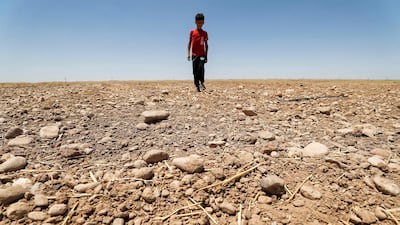
A boy walks through a dry field in eastern Iraq. Reduced agricultural production, water scarcity, rising sea levels and other adverse effects of climate change could force up to 216 million people to migrate within their own countries by 2050, the World Bank has said. AFP -
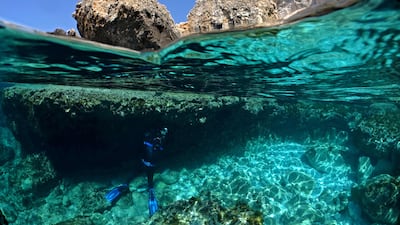
Cypriot marine ecologist Louis Hadjioannou takes pictures of coral as he monitors the effects of climate change in the crystal clear waters off the island's south-eastern shore. AFP -

Climate activists at a protest camp in Berlin. The activists were involved in a weeks-long hunger strike as they demanded meetings with German party leaders to discuss the environment. AFP -
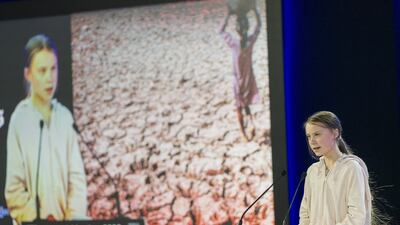
Swedish climate activist Greta Thunberg addresses a panel session during the 50th annual meeting of the World Economic Forum in Davos, Switzerland. EPA -

European Commissioner for Cohesion and Reforms Elisa Ferreira discusses the effects of natural disasters in Europe due to climate change, during a plenary session at the European Parliament in Strasbourg, France. AFP


But rising natural gas prices are at the heart of the issue, and when one stage of a supply chain goes awry, the knock-on effects compound. Natural gas is a key ingredient in making ammonia, an important ingredient in fertiliser manufacturing, which is vital for crop supplies. Producing fertiliser creates carbon dioxide.
Natural gas prices were climbing even before the pandemic. Environmental targets to reduce carbon levels and get rising global temperatures under control have led to the decreasing favour in some countries of traditional means of generating power, such as coal. This increases demand for cleaner sources, such as natural gas and renewable energy. The latter are still in early stages of development and capacity is limited, pushing up the price of more reliable natural gas.
If the situation continues, the case for a return to traditional, more polluting methods will be harder to resist. Some commentators in the UK are already lamenting the decision to decommission coal power stations, particularly given the country has vast natural reserves. This year, China is planning to build 43 new coal-fired stations, although the country's President Xi Jinping has said that the country plans to reduce its use of coal starting 2026.
Last week, UN Secretary General Antonio Guterres warned that climate disruption is already worse than previous assessments, after a key report, United in Science 2021, revealed that the international community is "nowhere close" to meeting carbon targets set in the Paris Agreement.
The flip side of this complex chain of factors is plenty of opportunity for innovation. One came last week. BP, Masdar and Adnoc have announced they will develop low carbon hydrogen hubs, as well as decarbonised air travel corridors between the two countries. Sustainable fuel is key if the aviation sector is to support the transition to a low carbon economy. Increased hydrogen production capacity in the UK and the UAE also presents a solution to supply chain issues and helps relieve any pressure to revert back to fossil fuels. This is happening on a wider scale. The Hydrogen Council's 92 global energy, transport, industry and investment companies are working towards a common goal of developing hydrogen for real-world use.
If we are to accelerate our climate change action without causing disruption to vital trade and industry, this is the path governments and businesses will have to take. Innovation - along with co-operation and understanding - will feed and rescue our planet.

