
Monday marked a hundred days since unidentified gunmen assassinated Hisham Al Hashimi outside his house in Baghdad. The tragic loss of this foremost expert on radical groups, and an adviser to the Iraqi government, dealt a massive blow to the country's academic, social and security institutions. Very few are spared the wrath of violent armed groups, whether they are non-state or state-sanctioned.
The world lost a historian who documented ISIS and the various extremist groups that preceded it (most if not all literature on these topics extensively source Al Hashimi’s works). Iraq lost a sociologist who understood and embraced his country’s complexities. A family lost a loving husband, father, brother and uncle. And many of us lost a good friend.
Aristotle once said: “A friend to all is a friend to none." Had he known Al Hashimi, he would have paused to reconsider his statement. If there was one thing Al Hashimi rejected, it was any ideology that would push human beings to kill one another. And yet, he made friends with anyone, whatever their world view was, so long as they did not resort to violence.
-

Iraqi extremism expert Husham Al Hashimi was shot dead outside his home in Baghdad on Monday night. AFP -
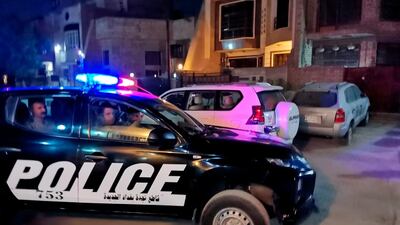
Security forces stand guard at the scene of Husham Al Hashimi's assassination in the Zeyouneh area of Baghdad. AP -
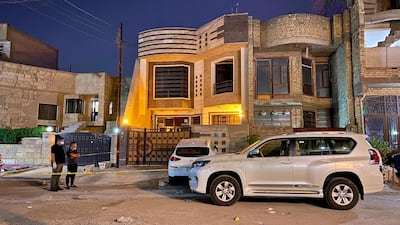
Iraqi police officers investigate the scene outside Husham Al Hashimi's house after he was shot dead in Baghdad on Monday following threats from Iran-backed militias. AP -
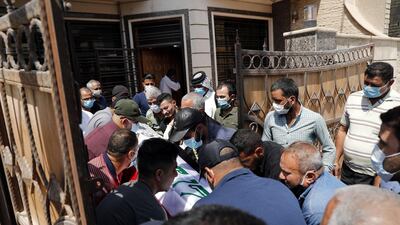
Iraqis carry the coffin of Iraqi terrorism expert Husham Al Hashimi, who was assassinated by an unknown armed group outside his house. EPA -

Mourners carry Husham Al Hishami's coffin during the funeral in Baghdad, Iraq. Reuters -
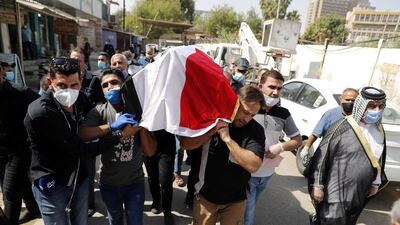
Al Hashimi, a leading expert on ISIS and other armed groups, was shot dead in Baghdad on Monday evening after receiving threats from Iran-backed militias, Iraqi security officials said. EPA -
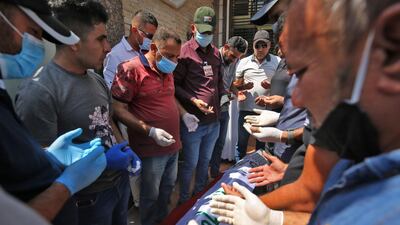
Mourners pray over the coffin of slain Iraqi extremism expert Husham Al Hashemi, who was shot dead yesterday outside his house in the Iraqi capital. AFP -
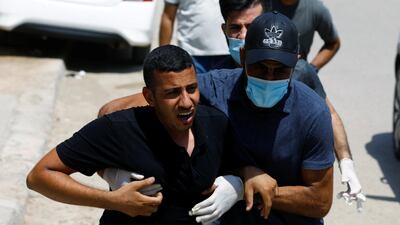
Al Hashimi was an authoritative voice on militant factions, including ISIS, but was also frequently consulted by media and foreign governments on domestic Iraqi politics and armed groups. Reuters -
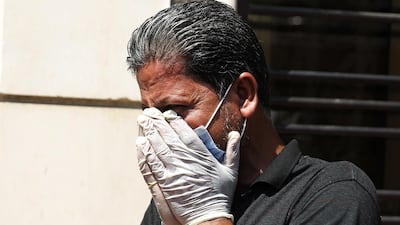
A mourner cries during the funeral. Al Hashimi had warm ties with top decision-makers, including President Barham Saleh, but was also trusted by rival parties and armed groups, which used him as a mediator. AFP -
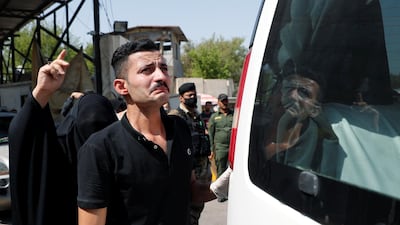
A relative reacts during the funeral of former government adviser and political analyst Husham Al Hashimi, who was killed by gunmen, in Baghdad. Reuters -
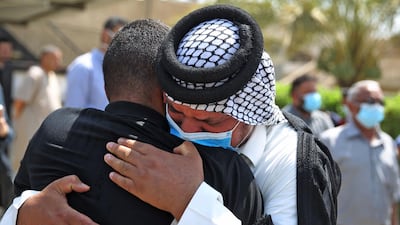
Mourners embrace during the funeral of slain Iraqi extremism expert Husham Al Hashimi, who was shot dead on Monday outside his house in the Iraqi capital. AFP -
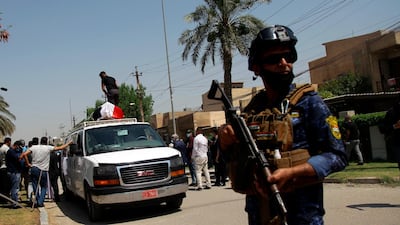
An Iraqi federal policeman stands guard while mourners carry the flag-draped coffin of Husham Al Hashimi during his funeral in the Zeyouneh area of Baghdad. AP -
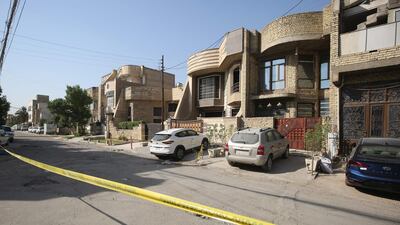
A general view shows the spot where Iraqi extremism expert Husham Al Hashimi was shot dead yesterday outside his house in the Iraqi capital Baghdad’s Zeyouneh district. AFP


Iraqis come from diverse backgrounds and thinking, many of who may even be at odds with each other. But according to Al Hashimi, most Iraqis rejected, in particular, two extreme but influential ideologies: one that envisions an Islamic state and the return of the Caliph, and the other that calls for an Islamic revolution that eventually places entire states under the influence of a supreme leader. Both of these ideologies, however, espouse violence.
Al Hashimi did not believe a majority of Iraqis subscribed to either world view. And if he met an individual who did, and if he determined that that individual did not mean to physically harm someone else, then to his mind the angry rhetoric and sometimes empty threats amounted to little more than sound bites.
In Al Hashimi’s view, listening to and befriending people of all stripes and reconciling quarreling groups were the only ways to defeat extremists at both ends of Iraq’s unique political and identity spectrums. Maybe he was on to something. It is important to note that in the aftermath of his killing, only two groups of people rejoiced: those who were aligned with ISIS, and those who supported the militias backed by Iran's Islamic Revolutionary Guard Corps and believed to be the prime suspects in his murder.
-
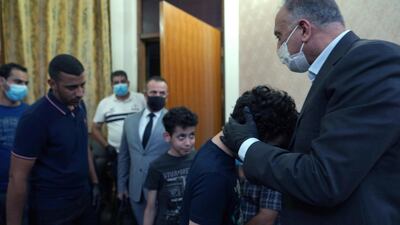
Iraqi Prime Minister Mustafa Al Kadhimi offers condolences to the family of the late former government adviser and political analyst Husham Al Hashimi. Iraqi Prime Minister Media Office -
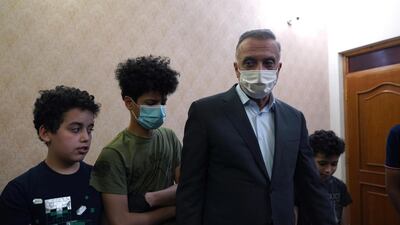
Husham Al Hashimi was killed by gunmen outside his home in Baghdad. Iraqi Prime Minister Media Office -
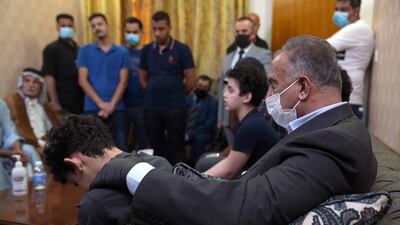
Iraqi Prime Minister Mustafa Al Kadhimi has promised to hold the killers of Husham Al Hashimi to account. Iraqi Prime Minister Media Office -
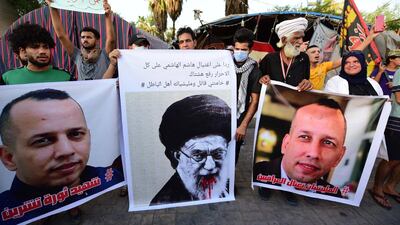
Iraqi protesters carry the picture of Iraqi terrorism expert Husham Al Hashimi with a slogan reading in Arabic 'Al Hashimi is the martyr of the October Revolution'. EPA -
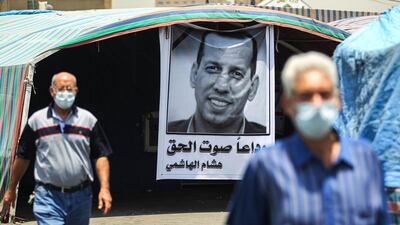
Men walk past a mourning tent bearing the poster of slain Iraqi extremism expert Husham Al Hashimi, who was shot outside his house this week. AFP -
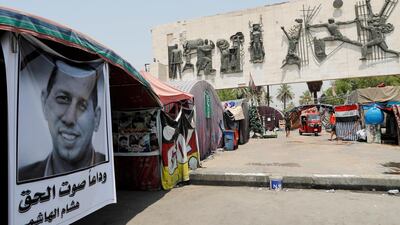
Al Hashimi was an authoritative voice on Sunni factions including ISIS, but was also frequently consulted by media and foreign governments on domestic Iraqi politics and Shiite armed groups. AFP


Al Hashimi was of the firm belief that everyone was redeemable. He was an opponent of what is known today as "cancel culture". Perhaps he projected the swirling dynamics of his own life's trajectory on to a people who have had to deal with the trauma of conflict since the conception of their nation. He found his greatest joy in reconciliation, and that is what he spent a significant amount of his final years working on. He helped turn foes into friends and paved the way for a more unified stance in tackling the many challenges facing the country.
Al Hashimi was an outspoken critic of corruption and kleptocracy but he was not an enemy of the state. In fact, he believed in gradual reform from within the system. Over the past six years, he served as a security adviser to Iraqi President Barham Salih. He engaged with the US Central Command stationed in the country, as well as leaders of the various militias, especially when the threat of ISIS foreshadowed all other problems.
His in-depth knowledge of the ISIS organisation served to understand the group's blueprint. When it lost its territorial control, Al Hashimi wasted little time in warning about an imminent underground resurgence – just in case Baghdad failed to seize the opportunity provided by victory.
-
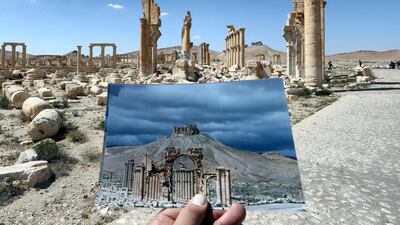
A photographer holding his picture of the Arc du Triomphe (Triumph's Arch) taken on March 14, 2014 in front of the remains of the historic monument after it was destroyed by ISIS in October 2015 in the ancient Syrian city of Palmyra. AFP -
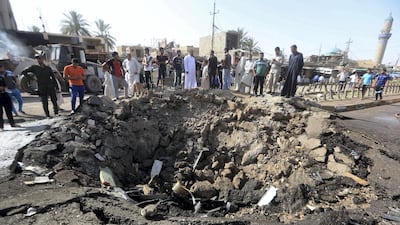
Iraqi men look at a crater left by a massive suicide car bomb attack carried out the previous day by ISIS in the predominantly Shiite town of Khan Bani Saad, 20km north of Baghdad, on July 18, 2015. AFP -
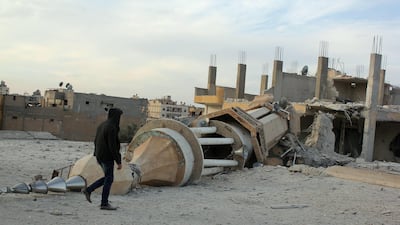
A Syrian man walks past a minaret destroyed following an alleged air strikes by Syrian government forces in the ISIS controlled Syrian city of Raqqa, on November 25, 2014. AFP -
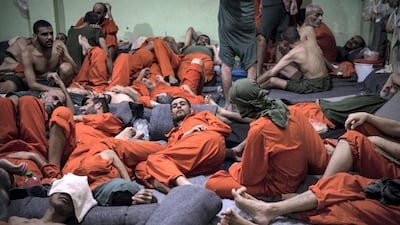
Men, suspected of being affiliated with ISIS, gather in a prison cell in the northeastern Syrian city of Hasakeh on October 26, 2019. AFP -
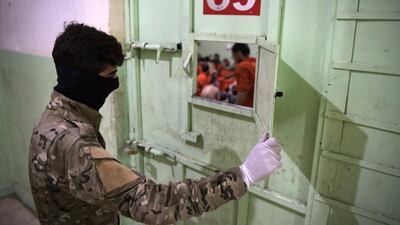
A member of the Syrian Democratic Forces (SDF) stands guard in a prison where men suspected to be affiliated with ISIS are jailed in northeast Syria in the city of Hasakeh on October 26, 2019. AFP -

A woman stands in front of a bullet riddled facade in the northern Syrian city of Raqqa, the former Syrian capital of ISIS, on August 21, 2019. AFP -

A fighter with the Syrian Democratic Forces (SDF) monitors on Surveillance screens, prisoners who are accused of being affiliated with ISIS, at a prison in the northeastern Syrian city of Hasakeh on October 26, 2019. AFP -
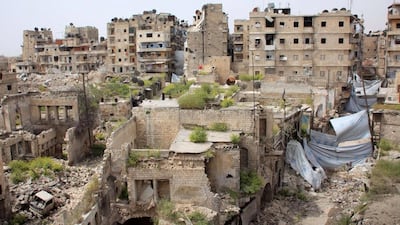
A general view shows blankets hanging across the road for protection from sniper fire in the Hamidiyeh neighbourhood of the northern Syrian city of Aleppo as local popular committee fighters, who support the Syrian government forces, try to defend the traditionally Christian district on the third day of intense battles with ISIS on April 9, 2015. AFP -

An undated image, which appears to be a screenshot from a video and which was published by ISIS in the Homs province (Welayat Homs) on August 25, 2015, allegedly shows smoke billowing from the Baal Shamin temple in Syria's ancient city of Palmyra. AFP -
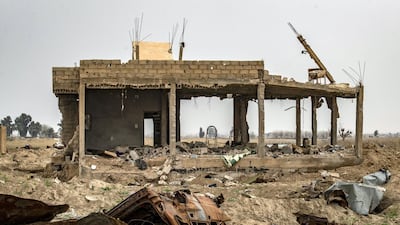
The house of local farmer Hamad al-Ibrahim is seen destroyed in the eastern Syrian village of Baghouz on March 13, 2020, a year after the fall of ISIS. AFP -

A picture taken on January 13, 2020 during a press tour organised by the US-led coalition fighting the remnants of ISIS, shows a view of the damage at Ain al-Asad military airbase housing US and other foreign troops in the western Iraqi province of Anbar. AFP -
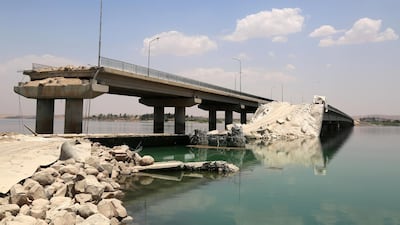
A bridge that was destroyed by ISIS after they took control of the river crossing and rebuilt the bridge as US-backed Kurdish and Arab fighters advance into ISIS's bastion of Manbij, in northern Syria, on June 23, 2016. AFP -
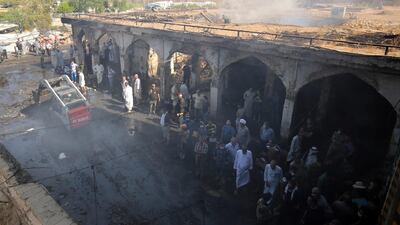
Iraqis look at the damage at aftermath scene of a mortar and bombing attack on the Sayyid Mohammed shrine in the Balad area, located 70km (around 45 miles) north of Baghdad, on July 8, 2016. AFP -
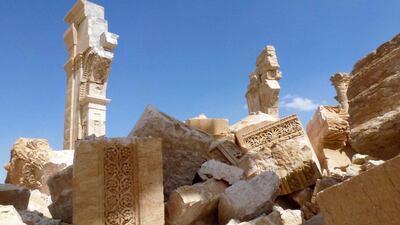
Part of the remains of Arch of Triumph, also called the Monumental Arch of Palmyra, that was destroyed by ISIS in October 2015 in the ancient Syrian city of Palmyra, after government troops recaptured the UNESCO world heritage site. AFP -
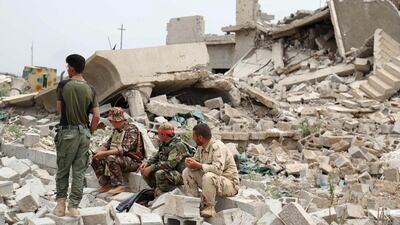
Iraqi Kurdish and Turkmen Shiite forces sit in the northern Iraqi town of Bashir after they recaptured the town from ISIS on May 1, 2016. AFP


Another threat, meanwhile, was looming: the growing pains of the hastily formed Popular Mobilisation Forces, an Iranian-backed umbrella group of militias that the IRGC had infiltrated and dominated. The impunity of some factions within the PMF to commit human rights violations worried Al Hashimi. Living in Baghdad amid their increasingly reckless behaviour warranted caution, and he balanced criticism with sound advice in his dealings with these groups.
There was one occasion when he abandoned this cautious approach – during the anti-government protests that broke out in October 2019. He could not conceal his heartbreak following the loss of young lives in their hundreds. He grew more critical of government orders to crack down on these unarmed protesters, while trying to mediate between the activists and the few "adults" still remaining in the government's backrooms.
It was during these protests when we got a glimpse of Al Hashimi's empathetic side. He spent hours observing the discourse between protesters on social media. He praised their bravery but sent them private messages, dissuading them from making fiery statements that might endanger their own lives.
“People in Tahrir Square are broken today," one friend said in the aftermath of his assassination. "Though hundreds died here, it is like the killing of this one man has casted an unparalleled gloominess. All hope died with Hisham."
A hundred days later, large posters of Al Hashimi remain pasted on walls and tents at the iconic protest venue. Faith in Prime Minister Mustafa Al Kadhimi, who promised reforms and justice, has dwindled significantly. People on the streets know who the killers are, but they also realise that these culprits are more powerful than the justice system and perhaps even the government.
Over the past three months, many people have shared their personal memories of Al Hashimi. “How did he make time for all of us?,” journalist Alison Meuse remarked. This is true. Al Hashimi never left a question unanswered or a message unattended to. He seldom turned away anyone in need of advice or a sounding board. He had a brilliant mind but also a gentle soul. He was down to earth, which is a rarity among security analysts and experts.
-
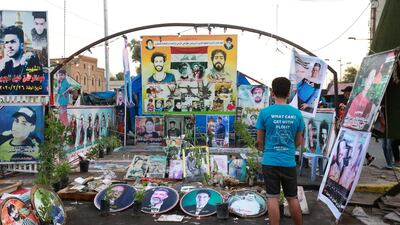
A protester stands next to the pictures of protesters who were killed in clashes with security forces during the anti-government protests at Tahrir Square in central Baghdad. EPA -
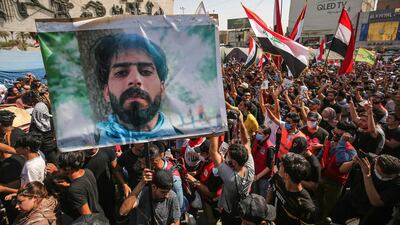
People hold up a picture of a slain protester as they gather with national flags for a demonstration in Tahrir Square in the centre of Iraq's capital Baghdad. AFP -
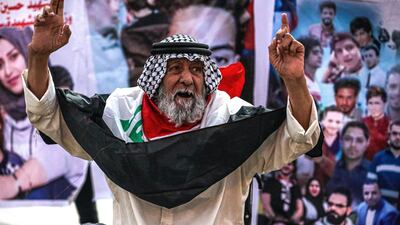
A demonstrator gestures during a protest to mark the first anniversary of the anti-government protests in Basra, Iraq on October 1, 2020. AP Photo -
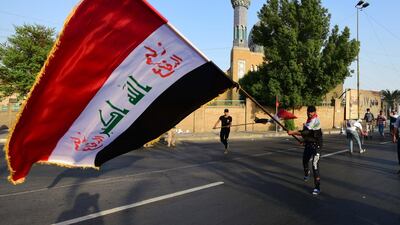
A protester waves the Iraqi national flag during a demonstration at the Al-Firdus square in central Baghdad. EPA -
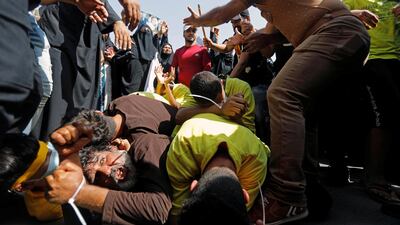
Demonstrators play the role of detainees as they gather to mark the first anniversary of the anti-government protests at Tahrir Square in Baghdad. Reuters -
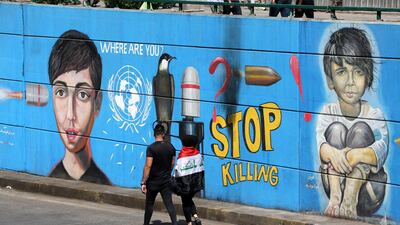
Protesters walk next to a wall with graffiti near Tahrir square in central Baghdad. EPA -
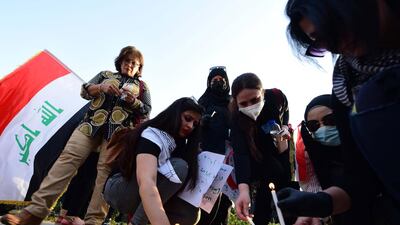
Women light candles and pray for the victims of protests at Tahrir Square in central Baghdad. EPA -
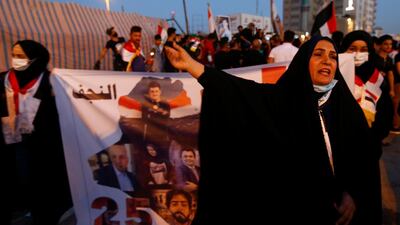
Demonstrators gather to mark the first anniversary of the anti-government protests, in Najaf, Iraq. Reuters -
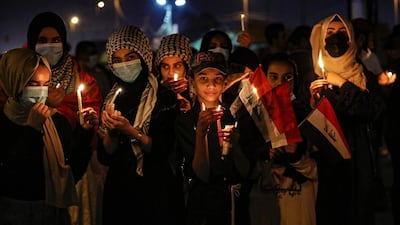
Demonstrators light candles to mark the first anniversary of the anti-government protests in Basra, Iraq. AP Photo -

A protester lights candles and prays for the victims of protests at Tahrir Square in central Baghdad. EPA -
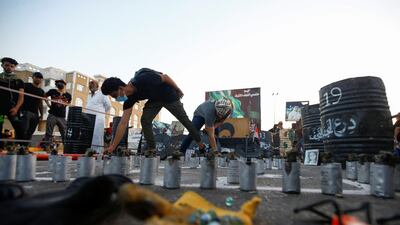
Men prepare torches as Iraqi demonstrators gather to mark the first anniversary of the anti-government protests, in Najaf. Reuters -
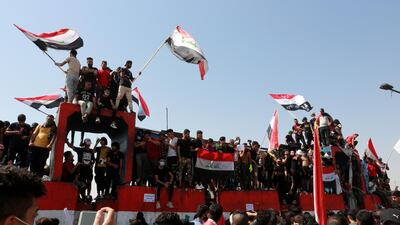
Protesters carry the Iraqi national flag as they stand on concrete blocks which are used by security forces to block the Al-Jumhuriya bridge, close to Tahrir square in central Baghdad. EPA -
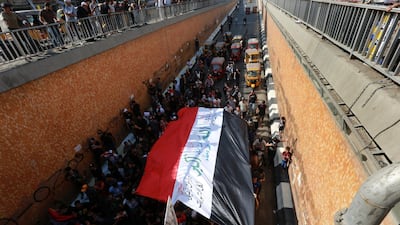
Iraqis carry the Iraqi national flag and chant slogans during a demonstration at Tahrir square in central Baghdad. EPA -
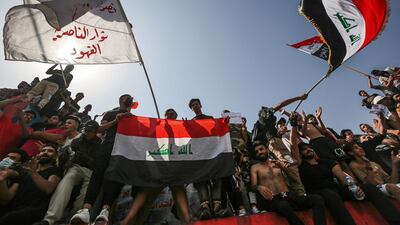
Protesters wave Iraqi national flags as they gather for a demonstration in Tahrir Square in the centre of Iraq's capital Baghdad. AFP -
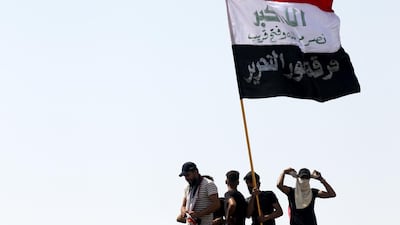
Iraqi protesters wave the national flag as they gather for a demonstration in Tahrir Square in the centre of Iraq's capital Baghdad. AFP


Al Hashimi left behind a treasure trove of writings that will no doubt shed light on some of Iraq and the region’s most pressing security concerns. Many of his works have yet to be published or translated. Friends and colleagues have pledged to make his papers and books accessible to larger audiences who did not get to know him.
He also left us with many fond memories, including lighter moments even as we discussed Iraq’s many ironies, complicated social compacts and delicious cuisines. There was never a dull moment with Al Hashimi. Perhaps the most vital lesson for us to learn is his unmatched ability to listen, understand, forgive and befriend. In his view, even those who seemed hopeless deserved a chance.
In 2016, amid all the anguish and confusion following the ISIS takeover of my hometown Mosul, a Baghdad-based journalist posted on Facebook that the only way to save Iraq was by bombing the city using chemical weapons. In his post, he described children as ticking time-bombs and viruses – were they to be brainwashed by the terror group into taking up their violent cause. I did not take kindly to the post. I was even upset that, rather than scorning him publicly, Al Hashimi reached out to him privately. “He is hurt and confused," he told me. "Words are only words. Talk to him. He would never accept killing civilians, Rasha. Befriend him."
Al Hashimi presumed the best in others, even actively seeking it from them. Only time will tell if that was a blessing or a curse.
Rasha Al Aqeedi is an Iraqi journalist

