The Seychelles, a string of 115 verdant, rocky islands in the Indian Ocean, recently announced, in the midst of the coronavirus pandemic, that it would protect 30 per cent of its glittering turquoise waters from commercial use.
Safeguarding some 410,000 square kilometres of the sea will benefit wildlife on the shore and in the water, including 100,000 giant tortoises and some of the world’s last pristine coral reefs. But, beyond helping such species, establishing the new Marine Protected Areas – which was made possible through an innovative debt-swap deal – will also bolster the health, wellbeing, and prosperity of the Seychellois, who number under 100,000 but cater to more than 350,000 visitors each year.
Currently hosting only a handful of tourists stranded by the pandemic, the country is under a lockdown aimed at preventing the further spread of the virus. President Danny Faure’s decision to press ahead with this protection effort, even as his country deals with a public-health emergency, serves as a powerful reminder of the importance of nature to people’s physical and economic wellbeing – and not just in the Seychelles.
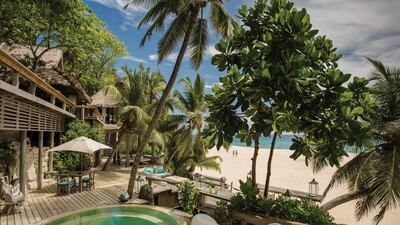
The Seychelles's pristine waters attract visitors from around the world. Courtesy: Constance Ephellia
The human, economic, and social consequences of the rapid and devastating global spread of the coronavirus will last for years to come. And with the pandemic still unfolding, the most urgent priority is to support those directly affected by the virus and its associated hardships.
But this pandemic has also provided us with unprecedented and compelling proof of how closely our fate is linked with the health of the natural world. And right now, our relationship with nature is broken. We have cut down forests, overgrazed grasslands, built ports and roads, and expanded our cities at a rapid rate, destroying countless natural habitats. At the same time, we trade wildlife globally, moving common and endangered species alike across the world as if they were inanimate commodities.
All of this is bringing us into closer and more frequent contact with viruses that can spread from animals to people, including Covid-19 and dozens of other deadly and debilitating illnesses, from HIV to Ebola. Likewise, our degradation of marine ecosystems causes blooms of pathogens that can cause potentially fatal diseases such as cholera.
The good news is that far-sighted political leaders and the United Nations are already formulating nature-focused action plans that could help to stop the next pandemic before it starts. These strategies include conserving ecosystems and wilderness still untouched by human activity, clamping down on wildlife trade – including by educating people about the risks of consuming wildlife – as well as restoring and protecting significant areas of land and ocean.
The world already safeguards 15 per cent of its land and 7 per cent of the ocean. But, for the sake of our health and prosperity, we must do more. Indeed, there is increasing agreement among countries that we need to return half the planet to nature and use the other half responsibly, and that we should start by protecting at least 30 per cent of it by 2030.
Seychelles has decided to preserve its envrionement. Reuters
Both nature and people would benefit. Research shows that abundant animals, plants, insects, and microbes living in complex, mature ecosystems can limit the spread of disease from animals to people.
But natural places do much more than provide a safety net against illness. They also shield us from the destructive power of extreme weather, safeguard us from our own pollution, and supply us with food, medicine, and leisure opportunities.
The Seychellois depend on the land and sea for their incomes and food. Fishing employs 17 per cent of the country’s workforce and provides the population with a low-cost, sustainable source of protein. Tourism, which is concentrated along the Seychelles’ coastlines and is driven by the country’s natural beauty on land and underwater, employs some 25 per cent of the workforce.
Safeguarding 30 per cent of the country’s waters will end harmful activities within the fully protected areas while bolstering sustainable fishing around them. And keeping the country’s natural places pristine – including, in addition to its seas, its mangrove forests, sea grass beds, and salt marshes – can help to ensure that the Seychelles remains the natural paradise that draws responsible visitors.
Research shows that biodiversity can limit the spread of disease from animals to people
When the worst of the pandemic has passed and the world embarks on the hard work of nursing its people, societies, and economies back to health, we must not overlook the need to care for nature and let nature care for us. A healthy environment is our best antiviral, and protecting more of it will help us to rebound from this pandemic and stop the next one before it starts.
Many countries are already demonstrating how we can build stronger bonds between nature, our economy, and our health. And the Seychelles’ recent marine-protection initiative offers hope that if every country, no matter how small, does its part, the planet can be safer and more prosperous for all of us – just as nature promises.
Enric Sala is Explorer-in-Residence at the National Geographic Society.

Will the pound fall to parity with the dollar?
The idea of pound parity now seems less far-fetched as the risk grows that Britain may split away from the European Union without a deal.
Rupert Harrison, a fund manager at BlackRock, sees the risk of it falling to trade level with the dollar on a no-deal Brexit. The view echoes Morgan Stanley’s recent forecast that the currency can plunge toward $1 (Dh3.67) on such an outcome. That isn’t the majority view yet – a Bloomberg survey this month estimated the pound will slide to $1.10 should the UK exit the bloc without an agreement.
New Prime Minister Boris Johnson has repeatedly said that Britain will leave the EU on the October 31 deadline with or without an agreement, fuelling concern the nation is headed for a disorderly departure and fanning pessimism toward the pound. Sterling has fallen more than 7 per cent in the past three months, the worst performance among major developed-market currencies.
“The pound is at a much lower level now but I still think a no-deal exit would lead to significant volatility and we could be testing parity on a really bad outcome,” said Mr Harrison, who manages more than $10 billion in assets at BlackRock. “We will see this game of chicken continue through August and that’s likely negative for sterling,” he said about the deadlocked Brexit talks.
The pound fell 0.8 per cent to $1.2033 on Friday, its weakest closing level since the 1980s, after a report on the second quarter showed the UK economy shrank for the first time in six years. The data means it is likely the Bank of England will cut interest rates, according to Mizuho Bank.
The BOE said in November that the currency could fall even below $1 in an analysis on possible worst-case Brexit scenarios. Options-based calculations showed around a 6.4 per cent chance of pound-dollar parity in the next one year, markedly higher than 0.2 per cent in early March when prospects of a no-deal outcome were seemingly off the table.
Bloomberg
Tentative schedule of 2017/18 Ashes series
1st Test November 23-27, The Gabba, Brisbane
2nd Test December 2-6, Adelaide Oval, Adelaide
3rd Test Dcember 14-18, Waca, Perth
4th Test December 26-30, Melbourne Cricket Ground, Melbourne
5th Test January 4-8, Sydney Cricket Ground, Sydney
Key facilities
Olympic-size swimming pool with a split bulkhead for multi-use configurations, including water polo and 50m/25m training lanes
Premier League-standard football pitch
400m Olympic running track
NBA-spec basketball court with auditorium
600-seat auditorium
Spaces for historical and cultural exploration
An elevated football field that doubles as a helipad
Specialist robotics and science laboratories
AR and VR-enabled learning centres
Disruption Lab and Research Centre for developing entrepreneurial skills
Ultra processed foods
- Carbonated drinks, sweet or savoury packaged snacks, confectionery, mass-produced packaged breads and buns
- margarines and spreads; cookies, biscuits, pastries, cakes, and cake mixes, breakfast cereals, cereal and energy bars;
- energy drinks, milk drinks, fruit yoghurts and fruit drinks, cocoa drinks, meat and chicken extracts and instant sauces
- infant formulas and follow-on milks, health and slimming products such as powdered or fortified meal and dish substitutes,
- many ready-to-heat products including pre-prepared pies and pasta and pizza dishes, poultry and fish nuggets and sticks, sausages, burgers, hot dogs, and other reconstituted meat products, powdered and packaged instant soups, noodles and desserts.
George Sainsbury of the supermarket dynasty, sugar magnate William Park Lyle and actress Dame Gracie Fields were residents in the 1930s when the street was only known as ‘Millionaires’ Row’.
Then came the international super rich, including the last king of Greece, Constantine II, the Sultan of Brunei and Indian steel magnate Lakshmi Mittal who was at one point ranked the third richest person in the world.
Turkish tycoon Halis Torprak sold his mansion for £50m in 2008 after spending just two days there. The House of Saud sold 10 properties on the road in 2013 for almost £80m.
Other residents have included Iraqi businessman Nemir Kirdar, singer Ariana Grande, holiday camp impresario Sir Billy Butlin, businessman Asil Nadir, Paul McCartney’s former wife Heather Mills.
Hunting park to luxury living
Land was originally the Bishop of London's hunting park, hence the name
The road was laid out in the mid 19th Century, meandering through woodland and farmland
Its earliest houses at the turn of the 20th Century were substantial detached properties with extensive grounds
Houthis: Iran-backed rebels who occupy Sanaa and run unrecognised government
Yemeni government: Exiled government in Aden led by eight-member Presidential Leadership Council
Southern Transitional Council: Faction in Yemeni government that seeks autonomy for the south
Habrish 'rebels': Tribal-backed forces feuding with STC over control of oil in government territory
Veere di Wedding
Dir: Shashanka Ghosh
Starring: Kareena Kapoo-Khan, Sonam Kapoor, Swara Bhaskar and Shikha Talsania
Verdict: 4 Stars
A little about CVRL
Founded in 1985 by Sheikh Mohammed bin Rashid, Vice President and Ruler of Dubai, the Central Veterinary Research Laboratory (CVRL) is a government diagnostic centre that provides testing and research facilities to the UAE and neighbouring countries.
One of its main goals is to provide permanent treatment solutions for veterinary related diseases.
The taxidermy centre was established 12 years ago and is headed by Dr Ulrich Wernery.
There are numerous success stories of teen businesses that were created in college dorm rooms and other modest circumstances. Below are some of the most recognisable names in the industry:
Facebook: Mark Zuckerberg and his friends started Facebook when he was a 19-year-old Harvard undergraduate.
Dell: When Michael Dell was an undergraduate student at Texas University in 1984, he started upgrading computers for profit. He starting working full-time on his business when he was 19. Eventually, his company became the Dell Computer Corporation and then Dell Inc.
Subway: Fred DeLuca opened the first Subway restaurant when he was 17. In 1965, Mr DeLuca needed extra money for college, so he decided to open his own business. Peter Buck, a family friend, lent him $1,000 and together, they opened Pete’s Super Submarines. A few years later, the company was rebranded and called Subway.
Mashable: In 2005, Pete Cashmore created Mashable in Scotland when he was a teenager. The site was then a technology blog. Over the next few decades, Mr Cashmore has turned Mashable into a global media company.
Oculus VR: Palmer Luckey founded Oculus VR in June 2012, when he was 19. In August that year, Oculus launched its Kickstarter campaign and raised more than $1 million in three days. Facebook bought Oculus for $2 billion two years later.
