As energy systems become more digital, more complex and more interconnected, the value of a partnership is no longer measured solely by the capital invested or the resources produced. Increasingly, it is measured by the ability to solve technical challenges together, deploy innovation at scale and build the expertise needed for long-term energy security.
The UAE and China have built one of the most significant energy relationships in the global economy. As China remains a major energy consumer and the UAE continues to invest across both conventional and emerging energy systems, the partnership is increasingly expanding beyond trade and investment towards technology, expertise and operational collaboration.
The evolution of the partnership between the China National Petroleum Company and Adnoc illustrates this shift. Over time, co-operation has expanded beyond investment and production towards shared technical capability, applying new approaches to reservoirs, drilling, digitalisation and lower-carbon operations and translating them into measurable results in the field.
This year, CNPC joined Adnoc and other international partners in the Bab Gas Cap concession, which is expected to produce 1.5 billion cubic feet of gas per day. CNPC is also a partner in the development of the Umm Shaif Gas Cap, expected to unlock more than 600 million cubic feet a day by 2030.
At Umm Shaif, the technical challenge is as important as the scale. The gas sits above an oil reservoir that has been producing for decades. Developing one resource while protecting reservoir pressure and oil recovery requires refined management, exactly the kind of challenge that requires close collaboration between partners over many years.
In 2017, CNPC became asset leader for the North East Bab oilfield group and established a technical centre to deepen technical collaboration with Adnoc. Since then, the partnership has applied advanced technologies to address complex reservoir challenges, helping to double annual production across the field group while improving operational efficiency and reducing unit technical cost.
Similar results have been achieved beyond NEB, with enhanced reservoir evaluation and development optimisation at Al Yasat onshore-offshore project helping unlock additional resource potential and exceed second-phase production targets. This demonstrates how long-term technical collaboration can create value by embedding expertise into the day-to-day development and operation of energy assets.
That principle is increasingly important as the industry brings new technologies into conventional operations. CNPC has supported Adnoc in addressing technical challenges around CO2 storage wells, while also exploring cleaner energy, electrification, automation, intelligent completions and advanced well designs.
The goal should not be technology for technology’s sake. It is to use the right technology where it can improve recovery, reduce operational complexity, strengthen asset integrity or bring down the cost per barrel.
-

Dr Sultan Al Jaber, UAE Minister of Industry and Advanced Technology, and Adnoc managing director and group chief executive, opens the Adipec conference. -
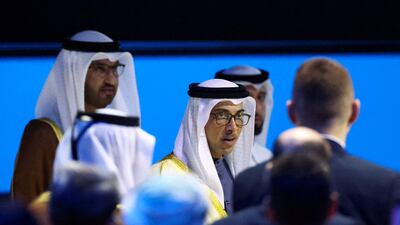
Sheikh Mansour bin Zayed, UAE Vice President, Deputy Prime Minister and Chairman of the Presidential Court, attends the opening ceremony of the Adipec conference. All photos: Reuters -
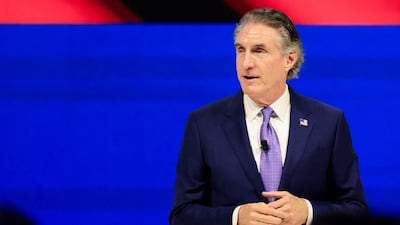
US Secretary of the Interior Doug Burgum addresses delegates at the major energy sector event. -

Suhail Al Mazrouei, UAE Minister of Energy and Infrastructure, and Qatari Energy Minister Saad Al Kaabi at the opening ceremony. -

More than 205,000 people are set to attend the Adipec conference in Abu Dhabi this year. Chris Whiteoak / The National -
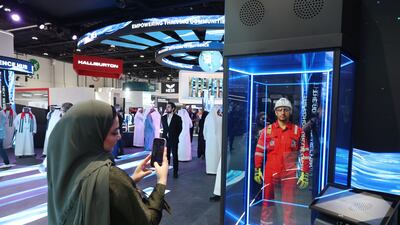
More than 50 energy companies from around the world to be represented at the event. Chris Whiteoak / The National -
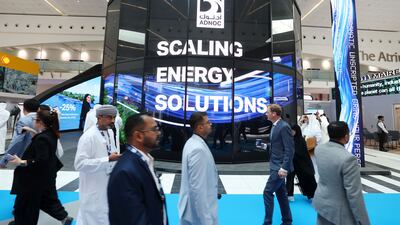
More than 1,800 speakers are scheduled to take part in the conference. Chris Whiteoak / The National


Practical innovation is already producing measurable results. Closer-spaced water injection has increased output by more than 20 per cent in major fields, while advanced completion techniques and new gas-management solutions have improved performance without adding operational complexity and cost.
The CNPC Monobore Expandable Casing Technology was successfully applied in Al Yasat and broke a world record in casing diameter and operation length. This solution will save time and reduce drilling cost in similar scenarios across all Adnoc fields.
These are very different technologies solving very different problems. What connects them is a focus on practical operating results.
That shift from experimentation to deployment is increasingly visible across Abu Dhabi’s energy sector, and artificial intelligence is becoming a powerful example of this shift. Adnoc is now using an AI-enabled platform across more than 120 drilling rigs, helping engineers monitor operations, identify potential issues earlier and manage larger volumes of information more efficiently. Robotics are also moving into day-to-day industrial applications, including the inspection of infrastructure and hazardous environments.
For energy companies, this changes the question. It is now about how quickly a proven application can move from a technical discussion stage to field trial and verification to industrial-scale deployment across complex operating assets.
Experience matters in making that transition. More than 150 technologies have now been registered for application within the onshore project, covering areas including reservoir development and optimisation, enhanced oil recovery, intelligent well completions and reservoir treatment. Hundreds of technical workshops and discussions also take place each year across development, drilling, completion and digitalisation, helping turn technical exchange into a more continuous way of working.
But the numbers themselves are less important than the capability built around them: engineers and operators who can understand a problem, pilot a solution, adapt it to local conditions and decide whether it can deliver value at scale. At a time when global energy demand continues to rise and energy systems face growing pressure to deliver affordability and reliability and lower greenhouse gas emissions simultaneously, operational efficiency is becoming a strategic priority. Technical capability is increasingly an element of energy security itself.
The next phase of China-UAE energy co-operation should build on that model. As the industry works to produce resources more efficiently, integrate AI and digital technologies and manage emissions, deeper technical capability will need to develop alongside long-term investment.
These questions are increasingly shaping industry discussions globally and will feature prominently at Adipec, where the focus is shifting from what technologies such as AI, robotics and advanced analytics might achieve in future to how they are already delivering measurable value today. Adipec’s expanded technology programme reflects that shift, with applications ranging from reservoir modelling and autonomous operations to infrastructure inspection and robotics.
For me, that is where the most useful conversation lies. Technology transfer is rarely a one-off transaction. It develops through working together repeatedly, sharing best practices on operation and building enough trust to verify new approaches in demanding environments.
For CNPC and Adnoc, years of co-operation have created that foundation. The opportunity now is to turn technical collaboration into an even greater source of shared capability and value. As energy systems become more complex and interconnected, the strongest partnerships will increasingly be defined not only by the resources they develop, but by the knowledge, expertise and innovation they build together.