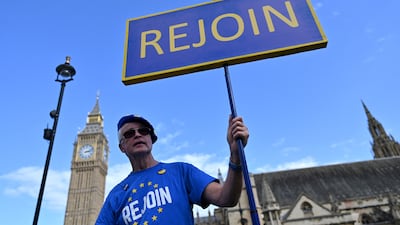

Confusion reigns where the UK and EU is concerned. Having been dormant for so long, avoided and ducked by successive recent prime ministers, Britain’s future relations with the EU has suddenly become a major political and diplomatic issue.
The uncertainty stems from how far Andy Burnham wants to go and at what speed. He gives every impression of wishing the UK to rejoin and quickly. But then he will say in the next breath that the British public must decide. That raises the possibility, make it probability, of a bitter, protracted Brexit battle all over again.
He is pinning much on the forthcoming UK-EU Summit, scheduled for November 20, and has set out his wish-list of what he would like that meeting to achieve – including free trade of food and drink products, greater movement of young people – while giving the impression of this only being the first step. That in itself, though, is radical compared with where the UK and EU were. And, as Leader of the Opposition Kemi Badenoch has rightly observed, it’s a curious way to proceed into a negotiation, showing your hand at one go. It is clear to everyone, not least the EU that he sees this as merely the beginning not the end. How though, can he get there, without resurrecting the old battle-lines and splitting the country?

He began by being inflammatory, by suggesting the referendum verdict was improperly obtained. No sooner did Mr Burnham signal his desire for the UK to form closer ties with the EU, with a view possibly to rejoining, than the Prime Minister appeared on a podcast saying there was incontrovertible evidence that Russia interfered in the referendum campaign.
Bearing in mind the decision to leave was won by just 2 per cent of the vote, the suggestion that it was some way Russian influenced has the ability to invalidate Brexit, to throw the authenticity of the UK’s departure into doubt (Remainers would argue it was already questionable as part of the Brexiteers’ campaign was based on hyperbole and falsehood). So, we actually didn’t choose to exit after all, which could help our efforts to gain readmission.
Except Mr Burnham’s was not a new claim. It had been made repeatedly in the past and had always been denied by government ministers and security officials. Nevertheless, here was Mr Burnham maintaining that upon arriving in No 10 he asked about possible Russian interference in the 2016 ballot and stating: “I’ve had the clear answer that, yes, there was.”
Fine, if he has the proof. At the time of writing, none is forthcoming. Indeed, well after Mr Burnham made his comment, Stephen Doughty, the Foreign Office minister, was challenged by the BBC to produce it, and replied he wouldn’t “get into specifics”.
Instead, Mr Doughty resorted to vague accusations that “Russia clearly has attempted to interfere on a number of our democratic processes. They’re engaged in information warfare, they’re spending £1.5 billion [almost $2 billion] this year alone on disinformation and propaganda”.

Cue Nigel Farage, the Brexit architect, denouncing Mr Burnham as “a liar”. Cue too, a feeling of deja vu, that we’ve been here before, many times, that nothing has really changed, that the old wounds have never healed, but still exist, waiting to be reopened.
All this row – and it quickly erupted into a war of words, with Mr Farage, who has been accused in the past of enjoying close ties with Russia, sensing his honour and reputation had been impugned sounding most indignant – served to show was that the UK is nowhere near ready to rejoin, not collectively with a consensus, that EU leaders starting to take Mr Burnham at his word might wish to reconsider.
The question they should ask themselves is, does Mr Burnham speak for the nation? He may wish to come back but does the electorate, how certain can they be that the same mixture of disregard, often tipping into open contempt, for the EU and its ideals, won’t simply rear its head again?
It’s true that a majority of the British people, far greater than the percentage who chose to quit, now believe Brexit was a mistake. The polls put the figure slightly above 70 per cent. In democratic terms, that’s substantial.
But it’s an opinion poll, not the real thing, and however the cake is cut, a significant portion of the populace still argue we were right to go. That slice is inspired by committed and noisy agitators. Mr Farage has already said Mr Burnham’s public ambition has regalvanised his Reform UK party’s support base.
-
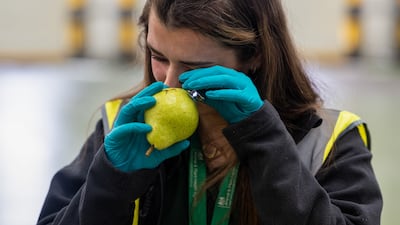
An Animal & Plant Health Agency (Apha) employee inspects a pear at a border control post at DP World's London Gateway port in Stanford-le-Hope, Essex. All photos: Bloomberg -
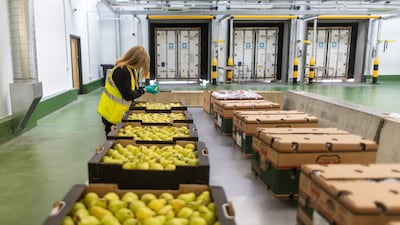
EU food imports to the UK are about to get more expensive and complicated as the British government implements the Brexit deal -
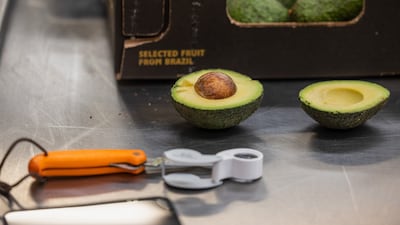
A halved avocado in the Apha inspection area -
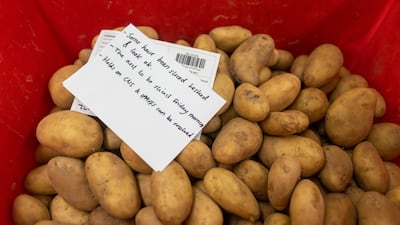
A note is left on potatoes to be inspected -
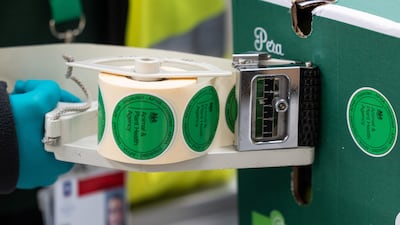
An Apha sticker machine -
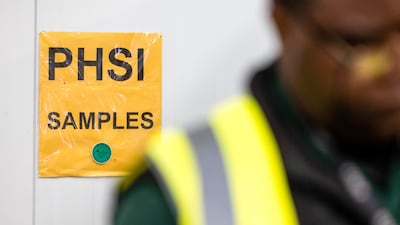
A Plant Health & Seeds Inspectorate sign -

Lorries carrying shipping containers are driven across the dockside at London Gateway port, operated by DP World Plc, in Stanford-le-Hope


Until the senior pro-Brexit players in the epic drama of a decade ago come out and admit they were wrong, those of a suspicious nature in the EU are fully entitled to worry the UK would become the renegade member it was before – harrying, obstructing and yes, insulting, at every turn. It would require former prime minister Boris Johnson to recant, and ideally, Mr Farage. Even better still, for the pair of them together to fall on their anti-EU swords.
Well, that will never occur. Rather, what will happen is that they will unpick the scars and a whole new anti-EU front will erupt.
In the same way that Britain withdrew by the thinnest of margins, this perception matters. Because should we pursue readmittance, we must clear several hurdles, any one of which could block our path.
Mr Burnham clearly would like to make it an election issue, to be included in the Labour manifesto. If he wins that popular mandate, in theory, there ought to be no requirement for a re-run of a separate EU vote.
That is the view of the mayor of London, Sadiq Khan, among others. But the EU is likely to insist upon a second referendum as a precursor to commencing membership negotiations. Their argument is that they would want to be persuaded the decision is non-party political, and that a vote for a manifesto covers all manner of issues, only one of which is the EU. A re-run could make the case that recommencing membership would last beyond the lifetime of the newly elected government and extend across successive governments. Virtually all countries joining have done so only after holding a public ballot. So, the UK could not realistically seek special dispensation.
The European Commission, which would lead the process, would also need to vote its agreement. So too would a majority of the members of European Parliament. Critically, as well, the 27 member countries would have a say and it is by no means guaranteed they would approve the UK resuming. Traditional anti-Britishness could re-surface and they could have agendas of their own – skilful diplomacy by the UK government and Foreign Office would have to be deployed. That said, British diplomats are indicating privately they think simply going back in and taking up where we left off is a tall, if not impossible, order.
The EU too would be right to examine Britain’s motives – why now, why the sudden change of heart, why after all this time, 10 years and counting, do we wish to return? The answer, and one Mr Burnham is correct to proclaim, is because Brexit has not delivered. At a stroke, we ditched a free trade bloc of 450 million people. British businesses too found themselves bereft of skilled EU labour. Nothing we’ve done since has come remotely close to replacing what was lost.
The Bank of England estimates a loss to our gross domestic product of 6 per cent to 8 per cent – this at a time of increased global competitiveness, rising protectiveness and sovereignty, energy crisis, supply chain difficulties, rising cost of living, threat of AI to jobs, when just adding 1 per cent is a tough bar. Here was the UK saying goodbye to 6 per cent. Just like that. As welcome as they are, trade deals have helped plug the gap, but they only go so far. We had a huge customs-free market on our doorstep, and we blew it. Business investment post-Brexit also fell, down, according to estimates, by 12 per cent to 18 per cent.
That’s what we’d like again and if not through full membership, through a much greater rapprochement, possibly through the Customs Union. We’d love also to be able to stem the tide of illegal immigration, which we have failed to do on our own. But the EU is aware of our need and it realises too, that is a prize worth having and is not something to be awarded easily. Not if it comes with the baggage of anti-EU rhetoric and the likelihood that at any moment, a new administration, one led by Mr Farage, say, could again up sticks.
That said, there are those in the EU who would like to see Britain’s return in some form. We bring with us 69.5 million people and we could provide an economic as well as political fillip. In a world dominated by two superpowers, a united EU would be a match for them. Canadian Prime Minister Mark Carney’s speech to Davos earlier this year, in which he called for the “middle powers” to combine, continues to resonate loudly.
The fact Mr Carney has followed that up with a suggestion of “associate membership” of the EU has met with a warm response. Mr Carney and Canada, they can do business with. Are they able to say the same with certainty for an unclear, impatient Mr Burnham and his Perfidious Albion? Therein lies the rub.

