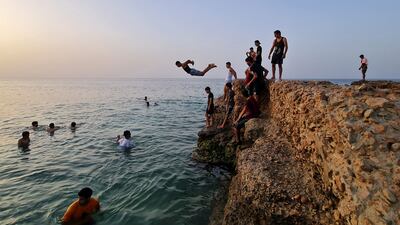

Eleven years ago, I published my book Arabs Unseen because the Arab world that I knew was more layered than the one represented internationally.
Conflict and instability often occupied the headlines. They were real and serious stories, but they were not the whole picture. Across the region, people were launching businesses, creating institutions, solving problems and pursuing ideas that did not attract the same attention. Arabs Unseen profiled 10 of them. I believe their stories came closer to the truth of the region as I knew it.
More than a decade later, the circumstances have changed, but the idea that gave rise to the book is still pertinent today. Conflict and geopolitical uncertainty have returned to the foreground, while economic and technological changes are altering the prospects of a generation before many have even entered the workforce.
Yet ask young Arabs how they see their own futures, and the prevailing narrative unravels. The Arab Youth Outlook of this year found that 75 per cent are optimistic about their future. And 83 per cent want to be involved in the decisions that will determine it. Those numbers deserve more than admiration.
There is always a temptation to romanticise youthful optimism. But this is not confidence born of comfortable circumstances. In the same research, only 54 per cent found it easy to cover their daily living expenses, while 55 per cent felt prepared to deal with a major financial challenge. Job security and financial circumstances rank among their biggest concerns. Their optimism does not appear to come from any illusion about the pressures around them, which makes it all the more valuable.
For any society, belief in the future has economic consequences. It influences whether people invest in their education, take risks, start companies, learn new skills and commit their talents to the places where they live. Optimism creates the willingness to act even when the path ahead is unclear. But it cannot survive indefinitely on just aspiration. It persists when experience validates it and weakens when ambition repeatedly encounters closed doors. And that is the challenge facing the Arab world.
The International Labour Organisation’s latest youth employment report puts youth unemployment at 26.2 per cent in Arab states and 22.6 per cent in North Africa last year, the highest regional rates in the world. In both regions, at least one in three young people was outside employment, education or training. These figures expose a gap between the confidence of young Arabs and the opportunities available to them. The region does not lack ambition. It needs an economy that gives ambition somewhere to go.
-
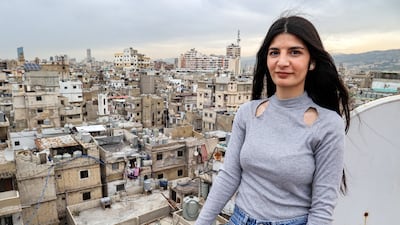
Nirmeen Hazineh, a Palestinian refugee in Lebanon, at the Shatila camp for refugees in Beirut. Young people in the camps say they dream of leaving the struggling country where their families took refuge generations ago. AFP -

Iraqi Sarah Nael inspects creations by Rafedin, a sewing project set up by Italians to help Iraqi refugee women in Jordan. AFP -
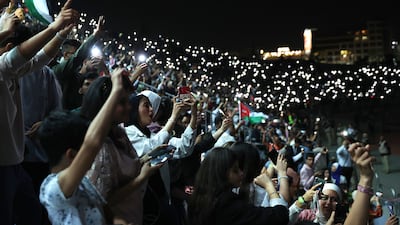
People enjoy a free concert to celebrate the wedding of Jordan's Crown Prince at Amman International Stadium last month. AFP -
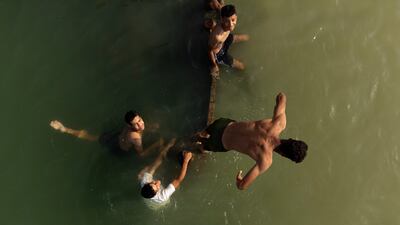
Young men swim in the Shatt Al Arab waterway, formed at the confluence of the Euphrates and Tigris rivers, in Iraq's southern city of Basra in May. AFP -

Protesters attacking a local bank in Beirut, Lebanon, last week, amid anger over a deepening economic crisis and hardship in the country. NurPhoto -

Members of Tunisian dance group Urban Dance perform during Carthage Choreographer Days in Tunis. EPA -

A young man sells roast sweet potato from a cart outside the walls of old Cairo in the historic district of Gamaliya. AFP


Education and training are still foundational, particularly as artificial intelligence transforms the nature of work. Encouragingly, 68 per cent of young Arabs say they feel equipped to adapt to emerging technologies. But preparing people for tomorrow’s economy will only achieve so much if the economy does not produce enough worthwhile opportunities for them.
This requires capital that reaches younger businesses as well as established ones, and education systems with stronger links to employers. It also requires us to take entrepreneurship seriously as a source of employment and economic renewal. Job creation cannot be treated as the preserve of government.
That said, jobs are only part of the equation. The 83 per cent who want to be involved in decisions about their future tell us that young Arabs are asking for agency as well as opportunity. I recognise that instinct.
When I wrote Arabs Unseen, I was interested in people who refused to wait for somebody else to determine what their contribution would be. They launched businesses and social ventures because they believed they had something worth adding to their societies. The tools available to today’s generation are more powerful, and their access to the world is greater.
Giving young people more agency also requires paying attention to what they are asking for. The new Arab Youth Priority Survey, conducted by the Arab Youth Centre, shows how their priorities are changing. When it was first conducted in 2020, security and safety ranked first. This year, health care comes first, followed by quality education, family and relationships, employment opportunities and community security. We should be careful about reading too much into any ranking. Security has not stopped being important, but the change in priorities is revealing.
A generation can be conscious of what is happening around it while still measuring its future against the ordinary questions of life. Will I receive a good education? Will I find meaningful work? Will I be able to raise a family? Will I have the freedom to pursue an idea? These questions are not as dramatic as the events that tend to dominate international coverage of our region, but they are where its future will ultimately be decided.
Listening to young people, therefore, has to be more than a communications exercise. It should influence where governments direct policy, where businesses look for talent, where educators focus reform and where investors see opportunity.
Governments have to create more paths in the economy for young people to participate. Employers should resist the temptation, particularly as automation advances, to remove the first rungs of the career ladder. Investors should recognise the economic value of committing more capital to younger companies and entrepreneurs. And those of us who have accumulated experience have an obligation to make access to it easier.
More than a decade ago, Arabs Unseen sought to show that some of the most important stories in the Arab world were being obscured by the stories told about it. That may still be true.
Conflict deserves attention. Economic hardship deserves attention. The pressures facing young people should never be minimised. But they co-exist with another reality that deserves equal scrutiny. Three in four young Arabs still look at everything around them and believe in the future. Our responsibility is to give them reason to keep believing in it.

