In Catia La Mar, on Venezuela’s shattered Caribbean coast, an exhausted rescue volunteer confronted soldiers carrying rifles: “Why did you not bring shovels?”
In those first desperate hours after twin earthquakes struck on June 24, firefighters idled for want of fuel, rescuers searched by the light of mobile phones, and neighbours clawed at rubble with bare hands while heavy machinery never came.
The magnitude 7.2 and 7.5 shocks released energy equal to 240 Hiroshima atomic bombs. At the time of writing, physical damage is estimated at $37 billion, a third of the country’s already-shrunken gross domestic product. Confirmed deaths have passed 5,000 with about 17,000 injured.
These numbers will tick upwards but belie the sheer scale of need in a country that was once among Latin America’s richest. Before the quakes, 7.9 million Venezuelans already needed humanitarian aid after years of misgovernance; the disaster has added 1.8 million more. Such is the measure of a natural catastrophe layering atop man-made crises.
Was the immediate response adequate? The answer is that it both inspires and disappoints; the distinction matters for the future.
The inspiration comes from ordinary Venezuelans: about 30,000 local rescue workers and countless volunteers organised searches, shelters and kitchens. Ideological rivals dug side-by-side as shared grief united a nation rent asunder by political tribulations and recent American military intervention.
The disappointing part was the Venezuelan state that prevaricated while citizens begged. Initially by restricting entry to the devastated city of La Guaira through bureaucratic delays and officials thwarting relief through demanding bribes and looting.
In fairness, the interim Venezuelan administration inherited hollowed-out institutions: hospitals without medicines, security forces primed to protect the regime not public, social disquiet and economic collapse.
An earthquake of this magnitude would overwhelm far sturdier states but what makes this tragedy harder to bear is that every weakness visible in Venezuela was documented, dissected and digested after previous quakes: Mexico City (1985), Armenia (1988), Iran (2003), Pakistan (2005), Haiti (2010), Nepal (2015), Turkey and Syria (2023).
Consider the most photogenic form of solidarity: search and rescue – or SAR. Up to 95 per cent of people pulled out alive are extricated by neighbours and local teams in the first 72 hours. International teams generally arrive too late, saving, over the past 30 years just 500 lives – at a cost approaching $1 million for every life saved.
Venezuela followed the same pattern with 44 rescue teams comprising 2,200 workers and 140 dogs from 27 countries. Those reaching the rubble within hours were neighbours from Colombia, Ecuador, Dominican Republic, El Salvador and Mexico. They got most of the 6,400 people extracted alive. Humanity triumphed despite several of these countries having previously cut diplomatic ties with Caracas.
Late-arriving European and Asian teams – Spanish, French, Swiss, Turkish, Vietnamese – largely recovered the dead. While this consoled those awaiting news of missing relatives, it was the publicity around foreign teams as heroes that grabbed headlines.
Even the US, the nearest great power, proved the rule. Its response teams started digging only about the 72-hour mark. Proximity of military force is not proximity of rescue capability as warships carry marines and helicopters, not shoring timber and concrete-cutters. Nevertheless, they repaired and re-opened vital ports and airbridges to enable relief delivery.

It is to the credit of distant states who resisted the reflex to fly in SAR teams with accompanying television crews while already-present local responders lacked fuel and tools. India sent a field hospital to tackle horrific physical injuries sustained by many survivors. Lives saved or mended this way cost just a few thousand dollars. China used satellite technology to map affected areas to guide emergency workers while sending relief supplies and cash. As did the UAE, recognising that the injection of purchasing power allows survivors to recover with dignity.
Consider that most precious crisis commodity: information. This is contentious when used for control or for showing authorities in the best light. An absent Venezuelan system for the missing added heartbreak to hurt, with grieving families depending on improvised volunteer databases. Meanwhile, estimates of the missing ranged from 30,000 to 50,000 while unclaimed bodies multiplied in makeshift cemeteries.
This affects entitlements to rehabilitation and reconstruction that require validated registrations. Information gaps also get filled by misinformation that breeds mistrust, corruption and grievance. This is coming to the fore with substantial aid announcements: a civil society platform documents about $780 million pledged from 43 countries and 89 organisations, companies and individuals. But how much is actually received, and who benefits?
Then consider knock-on secondary emergencies. Cholera in Haiti showed how earthquakes disrupt water and sanitation to cause outbreaks in crowded shelters. It is unsurprising that diarrhoeal disease is spreading through 87 improvised shelters holding nearly 20,000 homeless Venezuelans.
Consider how sanctions work. After its 2023 earthquakes, Syria got speedy American sanctions relief but only for 180 days. Venezuela’s earthquake licence is reportedly limited to four months, while reconstruction will take years and banks remain too frightened to move permitted money.
-
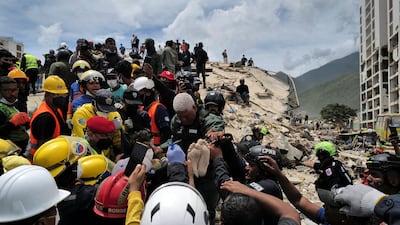
The search and rescue operation continues after Venezuela was hit by two strong earthquakes last week. Here, a person is pulled alive from the rubble of a collapsed building in Caraballeda, La Guaira. AFP -
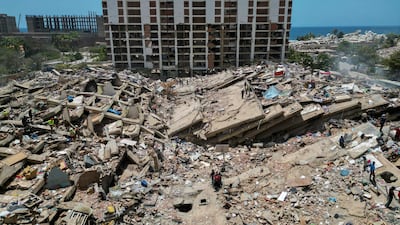
Collapsed buildings in Caraballeda, La Guaira. AFP -
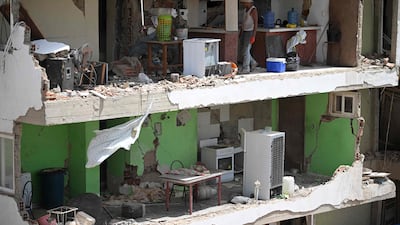
A damaged apartment building in Catia La Mar, La Guaira. AFP -
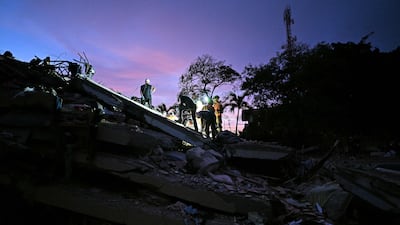
The search for bodies at the site of a collapsed building in Caraballeda in La Guaira. AFP -
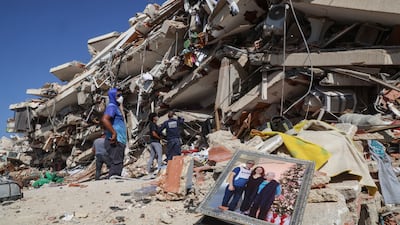
Emergency responders search for bodies in the debris of a building in Caraballeda city after two earthquakes struck Venezuela and other parts the Caribbean. Getty Images -

Venezuela's government said 1,600 members of foreign rescue teams arrived to help search for survivors of the disaster. Reuters -
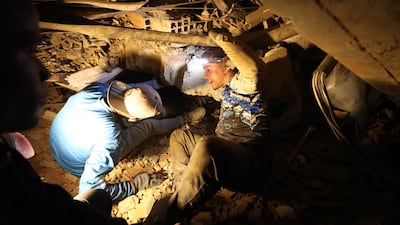
The government confirmed hundreds of bodies had been recovered and efforts were continuing. EPA -
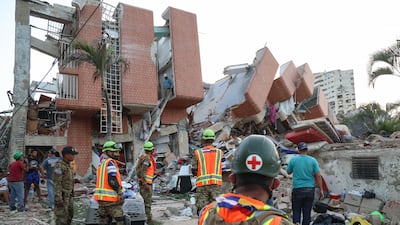
Rescuers from El Salvador search for people trapped in the rubble of a building in Catia La Mar, La Guaira, after two deadly earthquakes struck Venezuela. Getty Images -

Family members react as firefighters and volunteers search for their loved ones in the rubble in La Guaira. Tens of thousands of people have been reported missing since the quakes hit Venezuela on June 24. Reuters -
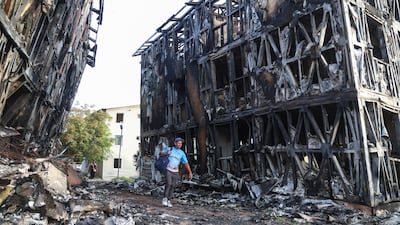
Destroyed buildings in Catia La Mar after a 7.2-magnitude earthquake struck, followed by a 7.5-magnitude aftershock less than a minute later. Getty Images -

A dog handler from El Salvador's rescue team during the search for survivors in La Guaira. The quakes killed hundreds of people and left thousands injured. Reuters -
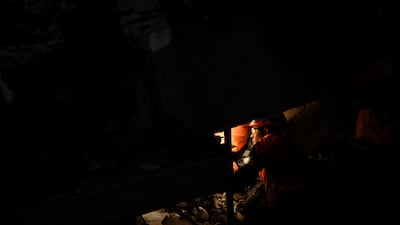
The searches continued through the night. Reuters -
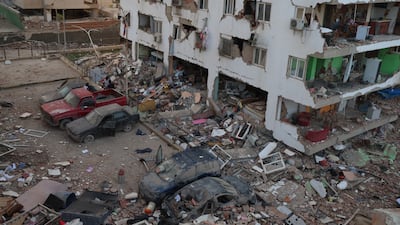
Damaged buildings in Catia La Mar. The La Guaira region, north of the capital Caracas, has been hardest hit. Getty Images -

A firefighter shouts through a pipe to people trapped under a collapsed building in La Guaira. Reuters -
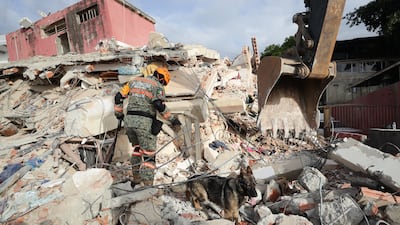
A Mexican Army rescue worker and his dog search the rubble of a building in La Guaira. EPA -
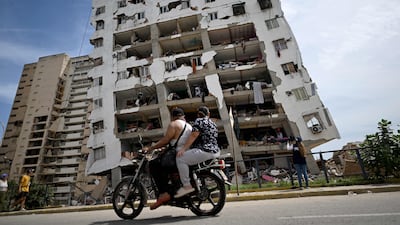
Two people ride a motorcycle past a heavily damaged apartment building in Catia La Mar. AFP


Consider disaster reduction: Caracas, with half its impoverished population occupying informal barrios, sits on sediments that amplify seismic waves. It was destroyed in 1812 and shaken hard in 1967. The risk is well-known, but construction codes are unenforced and retrofitting unfunded. A familiar story from many other quakes.
Far too often, fragile countries are considered incapable of meaningful improvement and doomed to struggle on as humanitarian recipients. But the shock of massive disasters can upend such excuses by obliging institutions and governments to bend towards competence. That necessitates responses specifically designed for that purpose.
Pakistan improved school attendance after its 2005 earthquake reconstruction, Nepal mitigated 2015 quake effects on tourism by using tour operators to transport aid, and rapid unconditional financing facilitated Ecuador’s 2016 recovery. Venezuela has just glimpsed the same possibility: on 18 July the IMF unlocked $346 million from the country’s own reserves for quake relief – rapid, unconditional funding of a kind unthinkable only months ago, before the Fund restored relations in April.
So what should change for future earthquakes in Venezuela and elsewhere?
First, invest beforehand in those who actually save lives: local, national and regional rescue services as well as community responders with pre-positioned equipment in sensitive seismic zones. They could use funding redirected from late-arriving international teams.
Second, make humanitarian relief automatic in sanctions regimes: multi-year carve-outs with pre-approved banking channels that activate the moment a major disaster is declared, rather than short ad hoc licences that expire before the rubble is cleared.
Third, treat honest information as aid, because it provides healing even as its absence adds insult to injury. Casualty estimates and missing-persons registries should meet transparent standards, insulated from political convenience.
Fourth, fund recovery intelligently. The UN’s $296 million emergency appeal for 1.3 million people over six months is modest. It should favour cash assistance and owner-driven repair over the transitional shelter camps that became permanent in Haiti.
Finally, keep the response honestly humanitarian. Washington sees this operation as the flagship of its new aid model, while the interim Venezuelan government may be tempted to let reconstruction justify postponing political reforms. Both instincts could repeat the oldest mistake of all: treating suffering people as instruments of policy.
The geological faultlines beneath Venezuela are beyond human remedy. But the faultlines running through the response – between spectacle and effectiveness, politics and principle, lessons documented and applied – are of our own making. Venezuela’s dead deserve more than ritual promises to do better next time.