
The arrival of the summer months is usually accompanied by the publication of a flurry of weather warning stories, with this year being no exception to that rule.
The National this week reported that temperatures were expected to reach 48°C in parts of Abu Dhabi emirate before the weekend. Last week, we cautioned of the impending arrival of the “hottest May day on the horizon”. Forecasters have also recently pointed to the possibility of another phase of extreme weather globally. The World Meteorological Organisation, or WMO, said earlier this year that last year was one of the three hottest on record.
All this after the UAE was hit by intense wet weather in March and April, only two years after the exceptional 2024 storms, when the country experienced its heaviest rainfall for generations. A cool wet spring has given way to a traditional hot summer.
Weather has rarely been bigger news or more important than today in this part of the world and the shifts, both great and small in climate patterns, need more attention, study and strategic management than ever before.
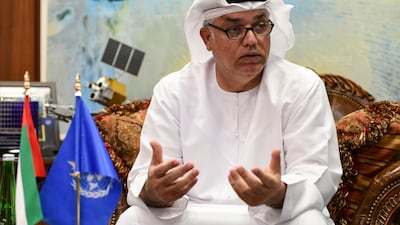
Given that context, the recent ministerial assignment of Dr Abdulla Al Mandous, director general of the National Centre of Meteorology and WMO president, appears both well-timed and smart. In an interview with The National last month, Dr Al Mandous said his appointment by federal decree reflected the deep commitment to climate issues that the UAE has made for many years.
The Climate Change and Environment brief is, of course, ultimately overseen by cabinet member Dr Amna Al Dahak, who has been active recently in strengthening homegrown food production as part of a broader cross-discipline preparedness plan. She told The National this year that the country was “not waiting for a crisis to happen to design our strategy”. That helps explain why the level of disruption experienced by the country when the Iranian attacks began on February 28 has been substantially mitigated by that same philosophy of readiness.
The granting of the rank of minister to Dr Al Mandous can be seen in that framework of preparedness, adding further expertise to the mix to help aid complex decision-making and management across the economy. He said when speaking to The National that the NCM has been able to deliver precise forecasting and early warnings to support the National Emergency, Crisis and Disaster Management system, just one example of how more and more decisions are weather-related or have a climate angle to them.
When the worst of the storms were approaching this year, there was plenty of advice and guidance being offered to the public, which undoubtedly aided a speedy return to normal and enhanced public safety.
Dr Al Mandous also said that his aim was for the country to become a centre for climate innovation and to further integrate artificial intelligence and advanced technologies into that framework.
It is almost nine years since the UAE appointed its Minister of State for AI, Omar Al Olama, later adding responsibility for Digital Economy and remote work to the brief. Viewed from the now AI-dominated mid-2020s, that appointment appears to be incredibly far-sighted. Others in the international community have since followed where the UAE led the way. This latest weather-related ministerial appointment may well be seen in the same way in years to come.
No country in the international community has a dedicated minister of weather. Typically those duties are housed within one or more government agencies that have oversight over environmental issues, as is the case in the UAE – although some governments have experimented in the past.
Fifty years ago, the UK appointed a temporary minister for drought, Denis Howell, during a hot summer when water supplies were placed under the most severe pressure, as the country experienced its worst drought for more than a century.
His appointment had a near-instant but accidental impact, with almost uninterrupted rain falling for much of the next two months over the British Isles. A one-day cricket international match in London staged at the end of the long hot summer took two days to complete, such was the rain-soaked nature of late August. The minister for drought was soon nicknamed the rain minister.
Some of the failure of that role 50 years ago was rooted in a lack of agency for the short-lived drought portfolio. Most of what was in Howell’s portfolio was, in fact, outside of his control. He was criticised when the UK was too dry and attracted equal disapproval when the rain arrived.
The UAE has shown particular acuity in setting out government priorities over the years through ministerial appointments and agenda-setting – not just in AI, but also in other areas such as tolerance and family. The new appointment is a clear signal in that regard.
Adding data-driven forecasting and deep-rooted meteorological expertise into the fabric of government will help deliver an informed analytical management strategy.