

In the past, the countries of the Levant seemed to point the way to the future; in recent decades, they spiralled into dysfunction and civil war. After the changes over the past year, might the Levant – in particular Syria and Lebanon – be on course to re-establishing sovereignty, functioning statehood and economic revival?
The new governing order in Damascus put a necessary end to the regime of Bashar Al Assad that had become a scourge on its own people and the region. President Ahmad Al Shara is saying the right things and has found strong support from key regional powers as well as the US. But many questions and challenges remain along the path to Syria’s revival.
Will Mr Al Shara make good on his word of forging a nationalist and inclusive state, or will he revert to his past and build an exclusionary Islamist authoritarian state? Will he be able to reunite Syria, or will Syria fall back into warring ethnic and sectarian cantons?
He enjoys considerable support, internally, regionally and internationally, but is also facing strong headwinds: both Iran and Israel oppose his project, and are working to prevent Syria from uniting under his rule; Kurdish, Alawite, Druze and Christian communities in Syria are sceptical – indeed fearful – of what his group’s ascendance means for them; and Mr Al Shara’s own base – which brought him to power – is not on board with his broader nationalist project or his embrace of the US.
Unlike transitions in Libya after Muammar Qaddafi and Iraq after Saddam Hussein, Mr Al Shara’s first year in office has shown signs of progress. Despite horrific clashes on the western Alawite-dominated coast and the Druze-majority Sweida in the spring, the situation in much of the country has been fairly stable, with many internally displaced and external refugees returning to celebrate the eclipse of the Assad regime and to begin exploring means to rebuild their homes and lives.
Along the coast, the government withdrew the extreme groups that had wrought havoc in March, and sent more reliable Ministry of Interior forces. It has opened talks with local communities and generally managed to rebuild a semblance of normality. Talks with the Druze community have stalled as key leaders of the minority group have thrown their lot in with Israel, which covets control of large portions of southern Syria. Talks with the Kurdish-led Syrian Democratic Forces that control the north-east have continued, although no breakthroughs have been achieved.
The coming year is likely to be one of continued consolidation for Mr Al Shara and his new order. He has at his disposal a strong grip on power, ample support in the core of the country, and strong regional and international support.
Most Syrians care most about rebuilding their homes and livelihoods, and Mr Al Shara’s top priority will be bringing back investment and economic vitality to the country. The lifting of US sanctions and strong engagement from both the Gulf Co-operation Council and Turkey, as well as the efforts and assets of the large Syrian diaspora, are likely to bring back zones of economic activity, although real recovery will be measured in years – indeed decades – not months.
In the north-east, the US is putting serious pressure on both the SDF and Damascus to find an integrated way forward – especially as the threat of ISIS remains real. Along the western coast, the government must continue to engage with the Alawite community and provide reassuring and inclusive security; activity in the western cities of Latakia and Tartous has already picked up in the past months.
-
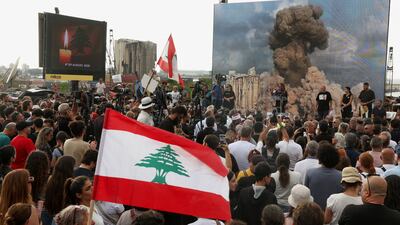
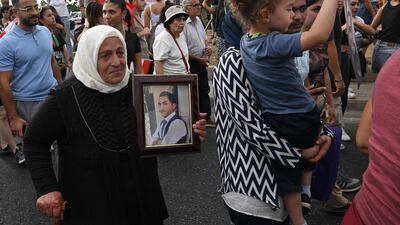
People attend a gathering in Beirut as Lebanon marks the fifth anniversary of the port blast. Reuters -
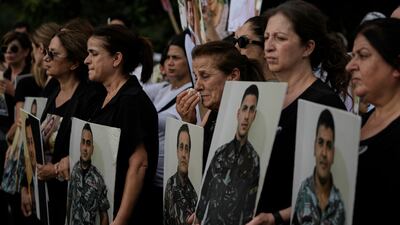
Relatives of victims hold portraits of their loved ones during the gathering. AP -
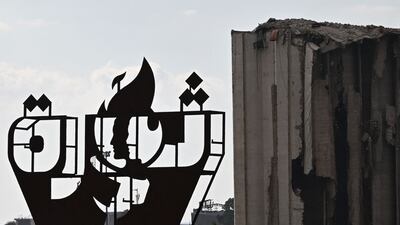
A metal installation set up across from the destroyed Beirut port silos. AFP -
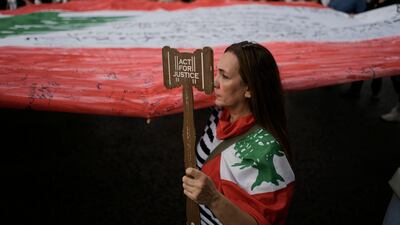
A woman holds a mock judge's gavel. AP -
Demonstrators march during the gathering. AFP -
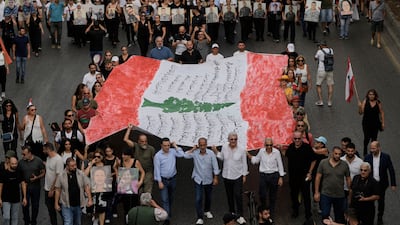
Relatives of victims hold portraits of their loved ones and carry the Lebanese flag. AP


Damascus still faces a major challenge from Israel in the south, although the US is encouraging both sides to build on their face-to-face talks this year. Progress in those talks is necessary to avoid major armed conflict next year, to roll back Israeli occupation of Syrian lands, and to help find a positive resolution to Druze demands.
If Mr Al Shara continues to push in the direction that he claims he is pushing, and with oversight and support from key friends of Syria, the country could see consolidation and gradual progress next year.
In Lebanon, the stakes are equally high. The devastation of Hezbollah and collapse of the Assad regime last year enabled the rise of a new nationalist and reformist executive branch in Lebanon this year, including a new president, prime minister and government.
The Lebanese army is completing phase one of its national deployment plan: it has established operational control over the south of the country (the area south of the Litani River) after an absence of more than 40 years, disarming and replacing Hezbollah there. It has also taken back control of much of the Lebanon-Syria border, the airport and the port.
Hezbollah – with support and insistence from Iran’s Islamic Revolutionary Guard Corps – is refusing to disarm, making the army’s task that much harder. Nevertheless, the army is re-establishing state sovereignty in all parts of the country – according to a phased plan – but still wants to avoid a direct armed clash with Hezbollah, which risks spilling into sectarian conflict and civil war.
Israel is also making the government’s task harder by refusing to comply with the Cessation of Hostilities agreement of November 2024, and refusing to withdraw from any Lebanese occupied territories or stop daily bombings. And this despite the widening of direct Lebanese-Israeli talks that seek to find a negotiated way forward for the two countries.
Next year, the army needs urgent support from regional and international players to continue its reclaiming of state sovereignty across the country. Diplomatically the state needs international help to press Israel to engage with Lebanon and enable – rather than obstruct – the resurgence of state authority in the country.
Beirut also needs international help in pressing Iran to accept the Lebanese state’s revival and urge Hezbollah to end its militia status and disarm, as other Lebanese militias disarmed and integrated into the state in the recent past. At the end of the day, the decision to hand over Iranian weapons in the hands of Hezbollah is a decision that cannot be taken in Beirut, but only in Tehran.
In the meantime, the new government has also moved to tackle the crippling banking, economic and financial collapse that has devastated the population. The last of three strategic laws to address the collapse of 2019 will be sent by government to Parliament in the next few weeks.
If Parliament does its job, then 2026 could see the implementation of critical reforms that could begin to restore to the public at least part of their losses, rebuild a slimmed down and transparent new banking system, and enable the country to attract foreign and diaspora investment.
Syria and Lebanon have seen dramatic political changes over the past 12 months, which had not been seen in decades. And their fates are intertwined. Although their pathways remain strewn with challenges and risks, they both have a chance at rebuilding the promise of a more stable and prosperous future that their populations so desperately need. That would be a boon to the region as well.

