


Since returning to power in January, US President Donald Trump has thrown the world into confusion with contradictory moves – issuing ultimatums and deadlines only to walk them back.
This was the case on in the early hours of Sunday morning, too, when he attacked three of Iran’s nuclear facilities after having earlier announced that he would give two weeks’ time for the ongoing Israel-Iran war to be resolved diplomatically.
Mr Trump had usually been averse to wars and their consequences. He has often been influenced by the last person to interact with him, whoever that might be, particularly if he or she offered him a political safety net. Yet on Saturday, he shed the pejorative tag “Taco” – or “Trump Always Chickens Out” – which he earned for his on-again, off-again tariff war with the rest of the world.
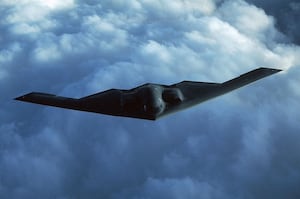
The US strikes have left the international community unable to predict what its President will do next on the Iran issue, and whether he even has an exit strategy.
Iran’s supreme leader, Ayatollah Ali Khamenei, faces a different predicament. The US, no matter what Mr Trump chooses, is more or less capable of weathering the fallout. Iran, on other hand, will find itself teetering on the edge of devastation if Mr Khamenei widens the war to defend his establishment at the country’s expense.
So who now has the initiative?
Peering into Mr Trump’s mind to understand how he thinks is a near impossible task. He is convinced that the art of negotiation and inducements can still help convince Tehran to abandon its nuclear and ballistic missiles programmes, as well as its doctrine of expansionism, and make peace. Deep down, the US President appears to believe that if he were to sit face to face with Mr Khamenei, he could persuade him to strike a deal.
Mr Trump’s demand that Iran surrender unconditionally appeared to have stirred the establishment’s instinct, making it react viscerally to what it views as humiliating rhetoric. And so in the run-up to the strikes, Tehran made it clear that if Washington enters the conflict directly, all options would be on the table – from closing the Strait of Hormuz to activating its armed proxies in the region and attacking American interests. It also boasted of hitting Israeli cities with its missiles and insisted that nothing can bring down the establishment in Tehran.
Yet it had to take a step back, particularly after concluding that neither Russia nor China were prepared to stand with it, despite their security pacts. It sought help from the European troika of France, Germany and the UK – countries that were involved in the 2015 Iran nuclear deal – to end the war. But the talks involving Iranian Foreign Minister Abbas Araghchi failed to make a breakthrough.
French President Emmanuel Macron floated a proposal involving three pillars: curbing Iran’s nuclear programme, its ballistic missiles programme and its funding of regional armed groups. Those pillars still stand, should Mr Khamenei accept the diplomatic exit from this war.
Mr Macron’s statement marked a shift in the framework of the US-Iran bilateral talks led by Mr Araghchi and Mr Trump’s envoy, Steve Witkoff, brokered by Oman, which focused solely on the nuclear issue. Those five rounds misled Iran – or Iran misled itself – into believing it had succeeded in excluding missiles and proxies from the negotiations. But Israel’s pre-emptive military actions aborted the chances of Mr Trump and his envoy being ensnared by Iran’s negotiating tactics.
The hardening of public positions on all sides suggests there is little room for Iranian concessions on any of these issues. Yet what might unfold behind the scenes could force Iran’s leaders into making trade-offs in exchange for silent guarantees that they stay in power, effectively thwarting Israel’s effort to end their rule.
Mr Khamenei now stands in the shadow of his predecessor, Ayatollah Ruhollah Khomeini, who once said he had to drink from a poisoned chalice when he agreed to a ceasefire that ended Iran’s eight-year war with Iraq in 1988 for the sake of regime preservation. What does Mr Khamenei intend to do to prevent its collapse?
-
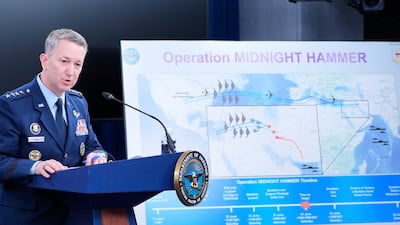
Gen Dan Caine, Chairman of the Joint Chiefs of Staff, holds a press conference at the Pentagon after the US military struck three sites in Iran. AP -
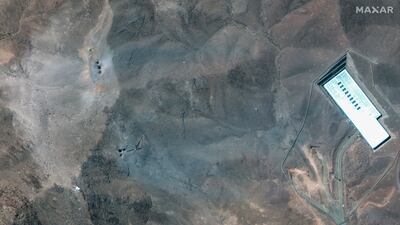
A handout satellite image made available by Maxar Technologies shows craters and ash on a ridge at the Fordow underground uranium enrichment following US air strikes. EPA -
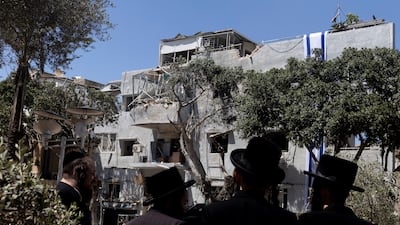
Ultra-Orthodox Jewish men look in shock at a building ruined in an Iranian missile strike in Haifa, Israel. Getty Images -
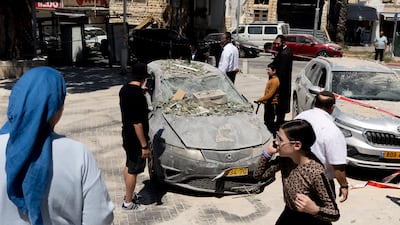
Cars damaged in Haifa. Getty Images -
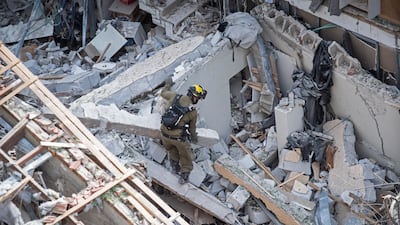
Debris in Tel Aviv. Israel was hit by a wave of aerial attacks from Iran after the US entered the war overnight and bombed several Iranian nuclear sites. Getty Images -
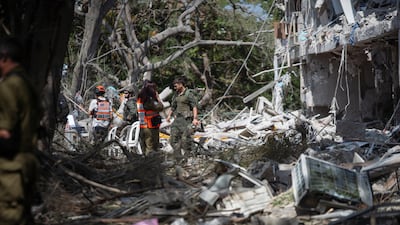
Emergency workers search for survivors in the Ramat Aviv neighbourhood of Tel Aviv, after it was bombed. Getty Images -
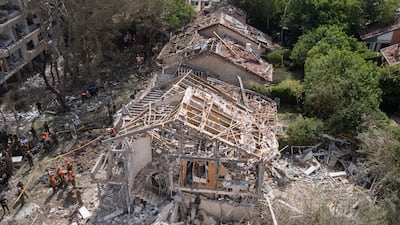
Residential buildings destroyed at the site of an Iranian air strike in Ramat Aviv. Getty Images -
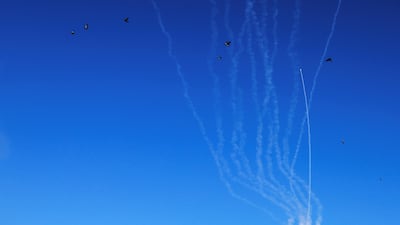
Missiles launched from Iran are intercepted over Tel Aviv. Reuters -
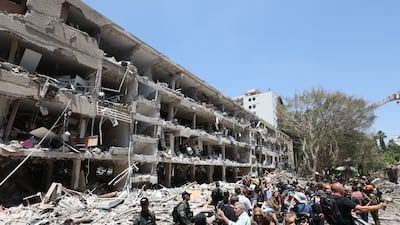
Israeli emergency teams at the site of an Iranian missile strike on a residential complex in Tel Aviv. EPA -
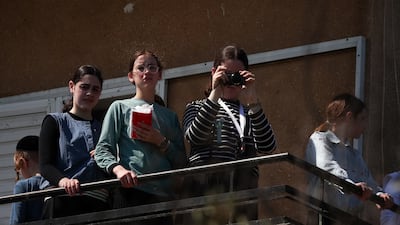
People look at a site bombed in Haifa. Reuters -
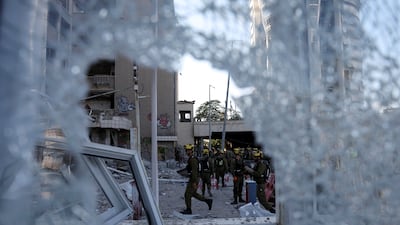
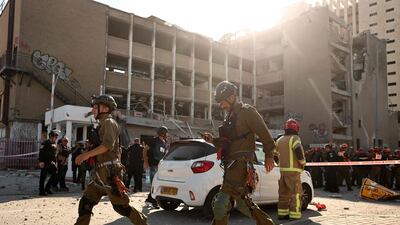
Israeli emergency personnel at a building hit by an Iranian missile strike, in Haifa. Reuters -
Israeli emergency personnel at a building hit by an Iranian missile strike, in Haifa. AFP -
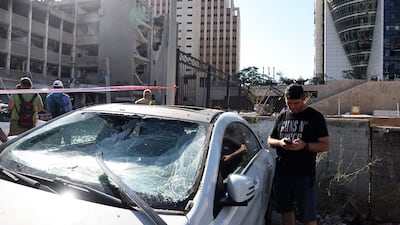
A car hit by a missile launched from Iran, in Haifa. AFP -

Israeli emergency personnel at a building hit by an Iranian missile strike, in Haifa. AFP -
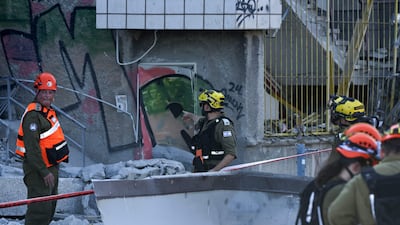
Israeli emergency personnel at a building hit by an Iranian missile strike, in Haifa. AFP -
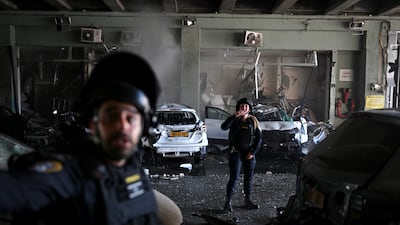
Israeli emergency personnel at a building hit by an Iranian missile strike, in Haifa. AFP -
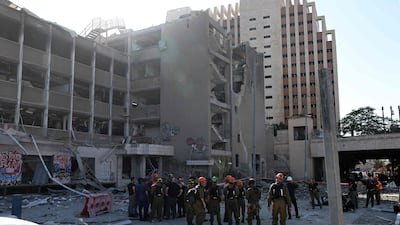
Israeli emergency personnel at a building hit by an Iranian missile strike, in Haifa. AFP -
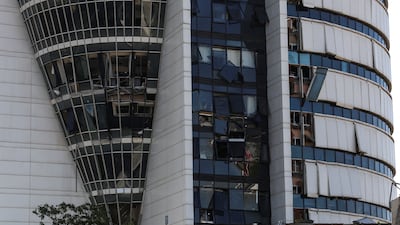
People gather outside a damaged building in Haifa. Reuters -
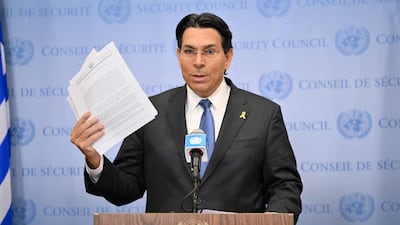
Israeli ambassador to the UN in Geneva addresses and emergency session. AFP -
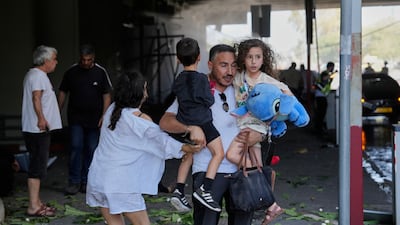
Israelis flee an Iranian missile strike in the port city of Haifa. AP Photo -
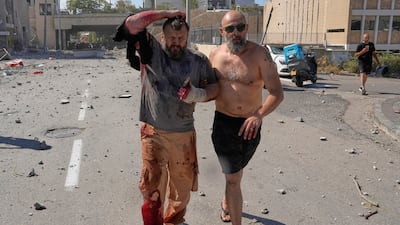
An injured man is helped after an Iranian missile strike in Haifa. AP Photo -
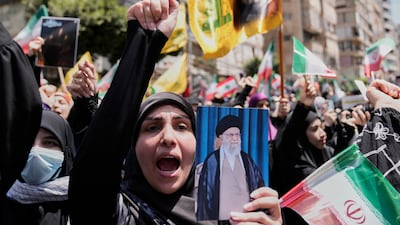
A protester holds up a portrait of Iran's supreme leader Ayatollah Ali Khamenei at a demonstration against Israeli attacks on Iran, in Beirut, Lebanon. AP Photo -
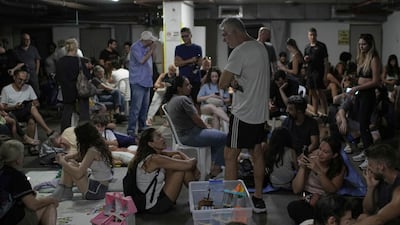
People take shelter as air raid sirens warn of incoming Iranian strikes in Tel Aviv. AP Photo -
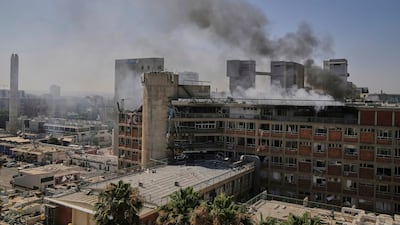
Smokes rises from Soroka Medical Centre, in Beersheba, southern Israel, after it was hit by an Iranian missile. AP -
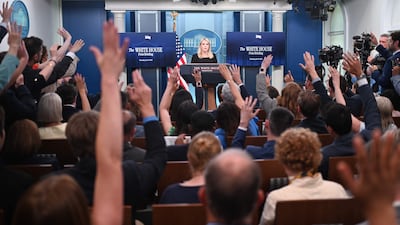
White House press secretary Karoline Leavitt takes questions from reporters. She said President Donald Trump would decide whether the US would join Israel’s war on Iran 'in the next two weeks'. AFP -
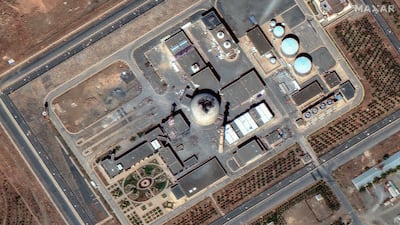
Iran's Arak heavy water reactor, in central Iran, after Israeli air strikes. Reuters -
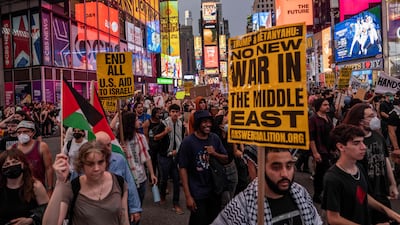
People march in Times Square, New York, to call on President Trump not to go to war with Iran. AFP -
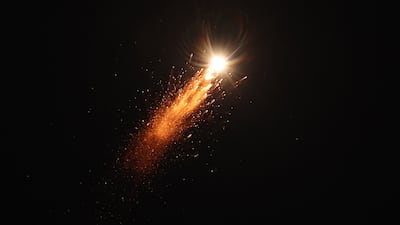
Israel's Iron Dome air defence system intercepts missiles fired from Iran over Tel Aviv. EPA -
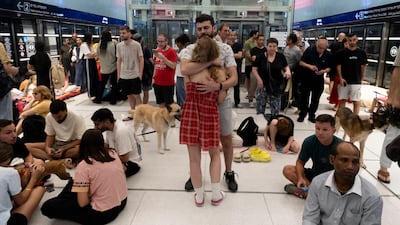
Israelis shelter in an underground train station in Ramat Gan after a missile warning. Getty Images -
Israeli special forces check the remains of a suspected Iranian ballistic missile in northern Israel. Reuters -
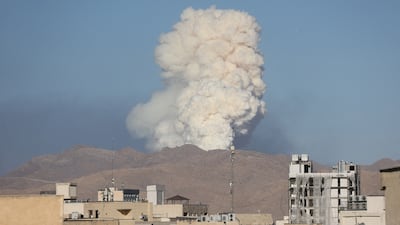
Smoke rises after an Israeli attack in the Iranian capital, Tehran. Reuters -
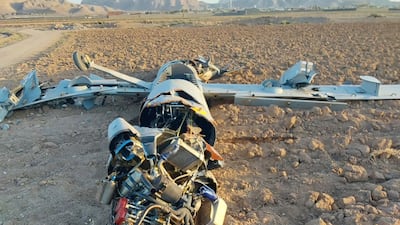
A picture released by Iran's armed forces claims to show an Israeli drone shot down outside the central city of Isfahan. AP -
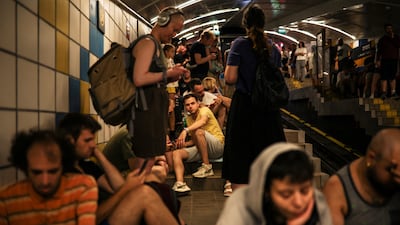
People take cover inside a cable car tunnel in Haifa after an Iranian missile attack. Reuters -
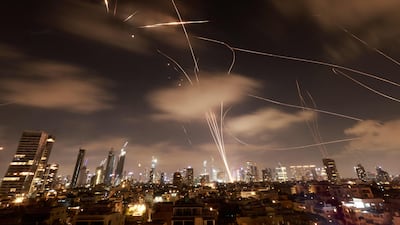
Israeli air defence systems fire at Iranian missiles over Tel Aviv. AFP -
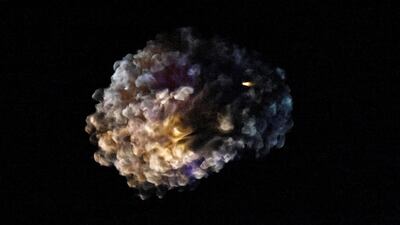
Missiles are intercepted above Ashkelon, Israel. Reuters -
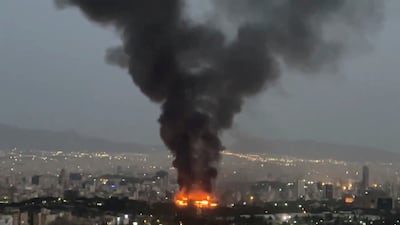
Smoke rises in Tehran. Reuters -
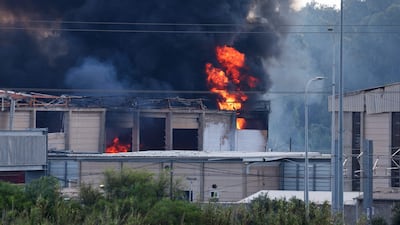
A building burns after strikes on the Israeli city of Herzliya, near Tel Aviv. AFP -
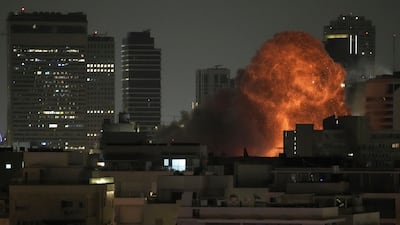
An Iranian missile causes an explosion in Tel Aviv. AP -
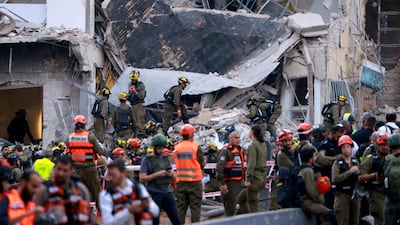
Rescuers sift through the remains of a damaged building in Tel Aviv after a barrage of Iranian rockets. AFP -

A wounded man is treated after an explosion in Tehran. AP


Will he decide that inflicting damage on Israel’s infrastructure and rousing Iranian pride are both key to its survival? Or is a deal on the horizon after the US stepped in as a direct actor in this war? In other words, will the internal divisions between hardliners and reformists in the Islamic Republic lead to the conclusion that reforming the establishment’s doctrine is the only means to ensure its survival?
The Israel-Iran war of attrition has already cost both sides, and each is boasting of having inflicted serious damage on the other. Israel has made it clear that this is Mr Trump’s war as much as its own. The losses Israel has suffered have made it unwilling to continue serving as a proxy in the US-led war. This is a qualitative shift in the equation.
Perhaps this is now a duel between Mr Trump and Mr Khamenei. Or perhaps this is a war between the extremist ideologies that govern both Iran and Israel, and which the US seeks to tame. Perhaps it’s both.
Israeli Prime Minister Benjamin Netanyahu rejects any fundamental solution in the Middle East because his hard-right government’s ideology precludes accepting a Palestinian state, just as the ideology of the Islamic Republic precludes a normal Middle East as long as it pursues Iranian hegemony enforced by armed proxies.
We will know soon if Iran’s rulers are genuinely ready to compromise and secure a deal to preserve their rule, or if the hardliners within effectively embrace existential self-harm. Either way, unlike in the past, today the tactic of buying time has diminishing returns for the Islamic Republic.

