


We all have distinct memories of the onset of the pandemic five years ago.
The first Covid-19 case in the UAE was confirmed at the end of January 2020, but at that time it was possible to think that this would be a temporary bump in the road rather than a full-blown global crisis. How quickly times changed.
By the beginning of March 2020, however, UAE schools took an early spring break as a precautionary measure designed to contain the spread of the virus and were then required to switch to distance learning. On March 11, the World Health Organisation declared it a pandemic. By the end of the month five years ago, a nationwide disinfection campaign had begun and our everyday routines had changed. Somewhere in between those calendar points, it became clear that we were moving into exceptional times.
The rest of the opening phase of what was then termed the “coronavirus” crisis exists for me as a patchwork of non-linear moments: the last day in the newsroom before we switched fully to WFH protocols, the beautiful spring weather that provided the backdrop to those first few days of confusion as we sat at home and the compulsive viewing that the regular TV briefings provided about what was happening across the country.
There were evenings playing board games with family and visits to supermarkets and pharmacies, which felt like incredible and challenging adventures at the time. There were fluffed Zoom calls and also moments of great connection. There were health scares and pockets of personal sadness. This was a period filled with the most visceral and prosaic moments.
Our horizons shrank a little more each time the crisis grew bigger. Each piece of news or updated policy requirement seemed more consequential than the last. Every development took us further towards a so-called “new normal”.
What was to become clear later was that the relative universality of experience of the first phase of the pandemic – with its silent streets and stay-at-home orders – stood in marked contrast to how the virus applied itself to each of us.
Some who contracted the virus will have experienced few symptoms, others faced a catastrophic set of circumstances. There may be many who are still dealing with “long” Covid. Some global communities suffered near overwhelming moments of dark tragedy, others were relatively untouched.
Despite the story of Covid-19 being largely told through statistics, caseloads and dashboards, it was a human crisis at heart – and a markedly uneven one.
There was also much to be thankful for, of course. The UAE’s considered approach to the pandemic placed it in the top tier of global resilience indices. The national response was to roll out a comprehensive vaccine programme with a regular testing regimen and combine it with a tech-based response aimed at providing clarity and certainty for citizens and residents.
More generally, this five-year anniversary is a reminder of how quickly memories fade from such consequential times. Most of the infrastructure of the pandemic response is no longer there. Even the vocabulary of the pandemic seems distant and in decline now. Not just new normals, but the complex discussion of new variants arriving in intense and unexpected waves, as well as the requirements for self-isolation, quarantine periods, booster shots, testing regimens and so on.
Occasionally in the back of a drawer at home, I may come across an unopened pack of face masks, which were our constant companions until February 2022, when mandates were initially relaxed. Ever more infrequently, I might still chance upon one of the last reminders of that era: a sticker or a sign in a public space that encourages social distancing. The temporary tents where we used to queue to have a PCR test were disassembled long ago and the dusty lots on to which they were imposed have become just that again.
-
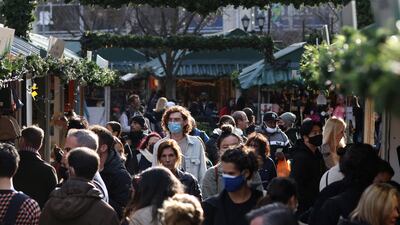
People walk through Union Square Holiday Market, in New York, as the Omicron coronavirus variant continues to spread. Reuters -
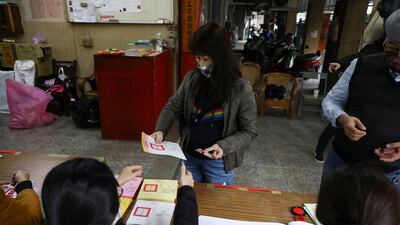
A woman receives ballots at a polling station in Taiwan. Reuters -
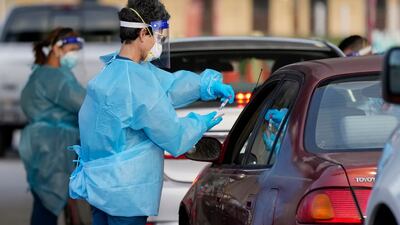
Health workers perform Covid-19 checks at a drive-through testing centre at Tropical Park, Florida. AP -
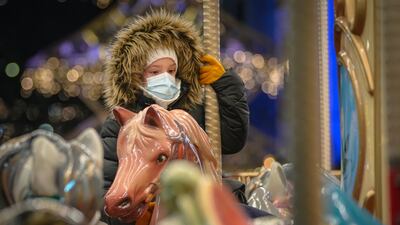
A child wearing a mask rides on a carousel at a Christmas fair in Bucharest, Romania. AP -
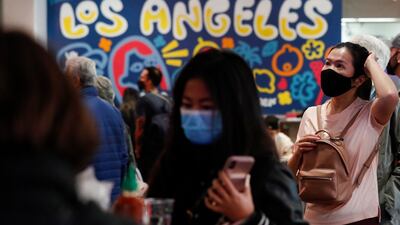
People wear face masks inside Grand Central Market in Los Angeles. EPA -
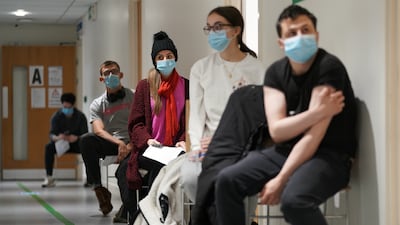
People wait to receive a Covid-19 vaccine doses during a 24-hour “jabathon” in Haringey, London. PA -
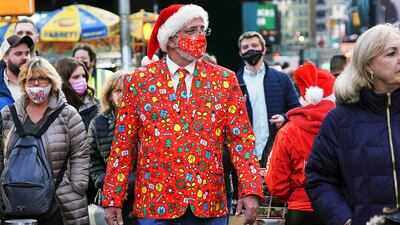
A man wearing a festive jacket, tie and matching mask walks through Times Square in New York. Reuters


Many of us will have speculated back then about what would be left behind after the big shock of 2020 and concluded that it would be most things, yet the anecdotal evidence above suggests a different conclusion. A recent piece of commentary in the Financial Times ran with the headline “The pandemic that didn’t change the world”, ranking it well below era-defining moments such as the fall of the Soviet Union and the election of Donald Trump and reminding readers that all times are transient.
A further review might deliver another interpretation. The signposts and structure of the pandemic may have receded, but the pandemic’s legacy is still all around us.
On an individual level, our lives have been thoroughly rewired. While social distancing is no longer a phrase used regularly, spontaneity may be in shorter measure. The pandemic has also made us more aware of self-care and of mental health.
That period may have also fast-tracked our fixation with a world lived on screens. The habits and practices we all formed in the first phase of the pandemic of relentless checking, scrolling and living through digital means have calcified into regular routines with potentially dangerous consequences.
More broadly, the unpredictability and unevenness of the pandemic have set the geopolitical agenda for the entire decade. Global politics are shifting at a far quicker pace than ever before. Notions of isolationism may also have their roots in 2020.
The legacy of five years ago will be with us for years to come.

