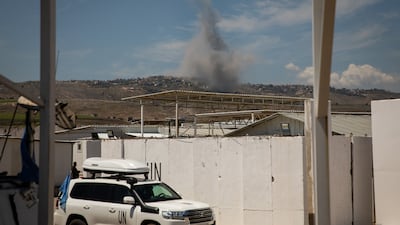
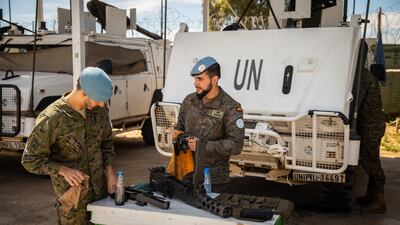
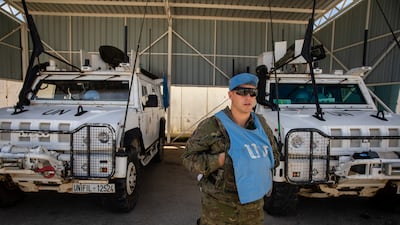
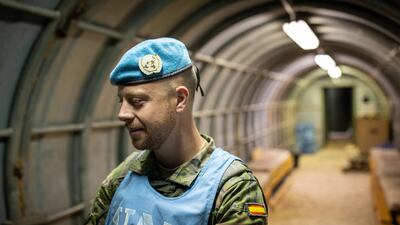
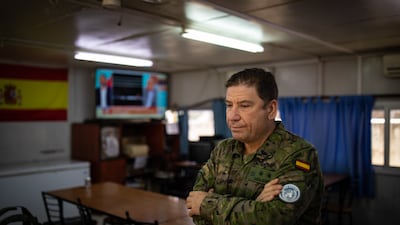
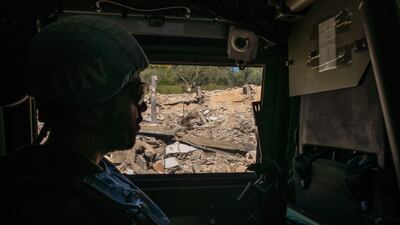
I was in office as president of Lebanon’s Council of Ministers when Israel last invaded, in July 2006, causing death and destruction. Our main concern then was that the war would also damage the fabric of Lebanese society. The trauma caused by such brutality eventually divided the country and dented the fundamental principles of coexistence upon which it was built. Another war will destroy these principles, with repercussions across the whole region.
Physical reconstruction is always possible after a devastating war, but the political impact and the ideas that emerge from it are far more dangerous and difficult to reverse. At stake is what the late Pope John Paul II described as Lebanon’s mission: to demonstrate that coexistence and conviviality are possible among different religions, not just in Lebanon but in the wider region. Lebanon sends the world a message of immense significance: that religion brings people together rather than separating them.
Lebanon cannot survive another war; the Lebanon we know could disappear and a far more dangerous entity may emerge. The prosperity of Lebanon is in its example that Muslims and Christians can live together, that they share a common history and a common future. It is not about numbers but about roles – the whole adds up to more than the sum of its parts because of the roles played by each community. The Christians of Lebanon, who were open to the West and the Arab world, built important educational, medical, cultural and business institutions from which the entire region benefited.
We are still trying to heal the wounds from the 2006 war and the prospect of another is making things even worse. Some are calling for separation and partition, with extremists and pessimists influencing the debate.
Circumstances in 2006 were different. We survived that war because Lebanon had a functioning state with a president, a strong and leading government as well as an elected parliament. Most importantly, we managed to unite the country in solidarity with the victims. We had strong Arab and international support, including at the UN. Our opinions were sought, and we managed to stop the war through an Arab initiative and international involvement. The Arab initiative at the UN was timely and effective, a shining example of Arab co-operation. UN Security Council Resolution 1701 that stopped the war was a feat of Arab and international co-operation, which is desperately needed now for Gaza.
After the fighting stopped in mid-August 2006, there was a rush to help Lebanon, mainly from the Gulf states but also from international initiatives. People were back in their villages in South Lebanon within two weeks, the incentive being direct grants for the reconstruction of their homes. Schools were open by November, a couple of months after the cessation of hostilities. The government also played a leading role in the rehabilitation of the country. A summit of spiritual leaders organised by the Maronite Patriarchate played a vital part in preserving unity in the country and in supporting the people of South Lebanon. The show of national unity and co-operation was heart-warming. The economy picked up and we had growth afterwards for several years.
We are still trying to heal the wounds from the 2006 war and the prospect of another is making things even worse
It is only after the dust settled that the political consequences emerged. Hezbollah, after fully consenting to Resolution 1701 in the Council of Ministers, reversed its position and openly opposed the Seven-Point Plan that ended the hostilities. Assassinations continued at regular intervals. Occupation of Beirut’s main business district in November 2006, followed by an attack on the city in May 2008, further damaged the economy. A coup against the Saad Hariri government in January 2011 also dented our relations with some Arab countries and the international community. All this and the fallout from the Syrian civil war ultimately led to the current economic collapse and a paralysing political crisis.
Lebanon has never been more divided over the role of Hezbollah versus that of the state. State institutions are crumbling; for the third time in about 15 years we are without a president and an effective government and our parliament is blocked. We are still dealing with the consequences of the Syrian war with almost one third of the population being Syrian refugees. It is difficult to imagine how Lebanon will survive another war without international help, given that its institutions are paralysed and its people polarised. The country is also isolated; we no longer have the level of Arab and the international support we had before.
A positive result of wars is when people, confronted by its horrors, decide to come to their senses. Wars can trigger a re-evaluation of ideas and institutions as well as a discussion about how to avoid further hatred and destruction. We saw this in post-war Europe where this process led to the EU.
The horrors we have seen so far in Gaza are enough to push us all in in the right direction. All parties should come back to their senses and figure out a way to a better future. Justice for the Palestinians should be at the heart of this move, in which they are entitled to have their independent and sovereign state.
Western powers, especially the US, have an important role to play. They must re-evaluate their shameful support of Israel’s war, stop supporting a self-destructive adventure that can threaten the whole regional and international order, and implement a ceasefire as soon as possible.
The outcome of the Gaza war should not lead to more wars. We should all go back to the drawing board and create peace in the Middle East for the sake of the next generation. In the meantime, all efforts should focus on avoiding a destructive war on Lebanon.

The%20specs%20
%3Cp%3E%3Cstrong%3EEngine%3A%20%3C%2Fstrong%3E2.0-litre%204cyl%20turbo%0D%3Cbr%3E%3Cstrong%3EPower%3A%20%3C%2Fstrong%3E261hp%20at%205%2C500rpm%0D%3Cbr%3E%3Cstrong%3ETorque%3A%20%3C%2Fstrong%3E400Nm%20at%201%2C750-4%2C000rpm%0D%3Cbr%3E%3Cstrong%3ETransmission%3A%20%3C%2Fstrong%3E7-speed%20dual-clutch%20auto%0D%3Cbr%3E%3Cstrong%3EFuel%20consumption%3A%20%3C%2Fstrong%3E10.5L%2F100km%0D%3Cbr%3E%3Cstrong%3EOn%20sale%3A%20%3C%2Fstrong%3ENow%0D%3Cbr%3E%3Cstrong%3EPrice%3A%20%3C%2Fstrong%3EFrom%20Dh129%2C999%20(VX%20Luxury)%3B%20from%20Dh149%2C999%20(VX%20Black%20Gold)%3C%2Fp%3E%0A
The%20Color%20Purple
%3Cp%3E%3Cstrong%3EDirector%3A%20%3C%2Fstrong%3EBlitz%20Bazawule%3Cbr%3E%3Cstrong%3EStarring%3A%20%3C%2Fstrong%3EFantasia%20Barrino%2C%20Taraji%20P%20Henson%2C%20Danielle%20Brooks%2C%20Colman%20Domingo%3Cbr%3E%3Cstrong%3ERating%3A%3C%2Fstrong%3E%204%2F5%3C%2Fp%3E%0A
'HIJRAH%3A%20IN%20THE%20FOOTSTEPS%20OF%20THE%20PROPHET'
%3Cp%3E%3Cstrong%3EEdited%20by%3A%3C%2Fstrong%3E%20Idries%20Trevathan%3Cbr%3E%3Cstrong%3EPages%3A%3C%2Fstrong%3E%20240%3Cbr%3E%3Cstrong%3EPublisher%3A%3C%2Fstrong%3E%20Hirmer%20Publishers%3Cbr%3E%3Cstrong%3EAvailable%3A%3C%2Fstrong%3E%20Now%3C%2Fp%3E%0A
Company Profile
Name: Thndr
Started: 2019
Co-founders: Ahmad Hammouda and Seif Amr
Sector: FinTech
Headquarters: Egypt
UAE base: Hub71, Abu Dhabi
Current number of staff: More than 150
Funds raised: $22 million
Griselda
%3Cp%3E%3Cstrong%3EDirector%3A%3C%2Fstrong%3E%C2%A0Andr%C3%A9s%20Baiz%3C%2Fp%3E%0A%3Cp%3E%3Cstrong%3EStarring%3A%C2%A0%3C%2Fstrong%3ESof%C3%ADa%20Vergara%2C%20Alberto%20Guerra%2C%20Juliana%20Aiden%20Martinez%3C%2Fp%3E%0A%3Cp%3E%3Cstrong%3ERating%3A%3C%2Fstrong%3E%204%2F5%3C%2Fp%3E%0A
ARGENTINA SQUAD
Goalkeepers: Franco Armani, Agustin Marchesin, Esteban Andrada
Defenders: Juan Foyth, Nicolas Otamendi, German Pezzella, Nicolas Tagliafico, Ramiro Funes Mori, Renzo Saravia, Marcos Acuna, Milton Casco
Midfielders: Leandro Paredes, Guido Rodriguez, Giovani Lo Celso, Exequiel Palacios, Roberto Pereyra, Rodrigo De Paul, Angel Di Maria
Forwards: Lionel Messi, Sergio Aguero, Lautaro Martinez, Paulo Dybala, Matias Suarez
SPECS
%3Cp%3EEngine%3A%20Twin-turbocharged%204-litre%20V8%3Cbr%3EPower%3A%20625%20bhp%3Cbr%3ETorque%3A%20630Nm%3Cbr%3EOn%20sale%3A%20Now%3Cbr%3EPrice%3A%20From%20Dh974%2C011%3C%2Fp%3E%0A
PROFILE OF INVYGO
Started: 2018
Founders: Eslam Hussein and Pulkit Ganjoo
Based: Dubai
Sector: Transport
Size: 9 employees
Investment: $1,275,000
Investors: Class 5 Global, Equitrust, Gulf Islamic Investments, Kairos K50 and William Zeqiri
WHAT IS A BLACK HOLE?
1. Black holes are objects whose gravity is so strong not even light can escape their pull
2. They can be created when massive stars collapse under their own weight
3. Large black holes can also be formed when smaller ones collide and merge
4. The biggest black holes lurk at the centre of many galaxies, including our own
5. Astronomers believe that when the universe was very young, black holes affected how galaxies formed
Kamindu Mendis bio
Full name: Pasqual Handi Kamindu Dilanka Mendis
Born: September 30, 1998
Age: 20 years and 26 days
Nationality: Sri Lankan
Major teams Sri Lanka's Under 19 team
Batting style: Left-hander
Bowling style: Right-arm off-spin and slow left-arm orthodox (that's right!)
Mercer, the investment consulting arm of US services company Marsh & McLennan, expects its wealth division to at least double its assets under management (AUM) in the Middle East as wealth in the region continues to grow despite economic headwinds, a company official said.
Mercer Wealth, which globally has $160 billion in AUM, plans to boost its AUM in the region to $2-$3bn in the next 2-3 years from the present $1bn, said Yasir AbuShaban, a Dubai-based principal with Mercer Wealth.
“Within the next two to three years, we are looking at reaching $2 to $3 billion as a conservative estimate and we do see an opportunity to do so,” said Mr AbuShaban.
Mercer does not directly make investments, but allocates clients’ money they have discretion to, to professional asset managers. They also provide advice to clients.
“We have buying power. We can negotiate on their (client’s) behalf with asset managers to provide them lower fees than they otherwise would have to get on their own,” he added.
Mercer Wealth’s clients include sovereign wealth funds, family offices, and insurance companies among others.
From its office in Dubai, Mercer also looks after Africa, India and Turkey, where they also see opportunity for growth.
Wealth creation in Middle East and Africa (MEA) grew 8.5 per cent to $8.1 trillion last year from $7.5tn in 2015, higher than last year’s global average of 6 per cent and the second-highest growth in a region after Asia-Pacific which grew 9.9 per cent, according to consultancy Boston Consulting Group (BCG). In the region, where wealth grew just 1.9 per cent in 2015 compared with 2014, a pickup in oil prices has helped in wealth generation.
BCG is forecasting MEA wealth will rise to $12tn by 2021, growing at an annual average of 8 per cent.
Drivers of wealth generation in the region will be split evenly between new wealth creation and growth of performance of existing assets, according to BCG.
Another general trend in the region is clients’ looking for a comprehensive approach to investing, according to Mr AbuShaban.
“Institutional investors or some of the families are seeing a slowdown in the available capital they have to invest and in that sense they are looking at optimizing the way they manage their portfolios and making sure they are not investing haphazardly and different parts of their investment are working together,” said Mr AbuShaban.
Some clients also have a higher appetite for risk, given the low interest-rate environment that does not provide enough yield for some institutional investors. These clients are keen to invest in illiquid assets, such as private equity and infrastructure.
“What we have seen is a desire for higher returns in what has been a low-return environment specifically in various fixed income or bonds,” he said.
“In this environment, we have seen a de facto increase in the risk that clients are taking in things like illiquid investments, private equity investments, infrastructure and private debt, those kind of investments were higher illiquidity results in incrementally higher returns.”
The Abu Dhabi Investment Authority, one of the largest sovereign wealth funds, said in its 2016 report that has gradually increased its exposure in direct private equity and private credit transactions, mainly in Asian markets and especially in China and India. The authority’s private equity department focused on structured equities owing to “their defensive characteristics.”
Chris%20Jordan%20on%20Sanchit
%3Cp%3EChris%20Jordan%20insists%20Sanchit%20Sharma%20will%20make%20an%20impact%20on%20the%20ILT20%2C%20despite%20him%20starting%20the%20campaign%20on%20Gulf%20Giants'%20bench.%3Cbr%3EThe%20young%20UAE%20seamer%20was%20an%20instant%20success%20for%20the%20side%20last%20season%2C%20and%20remained%20part%20of%20the%20XI%20as%20they%20claimed%20the%20title.%3Cbr%3EHe%20has%20yet%20to%20feature%20this%20term%20as%20the%20Giants%20have%20preferred%20Aayan%20Khan%20and%20Usman%20Khan%20as%20their%20two%20UAE%20players%20so%20far.%3Cbr%3EHowever%2C%20England%20quick%20Jordan%20is%20sure%20his%20young%20colleague%20will%20have%20a%20role%20to%20play%20at%20some%20point.%3Cbr%3E%22Me%20and%20Sanchit%20have%20a%20great%20relationship%20from%20last%20season%2C%22%20Jordan%20said.%3Cbr%3E%22Whenever%20I%20am%20working%20with%20more%20inexperienced%20guys%2C%20I%20take%20pleasure%20in%20sharing%20as%20much%20as%20possible.%3Cbr%3E%22I%20know%20what%20it%20was%20like%20when%20I%20was%20younger%20and%20learning%20off%20senior%20players.%3Cbr%3E%22Last%20season%20Sanchit%20kick-started%20our%20season%20in%20Abu%20Dhabi%20with%20a%20brilliant%20man-of-the-match%20performance.%3Cbr%3E%22Coming%20into%20this%20one%2C%20I%20have%20seen%20a%20lot%20of%20improvement.%20The%20focus%20he%20is%20showing%20will%20only%20stand%20him%20in%20good%20stead.%22%3C%2Fp%3E%0A
Joker: Folie a Deux
Starring: Joaquin Phoenix, Lady Gaga, Brendan Gleeson
Director: Todd Phillips
Rating: 2/5
Book%20Details
%3Cp%3E%3Cem%3EThree%20Centuries%20of%20Travel%20Writing%20by%20Muslim%20Women%3C%2Fem%3E%3Cbr%3E%3Cstrong%3EEditors%3A%20%3C%2Fstrong%3ESiobhan%20Lambert-Hurley%2C%20Daniel%20Majchrowicz%2C%20Sunil%20Sharma%3Cbr%3E%3Cstrong%3EPublisher%3A%20%3C%2Fstrong%3EIndiana%20University%20Press%3B%20532%20pages%3Cbr%3E%3C%2Fp%3E%0A
COMPANY%20PROFILE
%3Cp%3E%3Cstrong%3ECompany%20name%3A%3C%2Fstrong%3E%20OneOrder%3Cbr%3E%3Cstrong%3EStarted%3A%3C%2Fstrong%3E%20March%202022%3Cbr%3E%3Cstrong%3EFounders%3A%3C%2Fstrong%3E%20Tamer%20Amer%20and%20Karim%20Maurice%3Cbr%3E%3Cstrong%3EBased%3A%3C%2Fstrong%3E%20Cairo%3Cbr%3E%3Cstrong%3ENumber%20of%20staff%3A%20%3C%2Fstrong%3E82%3Cbr%3E%3Cstrong%3EInvestment%20stage%3A%3C%2Fstrong%3E%20Series%20A%3C%2Fp%3E%0A
Famous left-handers
- Marie Curie
- Jimi Hendrix
- Leonardo Di Vinci
- David Bowie
- Paul McCartney
- Albert Einstein
- Jack the Ripper
- Barack Obama
- Helen Keller
- Joan of Arc
Everybody%20Loves%20Touda
%3Cp%3E%3Cstrong%3EDirector%3A%3C%2Fstrong%3E%20Nabil%20Ayouch%C2%A0%3C%2Fp%3E%0A%3Cp%3E%3Cstrong%3EStarring%3A%3C%2Fstrong%3E%20Nisrin%20Erradi%2C%20Joud%20Chamihy%2C%20Jalila%20Talemsi%3C%2Fp%3E%0A%3Cp%3E%3Cstrong%3ERating%3A%20%3C%2Fstrong%3E4%2F5%3C%2Fp%3E%0A
Living in...
This article is part of a guide on where to live in the UAE. Our reporters will profile some of the country’s most desirable districts, provide an estimate of rental prices and introduce you to some of the residents who call each area home.