

In the high-stakes world of international diplomacy, a quiet revolution is under way. Amid the clamour of clashing superpowers and the wreckage of failed peace talks, a new force is emerging from the sun-scorched sands of the Gulf. After decades on the sidelines, the Gulf states are stepping into the spotlight, bringing a golden touch to mediation.
From the gleaming skyscrapers of Dubai to the ancient souks of Muscat, a new brand of diplomacy is taking root – one that is turning heads and can change the game in conflict zones around the globe. At first glance, it seems an unlikely role for these young but rich nations. But look closer, and you will see a region uniquely equipped to tackle today’s conflicts.
Gulf countries have been crucial in mediation efforts across regional and international disputes.
For instance, Qatar has been active for some time, with its successful mediation in the 2008 Lebanese crisis, hosting the US-Taliban talks in Doha, and most recently mediating between Israel and Hamas. Kuwait played a pivotal role in attempting to resolve Qatar’s fallout with some of the GCC countries from 2017 to 2021.
Saudi Arabia has traditionally tried to mediate the intra-Palestinian conflict with the Makkah Agreement and is looking to host talks between warring Sudanese factions. Oman’s discreet diplomacy facilitated the early discussions between the US and Iran that led to the 2015 nuclear deal.

The UAE has actively stepped into the mediation arena, notably with its pivotal role in the Ethiopia-Eritrea peace agreement in 2018, continuously facilitating prisoner-of-war exchanges between Russia and Ukraine, including one last month, and in the multilateral arena by hosting the Cop28 summit in Dubai.
But what sets the Gulf states’ approach apart from traditional western mediation? The answer lies in the heart of Arab culture and tradition.
Picture this: a traditional majlis, a welcoming space adorned with plush cushions and ornate carpets. It is here, over steaming cups of cardamom-spiced coffee, that the real magic happens. Conflicting parties are invited to sit, breathe, let their guard down, and engage in the kind of unhurried, face-to-face dialogue that is so often missing from the breakneck pace of modern diplomacy.
In the Gulf, the majlis is more than just a room – it’s a sacred space, a refuge from the din of the outside world where conflicts can be untangled one thread at a time. This concept is so powerful that Unesco has recognised it as a cultural treasure, a masterclass in the art of building social bonds and fostering community-driven solutions. Some have argued that the majlis was one of the critical instruments in fostering the ground-breaking UAE Consensus at the Cop28 negotiations.
But the majlis is just one piece of the puzzle. Gulf states are also guided by the principle of Sulh, an ancient Arab tradition that prioritises the pursuit of amicable settlements over zero-sum victories, long recognised by scholars as a critical element in the Arab approach to mediation. The goal is not just to stop the fighting but to lay the groundwork for lasting peace – a delicate dance that requires patience, finesse and a deep understanding of the local context.
It is an approach that starkly contrasts with the hard-charging, one-size-fits-all style of western mediation. In place of ultimatums and red lines, Gulf states offer flexibility and pragmatism. They understand that in a region where honour and reputation are paramount, sometimes the most effective way to resolve a dispute is not through public posturing but through quiet back channels and subtle gestures of respect.
Oman has carved out a niche as the “Switzerland of the Middle East”, using its neutrality to bring adversaries together under the radar.
In 1980, the US had to mediate to avert Oman’s involvement in Saddam Hussein’s war on Iran. In 2015, it was Oman that helped quietly broker the US-Iran deal that led to the JCPOA, turning the country into what the UK-based academic James Worrall aptly called an “interlocutor state”. Muscat employs a blend of traditional diplomacy and cultural wisdom, prioritising mediation and non-interference.
-
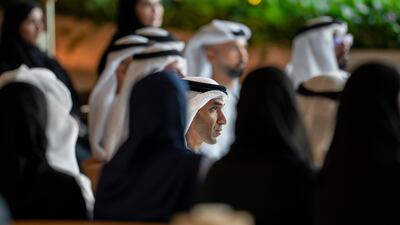
Dr Thani Al Zeyoudi, Minister of State for Foreign Trade, attends 'The UAE’s Humanitarian Legacy' at Majlis Mohamed bin Zayed. -
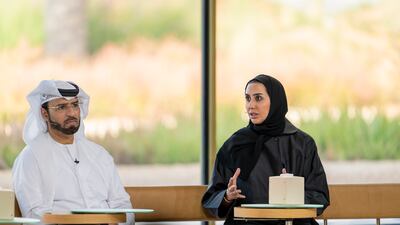
From right, Hessa Tahlak, assistant undersecretary for the social development sector at the Ministry of Community Development and Ali Al Mutawa, the secretary general of the Awqaf and Minors Affairs Foundation, at Majlis Mohamed bin Zayed. All Photos: UAE Presidential Court -
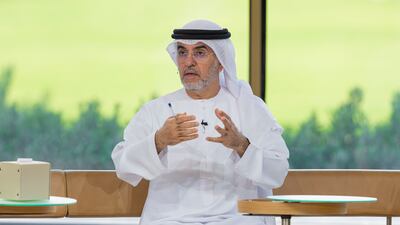
Dr Hamdan Al Mazrouei, chairman of the board of the Emirates Red Crescent Authority participates in a lecture titled 'The UAE’s Humanitarian Legacy', at Majlis Mohamed bin Zayed. -
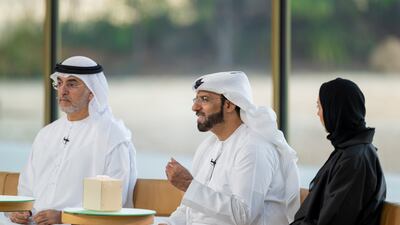
From left, Dr Hamdan Al Mazrouei, chairman of the board of the Emirates Red Crescent Authority, Ali Al Mutawa, secretary general of the Awqaf and Minors Affairs Foundation and Hessa Tahlak, assistant undersecretary for the social development sector at the Ministry of Community Development at Majlis Mohamed bin Zayed. -
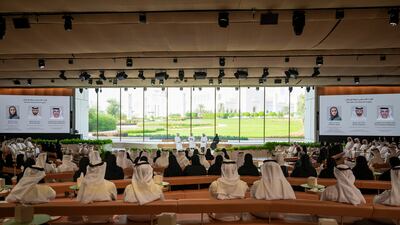
The philanthropic tradition established by UAE Founding Father, the late Sheikh Zayed bin Sultan Al Nahyan, runs deep in the veins of Emiratis, according to the Emirates Red Crescent's leading figure. -

The UAE is pursuing philanthropy with a wide range of campaigns. -

Guests attend a lecture titled 'The UAE’s Humanitarian Legacy', at Majlis Mohamed bin Zayed. -

Hessa Tahlak, assistant undersecretary for the social development sector at the Ministry of Community Development told guests: "We have been one of the leading countries in the world to have laws that streamline volunteering and humanitarian work." -
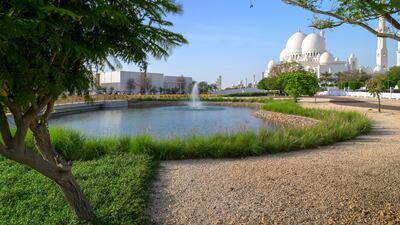
The view from outside the Majlis Mohamed bin Zayed.


The UAE is systematically carving its niche as “the consensus builder” and developing a track record of consistency, innovation and a positive negotiation approach.
Abu Dhabi’s style is characterised by its ability to ensure confidentiality and the capacity to talk with all sides. This is most visible in the UAE’s successful effort to mediate the largest exchange of prisoners of war between Russia and Ukraine in January and in ensuring agreement between the European Commission, Cyprus, the US and the UK on activating the maritime humanitarian aid corridor for Gaza.
On the multilateral stage, its two-year successful tenure in the UN Security Council (2022-2023) proved Abu Dhabi’s ability to act as a “bridge builder” between the Global North and South while representing Middle Eastern sensitivities and demonstrating that national interest can be subtly served through altruism.
Qatar has emerged as a “high-stakes mediator”, willing to take on the thorniest of conflicts. Qatar’s role diminished following the 2017 Gulf Crisis. Still, it re-emerged with a return to third-party mediation in the early 2020s, receiving widespread attention following the US-Taliban agreement and, most recently, the Gaza crisis.
Doha’s conflict resolution style involves engaging in several forms of conflict resolution, including preventive diplomacy, third-party mediation and support for multilateral conflict prevention.
Of course, this newfound clout in the mediation world has its pitfalls. The Gulf states must be cautious not to appear biased or self-interested. They will need to continuously prove their commitment to transparency and inclusivity, and strengthen partnerships with established bodies such as the UN, the primary global body responsible for maintaining international peace and security.
But the potential rewards are immense. With their vast resources, cultural savvy and knack for playing the long game, the Gulf states are uniquely positioned to untangle some of the world’s most intractable conflicts. As power fragments in an increasingly multipolar world, their star will continue to rise, buoyed by generational change and technological transformation.
Ultimately, the Gulf states offer a glimpse of a different kind of diplomacy – one rooted in the timeless wisdom of the majlis and the transformative power of Sulh. Their message is evident in a world desperate for healing: peace is possible, but it must be built from the inside out, one cup of coffee and one heartfelt conversation at a time.
So, the next time you hear of a breakthrough in some far-flung conflict, don’t be surprised if you see a Gulf state’s role in facilitating its resolution or de-escalation. With their unique blend of cultural finesse, economic clout and diplomatic daring, they are quietly rewriting peace-making rules for a new era. And as the winds of change sweep across the global order, their impact will only grow – a reminder that sometimes, the most enduring victories are won not through force but through patience and the steadfast pursuit of understanding.

