

I abhor violence, probably because I have spent more than half my life in the world’s most violent places.
I condemn the killing of any civilians, no matter their faith, race, or creed. I mourn all the dead in Palestine and Israel, and the dead do not distinguish whether they are Jewish, Muslim, Christian or atheist.
They are all victims of the actions taken by some politicians, warlords and leaders who put the safety of civilians far behind their own quest for power.
Successive Israeli governments have subjugated the Palestinian people for 75 years, while yet another military operation carried out by Hamas will once again have a tragic blowback on the Palestinians living in Gaza – the very people they are supposed to represent and protect.
I have worked in Gaza since 1990 and continue to work there. I have relationships that stretch back over decades.
I started out as a young journalist who was horrified by the events of the first intifada. Israeli tactics of torture, deportation, incarceration and indiscriminate attacks against civilians led me to do the work I do today – documenting and cataloguing potential war crimes in Ukraine.
While one might be able to hold Israel responsible for certain crimes, I am also aware of the deep fractures in Palestinian political life and their many flaws.
Following its actions on Saturday, Hamas has opened the gates of hell against their own people. So much for Hamas 2.0, the supposedly kinder and gentler face of terrorism, which was their last public diplomacy operation a few years ago.
It is important to remember, however, that all Palestinians should not be painted with Hamas’s violence brush.
-
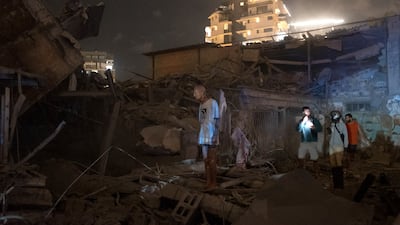
People survey the damage from a rocket fired from the Gaza Strip in Tel Aviv. AP -
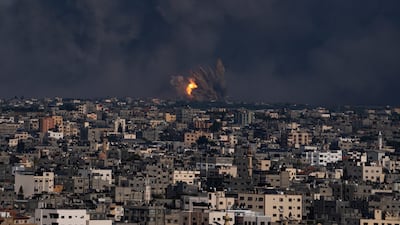
Fire and smoke rise following an Israeli air strike, in Gaza city. AP -
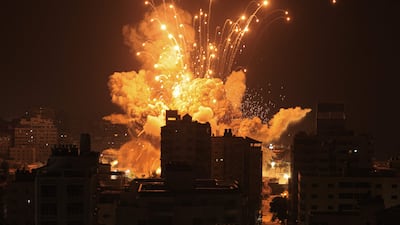
A missile explodes in Gaza city during an Israeli air strike. AFP -

New York City Police hold back Israeli supporters during a protest between Palestinian and Israeli demonstrators. EPA -

Relatives of an Israeli missing since a surprise attack by Hamas militants near the Gaza border during a press conference in Ramat Gan, Israel. AP -

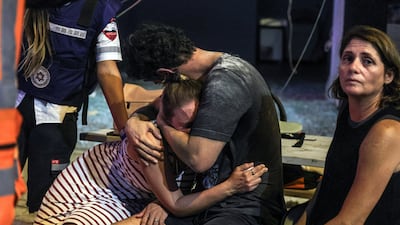
A relative of an Israeli missing since the attack by Hamas militants near the Gaza border sheds tears during a press conference in Ramat Gan, Israel. AP -
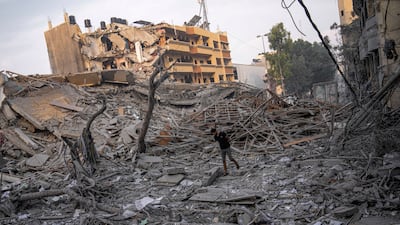
Palestinians inspect the rubble of a building after it was struck by an Israeli air strike, in Gaza city. AP -
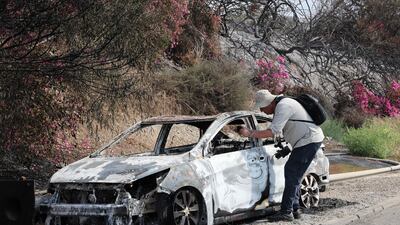
A car burnt during an infiltration by Palestinian militants from the Gaza Strip, near Sderot, Israel. AFP -

Israeli border police take cover by a vehicle, near Sderot. Reuters -
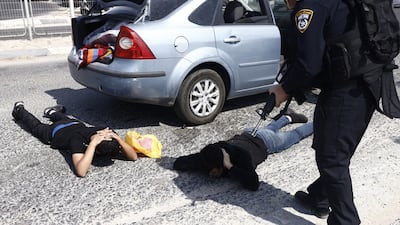
Israeli police check the occupants of a vehicle near Ashkelon, Israel. Bloomberg -

Lebanese soldiers overlook the Israeli town of Metula at the Lebanese side of the border in Kfar Kila, Lebanon. AP -
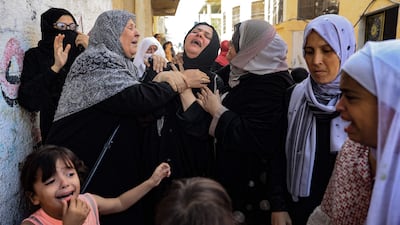
Women mourn during a funeral of a family killed in Israeli strikes on the Palestinian city of Rafah in the Gaza Strip. AFP -
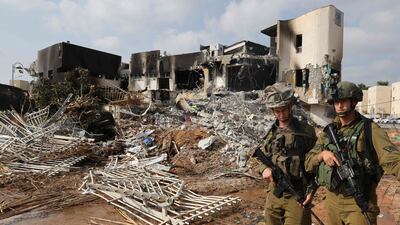
Soldiers walk past an Israeli police station damaged during battles to dislodge Hamas militants who were stationed inside. AFP -
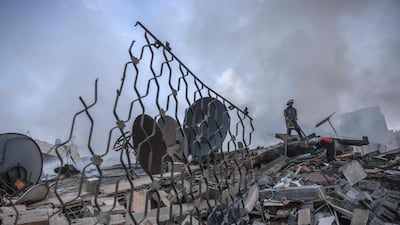
Palestinian firemen check the remains of a residential building destroyed by Israeli airstrikes in Gaza City. AFP -
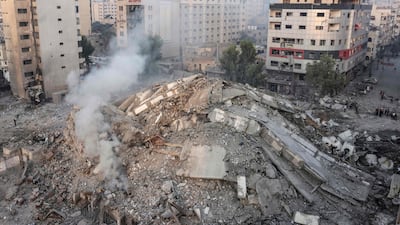
People walk around the ruins of a building destroyed in Israeli airstrikes in Gaza City. AFP -
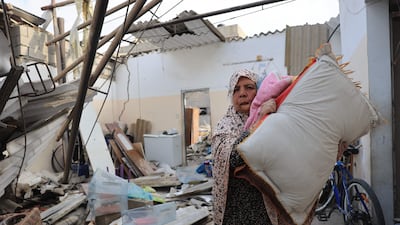
A Palestinian woman's home which was damaged during Israeli airstrikes on Rafah in the southern Gaza Strip. AFP -
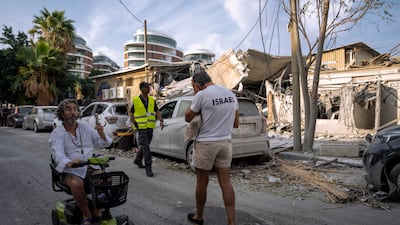
Israelis inspect the rubble of a building in Tel Aviv after it was hit by a rocket fired from the Gaza Strip. AFP -
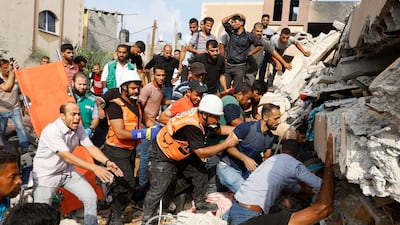
Palestinians search for casualties in a house destroyed by Israeli strikes in Khan Younis, in the southern Gaza Strip. Reuters -

A Palestinian man reacts next to the ruins of a house destroyed in Israeli strikes in Khan Younis. Reuters -
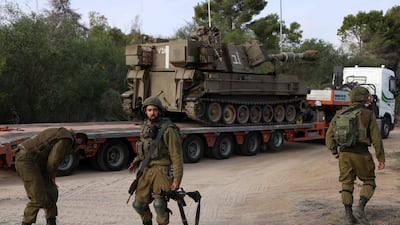
Israeli troops unload 155 mm artillery at an undisclosed location on the border with the Gaza Strip. AFP -
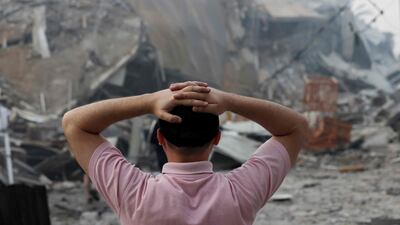
A Palestinian man stands in front of the rubble of Gaza city's Al-Watan Tower, which was destroyed in Israeli airstrikes. AFP -

People near a mosque destroyed in Israeli airstrikes in Khan Yunis, southern Gaza Strip. AFP -
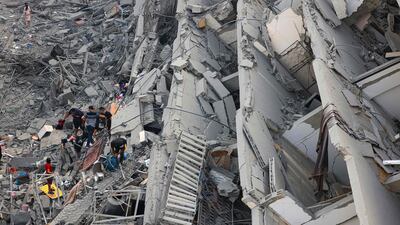
People examine a building destroyed in Israeli air strikes in Gaza city. AFP -
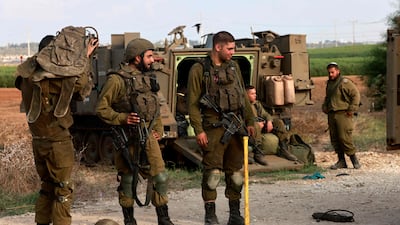
Israeli troops gather at an undisclosed location on the border with the Gaza Strip. AFP -
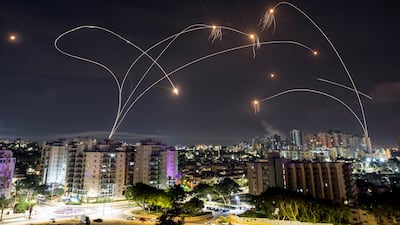
Israel's Iron Dome anti-missile system intercepts rockets launched from the Gaza Strip. Reuters -
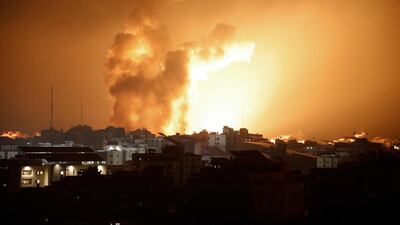
Fire and smoke rises amid an Israeli air strike in Gaza city. AFP -
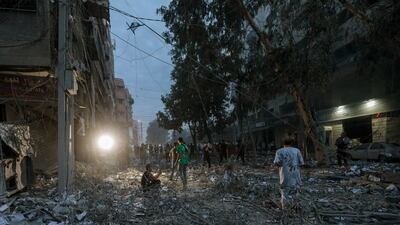
Palestinians inspect the ruins of the Palestine Tower after an Israeli missile struck. EPA -
Rockets launched from the Gaza Strip landed in Tel Aviv. Reuters -
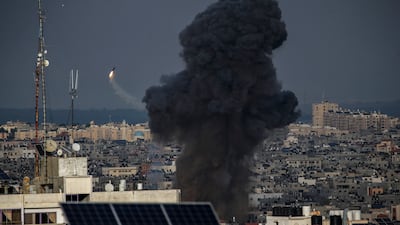
Black smoke rises after an Israeli air strike in Gaza city. EPA -

The departure board at Ben Gurion Airport near Tel Aviv displays a host of cancelled flights. AFP -
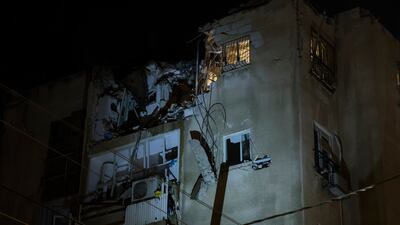
A building hit by a rocket fired from the Gaza Strip. Getty Images -
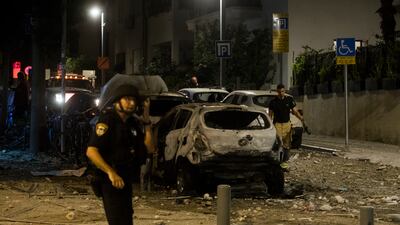
A police officer stands near a burned car at a scene in Tel Aviv. Getty Images -
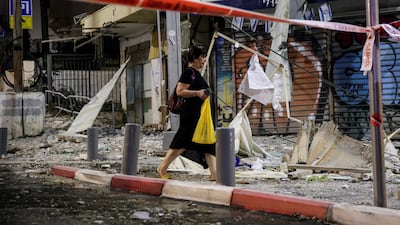
A woman walks past a damaged site after a rocket landed in Tel Aviv. Reuters -
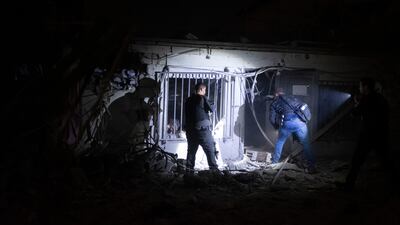
Israeli police inspect the damage from a rocket fired from the Gaza Strip. AP -
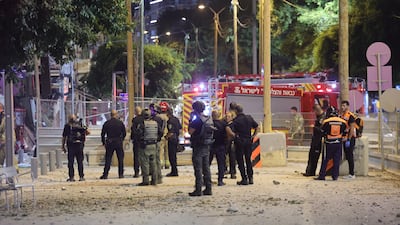
Firefighters, rescue and security workers at the site, where a rocket hit a residential building in Tel Aviv. EPA -

Residents of the Israeli city of Netivot bordering the Gaza Strip wait to be evacuated to central Israel. AFP -
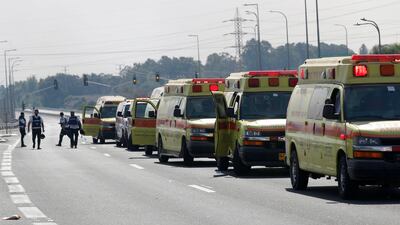
Israeli ambulances wait to evacuate wounded residents from the city of Sderot. EPA -

A car amid the rubble of a destroyed tower after an Israeli air strike in Gaza city. AFP


The Israeli government’s collective punishment against all of Gaza for the actions of Hamas – who Israeli officials might say were elected by the people of Gaza, so they all deserve to be punished – is inhumane and a potential war crime.
Gaza, an area that is just 40 kilometres long and 12 kilometres wide, houses as many as two million people. The lives of a majority of them are hellish – packed in tightly, subject to blanket Israeli restrictions, and unable to leave the territory even for crucial medical treatment. The list of those who died because they could not leave for chemotherapy or organ transplants is long – and this includes plenty of children.
My friends in Gaza’s ancient Christian community are forbidden to leave to go to Easter or Christmas in Bethlehem – or one member of the family is permitted, and no one else. The young entrepreneurs – and there are many – are refused exit visas for visits to workshops, scholarships, or conferences in foreign countries.
On my last trip to Gaza, I decided to focus on the extraordinary talent and resilience of the youth – because two-thirds of Gaza’s two million people are under the age of 25.
The people I met – computer geeks, rock musicians, artists, poets and female entrepreneurs promoting empowerment – want peace. They don’t want Hamas. They want to live a life that doesn’t mean hiding from bombs and Israel turning off their water and electricity supplies. They want to fall in love, get married, have children, and build better lives. Now that future is shattered.
What annoys me more than anything is the coverage by the largely American, but also British, TV presenters who have little knowledge of the history of the occupation, or the suffering that has accompanied it. It is too easy to follow the narrative that Hamas are evil while all Israelis are cast as heroes, who want peace.

Worse is a new geopolitical “theory” linking Palestinians to Russia. Some of the rhetoric I have come across suggests the world is divided between the bad guys – Russia, the Middle East and Iran – on the one side, and the good guys – the western superheroes of Nato, Ukraine and Europe – on the other.
US President Joe Biden and Ukrainian President Volodymyr Zelenskyy do not help by pushing the narrative and unequivocally supporting Israel. In any case, where was Israel when Ukraine needed it? Sitting on the fence.
The background and the future are just more nuanced and complicated, but this is the simple narrative they are running with because it is easy to swallow.
Being under aerial bombardment, as I have, is like being in a doll’s house as one tries to find a place to hide while a giant from up above is constantly throwing boulders at the house. There is nowhere for people to run. I was able to leave the places where I was trapped in bombing, but the people of Gaza have no such escape route.
I write this with the heaviest of hearts, because I think of the summer nights a few years ago, sitting at the edge of the Mediterranean in Gaza City with young Gazan friends who had dreams and real hopes of innovations, businesses and creativity. The only way they could do this was if there was a pathway of peace.
But the Israeli government’s vengeance will destroy Gaza again. It will be rebuilt. Then it will be destroyed again.
What the Israeli government does not understand is that every time it bombs a building with families and innocent people inside, it closes several doors to peace. It kills and crushes the best of these young thinkers – the very people it should be cultivating as a new generation of peacemakers.

