


As the Fifa Women’s World Cup enters the quarter-final stage and the stakes ramp up for the eight teams left in the competition, there is a sense of a growing depth of quality and increasing and contrasting breadth of styles in women’s football.
The tournament has already been a success. Record attendances at stadiums in Australia and New Zealand are ample evidence, but more broadly, it feels as if women’s football has established itself among the elite sporting spectacles.
While the historic journey for the Moroccan women’s national football team ended on Tuesday against France in the last-16 knockout round, the Atlas Lionesses were still the first Arab nation to play in the World Cup, which is a milestone for the region too.
Three years ago, writing in The National, I said that the women’s game was on an inevitable path to hegemony, destined to overtake the men’s game in terms of popularity.
-
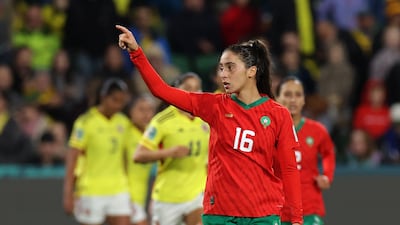
Anissa Lahmari of Morocco celebrates after scoring the opening goal in their Women's World Cup match against Colombia in Perth on Thursday, August 3, 2023. EPA -

Morocco players celebrate their first goal against Colombia. AFP -
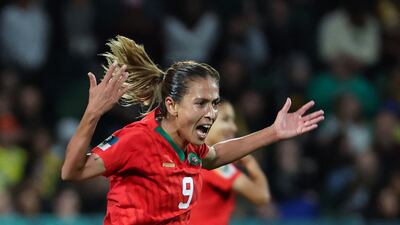
Morocco's Ibtissam Jraidi celebrates her team's first goal against Colombia at the Perth Rectangular Stadium. AFP -
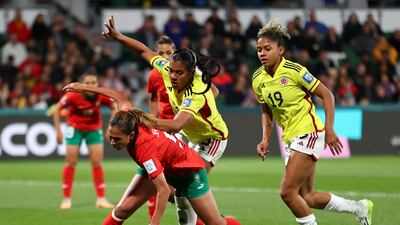
Morocco's Ibtissam Jraidi vies for the ball with Jorelyn Carabali and Daniela Arias. Reuters -
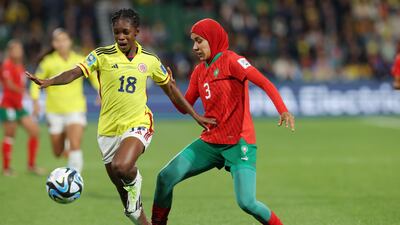
Linda Caicedo of Colombia fights for the ball with Nouhaila Benzina of Morocco. EPA -
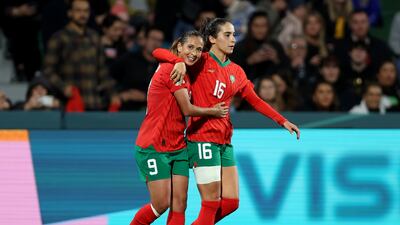
Anissa Lahmari, right, of Morocco celebrates with teammate Ibtissam Jraidi after scoring against Colombia. Getty -
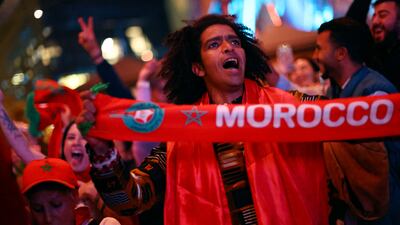
Morocco fans celebrate after Anissa Lahmari's goal at a fan park in Melbourne. Reuters -
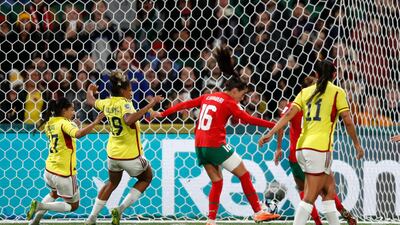
Morocco's Anissa Lahmari shoots to score her side's first goal. AP


At the time, I argued that this was not an outlandish claim. My confidence is even higher now. In 2023, with men’s professional football increasingly fragmented, and the dominance of Europe – and in particular the English Premier League – seriously challenged by a rising Saudi Arabia, we have arrived at a tipping point.
Money is always important in sport, for without it we cannot expect spectacle – but like gravity, its impact cannot be reversed. So, it is men’s football that has become bloated and self-serving.
Women’s football in contrast is still fighting for its fair share. The advantage of that status, at least for now, is that the purity of competition on the field always takes centre stage – as seen in exciting contests such as England versus Nigeria on Monday, which was a brilliant match won on penalties by the reigning European Champions.
After scoring the winning penalty kick, Chloe Kelly offered an insight into the more collegiate nature of the women’s game, stopping her celebrations to check on Nigeria’s distraught goalkeeper Chiamaka Nnadozie and waving a TV camera operator away who had come too close in the midst of such naked emotion. It is as if the players know that they are all in this together, regardless of which side they play for, working towards growing their sport as one.
For the men, tribalism rules. Relentless transfer market gossip, discussions about rising levels of sponsorship and which owners are better than others, and the congested fixture schedule have become increasingly louder, threatening to overshadow the beauty of the game.
The football lexicon has expanded from “on the head” and “top bins” to include business jargon like “product” and “project”. Hype – of individuals, clubs and leagues – has created a toxic atmosphere on social media that is increasingly visible in the stadiums.
For their part, players are taking on those that run the game directly. Kevin de Bruyne and Raphael Varane were among those footballers openly challenging new rules aimed at stopping time-wasting and that will probably make matches considerably longer.
“From the managers and players, we have shared our concerns for many years now that there are too many games, the schedule is overcrowded, and it’s at a dangerous level for players’ physical and mental well-being,” Varane wrote on Twitter.
“Despite our previous feedbacks, they have now recommended for next season: longer games, more intensity, and less emotions to be shown by players. We just want to be in good condition on the pitch to give 100 per cent to our club and fans. Why are our opinions not being heard?” the Manchester United and France star said.
“As a player, I feel very privileged to do the job I love every day, but I feel these changes are damaging our game. We want to be at our maximum level, the best we can be and put on amazing performances for fans to celebrate every week.
Varane also said that it was important for players and managers to “highlight these important issues, as we want to protect the game we love and give the fans our best”.
All is not rosy in the women’s game, of course. The Reggae Girlz’s fairytale run to the World Cup knockout stages at Brazil’s expense was in spite of the Jamaican federation’s lack of support and thanks to the private donors who helped pay for their travel and training expenses.
My column three years ago addressed the fight for equal pay that the US women’s team has since won – a hard and bitter battle – but that has expanded to include other federations, including England.
Accusations of sexual assault by coaches also feature, a sad indictment of how female athletes can be exploited and be at risk from men who can have too much power over their charges’ futures.
On the commercial side, corporations still do not take women as seriously as men, one notable example being Nike’s refusal to make available for commercial sale the replica kits worn by the England goalkeeper Mary Earps during the World Cup. She has taken to handing out shirts to excited fans after each match.
Many of these issues can be tackled effectively and will be dealt with over the coming years as women’s football continues its march to the pinnacle.
Meanwhile, the men’s game is mired in a labyrinth of issues with entrenched special interests, corruption and a lack of faith in good governance presenting problems that could take decades to unwind if they are even addressed, given the obsession with growing revenue.
Perhaps, like the men, the women will end up in the same place eventually. Despite this potential inevitability of fate, lessons can at least be drawn and a different direction of travel charted for the women’s game in the hope of avoiding a similar destination.
In some ways, this region can offer a wider perspective on the impact of women’s sport, thinking beyond just football, and into tennis, cycling, cricket, MMA, golf and others, to consider how their development – as UAE football star Nouf Al Anzi told The National last year – can change lives for the better.

