Dr Justin Thomas is a chartered health psychologist, author and a columnist for The National
November 15, 2022
Last week, Twitter launched a new pay-for-checkmark scheme. The identity-verifying blue checkmark, once reserved for notable individuals and institutions, is now available to all. Since the update was first announced, the price has changed, and details of the verification process are, at best, uncertain. The current state of play is captured in a tweet by Elon Musk, the company's new owner: "Please note that Twitter will do lots of dumb things in coming months. We will keep what works and change what doesn't."
As it stands, the new scheme is part of an update to "Twitter Blue", the social media platform's premium subscription service. Along with the blue checkmark, anyone willing to pay the fee – $7.99 per month – will also get early access to new functions, such as the ability to edit tweets. For the time being, this is rolled out only in certain geographies. Twitter claims the changes are part of a verification revamp motivated by a desire to reduce fake, untrustworthy accounts.
So far, so bad. Since the launch of the new scheme, the platform has been plagued by fake accounts, many sporting the blue checkmark that once signified account authenticity. For example, there was a fake George W Bush account, tweeting that "I miss killing Iraqis", to which a fake Tony Blair replied, "Same tbh". Similarly, a fraudulent Nintendo account posted a picture of the gaming character Mario making an obscene hand gesture.
Elon Musk said Twitter Blue was 'probably' coming back next week in a Twitter exchange on Sunday. Photo: Twitter
Twitter makes most of its revenue from advertising. So if brands are being brought into disrepute, that is going to be bad for business. At the time of writing, Twitter has, at least temporarily, suspended the new blue checkmark scheme amid a wave of people impersonating notable brands and individuals.
Overlooking the chaos of Twitter's blue checkmark free-for-all, the fact that people will pay to verify their identity reflects our changing attitudes toward technology. In the early days of internet chat rooms, the forerunners to social media platforms, almost nobody used their real names. Service providers actively discouraged users from disclosing too much personal information. Anonymity and pseudonymity (fake names) were internet norms.
Today, many people strive for hyper-authenticity, real-time sharing of the most intimate and traditionally private details of their daily lives. And while most of us are not serial over-disclosers or online exhibitionists, we have become far more willing to share aspects of our identities. For example, many of us share our most recent accolades (LinkedIn) or our opinions (Twitter) or even what we are about to eat for lunch (Instagram).
Along with us being OK about projecting our true identities online, we are also increasingly required to verify that we are who we say we are. Web-based services actively and repetitively encourage us to share additional verifying information with them. For example, an email service might request our mobile phone number to help us regain access to accounts should we forget our password.
This need for online verification, and the protection of our digital identity, will only intensify as more of our daily tasks and social transactions move online. Apple, Microsoft, Google and other tech giants have already committed to greater use of biometrics – Face and Touch ID – to access online accounts. Ultimately this move is designed to do away with time-consuming passwords, which are hackable, sharable and forgettable.
The need for verifiable identities will increase as the internet expands. The next significant phase in the evolution of the internet is being called the metaverse. This term first appears in Neal Stephenson's 1992 novel, Snow Crash. The author uses the word to describe a persistent virtual world, a successor to the internet, populated by millions of people in digital avatar form. Stephenson's virtual reality world features places of work, rest and play where people purposefully interact with each other.
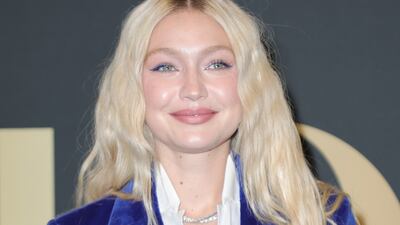
Gigi Hadid has deactivated her Twitter account following Elon Musk's takeover of the platform, saying 'it's becoming more and more of a cesspool of hate and bigotry with the new leadership'. AFP
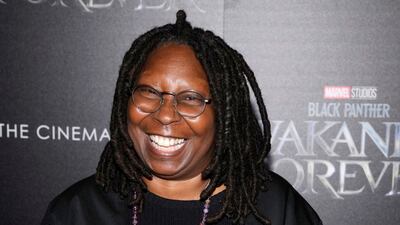
Whoopi Goldberg said she was getting off Twitter because 'it’s so messy'. AP
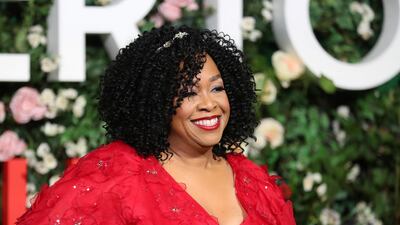
Producer Shonda Rhimes quit the platform days after Elon Musk took over. Reuters
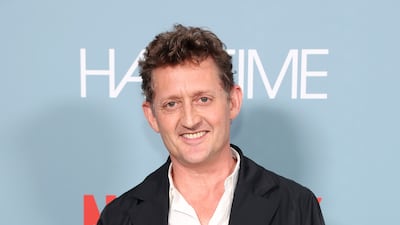
Actor and filmmaker Alex Winter's account has also been deactivated. AFP
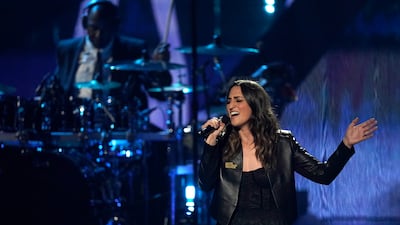
Grammy-winning singer Sara Bareilles said Twitter was no longer for her. AP
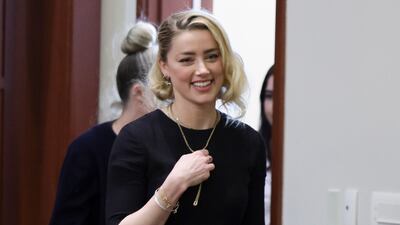
Actor Amber Heard, who once dated Elon Musk, has also deactivated her account. AP
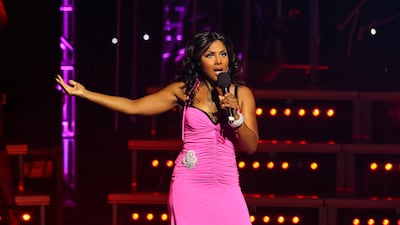
Singer Toni Braxton, who has also quit, said she was not comfortable with 'hate speech under the veil of free speech'. Alamy Stock Photo
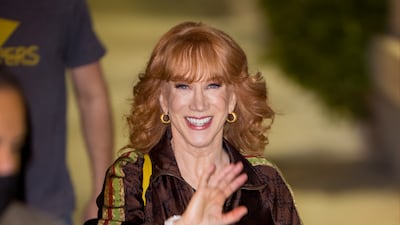
Comedian Kathy Griffin's Twitter account was suspended after she changed her name to 'Elon Musk'. GC Images
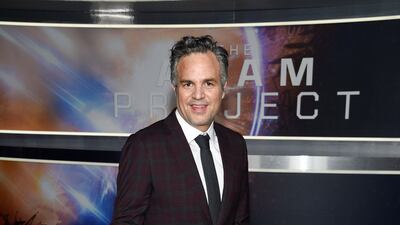
'Avengers' star Mark Ruffalo has pleaded with Elon Musk to 'get off Twitter and get on with running Tesla and SpaceX'. AP
While the details have yet to be fully agreed and ironed out, the emerging metaverse greatly resembles Stephenson's vision. This computerised universe is widely envisaged as an immersive 3D digital ecosystem, a network of unending and interconnected virtual worlds. In his book, The Metaverse: And How it Will Revolutionise Everything, Matthew Ball describes it as "a parallel plane of existence for millions, if not billions, of people, that sits atop our digital and physical economies".
Today, we are "on" the internet. Tomorrow, we will be "in" the metaverse. The need for verifiable identification in such a digital ecosystem will parallel the need for passports, social security numbers and national identity cards in the physical one.
Twitter's blue checkmark scheme looks like it is having some teething troubles. However, rigorous and robust identity verification will eventually become a prerequisite for participation in many walks of online life. I also suspect that many people want, or wanted, Twitter's blue checkmark as a status symbol, the digital equivalent of a branded T-shirt. The blue check, after all, implies that you are worthy of impersonation. The fact that we are prepared to spend money on our digital identities, enriching them with digital status symbols, also fits with future economic visions of the metaverse. As it is offline, so shall it be on the web.

UAE squad Rohan Mustafa (captain), Chirag Suri, Shaiman Anwar, Rameez Shahzad, Mohammed Usman, Adnan Mufti, Saqlain Haider, Ahmed Raza, Mohammed Naveed, Imran Haider, Qadeer Ahmed, Mohammed Boota, Amir Hayat, Ashfaq Ahmed
Fixtures Nov 29-Dec 2
UAE v Afghanistan, Zayed Cricket Stadium, Abu Dhabi
Hong Kong v Papua New Guinea, Sharjah Cricket Stadium
The internal combustion engine is facing a watershed moment – major manufacturer Volvo is to stop producing petroleum-powered vehicles by 2021 and countries in Europe, including the UK, have vowed to ban their sale before 2040. The National takes a look at the story of one of the most successful technologies of the last 100 years and how it has impacted life in the UAE.
ATP China Open
G Dimitrov (BUL x3) bt R Bautista Agut (ESP x5)
7-6, 4-6, 6-2
R Nadal (ESP x1) bt J Isner (USA x6)
6-4, 7-6
WTA China Open
S Halep (ROU x2) bt D Kasatkina (RUS)
6-2, 6-1
J Ostapenko (LAT x9) bt S Cirstea (ROU)
6-4, 6-4
ATP Japan Open
D Schwartzman (ARG x8) bt S Johnson (USA)
6-0, 7-5
D Goffin (BEL x4) bt R Gasquet (FRA)
7-5, 6-2
M Cilic (CRO x1) bt R Harrison (USA)
6-2, 6-0
The Nobel Prize was created by wealthy Swedish chemist and entrepreneur Alfred Nobel.
In his will he dictated that the bulk of his estate should be used to fund "prizes to those who, during the preceding year, have conferred the greatest benefit to humankind".
Nobel is best known as the inventor of dynamite, but also wrote poetry and drama and could speak Russian, French, English and German by the age of 17. The five original prize categories reflect the interests closest to his heart.
Nobel died in 1896 but it took until 1901, following a legal battle over his will, before the first prizes were awarded.
Dubai launched the pilot phase of its real estate tokenisation project last month.
The initiative focuses on converting real estate assets into digital tokens recorded on blockchain technology and helps in streamlining the process of buying, selling and investing, the Dubai Land Department said.
Dubai’s real estate tokenisation market is projected to reach Dh60 billion ($16.33 billion) by 2033, representing 7 per cent of the emirate’s total property transactions, according to the DLD.
Stop all transactions and communication on suspicion
Save all evidence (screenshots, chat logs, transaction IDs)
Report to local authorities
Warn others to prevent further harm
Courtesy: Crystal Intelligence
Schedule for Asia Cup
Sept 15: Bangladesh v Sri Lanka (Dubai)
Sept 16: Pakistan v Qualifier (Dubai)
Sept 17: Sri Lanka v Afghanistan (Abu Dhabi)
Sept 18: India v Qualifier (Dubai)
Sept 19: India v Pakistan (Dubai)
Sept 20: Bangladesh v Afghanistan (Abu Dhabi) Super Four
Sept 21: Group A Winner v Group B Runner-up (Dubai)
Sept 21: Group B Winner v Group A Runner-up (Abu Dhabi)
Sept 23: Group A Winner v Group A Runner-up (Dubai)
Sept 23: Group B Winner v Group B Runner-up (Abu Dhabi)
Sept 25: Group A Winner v Group B Winner (Dubai)
Sept 26: Group A Runner-up v Group B Runner-up (Abu Dhabi)
Sept 28: Final (Dubai)
House-hunting
Top 10 locations for inquiries from US house hunters, according to Rightmove
Edinburgh, Scotland
Westminster, London
Camden, London
Glasgow, Scotland
Islington, London
Kensington and Chelsea, London
Highlands, Scotland
Argyll and Bute, Scotland
Fife, Scotland
Tower Hamlets, London
Some of Darwish's last words
"They see their tomorrows slipping out of their reach. And though it seems to them that everything outside this reality is heaven, yet they do not want to go to that heaven. They stay, because they are afflicted with hope." - Mahmoud Darwish, to attendees of the Palestine Festival of Literature, 2008
His life in brief: Born in a village near Galilee, he lived in exile for most of his life and started writing poetry after high school. He was arrested several times by Israel for what were deemed to be inciteful poems. Most of his work focused on the love and yearning for his homeland, and he was regarded the Palestinian poet of resistance. Over the course of his life, he published more than 30 poetry collections and books of prose, with his work translated into more than 20 languages. Many of his poems were set to music by Arab composers, most significantly Marcel Khalife. Darwish died on August 9, 2008 after undergoing heart surgery in the United States. He was later buried in Ramallah where a shrine was erected in his honour.
The Federal National Council is one of five federal authorities established by the UAE constitution. It held its first session on December 2, 1972, a year to the day after Federation.
It has 40 members, eight of whom are women. The members represent the UAE population through each of the emirates. Abu Dhabi and Dubai have eight members each, Sharjah and Ras al Khaimah six, and Ajman, Fujairah and Umm Al Quwain have four.
They bring Emirati issues to the council for debate and put those concerns to ministers summoned for questioning.
The FNC’s main functions include passing, amending or rejecting federal draft laws, discussing international treaties and agreements, and offering recommendations on general subjects raised during sessions.
Federal draft laws must first pass through the FNC for recommendations when members can amend the laws to suit the needs of citizens. The draft laws are then forwarded to the Cabinet for consideration and approval.
Since 2006, half of the members have been elected by UAE citizens to serve four-year terms and the other half are appointed by the Ruler’s Courts of the seven emirates.
In the 2015 elections, 78 of the 252 candidates were women. Women also represented 48 per cent of all voters and 67 per cent of the voters were under the age of 40.
Anas Siraj Mounir (MAR) beat Leandro Martins (BRA)
(Second round knockout)
Flyweight (female)
Manon Fiorot (FRA) beat Corinne Laframboise (CAN)
(RSC in third round)
Featherweight
Bogdan Kirilenko (UZB) beat Ahmed Al Darmaki
(Disqualification)
Lightweight
Izzedine Al Derabani (JOR) beat Rey Nacionales (PHI)
(Unanimous points)
Featherweight
Yousef Al Housani (UAE) beat Mohamed Fargan (IND)
(TKO first round)
Catchweight 69kg
Jung Han-gook (KOR) beat Max Lima (BRA)
(First round submission by foot-lock)
Catchweight 71kg
Usman Nurmogamedov (RUS) beat Jerry Kvarnstrom (FIN)
(TKO round 1).
Featherweight title (5 rounds)
Lee Do-gyeom (KOR) v Alexandru Chitoran (ROU)
(TKO round 1).
Lightweight title (5 rounds)
Bruno Machado (BRA) beat Mike Santiago (USA)
(RSC round 2).
Terror attacks in Paris, November 13, 2015
- At 9.16pm, three suicide attackers killed one person outside the Atade de France during a foootball match between France and Germany - At 9.25pm, three attackers opened fire on restaurants and cafes over 20 minutes, killing 39 people - Shortly after 9.40pm, three other attackers launched a three-hour raid on the Bataclan, in which 1,500 people had gathered to watch a rock concert. In total, 90 people were killed - Salah Abdeslam, the only survivor of the terrorists, did not directly participate in the attacks, thought to be due to a technical glitch in his suicide vest - He fled to Belgium and was involved in attacks on Brussels in March 2016. He is serving a life sentence in France