


In one of Hollywood’s more successful 1960s comedies, a Soviet submarine runs aground near a small New England island and its leaders come ashore in search of assistance. With the casting of the soft-spoken Alan Arkin, raised in a Russian Jewish household in real life, as Soviet captain Rozanov, one might have guessed that these visitors meant no harm.
But like all Americans of that period, the islanders had been raised on Cold War-era fears of a nuclear-armed Soviet menace, and they respond with panicked hysteria. Soon the town drunk is galloping across the island shouting: “The Russians are coming, the Russians are coming” – the film’s title and a reference to the American Revolution hero Paul Revere’s storied midnight ride.
The good folks of Europe, the Caucasus and Central Asia would be forgiven for invoking this same refrain in recent days, as some 300,000 Russians, mostly men, are thought to have fled the country since Moscow enacted a military mobilisation.
The vast majority have gone to countries that do not require visas, such as Georgia, Kazakhstan and Turkey. But the EU has also seen a spike in Russian arrivals, reviving the prickly debate about whether it should ban the entry of Russian citizens.
The initial, Ukraine-led push for an EU ban on Russian visas was sparked by several run-ins this past summer.
In Warsaw, a drunk Russian tourist shouted obscenities at locals and made lewd gestures, then squared off with a couple of men and took a few wild swings before paramedics wrestled him to the ground. Two weeks later, a Russian woman reportedly struck a Ukrainian girl – resulting, again, in no injuries – on a Vienna-Valencia flight.
In August, EU foreign ministers held off on a full ban and agreed to a compromise measure – suspending a 2007 visa deal with Russia and making it harder for Russians to get visas due to more paperwork and higher fees.
-
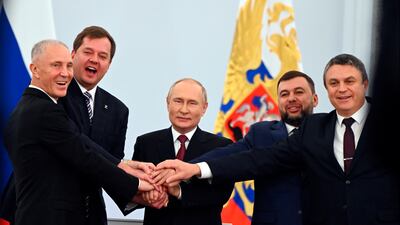
From left, Moscow-appointed head of Kherson region Vladimir Saldo, Moscow-appointed head of Zaporizhzhia region Yevgeny Balitsky, Russian President Vladimir Putin, leader of the Donetsk People's Republic Denis Pushilin, and leader of the Luhansk People's Republic Leonid Pasechnik during a ceremony to sign an annexation agreement with Russia in Moscow. AP -
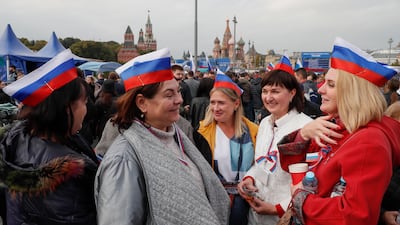
Russians gather for a celebration after the ceremony in central Moscow. EPA -
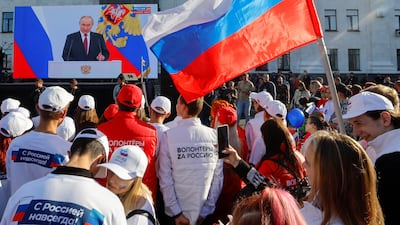
People gather near a screen showing Mr Putin during a broadcast of the ceremony. Reuters -
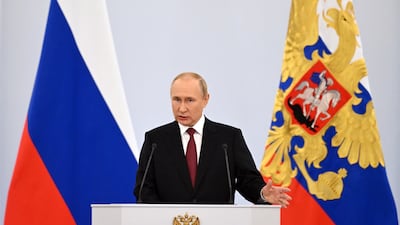
Mr Putin speaks during the ceremony to sign the treaties for the new territories' accession to Russia at the Grand Kremlin Palace in Moscow. EPA -
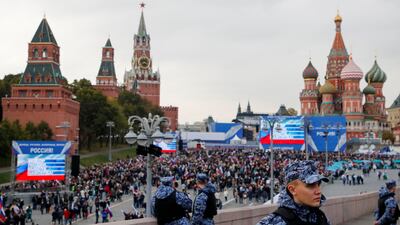
Law enforcement officers stand guard as people walk towards Red Square to attend the ceremony marking the annexation of the Russian-controlled territories. Reuters -

Participants listen to Mr Putin at the ceremony in the Georgievsky Hall of the Great Kremlin Palace in Moscow. Reuters -
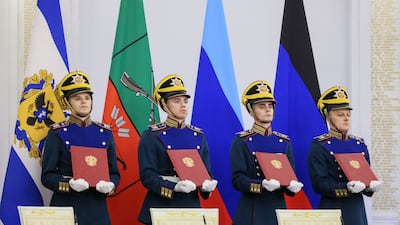
Honour guards attend the ceremony. Reuters -
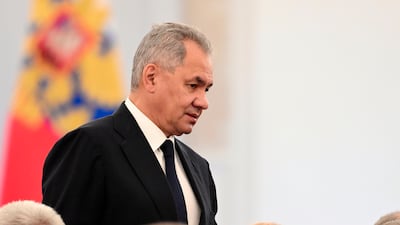
Russian Defence Minister Sergey Shoigu arrives at the ceremony. AP -

People walk towards Red Square in Moscow. Reuters -
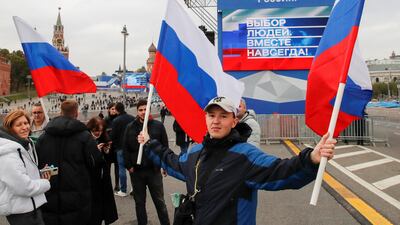
People gather in front of screens located near the Kremlin before the live broadcast of the ceremony. Reuters


The Biden administration has also come out against a blanket ban, preferring to delineate between Russia’s government and its citizens and avoid closing off exit pathways for regime foes. Poland, Lithuania, Latvia and Estonia took this concern into consideration last month when they put in place a regional tourist ban that makes exceptions for truck drivers, dissidents and relatives of EU residence permit holders.
On Friday, Finland followed suit and closed Russians’ last available land route to the EU.
That same day, the EU put stricter measures in place. Now, if a draft-dodging Russian plans to stay more than 90 days, the visa will be denied. This mainly means Russians cannot give conscription avoidance as their reason for EU entry, but must instead apply for asylum.
Also, Russians can now only apply for EU visas while in Russia, not from a third country, such as Georgia. And lastly, EU border officials will more carefully assess Russians looking to enter and if the applicant could pose a security threat entry will be denied, even if they hold a valid Schengen visa. This seems wise, as top terrorism analysts have begun warning of attacks by pro-Russian partisans on western soil, in particular against Nato shipments.
But the matter is far from settled, and EU leaders are expected to discuss it further at this month’s summit in Brussels. One possible tweak is that EU member states that have bans in place allow Russian citizens to transit through their country to reach EU countries willing to accept Russians. France, Germany and European Council President Charles Michel have made clear their view that the EU should allow Russian arrivals. But Kyiv and several of its allies take a different stance.
“Russians fleeing mobilisation are not anti-war activists,” the explanatory pro-Ukraine platform Ukraine Explainers said on Twitter last week. “The vast majority remained silent for 7 months.” Rather than running, the thread continued, it was time for Russians to stand up and voice opposition to their government.
I get why many Ukrainians would prefer Russians to stay and protest. It’s understandable, given the Ukrainian suffering inflicted by Moscow in recent months. But it’s also spiteful and undemocratic.
Barring people from fleeing a government contravenes the most basic of European rights and values. And it might feel good, but it would probably benefit only Moscow. A protest-driven revolution may be a semi-regular occurrence in Ukraine (two since 2005), but it’s not in Russia, where civil society has been shut down and protesting is punishable by up to 15 years in prison.
-
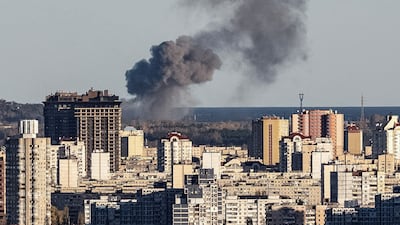
Smoke rises on the outskirts of the city during a Russian missile attack in Kyiv. Reuters -

Workers surround the Monument to the Heroes of the Heavenly Hundred with sandbags against damage from shelling in Mykolaiv. EPA -
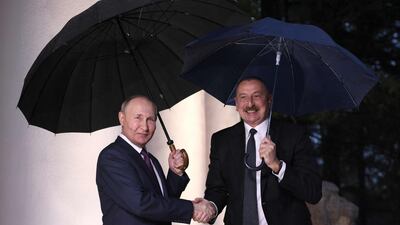
Russian President Vladimir Putin welcomes Azerbaijan President Ilham Aliyev for talks before a meeting between the Russian president and the leaders of Armenia and Azerbaijan in the Black Sea resort city of Sochi, Russia. AFP -
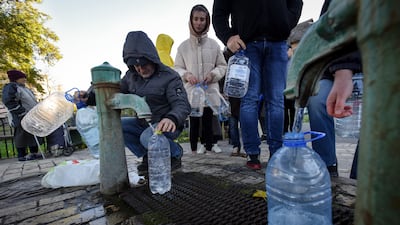
People take water from a water pump in Kyiv. EPA -
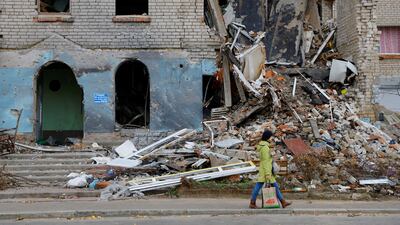
A woman walks past a damaged building in the town of Nova Kakhovka. Reuters -
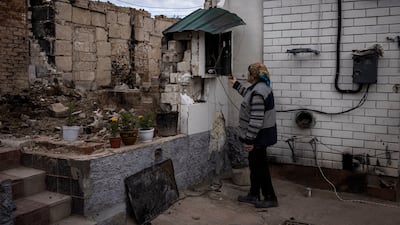
A woman outside her home, which was destroyed during battles at the start of the conflict, in Yahidne, Chernihiv. Getty Images -
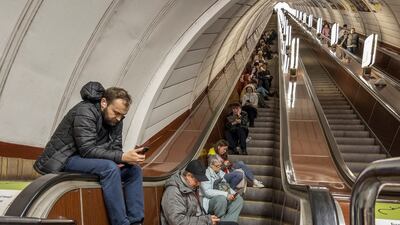
People shelter inside a subway station during a Russian missile attack in Kyiv. Reuters -
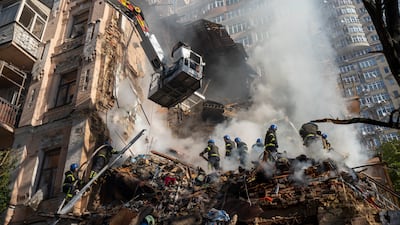
Firefighters at the site of a drone attack in Kyiv, Ukraine. AP -
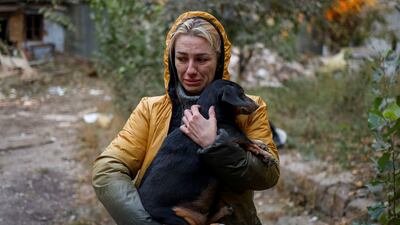
A woman walks past the site of a Russian missile strike in the southern Ukrainian city of Mykolaiv. Reuters -
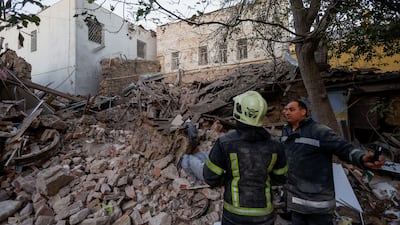
Rescuer workers at a building destroyed in an attack in Mykolaiv. Reuters -
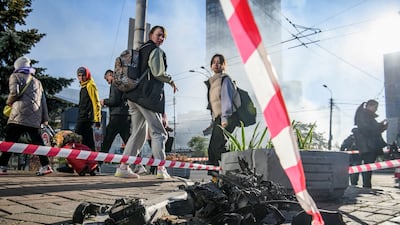
Parts of a drone lie on a street in Kyiv. Reuters -
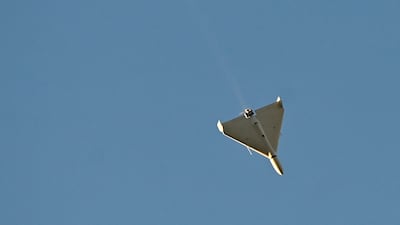
A drone flies over the Ukrainian capital during an attack. AFP -
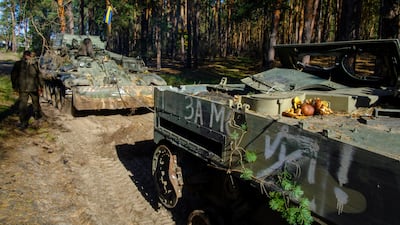
Ukrainian servicemen tow a captured Russian armoured vehicle in Rudneve village, Kharkiv. EPA -
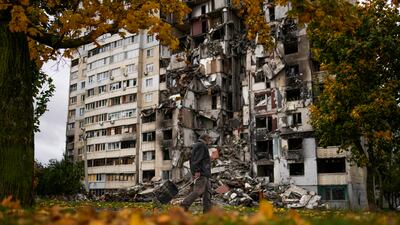
A partially destroyed residential building in Saltivka, in Kharkiv. AP -
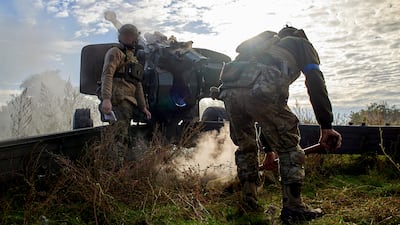
Ukrainian servicemen fire a captured Russian howitzer on a front line near Kupyansk city, Kharkiv. EPA -
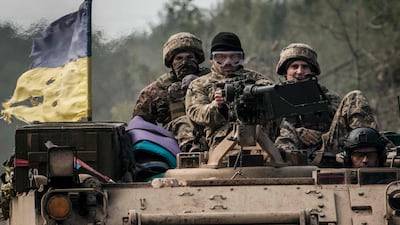
Ukrainian servicemen near the recently retaken town of Lyman in Donetsk region. AFP -
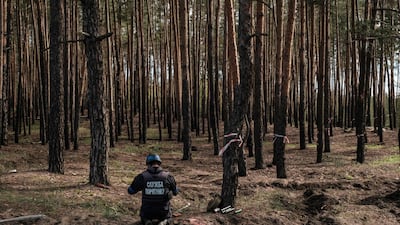
An officer from a Ukrainian national police emergency demining team prepares to detonate collected anti-tank mines and explosives near Lyman, in the Donetsk region. AFP -
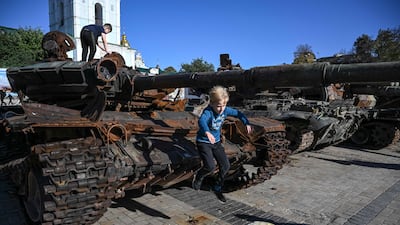
A boy playing on a destroyed Russian tank on display in Kyiv. AFP -
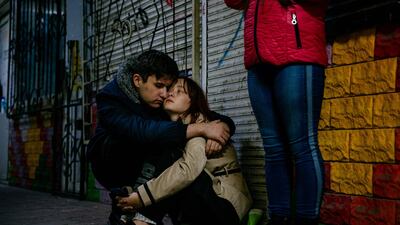
A young couple hiding underground during an air alert in Zaporizhzhia. AFP -
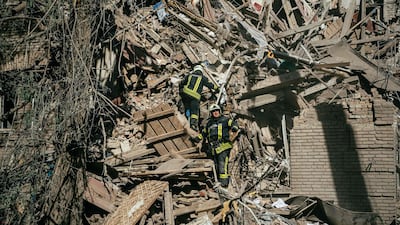
Ukrainian firefighters looking for survivors after a strike in Zaporizhzhia. AFP -
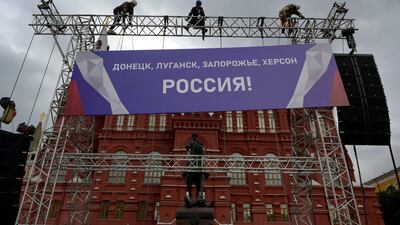
Workers fix a banner reading 'Donetsk, Luhansk, Zaporizhzhia, Kherson - Russia!' to the State Historical Museum near Red Square in Moscow. AFP -

Residents try to cross a destroyed bridge in the Kharkiv region of Ukraine. AFP -
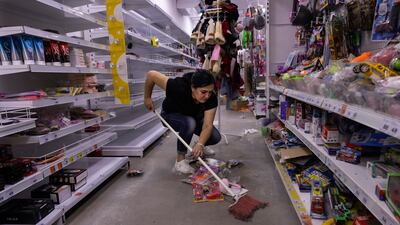
Alyona Kishinskaya helps to clean up a shop as it prepares to reopen in Balakiya, Ukraine, after a six-month Russian occupation. Getty Images -
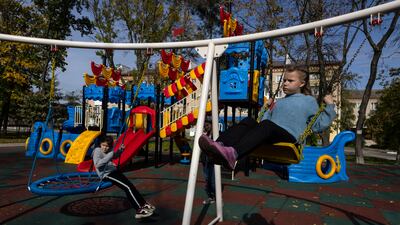
Alla, 12, has a swinging time in Balakiya, Ukraine, as life goes on despite the war. Getty Images -
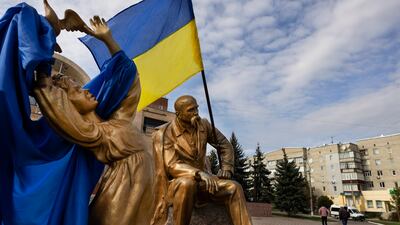
Ukrainian flags in the town square in Balakiya. Getty Images -
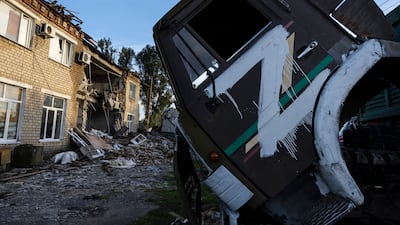
A destroyed Russian command centre in Izium, Ukraine. Getty Images -

In what may be a final farewell, young Russian recruits - escorted by their wives - walk to a train station in Volgograd before being sent to war in Ukraine. AP -
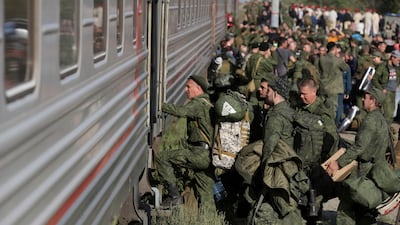
Russian recruits board the train to Ukraine in Volgograd. AP -
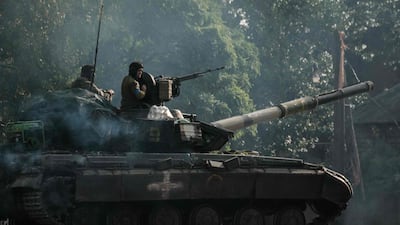
Ukrainian soliders drive a tank at the recently retaken eastern side of the Oskil River in Kharkiv region, Ukraine. AFP -
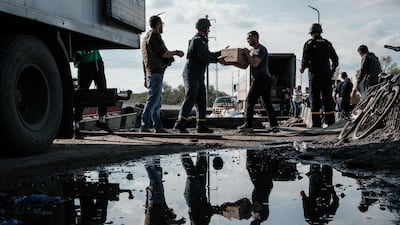
Volunteers pass boxes of food aid on a destroyed bridge over the Oskil River. AFP -
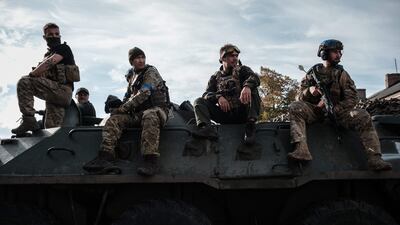
Ukrainian soliders rest on an armoured personnel carrier. AFP -
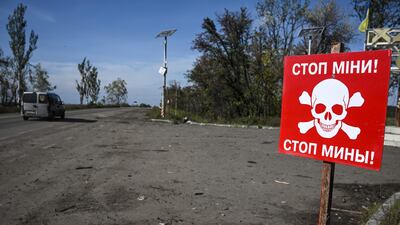
A sign warns of landmines in Izyum, eastern Ukraine. AFP -
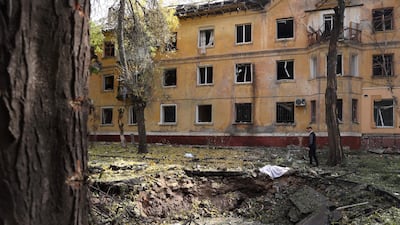
This crater was left after a missile strike in the Donetsk region of Ukraine. AFP


And banning Russians from Europe would possibly further weaken the Russian opposition. Already last month, due to Latvia’s ban, Riga cancelled a planned conference of Russian investigative journalists. Meanwhile, the likeliest outcome for most Russian protesters, after a stint in prison, would be ending up on the frontline; already some have emerged from jail with draft papers.
If forced to choose, I would guess that most Ukrainians would prefer Russians dining in Vienna rather than putting Ukrainian soldiers in their crosshairs in Donetsk. And what better way to distance Moscow from the Russian people than by giving them physical – not to mention emotional and political – distance?
Regardless of their actions over the past seven months, those who flee are essentially siding with Ukraine. Telling them that they should stay and take a stand, on the other hand, is like telling workers rushing out of a blazing factory fire that they should instead employ the fire extinguishers. This would add more fuel to the fire and essentially confirm Moscow’s narrative – that the western world opposes each and every Russian.
Late in The Russians Are Coming, an islander writer named Walt shoots at the fleeing Rozanov, forcing his car to smash into a ditch. “I’m sorry, I wasn’t trying to – well, I was trying to kill you, I’ll admit that,” Walt tells a shaken Rozanov through the car window. “But it wasn’t anything personal.”
The Russian government’s actions in Ukraine have revived a Cold War mentality in the West that paints all Russians as bad guys. There are likely to be more run-ins between Russians and their critics in the weeks ahead. And some are surely deserving of international condemnation and will hopefully at some point be brought before a judge.
But let’s not make it personal. Despite their apparent acquiescence in recent months, the vast majority of Russians deserve to live in freedom. After all, isn’t that what Ukraine’s fighting for?

