Richard Javad Heydarian is a Manila-based academic, columnist and author
August 23, 2022
Later this year, Chinese and Russian leaders Xi Jinping and Vladimir Putin are expected to attend the G20 summit on the resort island of Bali, Indonesia. Although they have pushed for the exclusion of Russia from the power grouping, leaders from major western nations are also set to attend the high-level meeting in November. By all accounts, Indonesia is determined to host the first face-to-face meeting between the leaders of China, Russia and the US since the Ukraine war began in February.
Since taking over the rotational presidency of the G20 grouping, Indonesia has underscored its commitment to play a proactive role in promoting global peace and stability. In late June, Indonesian President Joko Widodo, affectionately known as “Jokowi”, embarked on an unprecedented “peace mission” to Europe, where he met his counterparts in Kyiv and Moscow.
During his exchanges with Ukrainian President Volodymyr Zelenskyy, Jokowi promised to pass on his message to Mr Putin and, accordingly, expressed his commitment to help establish contact between the two leaders in order to ensure a move towards “a peace settlement and an open dialogue”. In Moscow, Jokowi reportedly secured “guarantees” on the safe passage of agricultural products “not only from Russia but also from Ukraine".
Jokowi’s “peace mission” to Europe received relatively scant attention in western media, especially since Indonesia’s mediation efforts have yet to produce a major breakthrough. But what’s clear is that the world’s largest Muslim-majority nation and third-largest democracy has steadily emerged as a global force in the 21st century. In the coming decades, the South-East Asian country is well-placed to claim its place of pride among rising Asian superpowers of China and India.
Spanning 4,700 kilometres from the Indian Ocean to the Western Pacific, Indonesia is the world’s largest archipelagic nation, with 17,000 islands. Yet, since its independence in the mid-20th century, Indonesia, home to 275 million people, has often struggled to attract global attention commensurate to its demographic size and geopolitical heft.
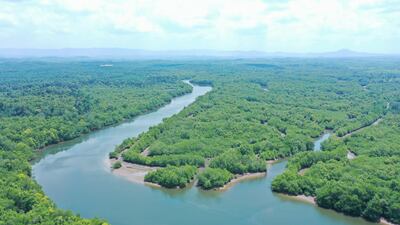
Penajam North Paser regency in East Kalimantan will soon be home to Indonesia's new capital city. Unsplash
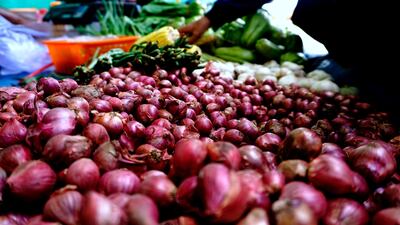
Onions on sale at a market in East Kalimantan. Unsplash
'Ground zero' of Indonesia's planned new capital, which would house the Presidential Palace and other government buildings. Photo: Syahruddin
Balikpapan city in East Kalimantan. Unsplash
Motorboats at a harbour in Penajam North Paser regency. Photo: Syahruddin
A harbour in Penajam North Paser regency. Visitors can take motorboats or ferry vessels to reach the regency from Balikpapan, a major city in Indonesia's East Kalimantan province. Photo: Syahruddin
The central district of Penajam North Paser, one of the two sites of Indonesia's planned 'green capital'. Photo: Syahruddin
The Penajam North Paser regency. Photo: Syahruddin
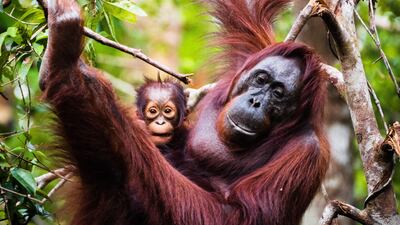
See wild Borneo orangutans being rehabilitated in East Kalimantan. Unsplash
Former Indian prime minister Jawaharlal Nehru once described Indonesia, along with other South-East Asian countries, as “Coca-Cola governments”, because they were seen as too dependent on the West and often lacked both strategic autonomy and international influence to truly matter. Accordingly, Indonesia was placed in the lowly “Category C” of India’s foreign policy priorities.
Decades later, leading South-East Asia expert Donald Emmerson lamented Indonesia’s marginal position in America’s regional strategic priorities, arguing “the significance of a country and the attention it receives are separate matters". After all, much smaller nations such as Vietnam or Cambodia absorbed much of the West’s strategic focus throughout the twilight decades of the 20th century.
A former Dutch colony, Indonesia was also largely ignored by major European powers, which were more focused on Russia, China and former colonies in East Asia. Thanks to bitter Cold War-era rifts, China lacked even formal bilateral ties with Indonesia for more than two decades.
For its part, Indonesia remained largely focused on strengthening the Association of South-East Asian Nations, a regional body that aimed to prevent the domination of the region by any major power.
In recent years, however, Indonesia has rapidly transformed into an indispensable power in the Indo-Pacific. To begin with, it boasts a $1 trillion GDP, with a booming digital economy that has produced unicorns and world-class start-ups such as Gojek, a multi-service platform that could soon rival FinTech giants in China and the West.
Under Jokowi, Indonesia is also exploring a transformative national development programme, which includes the construction of a new capital city called Nusantara, with a price tag of $31 billion, as well as a shift to high value-added industries, including the establishment of a Tesla regional EV battery production hub. Its pursuit of a knowledge-based economy has gone hand-in-hand with a comprehensive rural development programme, which has significantly reduced poverty and enhanced productivity across Indonesia’s provinces.
To boost economic growth, Indonesia is also overseeing multi-billion-dollar public infrastructure projects, including the Jakarta-Bandung high-speed-rail project, in tandem with leading development partners such as China and Japan. Before the end of this century, the country is expected to become the fourth-largest economy in the world, just behind China, India and the US. And with growing economic power comes rapid military modernisation.
After winning his second term in office in the 2019 election, Jokowi has embarked on an ambitious programme to strengthen the country’s defensive capabilities. The Indonesian government has allocated up to $125bn to beef up the naval and air forces, including $22bn to acquire Rafale and F15 fighters from the West. The ultimate goal of this military build-up is to transform Indonesia into what Jokowi has described as a "global maritime fulcrum", namely an autonomous and consequential power at the heart of the Indo-Pacific.
Amid the intensifying Cold War in the mid-20th century, Mohammad Hatta, one of Indonesia’s founding fathers, vowed to pursue a foreign policy that “reserves the right to decide our own destiny and fight for our own goal, which is independence for the whole of Indonesia". He advocated for a dynamic, non-aligned strategic orientation akin “rowing between two reefs”.
Joko Widodo, Indonesia's president. Bloomberg
Over the next half-a-century, Hatta’s successors have sought to follow in his footsteps with significant degrees of success. Unlike neighbouring states such as the Philippines, Indonesia has consistently shunned overt alliances with any major power in favour of enhancing its own strategic autonomy. To this end, Indonesia assiduously pursued a balanced relationship with rival superpowers, with co-operation and competition defined on a case-to-case basis without choosing sides.
Thanks to its "multi-vector" foreign policy, Indonesia has managed to maintain strong defence and strategic co-operation with the US, China, Russia and Japan throughout recent decades. Whenever threatened by one major power, Indonesia sought assistance from the other. This is particularly in the context of Indonesia’s maritime disputes with China in the so-called North Natuna Sea, the intersection of the southern tip of the South China Sea and waters off the coast of Natuna Islands.
While maintaining robust economic and strategic dialogue with Beijing, the Jokowi administration has welcomed Russian energy investments in the disputed areas as well as large-scale military drills with the US and Japan. For its part, Indonesia has also adopted an uncompromising stance and beefed up its military presence in the disputed areas.
In recent years, Indonesia has also emerged as a proactive mediator in international conflicts, assisting in the peace process negotiations from the Cambodia-Thailand border disputes to Palestine and Afghanistan to Mindanao and Myanmar. Jakarta's deft management of delicate relations with rival powers as well as growing profile as an international mediator is also a function of its superb diplomatic tradition.
Throughout the past decade, star Indonesian diplomats such as Marty Natalegawa, Dino Djalal, and Retno Marsudi have tirelessly advocated for an inclusive and stable regional order in the Indo-Pacific, while maintaining close personal relations with counterparts from major global powers. By all indications, Indonesia is steadily transforming from a seemingly marginal regional player into an indispensable force in Asian geopolitical affairs, thanks to its booming economy, modernising military and adept diplomacy. And over the next decades, it is well-poised to join the ranks of no less than emerging superpowers of the 21st century.

Squid Game season two
Director: Hwang Dong-hyuk
Stars: Lee Jung-jae, Wi Ha-joon and Lee Byung-hun
Rating: 4.5/5
EA Sports FC 25
Developer: EA Vancouver, EA Romania Publisher: EA Sports Consoles: Nintendo Switch, PlayStation 4&5, Xbox One and Xbox Series X/S Rating: 3.5/5
MATCH INFO
Uefa Champions League, Group C
Liverpool v Red Star Belgrade
Anfield, Liverpool
Wednesday, 11pm (UAE)
Reading List
Practitioners of mindful eating recommend the following books to get you started:
Savor: Mindful Eating, Mindful Life by Thich Nhat Hanh and Dr Lilian Cheung
How to Eat by Thich Nhat Hanh
The Mindful Diet by Dr Ruth Wolever
Mindful Eating by Dr Jan Bays
How to Raise a Mindful Eaterby Maryann Jacobsen
Results
5pm: Maiden (PA) Dh80,000 (Turf) 1,000mm, Winners: Mumayaza, Fabrice Veron (jockey), Eric Lemartinel (trainer)
5.30pm: Wathba Stallions Cup Handicap (PA) Dh70,000 (T) 2,200m, Winners: Sharkh, Pat Cosgrave, Helal Al Alawi
6pm: The President’s Cup Prep - Conditions (PA) Dh100,000 (T) 2,200m, Winner: Somoud, Richard Mullen, Jean de Roualle
6.30pm: Handicap (PA) Dh90,000 (T) 1,600m, Winner: Harrab, Ryan Curatolo, Jean de Roualle
7pm: Abu Dhabi Equestrian Gold Cup - Prestige (PA) Dh125,000 (T) 1,600m, Winner: Hameem, Adrie de Vries, Abdallah Al Hammadi
7.30pm: Al Ruwais – Group 3 (PA) Dh300,000 (T) 1,200m, Winner: AF Alwajel, Tadhg O’Shea, Ernst Oertel
8pm: Maiden (TB) Dh80,000 (T) 1,400m, Winner: Nibras Passion, Bernardo Pinheiro, Ismail Mohammed
The specs
Engine: 3.0-litre six-cylinder turbo
Power: 398hp from 5,250rpm
Torque: 580Nm at 1,900-4,800rpm
Transmission: Eight-speed auto
Fuel economy, combined: 6.5L/100km
On sale: December
Price: From Dh330,000 (estimate)
UAE’s revised Cricket World Cup League Two schedule
August, 2021: Host - United States; Teams - UAE, United States and Scotland
Between September and November, 2021 (dates TBC): Host - Namibia; Teams - Namibia, Oman, UAE
December, 2021: Host - UAE; Teams - UAE, Namibia, Oman
February, 2022: Hosts - Nepal; Teams - UAE, Nepal, PNG
June, 2022: Hosts - Scotland; Teams - UAE, United States, Scotland
September, 2022: Hosts - PNG; Teams - UAE, PNG, Nepal
February, 2023: Hosts - UAE; Teams - UAE, PNG, Nepal
TOURNAMENT INFO
Women’s World Twenty20 Qualifier
Jul 3- 14, in the Netherlands
The top two teams will qualify to play at the World T20 in the West Indies in November
FlyDubai flies direct from Dubai to Skopje in five hours from Dh1,314 return including taxes. Hourly buses from Skopje to Ohrid take three hours.
The tours
English-speaking guided tours of Ohrid town and the surrounding area are organised by Cultura 365; these cost €90 (Dh386) for a one-day trip including driver and guide and €100 a day (Dh429) for two people.
The hotels
Villa St Sofija in the old town of Ohrid, twin room from $54 (Dh198) a night.
St Naum Monastery, on the lake 30km south of Ohrid town, has updated its pilgrims' quarters into a modern 3-star hotel, with rooms overlooking the monastery courtyard and lake. Double room from $60 (Dh 220) a night.
Global events: Much of the UK’s economic woes were blamed on “increased global uncertainty”, which can be interpreted as the economic impact of the Ukraine war and the uncertainty over Donald Trump’s tariffs.
Growth forecasts: Cut for 2025 from 2 per cent to 1 per cent. The OBR watchdog also estimated inflation will average 3.2 per cent this year
Welfare: Universal credit health element cut by 50 per cent and frozen for new claimants, building on cuts to the disability and incapacity bill set out earlier this month
Spending cuts: Overall day-to day-spending across government cut by £6.1bn in 2029-30
Tax evasion: Steps to crack down on tax evasion to raise “£6.5bn per year” for the public purse
Defence: New high-tech weaponry, upgrading HM Naval Base in Portsmouth
Housing: Housebuilding to reach its highest in 40 years, with planning reforms helping generate an extra £3.4bn for public finances
Scorecard
Scotland 220
K Coetzer 95, J Siddique 3-49, R Mustafa 3-35
UAE 224-3 in 43,5 overs
C Suri 67, B Hameed 63 not out
Lexus LX700h specs
Engine: 3.4-litre twin-turbo V6 plus supplementary electric motor
Mark Chahwan, co-founder and chief executive of robo-advisory firm Sarwa, forecasts that Generation Alpha (born between 2010 and 2024) will start investing in their teenage years and therefore benefit from compound interest.
“Technology and education should be the main drivers to make this happen, whether it’s investing in a few clicks or their schools/parents stepping up their personal finance education skills,” he adds.
Mr Chahwan says younger generations have a higher capacity to take on risk, but for some their appetite can be more cautious because they are investing for the first time. “Schools still do not teach personal finance and stock market investing, so a lot of the learning journey can feel daunting and intimidating,” he says.
He advises millennials to not always start with an aggressive portfolio even if they can afford to take risks. “We always advise to work your way up to your risk capacity, that way you experience volatility and get used to it. Given the higher risk capacity for the younger generations, stocks are a favourite,” says Mr Chahwan.
Highlighting the role technology has played in encouraging millennials and Gen Z to invest, he says: “They were often excluded, but with lower account minimums ... a customer with $1,000 [Dh3,672] in their account has their money working for them just as hard as the portfolio of a high get-worth individual.”
Goalkeepers: Ali Khaseif, Fahad Al Dhanhani, Mohammed Al Shamsi, Adel Al Hosani
Defenders: Bandar Al Ahbabi, Shaheen Abdulrahman, Walid Abbas, Mahmoud Khamis, Mohammed Barghash, Khalifa Al Hammadi, Hassan Al Mahrami, Yousef Jaber, Mohammed Al Attas
Midfielders: Ali Salmeen, Abdullah Ramadan, Abdullah Al Naqbi, Majed Hassan, Abdullah Hamad, Khalfan Mubarak, Khalil Al Hammadi, Tahnoun Al Zaabi, Harib Abdallah, Mohammed Jumah
Forwards: Fabio De Lima, Caio Canedo, Ali Saleh, Ali Mabkhout, Sebastian Tagliabue
How to help
Send “thenational” to the following numbers or call the hotline on: 0502955999
2289 – Dh10
2252 – Dh 50
6025 – Dh20
6027 – Dh 100
6026 – Dh 200
Earth under attack: Cosmic impacts throughout history
- 4.5 billion years ago: Mars-sized object smashes into the newly-formed Earth, creating debris that coalesces to form the Moon
- 66 million years ago: 10km-wide asteroid crashes into the Gulf of Mexico, wiping out over 70 per cent of living species – including the dinosaurs.
- 50,000 years ago: 50m-wide iron meteor crashes in Arizona with the violence of 10 megatonne hydrogen bomb, creating the famous 1.2km-wide Barringer Crater
- 1490: Meteor storm over Shansi Province, north-east China when large stones “fell like rain”, reportedly leading to thousands of deaths.
- 1908: 100-metre meteor from the Taurid Complex explodes near the Tunguska river in Siberia with the force of 1,000 Hiroshima-type bombs, devastating 2,000 square kilometres of forest.
- 1998: Comet Shoemaker-Levy 9 breaks apart and crashes into Jupiter in series of impacts that would have annihilated life on Earth.
-2013: 10,000-tonne meteor burns up over the southern Urals region of Russia, releasing a pressure blast and flash that left over 1600 people injured.
Mercer, the investment consulting arm of US services company Marsh & McLennan, expects its wealth division to at least double its assets under management (AUM) in the Middle East as wealth in the region continues to grow despite economic headwinds, a company official said.
Mercer Wealth, which globally has $160 billion in AUM, plans to boost its AUM in the region to $2-$3bn in the next 2-3 years from the present $1bn, said Yasir AbuShaban, a Dubai-based principal with Mercer Wealth.
“Within the next two to three years, we are looking at reaching $2 to $3 billion as a conservative estimate and we do see an opportunity to do so,” said Mr AbuShaban.
Mercer does not directly make investments, but allocates clients’ money they have discretion to, to professional asset managers. They also provide advice to clients.
“We have buying power. We can negotiate on their (client’s) behalf with asset managers to provide them lower fees than they otherwise would have to get on their own,” he added.
Mercer Wealth’s clients include sovereign wealth funds, family offices, and insurance companies among others.
From its office in Dubai, Mercer also looks after Africa, India and Turkey, where they also see opportunity for growth.
Wealth creation in Middle East and Africa (MEA) grew 8.5 per cent to $8.1 trillion last year from $7.5tn in 2015, higher than last year’s global average of 6 per cent and the second-highest growth in a region after Asia-Pacific which grew 9.9 per cent, according to consultancy Boston Consulting Group (BCG). In the region, where wealth grew just 1.9 per cent in 2015 compared with 2014, a pickup in oil prices has helped in wealth generation.
BCG is forecasting MEA wealth will rise to $12tn by 2021, growing at an annual average of 8 per cent.
Drivers of wealth generation in the region will be split evenly between new wealth creation and growth of performance of existing assets, according to BCG.
Another general trend in the region is clients’ looking for a comprehensive approach to investing, according to Mr AbuShaban.
“Institutional investors or some of the families are seeing a slowdown in the available capital they have to invest and in that sense they are looking at optimizing the way they manage their portfolios and making sure they are not investing haphazardly and different parts of their investment are working together,” said Mr AbuShaban.
Some clients also have a higher appetite for risk, given the low interest-rate environment that does not provide enough yield for some institutional investors. These clients are keen to invest in illiquid assets, such as private equity and infrastructure.
“What we have seen is a desire for higher returns in what has been a low-return environment specifically in various fixed income or bonds,” he said.
“In this environment, we have seen a de facto increase in the risk that clients are taking in things like illiquid investments, private equity investments, infrastructure and private debt, those kind of investments were higher illiquidity results in incrementally higher returns.”
The Abu Dhabi Investment Authority, one of the largest sovereign wealth funds, said in its 2016 report that has gradually increased its exposure in direct private equity and private credit transactions, mainly in Asian markets and especially in China and India. The authority’s private equity department focused on structured equities owing to “their defensive characteristics.”
Favourite piece of music: Verdi’s Requiem. It’s awe-inspiring.
Biggest inspiration: My father, as I grew up in a house where music was constantly played on a wind-up gramophone. I had amazing music teachers in primary and secondary school who inspired me to take my music further. They encouraged me to take up music as a profession and I follow in their footsteps, encouraging others to do the same.
Favourite book: Ian McEwan’s Atonement – the ending alone knocked me for six.
Favourite holiday destination: Italy - music and opera is so much part of the life there. I love it.
Stars: Varun Dhawan, Samantha Ruth Prabhu, Kashvi Majmundar, Kay Kay Menon
Rating: 4/5
Cry Macho
Director: Clint Eastwood
Stars: Clint Eastwood, Dwight Yoakam
Rating:**
MATCH INFO
AC Milan v Inter, Sunday, 6pm (UAE), match live on BeIN Sports
Scores
Rajasthan Royals 160-8 (20 ov)
Kolkata Knight Riders 163-3 (18.5 ov)
GOLF’S RAHMBO
- 5 wins in 22 months as pro
- Three wins in past 10 starts
- 45 pro starts worldwide: 5 wins, 17 top 5s
- Ranked 551th in world on debut, now No 4 (was No 2 earlier this year)
- 5th player in last 30 years to win 3 European Tour and 2 PGA Tour titles before age 24 (Woods, Garcia, McIlroy, Spieth)