


Only naive souls or blind ideologues could have thought that Russia’s invasion of Ukraine would end well. It will not. And the longer it continues, the worse the situation will be for everyone.
Did Moscow actually believe that the West would roll over and accept its annexation of more Ukrainian territory, giving its leadership an easy victory? Did it really think that Ukrainians would overthrow their own leadership, replacing it with a more pro-Russian government in Kyiv? Did the West, after appearing to dismiss US President Joe Biden’s early warnings about Moscow’s intentions, believe that their belated outrage and displays of resolve would mobilise the world community forcing the Kremlin to give up?
At this point, Moscow has invested too much of its prestige and resources to withdraw. And for the Ukrainians, their national pride is at stake, as is their justifiable fear of Russian intentions. They will not just surrender and accept defeat.
We have now entered the sixth month of this war and despite frequent reports that the Russian military is nearing exhaustion or that the Ukrainian resistance is flagging, there is no end in sight as the killing of innocent Ukrainians and widespread devastation of the country continues. The reality is that no one can or will win this war. While the Russians will be ground down in a long conflict that will cost them dearly, the Ukrainians will pay the greatest price in lives, treasure, homes and infrastructure, and security.
-
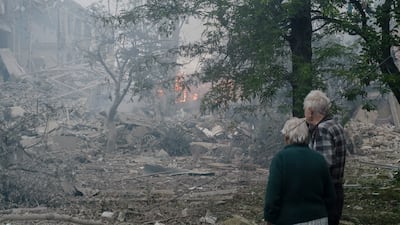
An elderly couple stands near a damaged school in the city of Kramatorsk in eastern Ukraine. EPA -
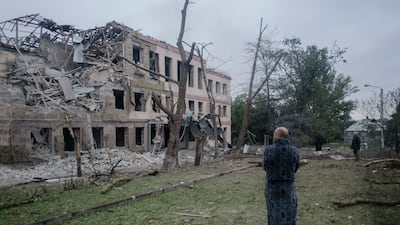
At least one person was killed after shelling hit the school, the Ukrainian State Emergency Service said. EPA -
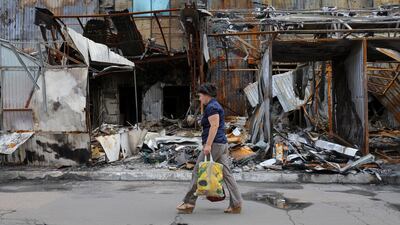
A woman walks past a destroyed market near a railway station in Donetsk. Reuters -
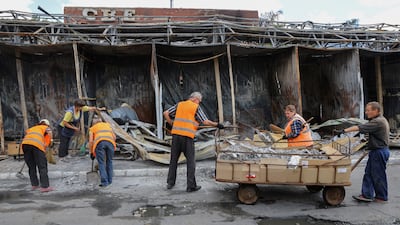
Municipal workers clean a street in Donetsk. Reuters -
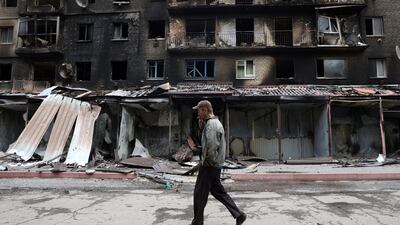
A man passes destroyed buildings in the Ukrainian town of Siversk. AFP -
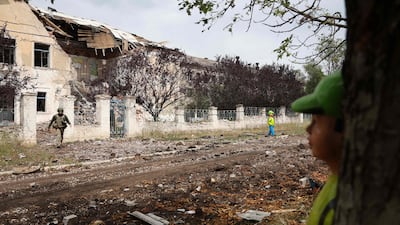
A destroyed school in Siversk. AFP -

A Ukrainian serviceman passes by destroyed buildings in Siversk. AFP -
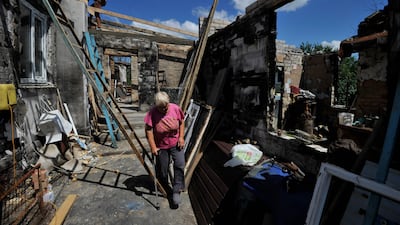
A woman's home is repaired by volunteers after being destroyed by shelling in the village of Zalissya. AFP -
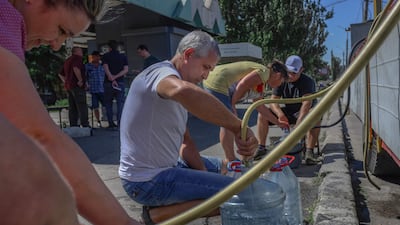
People fill up water canisters in Mykolaiv, amid the Russian invasion of Ukraine. AFP -
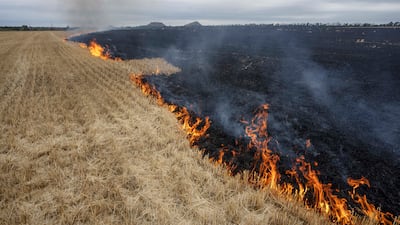
Grain fields burn on the outskirts of Kurakhove, Donetsk Oblast, eastern Ukraine. AP Photo -
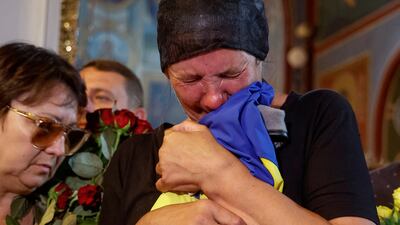
The mother of Ukrainian serviceman Abdulkarim Gulamov, who was killed in a fight against Russian troops in Kherson, attends his funeral in Kyiv. Reuters -
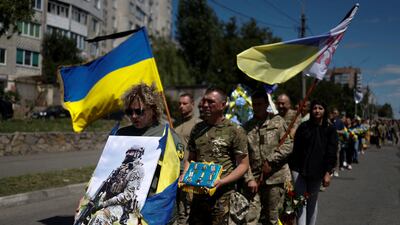
People carry pictures of Mr Gulamov at the funeral. Reuters -
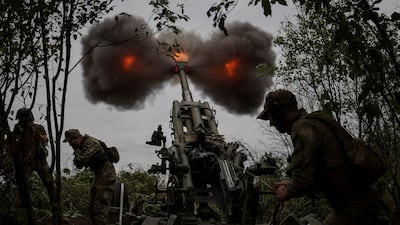
Ukrainian service members fire a shell from a M777 Howitzer in Kharkiv. Reuters -
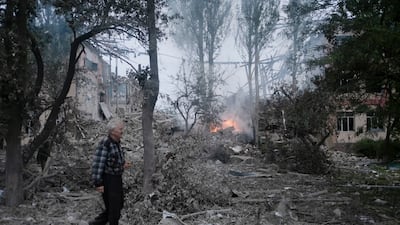
A man walks in front of a damaged school after a missile strike hit the city of Kramatorsk. EPA -
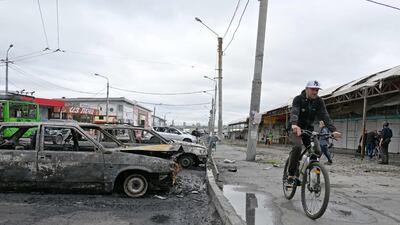
A cyclist rides past burnt cars after a Russian rocket strike in Kharkiv. AFP -
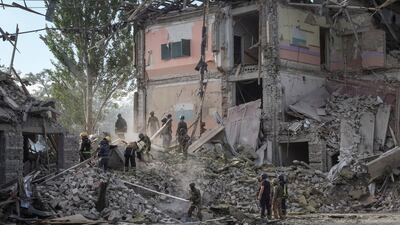
Rescuers and servicemen work at a school building damaged by a Russian military strike in Kramatorsk. Reuters -
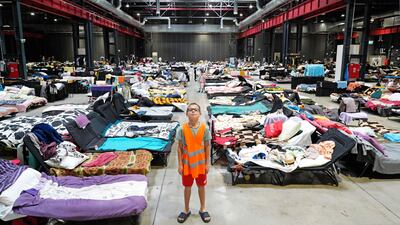
Sasha, 12, a refugee from Ukraine at the humanitarian aid centre set up at the Global Expo exhibition hall in Warsaw, Poland. AFP -
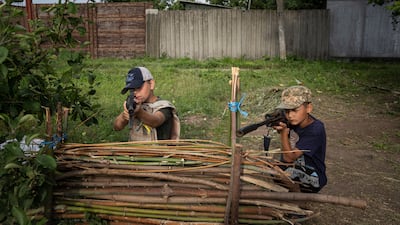
Maksym and Andrii, 11-year-old boys, play with plastic guns at a self-made checkpoint along a motorway in the Kharkiv region of Ukraine. AP -

A Ukrainian soldier nicknamed 'Oakland' guards his position at the front line in the Kharkiv region. AP -
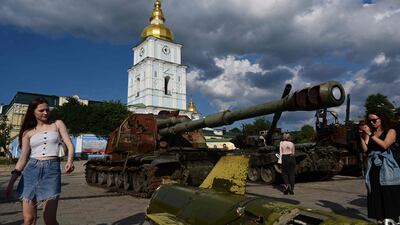
Ukrainians look at destroyed Russian military equipment at an outdoor exhibition near the Church of the Three Saints in Kyiv. AFP -
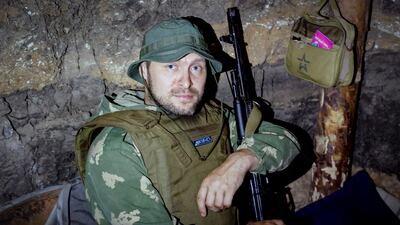
A member of the self-proclaimed Donetsk People's Republic (DPR) militia sits in a makeshift bunker near Avdiivka, in the Donbas region of Ukraine. EPA -
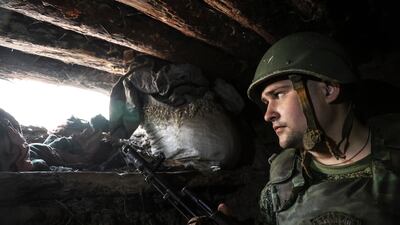
A DPR militia member monitors a section of the road near Avdiivka. EPA -
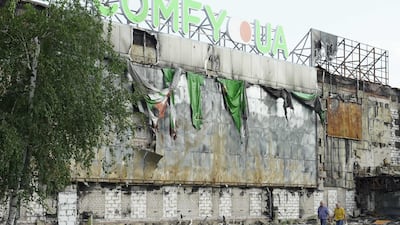
Ukrainians pass a heavily damaged shopping mall in the city of Kherson. AFP -
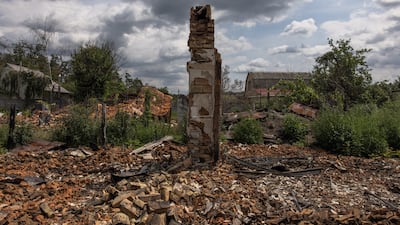
The rubble of a house in Moshchun village, about 20 kilometres outside Kyiv. EPA -

A resident helps a firefighter put out a fire after an air strike in the town of Bakhmut, in the breakaway enclave of Donetsk. AFP -
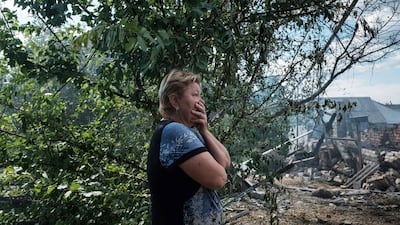
A woman surveys the devastation caused by an air strike in Bakhmut. AFP -
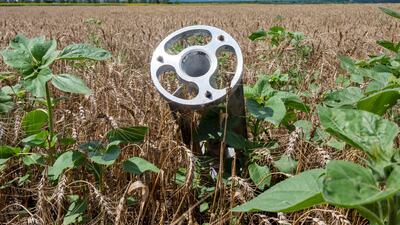
Part of a projectile fire by a rocket launcher lies embedded in a wheat field in Ukraine's Kharkiv region. AFP -
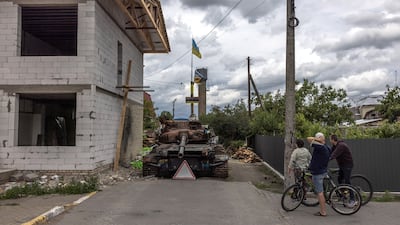
Members of the public look at a Ukrainian tank destroyed in a Russian attack, in Hostomel, north-west of Kyiv. EPA -

Burnt out cars destroyed in Russian attacks are piled up in Hostomel. EPA -
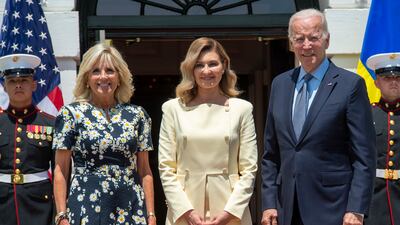
Jill Biden, US first lady, left, and US President Joe Biden welcome the first lady of Ukraine, Olena Zelenska, to the White House. EPA -
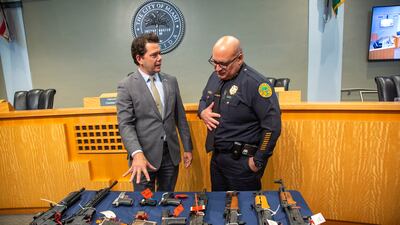
Miami District Two commissioner Ken Russell, left, and Miami police chief Manuel Morales with weapons collected in the Guns 4 Ukraine initiative, at Miami City Hall in Florida. Guns bought back by Miami will be delivered to sister city Irpin, near Kyiv. EPA -
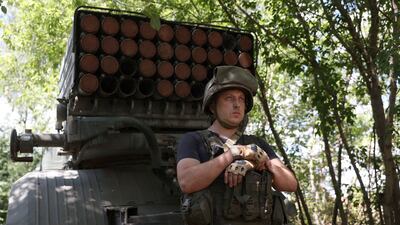
A Ukrainian serviceman stands next to a Grad BM-21 multiple rocket launcher at the front line in Donbas, eastern Ukraine. AFP -
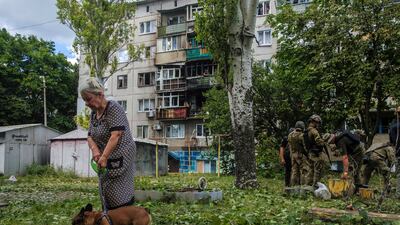
A woman walks her dog in front of a block of flats hit by shelling in Kramatorsk, Donetsk region, eastern Ukraine. EPA -
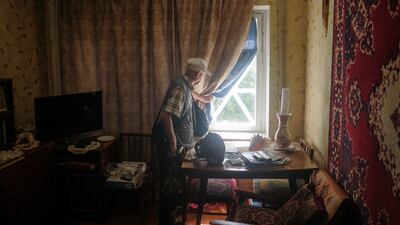
A Kramatorsk resident peers out of a window lined with tape to reduce the impact of shattering glass. EPA -
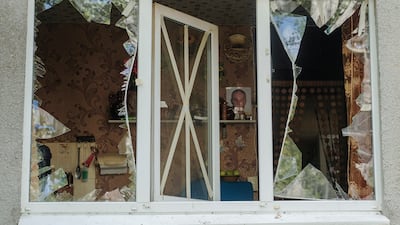
The damaged windows of an apartment, after shells hit a residential area in Kramatorsk. EPA -
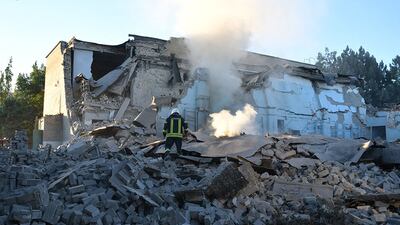
Rescuers working on a residential building partially destroyed by missile strike in Bashtanka, Mykolaiv as the Russian war in Ukraine continues. AFP -
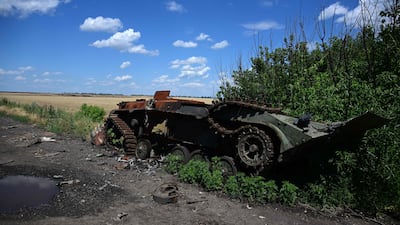
An Ukrainian infantry fighting vehicle lies by the roadside, having been destroyed by Russian forces in Ukraine. AFP


There are additional costs to this war, some of which will only become apparent in the years to come. First and foremost is the fate of the millions of Ukrainian refugees who have been forced to flee their country or who have been internally displaced by the fighting. As is the case in every war of these proportions, only the naive assume that when the hostilities end, the refugees will simply return. In the first place, we have no idea when, how, or if this war will end. What should be certain, however, is that the longer it continues, and the more damage done, the greater the number of refugees who will either be unable or will choose not to go back. In that case, we must ask whether the countries who were initially welcoming of refugees will remain so?
Then there are the unanticipated geopolitical transformations that are slowly beginning to take shape in response to this war. In the immediate aftermath of the invasion, Mr Biden, taking a rhetorical page from the likes of Winston Churchill, spoke of the world coming together to oppose Moscow. Weapons and aid were sent to Ukraine and Nato countries enacted ever-expanding sanctions on Russia. In speeches we were told that these crippling economic measures would isolate Russia, devastate its economy, and help bring an end to this war.
Some of these measures were necessary and others were justifiable. But just as the invasion will have consequences, both intended and unintended, the far-reaching economic measures and efforts to impose isolation will as well.
On the one hand, the loss of Russian oil and gas and Ukrainian wheat, blockaded until a UN-led deal was struck last week, are having a devastating impact on the economies and peoples of both East and West. While not able to immediately transition, Russia has, with some difficulty, been able to recoup some of its losses by selling its vital resources in Asian markets. Because restrictions have been placed on Russia’s ability to trade in dollars, it has demanded payment in roubles, giving its currency a needed boost. Meanwhile, the rising costs of fuel and flour are destabilising countries, both rich and poor. And the scramble to find new sources of oil and gas is putting critically important climate goals dangerously on hold for the foreseeable future.
-

UN Secretary General Antonio Guterres, Ukrainian Infrastructure Minister Oleksandr Kubrakov, Turkish President Recep Tayyip Erdogan and Turkish Defence Minister Hulusi Akar attend a signing ceremony in Istanbul, Turkey. Reuters -

Ukrainian Infrastructure Minister Oleksandr Kubrakov, seated, at the signing ceremony. Reuters -

UN Secretary General Antonio Guterres, left, Russia's Defence Minister Sergei Shoigu, second left, Turkish President Recep Tayyip Erdogan, seated, second right, and Turkish Defence Minister Hulusi Akar at the signing ceremony. Reuters -
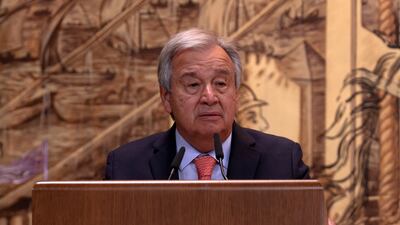
Mr Guterres speaks during the signing ceremony. Reuters -
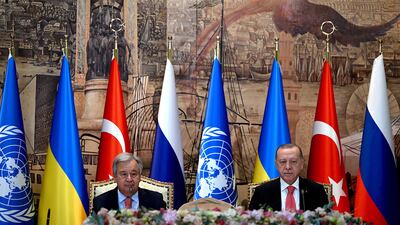
Mr Guterres and Mr Erdogan sit at the start of the signature ceremony for an agreement on the safe transportation of grain and foodstuffs from Ukrainian ports. AFP -
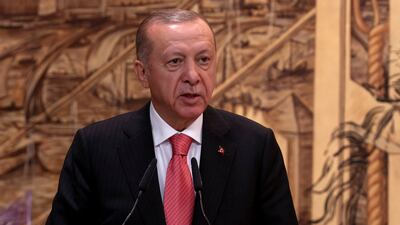
Mr Erdogan speaks at the signing ceremony. Reuters -
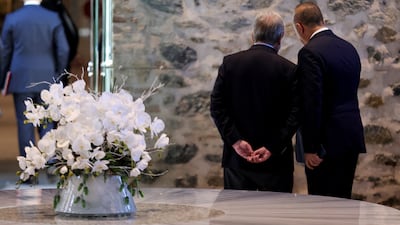
Mr Guterres and Turkish Foreign Minister Mevlut Cavusoglu stand together on the day of the deal signing in Istanbul. Reuters -
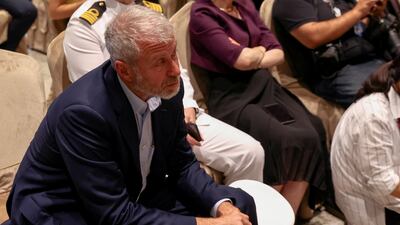
Roman Abramovich attends the ceremony in Istanbul. Reuters -
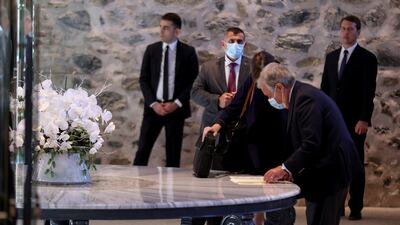
Mr Guterres said the deal would clear the way for grain shipments from three Ukrainian ports; Odesa, Chernomorsk and Yuzhny, stabilising runaway prices on the global market. Reuters -

The UN chief said a co-ordination centre would be set up in Istanbul to manage Black Sea traffic. Reuters -
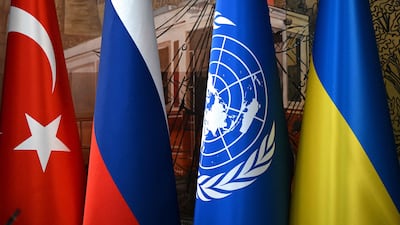
A Turkish national flag, a Russian national flag, a United Nations flag and a Ukrainian national flag in Istanbul, before the deal was signed. AFP


Partly because of continued lack of trust in the consistency in US leadership (given the dizzying shifts in US policies over the past two decades) many nations have hesitated or outright refused to join a united front in opposition to Russia. As US and other western diplomats have continued to apply pressure on Latin American and Asian countries to join the West’s campaign to isolate Russia, their efforts have been politely rebuffed. These countries have reminded their western interlocutors that just as various western nations have placed their national interests first, even though they do not support the Russian actions in Ukraine, they must now place their own economic and geopolitical interests first. This has led one analyst to cynically describe the emerging US/Nato coalition as “the West against the rest”.
The longer this conflict continues, the more locked in place some of these emerging economic and political realities become, and the greater the danger that the world will become more deeply divided in a new Cold War. Relations will fray, economies will suffer, antagonisms will fester, and new conflicts will emerge.
It was precisely for situations of this sort that the UN was created, and international law and conventions were written. If they had been functioning, the aggrieved parties could have demanded negotiations or arbitration. Because all the world powers have degraded the world body and ignored the rules of law and warfare, we lack the mechanisms to resolve conflict and protect rights.
What we are now left with are the same choices we faced five months ago – either pouring more petrol on the fire or mobilising international pressure to forge a negotiated solution. It won’t be easy or even palatable to find a way forward. Sacrifices will most likely be required and neither side will get what they want. But it’s either that or a continued downward spiral.

