


It was in a chaotic school playground that I had my first brush with the complicated legacy of militarism in Germany. I wouldn’t have realised it at the time – I was six – but my father certainly did. The Berlin International School had turned into a cultural battlefield, where British and American parents were pitted against the Germans. The objective: restoring order during our anarchic break times.
Children were running wild, screaming and generally having a great time as teachers stood idly by, to the ire of the international parents. They suggested that before break ended, we should stand in line for a minute to calm down before re-entering the classroom – a common practice in many schools around the world. But the German parents flatly rejected the proposal. It baffled the foreigners. How could something so benign be so controversial?
The answer came down to a defining aspect of modern Germany’s identity, at least up until this February: a total and, many would say, admirable rejection of militarism after the trauma and shame of the Nazi era. For German parents, seeing children line up went way beyond the playground. It was a reminder of a time when society lived under warlike order and discipline, set by leaders intent on regional, even global domination. Better that children run riot than rally unquestioning and silent behind a figure of authority, even if it was a primary school teacher. It is also why virtually no German schools have uniforms.
However bizarre it might seem, this petty instance of playground politics illustrates the scale of the historic shift Germany might be going through in 2022. Mere days after Russia’s invasion of Ukraine, Olaf Scholz, Germany’s new chancellor announced $112 billion for the country’s military in 2022, alongside a promise to finally meet its Nato commitment to spend 2 per cent of GDP on defence.

It is by far the largest increase in German defence spending since the Second World War, giving the country’s beleaguered and oft-neglected military access to a sum a little under the defence expenditure of France and the UK combined.
Mr Scholz’s abrupt decision shocked everyone, from his coalition partners – who were given barely any notice – to friends and, admittedly very few, foes abroad. After all, this was the same Germany that for decades resisted calls to meet its defence-spending commitment to Nato, much to the anger of some of the alliance’s member states, particularly the US under former president Donald Trump.
In the end, it was not four years of pressure and threats from Mr Trump that brought about the volte face, but an abrupt decision made by a man of the left, who, in normal times, could barely seem less militaristic.
But if there was any issue to compel Mr Scholz into drastic action it would be the Ukraine conflict, the largest European war in decades. Berlin’s decades-long approach of “change through trade” with Russia, pioneered by former chancellor Angela Merkel, unravelled overnight, forcing Germany to choose between saving face on the international stage by sticking up for its allies, or severely damaging its economy, which has become so intertwined with Russia’s. Far worse than simply being mistaken, Germany also looked naive and is still drawing criticism from Ukrainian President Volodymyr Zelenskyy for perceived inaction.
The new defence funding has helped claw back some reputation. But in the context of Germany’s wider moral and cultural quagmire, the grand gesture could quite soon look less grand, and there are already fears momentum is stalling.
First, does Germany know how to spend the money? Berlin has not even settled on a definition of what this new era of defence should look like. Is it to be purely spent on personnel and military equipment? Or, as some pacifism-inclined politicians advocate, should the budget also be spent on development projects and aid, part of a holistic, non-military approach to making Germany more secure?
-
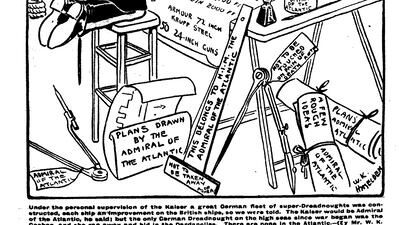
A cartoon from 1914 satirising the naval arms race between Germany and Britain. Getty Images -
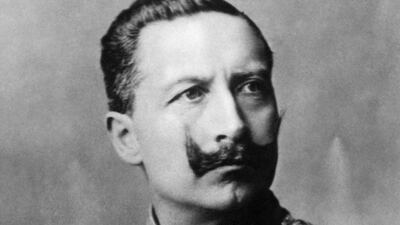
An undated portrait of German Emperor Wilhelm II. AFP -

1878: British warship 'HMS Dreadnought'. Getty Images -
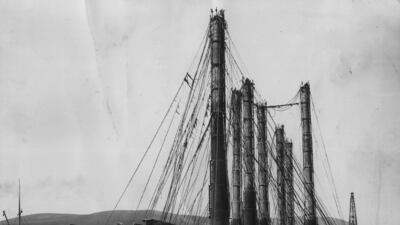
17th May 1936: The German dreadnought 'Kaiserin', and the huge air locks used to raise her at Scapa Flow. This is one of many German ships sunk by her crew in Scapa Flow on June 21, 1919, after the fleet surrendered in November 1918. Getty -
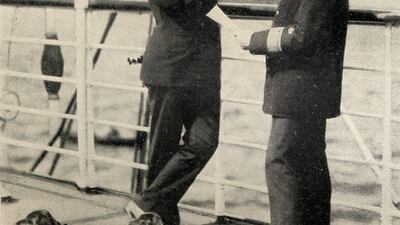
Kaiser Wilhelm II, 1859-1941. Emperor of Germany, King of Prussia 1888-1918, on board ship. Getty Images -

Kaiser Wilhelm II, right, at a review of his Guard in Berlin, in 1912. Reuters


Second, what is $112bn if it’s not used well? Stereotypes of Prussian militarism might make efficient defence spending seem inevitable. At the beginning of the 20th century, Kaiser Wilhelm II built a navy that threatened the global dominance of Britain in just 14 years, a key driver of tensions that led to the First World War. But today’s defence ministry is not up to that standard, with stories of deep inefficiency abounding. A 2015 restoration of the country’s naval training ship Gorch Fock was originally estimated to cost a little more than $10 million. By 2017, projected costs had risen to more than $140m, drawing intense criticism from the county’s audit office and media.
Deepest of all, the necessary social and cultural shift away from pacifism is something money cannot buy. For years the British Army has taught its personnel that achieving the best “fighting power” requires three ingredients. The first two are a conceptual component, “the ideas behind how to fight”, and the physical component, “the means to fight”. Securing these shouldn’t be a problem for a country as advanced as Germany. However, in a society that for so long has been raised on pacifism, the third, the moral component, “the ability to get people to fight” built on motivation, moral cohesion and an ethical foundation, might be tougher to instil.
Pledging the vast cash injection and Nato commitments is a big deal, but it is only the beginning. It might sound strange, but for those who really want to see if 2022 was the year Germany moved on from pacifism, don’t just look at the defence state budget in a decade’s time. Look at the playgrounds, too.

