


By the time US President Joe Biden took office almost a year ago, it had become obvious that he needed to adopt a bold and creative approach toward the Middle East.
Having inherited a number of challenges specific to the region from his predecessors, it was important for him to recognise both the dire circumstances the region was facing and the fact that many of its conflicts were connected and involved combinations of a similar cast of characters and issues of shared concern. Also important to consider was that the US could no longer pretend to be the post-Cold War's sole world leader. The disastrous consequences of former US president George W Bush's Iraq fiasco put an end to that, as had decades of US neglect and/or failed policies that had hardened negative trends, exacerbated conflicts and fuelled extremism.
Instead of the US playing "whack a mole" with each conflict, hotspot, or problem – a set of policies that had not worked in the past and would not work now – something akin to a P5+1 approach adopted by the five permanent members of the UN Security Council, plus Germany, was needed to advance a comprehensive initiative to promote regional security. The Biden administration, however, appears to have chosen a low-key, low-expectations approach employing quiet diplomacy and conflict management – something like prescribing aspirin to a patient suffering from massive third-degree burns. It was the very "whack a mole" approach that has failed in the past.
With conflicts aplenty, tensions rising and no solutions on the horizon, some countries in the region have taken it upon themselves to take steps that they deem necessary to calm tensions and promote stability and security. For example, Turkey has been making an effort to mend relations with Saudi Arabia, while Saudi Arabia has taken steps to do the same with Iraq and Iran.
Perhaps the most significant practitioner of the Middle East's new politics has been the UAE. Not only has it engaged in dramatic groundbreaking diplomacy with the region's three non-Arab powers – Israel, Turkey and Iran – it has also engaged in a constructive dialogue with Syria.
These moves have come amid the unpredictability and perhaps even unreliability of American foreign policy, partly a product of the presidency changing hands from Mr Bush to Barack Obama to Donald Trump to Mr Biden over the past two decades. The unpredictability has been exacerbated by the destructive hyper-partisanship that has come to characterise American domestic and foreign policy today.
As a result of Washington's many blunders across the region – including, for example, the unravelling of Iraq and Libya, the emboldening of hardline elements in Iran and Israel, and the spread of extremist currents – the US has left its allies in a lurch. These allies have, therefore, had to fend for themselves to try to clean up or just deal with the mess the US has helped to create.
For decades, since its founding, the UAE has carved out a role for itself as a regional hub of development and tolerance. In a study that Zogby Research Services conducted about a decade ago, when it asked Arabs for their views of other Arab countries, the UAE received near universal high marks. From its polling, the conclusion was that for many Arabs, the UAE had come to be viewed in the same way the US had been seen by Europeans in the late 19th and early 20th centuries – a land of opportunity and promise. For a half century now, the UAE has been the destination of entrepreneurial Arabs from the Levant and North Africa. They have started businesses and earned good salaries, and their remittances have helped to sustain their home countries.
-
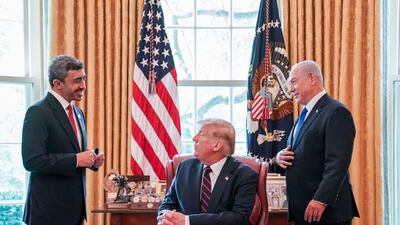
Sheikh Abdullah bin Zayed, UAE Minister of Foreign Affairs and International Co-operation, speaks to Donald Trump, US president at the time, and Israeli Prime Minister Benjamin Netanyahu in the Oval Office in September 2020. Ministry of Foreign Affairs and International Co-operation -
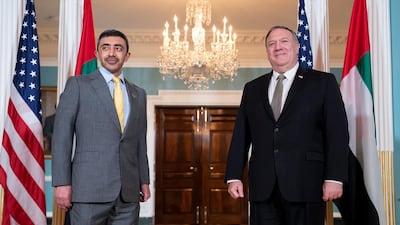
Sheikh Abdullah bin Zayed, UAE Minister of Foreign Affairs and International Co-operation, meets Mike Pompeo, US secretary of state at the time. Wam -
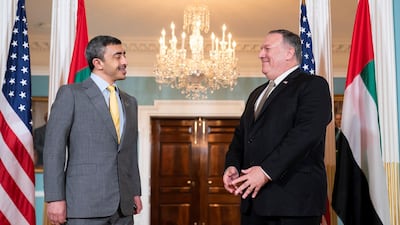
Sheikh Abdullah and Mr Pompeo in Washington. Wam -
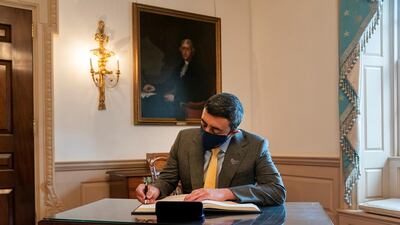
Sheikh Abdullah visits Washington in September last year. Wam -
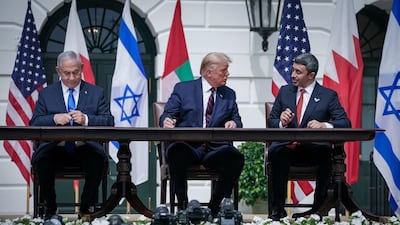
Sheikh Abdullah, UAE Minister of Foreign Affairs and International Co-operation, US President Donald Trump, centre, and Israeli Prime Minister Benjamin Netanyahu sign the Abraham Accord at the White House South Lawn. MOFAIC -
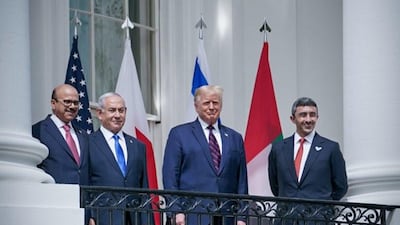
Sheikh Abdullah and, from left, Bahrain's Foreign Minister Abdullatif Al Zayani, Israeli Prime Minister Benjamin Netanyahu and US President Donald Trump at the White House. MOFAIC -
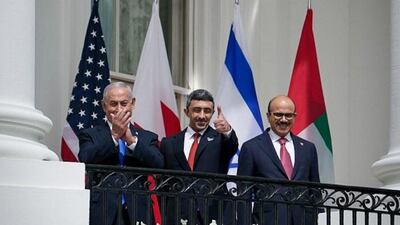
Sheikh Abdullah, Mr Al Zayani and Mr Netanyahu at the White House during the Abraham Accord signing ceremony. MOFAIC -
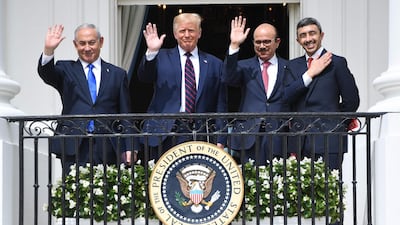
Sheikh Abdullah and, from left, Mr Netanyahu, Mr Trump and Mr Al Zayani wave from the Truman Balcony at the White House. AFP -
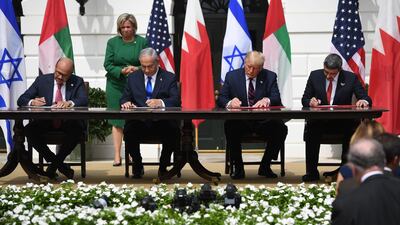
Sheikh Abdullah and, from left, Mr Al Zayani, Mr Netanyahu and Mr Trump sign the Abraham Accord. AFP -
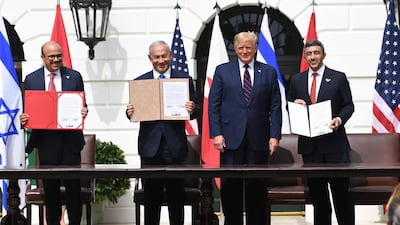
Sheikh Abdullah and, from left, Mr Al Zayani, Mr Netanyahu and Mr Trump after the signing ceremony. AFP -
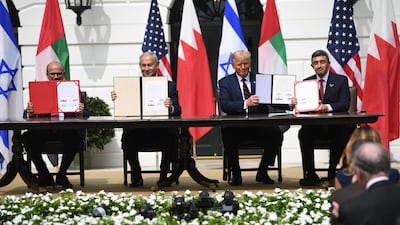
Sheikh Abdullah and, from left, Mr Al Zayani, Mr Netanyahu and Mr Trump after the signing ceremony. AFP -
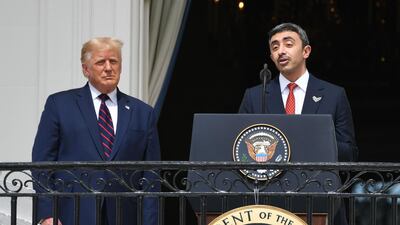
Sheikh Abdullah speaks from the Truman Balcony at the White House during the signing ceremony of the Abraham Accord. AFP -
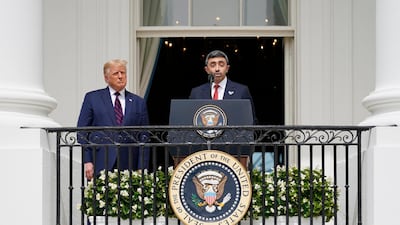
Sheikh Abdullah speaks as Mr Trump looks on before the signing of Abraham Accord on the South Lawn of the White House. AP -
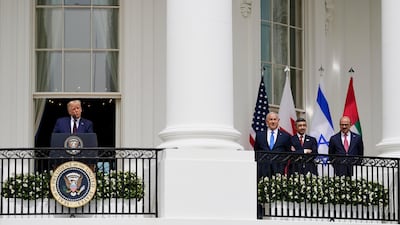
Sheikh Abdullah looks on from the White House as Mr Trump speaks at the Abraham Accord signing ceremony, also attended by Mr Al Zayani and Mr Netanyahu. AP -

Sheikh Abdullah bin Zayed, UAE Minister of Foreign Affairs and International Co-operation, Israeli Prime Minister Benjamin Netanyahu, left, and Bahraini Foreign Minister Abdullatif Al Zayani stand on the Blue Room Balcony during the signing ceremony. AP -
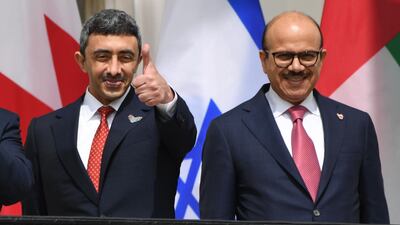
Sheikh Abdullah and Mr Al Zayani shortly before participating in the signing of the Abraham Accord. AFP -
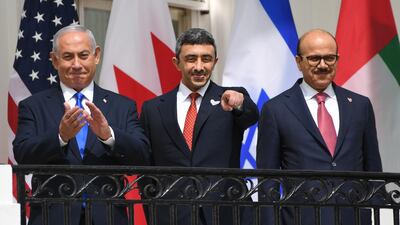
Sheikh Abdullah, with Mr Netanyahu, left, and Mr Al Zayani at the signing of the Abraham Accord on the South Lawn of the White House. AFP -
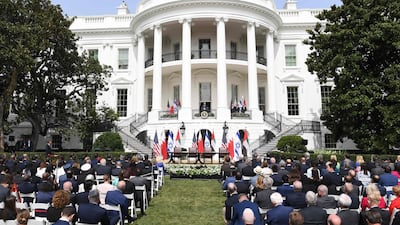
US President Donald Trump speaks from the Truman Balcony at the White House during the signing ceremony of the Abraham Accord. AFP -
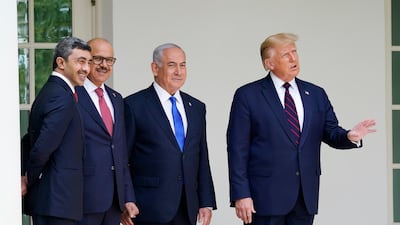
President Donald Trump walks to the Abraham Accord signing ceremony at the White House with Sheikh Abdullah bin Zayed, UAE Minister of Foreign Affairs and International Co-operation, Israeli Prime Minister Benjamin Netanyahu, and Bahrain's Foreign Minister Abdullatif Al Zayani. AP -
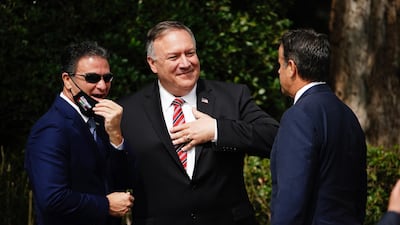
US Secretary of State Mike Pompeo arrives at the White House to attend the Abraham Accord signing ceremony hosted by President Donald Trump. EPA -
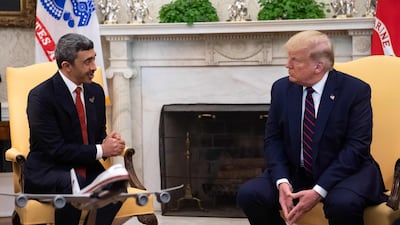
Sheikh Abdullah bin Zayed, UAE Minister of Foreign Affairs and International Co-operation, meets US President Donald Trump in the Oval Office of the White House before the signing of Abraham Accord. AFP -
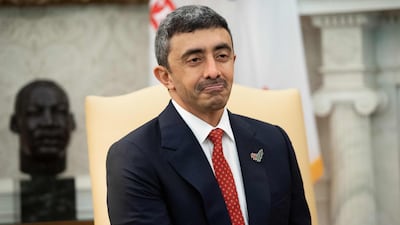
Sheikh Abdullah bin Zayed, UAE Minister of Foreign Affairs and International Co-operation, in the Oval Office. AFP -
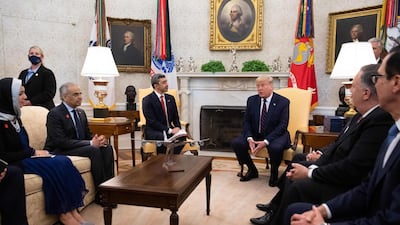
Sheikh Abdullah bin Zayed, UAE Minister of Foreign Affairs and International Co-operation, meets US President Donald Trump in the Oval Office of the White House. AFP -
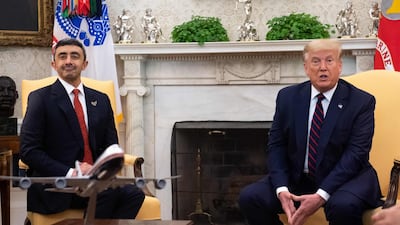
Sheikh Abdullah with Mr Trump in the Oval Office. AFP -
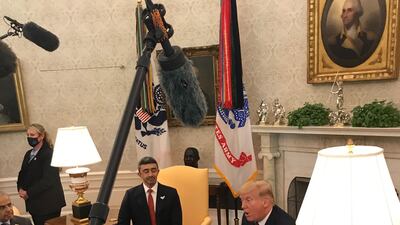
Sheikh Abdullah bin Zayed, UAE Minister of Foreign Affairs and International Co-operation, with by President Donald Trump at the White House. Mustafa Alrawi / The National -
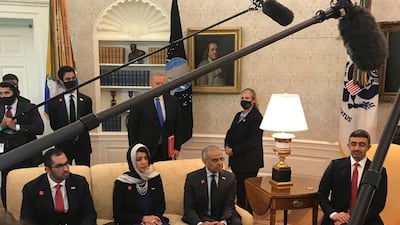
The UAE delegation led by Sheikh Abdullah bin Zayed, Minister of Foreign Affairs and International Co-operation, with US President Donald Trump at the White House. Mustafa Alrawi / The National -
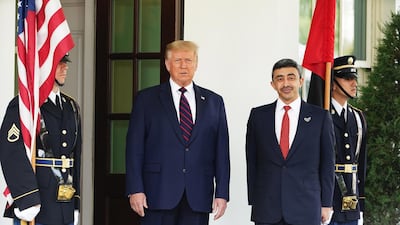
Sheikh Abdullah bin Zayed, UAE Minister of Foreign Affairs and International Co-operation, is welcomed to the White House by US President Donald Trump. EPA -
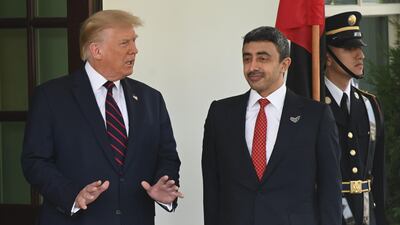
Sheikh Abdullah and Mr Trump outside the White House. AFP -
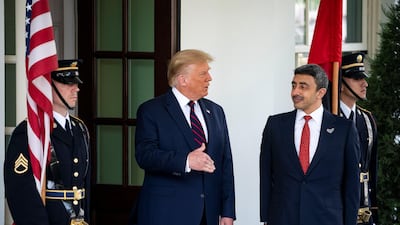
Sheikh Abdullah bin Zayed speaks to Mr Trump after arriving at the White House. Reuters -
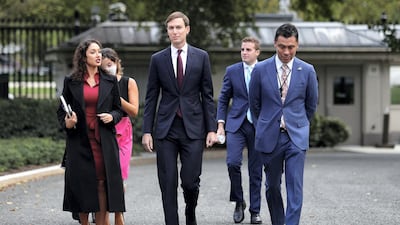
White House Senior Adviser Jared Kushner walks away following a television interview on the North Lawn at the White House in Washington. Reuters -
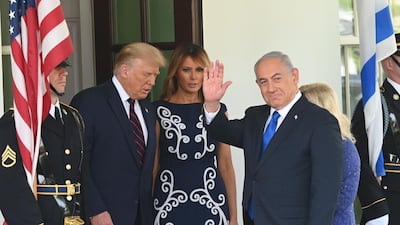
US President Donald Trump and First Lady Melania Trump welcome the arrival of Prime Minister of Israel Benjamin Netanyahu and his wife Sara on the North Lawn of the White House in Washington DC. AFP -
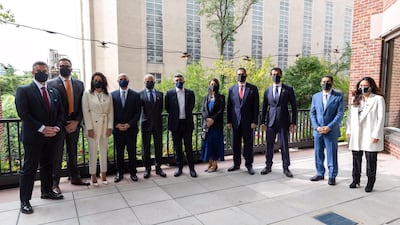
A delegation of senior UAE officials led by Sheikh Abdullah bin Zayed, UAE Minister of Foreign Affairs and International Co-operation, prepares to depart for the White House to sign the Abraham Accord. MOFAIC -
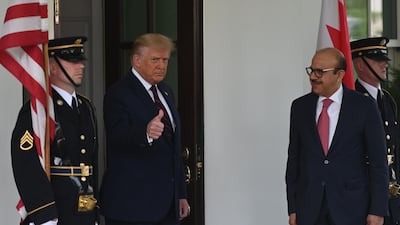
US President Donald Trump welcomes Bahraini Foreign Minister Abdullatif Al Zayani. AFP -

Bahraini Foreign Minister Abdullatif Al Zayani arrives at the White House in Washington DC. AFP -
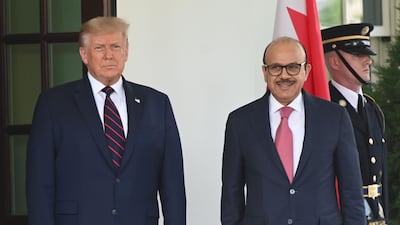
US President Donald Trump welcomes Bahraini Foreign Minister Abdullatif Al Zayani on the North Lawn of the White House in Washington, DC. AFP -
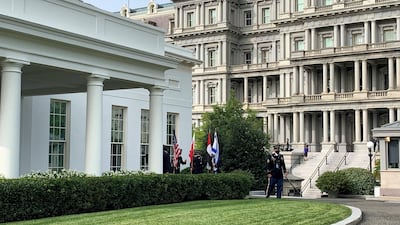
Preparations at the White House for the signing of the Abraham Accord. -
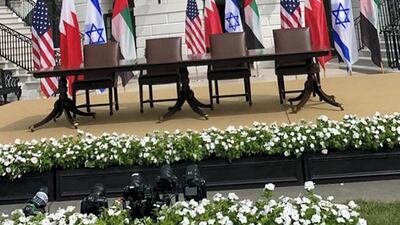
Preparations under way at the White House for the signing of the Abraham Accord. -
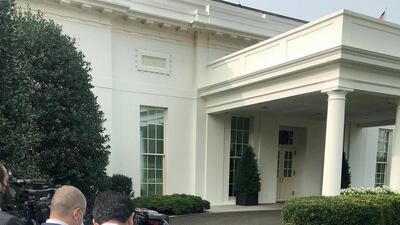
Preparations under way at the White House for the signing of the Abraham Accord. -

Preparation at the White House for the signing of the Abraham Accord. The National


Over the past decade, the Mena region faced a number of crises, including all-out war in Libya, Syria and Yemen. The growing influence of Muslim Brotherhood-led parties in North Africa also posed challenges in parts of the region. Palestinians, meanwhile, continue to be victims of Israeli acquisitiveness and brutality, of dysfunctions of their own leadership, and of callous US neglect. Indeed, Palestinian concerns remain ignored even though the US has always had the leverage to address the many injustices done to this long-suffering people.
Recognising that there will not be any military solutions to the many conflicts fuelled by regional rivals such as Turkey, Israel and Iran, the UAE has embarked on a series of diplomatic initiatives using what has always been its most potent weapon – the soft power of its economy, the freedom of its entrepreneurial culture, and the diversity of its population.
These are bold steps taken to fill the vacuum left by the US's blunders and neglect. If only the US could be as bold.
As the new Middle East policies of the UAE begin to take hold, hopefully it will use the leverage it will acquire to do what the US has failed to do.

