


On balance, the success of Cop 26 probably falls in favour of the stubborn optimist. For the climate scientist Michael Mann, the Glasgow conference fell somewhere between “blah blah blah and a total success”. Others are adamant that the agreements made and the outcomes enshrined in the Glasgow Pact suggest genuine headway was made, despite some last-minute softening of the language on the “phasing down” of coal.
Let’s look at what it achieved. Cop 26 provided the platform for the US and China to finally agree to work together on limiting a rise in global temperature to 1.5°C, which could herald a crucial era of climate co-operation. It saw nearly 200 countries finally strike an agreement on Article Six of the Paris Agreement after six long years of agonising negotiations over the rules on global carbon markets. And methane, coal and fossil fuels were all mentioned for the first time in a Cop communique. All this demonstrates a genuine collective will to affect change.
This all heads in the right direction. The question that lingers after the dust has settled in Scotland is where are we on implementation? The answer will determine whether we can truly begin to repair our planet and forge a sustainable future for all.
Now, as work gets underway to turn words into action, there is one outcome of which we are certain. The UAE has the chance to get the world aligned and on track towards an inclusive and equitable energy transition when we host Cop 28 in 2023, after Egypt hosts Cop 27 next year.
It’s difficult to overstate the significance of this moment, both for our nation as we stand on the verge of our Golden Jubilee, and for the wider international community as it stands poised and more determined than ever to turn the tide on climate change.
-
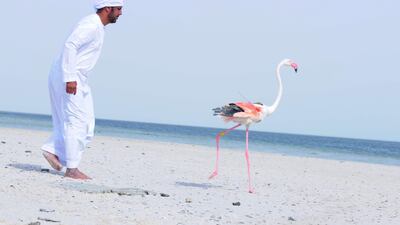
The UAE is known for protecting the environment. Here Environment Agency Abu Dhabi staff release a tagged flamingo as part of Abu Dhabi Birdathon initiative. Courtesy Environment Agency Abu Dhabi -

Umbrella Thorn Acacia trees are among the UAE's rich flora. Silvia Razgova / The National -
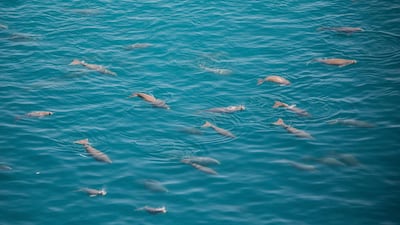
Abu Dhabi has the second-largest dugong population in the world. Environment Agency Abu Dhabi -
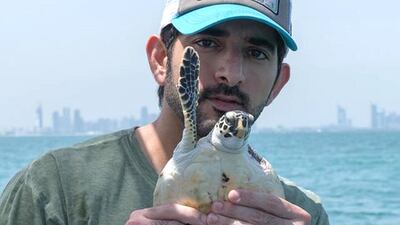
Love of nature is part of life here. Sheikh Hamdan bin Mohammed, Crown Prince of Dubai, with a sea turtles he helped release into the wild. Instagram/ @faz3 -

Abu Dhabi's environment agency is working to protect Hawksbill and Green turtles which live in the emirate's waters. Courtesy TDIC -
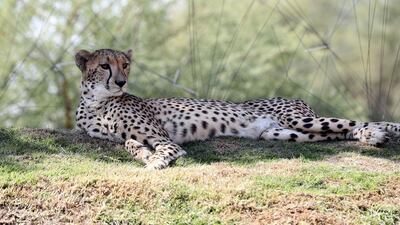
A cheetah at Al Ain Zoo, Al Ain. The zoo was founded by the Late President, Sheikh Zayed. Chris Whiteoak / The National -
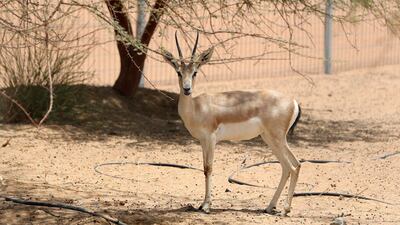
An Arabian sand gazelle at the Mleiha Archaeological Centre in Sharjah. Chris Whiteoak / The National -
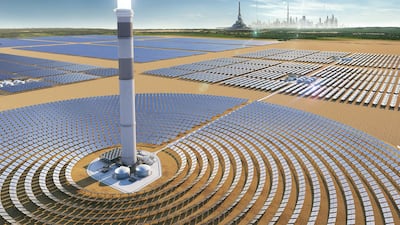
The UAE is also embracing clean energy. This computer-generated image shows what phase four of Dubai's Mohammed Bin Rashid Solar Park, currently under construction in Dubai. Image courtesy of Acwa Power -
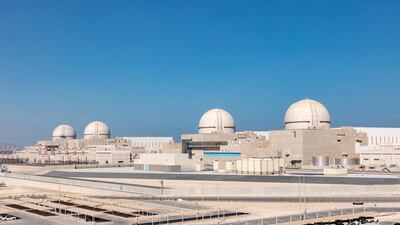
Nuclear energy is also important. The first reactor at Barakah nuclear plant reached 100 per cent power in December 2020. -

Abu Dhabi's new Midfield Terminal has won a coveted three-pearl rating under Abu Dhabi's Estidama, Arabic for sustainability, system. Courtesy KPF -
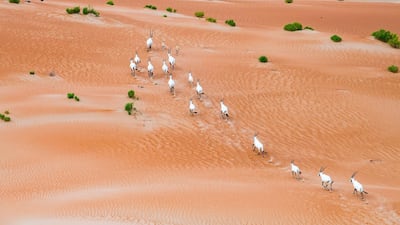
A breeding programme run by Environment Agency Abu Dhabi helped bring Arabian Oryx back from the brink of extinction. Courtesy: EAD


In the words of Mariam Al Mheiri, the UAE’s Minister for Climate Change and Environment: “By winning the bid to host Cop 28, the UAE is showing that climate action can – and must – happen anywhere in the world.”
Indeed, we have a chance to shine the spotlight on the critical role the Middle East’s economic transformation will play in shaping the global response to climate change, as the heartland of the hydrocarbon economy transitions to a future fuelled by clean and renewable energies, advanced technologies and innovative climate-smart solutions.
The stage for this was set at Cop 26. The UAE’s three-pronged climate action focus on finance, technology and the environment throughout our participation in Glasgow offered a glimpse of what we can expect to see in the coming years.
Starting with finance, the Energy Transition Accelerator Financing (ETAF) Platform, launched by the International Renewable Energy Agency (Irena) and the UAE, is the sort of critical financial tool that can enable an inclusive and equitable energy transition.
The platform aims to secure $1 billion to fund up to 1.5 gigawatts of new renewable energy by 2030, with a focus on developing economies. This will support the implementation of ambitious National Determined Contributions (NDCs) to meet Paris Agreement targets.
While serving vital national objectives such as energy access, energy security and economic diversification, ETAF funding is available for any of Irena’s 166 member states. It’s clear recognition of the fact that meeting international climate and development objectives requires a reallocation of capital towards low-carbon technologies, including renewables.
According to Irena’s research, total energy transition-related investments needed by 2050 are $131 trillion. That’s $33tn more than is currently planned for. The situation is made more urgent by the fact that regions dominated by developing and emerging economies remain consistently under-represented in the share of global renewable energy investments that they attract.
In co-launching the ETAF platform, the UAE is further enhancing its role as a global facilitator of sustainable solutions for all, having already committed $400 million to the platform through the Abu Dhabi Fund for Development (ADFD).

In another joint initiative launched in Glasgow, this time between the US and the UAE, the Agriculture Innovation Mission for Climate (AIM for Climate) announced that more than $4bn of increased investment was sourced from 33 countries for climate-smart agriculture solutions, with $1bn of this committed by the UAE.
The initiative is an urgent response to the fact that decarbonisation of agriculture and food systems has been limited, despite the sector contributing up to 33 per cent of human-made global greenhouse gas emissions. What’s more, the livelihoods of farmers, who are on the frontlines of climate change, risk being destroyed by global warming and changing weather patterns. AIM for Climate seeks to bolster the food security of countries and enhance farmers’ resilience in the face of the effects of climate change while spurring greater climate-smart agriculture innovation.
With AIM for Climate highlighting the convergence of finance and technology for climate action, the UAE Hydrogen Roadmap launched at Cop 26 showed the nation’s ambitions to become a low-cost producer and exporter of blue and green hydrogen by focusing on enhancing its technological capabilities in industries of the future.
This was followed by the raising of a mangrove-planting target outlined in our second NDC from 30m to 100m mangroves by 2030. And in between these announcements, the UAE signed up to the Global Methane Pledge, which saw more than 100 countries, including the UAE, committing to slash emissions of methane by 30 per cent by 2030, as well as the deforestation pledge, which committed more than 100 countries to ending and reversing deforestation by 2030.
From what we committed to and delivered in Glasgow, it’s clear that the UAE will work to ensure that Cop 28 marks an important moment in climate diplomacy. By delivering an inclusive and consultative Cop, we can mobilise the full weight and impact of international climate action and realise this moonshot moment for our country.
When the UN Climate Change Conference arrives in Abu Dhabi in two years, the UAE will seek to turn the world’s greatest existential challenge into a moment of great opportunity for all people, the planet and our shared prosperity.

