Birds do it. Bees do it. And these days, with an unprecedented 100 million people on the move, more humans are doing it than at any time in recorded history. In response, states around the world have shut their doors and battened down the hatches.
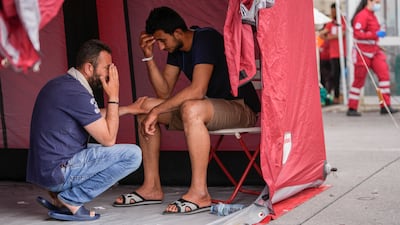
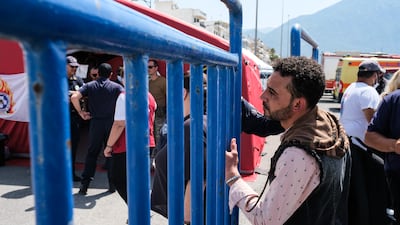
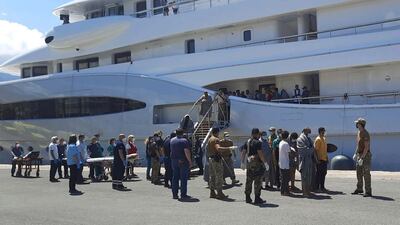
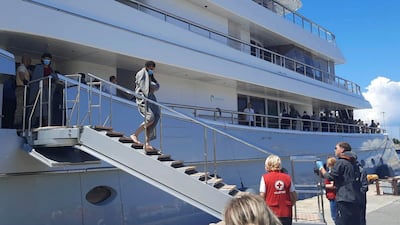
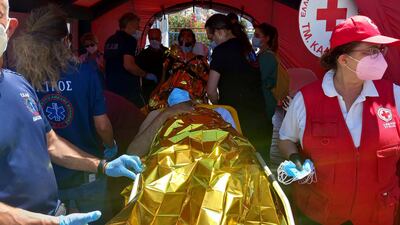
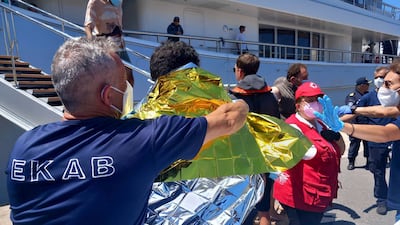
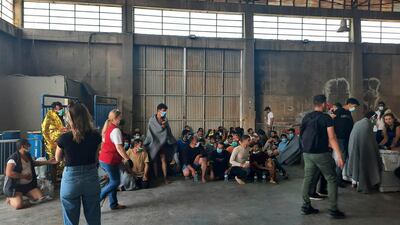
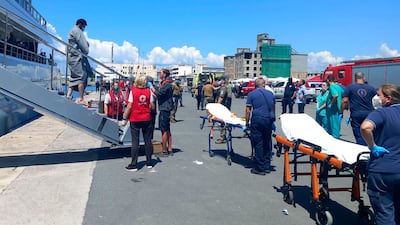
The tragic sinking of the Adriana off the Greek coast earlier this month was probably the deadliest migrant disaster in recent history, with as many as 600 people – from Pakistan and Egypt, Syria, the Palestinian territories and beyond – perishing in the Eastern Mediterranean.
That it happened despite activist groups and Greek and European authorities monitoring the creaky, Libya-launched vessel for the previous 15 hours makes the disaster all the more heart-rending for being wholly avoidable. When European leaders meet at this week’s EU summit in Brussels, one hopes they appreciate their role in this chronicle of a catastrophe foretold.
About eight years ago, western and European sympathies were largely with migrants. We were horrified by the 2013 shipwreck off Lampedusa that killed more than 300, then heartbroken at the sight, in the summer of 2015, of little Alan Kurdi washed up on a Turkish beach.
Down went the gates and in rushed up to two million Syrians, Iraqis, Afghans, Iranians, Africans and South Asians. Germany alone welcomed a million new arrivals. But European politics soon turned nativist after a few deadly terror attacks and hoary far-right warnings of a coming “Eurabia”, and even some of the continent’s liberal-minded leaders began to see the danger of too many new arrivals.
The first shoe fell in early 2016, when the EU agreed to pay Turkey €6 billion ($6.5 billion) to curb smuggling, accept the EU’s rejected asylum-seekers and indefinitely host some four million refugees. With this green light, Europe hardened its policies – beefing up border security agency Frontex and downgrading migrant search and rescue operations. Italy approved a controversial decree imposing stricter conditions on NGOs rescuing migrants, while Greece was charged with turning around migrant-laden boats at sea and pushing them back towards Turkey.
When European leaders meet in Brussels this week, one hopes they appreciate their role in this chronicle of a catastrophe foretold
In late 2019, European parliament rejected – by two votes – a plan to significantly expand search and rescue operations for migrants in the Mediterranean, and the die was cast. The next year, after Turkey encouraged refugees to head for the Greek border and Athens mounted a stiff response, European Commission President Ursula von der Leyen hailed Greece as Europe’s immigration shield.
In mid-2021, as such thinking gained ground, I warned of more Alan Kurdis to come. Six months later Russian forces invaded Ukraine, ultimately driving about 10 million Ukrainians into Europe. Now here we are, with migration, and migrant deaths, making a major resurgence.
From 2020 to 2022, the number of people arriving in Britain by boat increased five-fold, from 8,500 to more than 45,000, according to UK government figures. The US has repeatedly set new records for new arrivals at its Mexico border. Cypriot authorities last week rescued more than 80 migrants off the island’s south-east coast, and officials say boat arrivals are up 60 per cent this year.
The German news website Qantara reported that nearly 54,000 migrants have arrived in Italy this year as of mid-June, already twice as many as all of 2022, while the number of migrants killed while headed to Italy is up more than 30 per cent. Overall, more than 25,000 migrants have died attempting to cross the Mediterranean since 2014, according to German firm Statista.
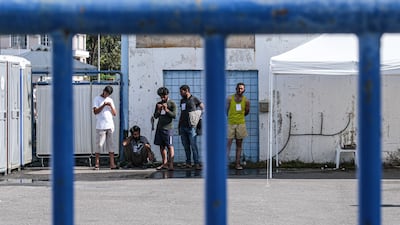
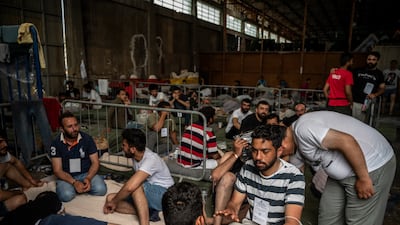
All this helps explain why the EU-Turkey deal has begun to emerge as a model, despite leaving tens of thousands of migrants in limbo in overcrowded Greek camps. The EU has offered Tunisia a €900 million “partnership programme” that provides budget assistance and would ensure Tunis’s full co-operation on migration, including stronger border management and anti-smuggling efforts. The deal was to be finalised on Tuesday.
The EU has given Egypt about $100 million in the past few years to bolster its border security and anti-smuggling efforts, and just last week EU foreign policy chief Josep Borrell pledged about $20 million more for Cairo, citing the outbreak of war in neighbouring Sudan.
European anti-migration funds are reaching even deeper into Africa. Last year, Rwanda and the UK signed a deal under which illegal arrivals to the UK would be flown to Rwanda, where they would be granted asylum and given settlement funds.
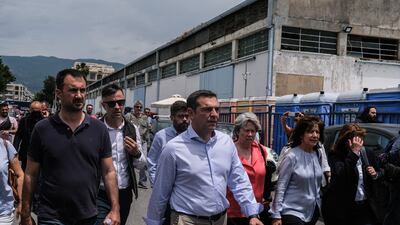
British refugee groups have challenged the plan and are awaiting a court decision, but the momentum seems clear: Fortress Europe is largely unconcerned about what happens beyond its parapets, as seen in the convincing re-election of a strongly anti-migrant government in Greece on Sunday.
The number of migrant deaths could soar, but as long as the number of new arrivals is kept to a minimum, the EU will continue to shell out good money, sacrificing its morality for a sense of political and social security while forcing emigrants to find new pathways.
On a class trip to Italy earlier this month as part of the Erasmus programme, an 11th-year student from a Turkish high school excused himself from a group meeting to visit the bathroom. An hour later, as teachers started wondering where he had gone off to, a text message arrived. “Don’t call me,” the student advised. “I won’t come back.”
He was already on a train headed for Germany, where he would check into a refugee camp and apply for asylum. As Turkey’s economy has drifted into rough seas over the past few years, the country’s youth have made for the EU in droves. The number of under-18 Turks seeking asylum in Germany has leapt six-fold in two years, according to Turkish journalist Elmas Topcu, and this Erasmus route is increasingly popular.
It’s far from the only novel path. Somalis have taken to obtaining health-related visas for Turkey only to make their way to a boat bound for Greece. Desperate Central Americans have hidden in airplane landing gear to reach the US and countless Syrians have flown to Belarus to wander blindly through dense forest in the hopes of stumbling into the EU.
There are surely other routes of which we are unaware, and refugees will in the months and years to come find new entryways, just as western powers will hit on new means to block their way. We are failing the world’s neediest, and every day we sail deeper into dark, stormy seas. Here’s hoping it’s not too late for a course correction.

Avatar: Fire and Ash
Director: James Cameron
Starring: Sam Worthington, Sigourney Weaver, Zoe Saldana
Rating: 4.5/5
Company%20Profile
%3Cp%3E%3Cstrong%3ECompany%20name%3A%20%3C%2Fstrong%3ENamara%0D%3Cbr%3E%3Cstrong%3EStarted%3A%20%3C%2Fstrong%3EJune%202022%0D%3Cbr%3E%3Cstrong%3EFounder%3A%20%3C%2Fstrong%3EMohammed%20Alnamara%0D%3Cbr%3E%3Cstrong%3EBased%3A%20%3C%2Fstrong%3EDubai%20%0D%3Cbr%3E%3Cstrong%3ESector%3A%20%3C%2Fstrong%3EMicrofinance%0D%3Cbr%3E%3Cstrong%3ECurrent%20number%20of%20staff%3A%20%3C%2Fstrong%3E16%0D%3Cbr%3E%3Cstrong%3EInvestment%20stage%3A%20%3C%2Fstrong%3ESeries%20A%0D%3Cbr%3E%3Cstrong%3EInvestors%3A%20%3C%2Fstrong%3EFamily%20offices%0D%3Cbr%3E%3C%2Fp%3E%0A
Results:
CSIL 2-star 145cm One Round with Jump-Off
1. Alice Debany Clero (USA) on Amareusa S 38.83 seconds
2. Anikka Sande (NOR) For Cash 2 39.09
3. Georgia Tame (GBR) Cash Up 39.42
4. Nadia Taryam (UAE) Askaria 3 39.63
5. Miriam Schneider (GER) Fidelius G 47.74
Qosty Byogaani
Starring: Hani Razmzi, Maya Nasir and Hassan Hosny
Four stars
The Perfect Couple
Starring: Nicole Kidman, Liev Schreiber, Jack Reynor
Creator: Jenna Lamia
Rating: 3/5
Wicked: For Good
Director: Jon M Chu
Starring: Ariana Grande, Cynthia Erivo, Jonathan Bailey, Jeff Goldblum, Michelle Yeoh, Ethan Slater
Rating: 4/5
COMPANY PROFILE
Name: Qyubic
Started: October 2023
Founder: Namrata Raina
Based: Dubai
Sector: E-commerce
Current number of staff: 10
Investment stage: Pre-seed
Initial investment: Undisclosed
Milestones on the road to union
1970
October 26: Bahrain withdraws from a proposal to create a federation of nine with the seven Trucial States and Qatar.
December: Ahmed Al Suwaidi visits New York to discuss potential UN membership.
1971
March 1: Alex Douglas Hume, Conservative foreign secretary confirms that Britain will leave the Gulf and “strongly supports” the creation of a Union of Arab Emirates.
July 12: Historic meeting at which Sheikh Zayed and Sheikh Rashid make a binding agreement to create what will become the UAE.
July 18: It is announced that the UAE will be formed from six emirates, with a proposed constitution signed. RAK is not yet part of the agreement.
August 6: The fifth anniversary of Sheikh Zayed becoming Ruler of Abu Dhabi, with official celebrations deferred until later in the year.
August 15: Bahrain becomes independent.
September 3: Qatar becomes independent.
November 23-25: Meeting with Sheikh Zayed and Sheikh Rashid and senior British officials to fix December 2 as date of creation of the UAE.
November 29: At 5.30pm Iranian forces seize the Greater and Lesser Tunbs by force.
November 30: Despite a power sharing agreement, Tehran takes full control of Abu Musa.
November 31: UK officials visit all six participating Emirates to formally end the Trucial States treaties
December 2: 11am, Dubai. New Supreme Council formally elects Sheikh Zayed as President. Treaty of Friendship signed with the UK. 11.30am. Flag raising ceremony at Union House and Al Manhal Palace in Abu Dhabi witnessed by Sheikh Khalifa, then Crown Prince of Abu Dhabi.
December 6: Arab League formally admits the UAE. The first British Ambassador presents his credentials to Sheikh Zayed.
December 9: UAE joins the United Nations.
Mercer, the investment consulting arm of US services company Marsh & McLennan, expects its wealth division to at least double its assets under management (AUM) in the Middle East as wealth in the region continues to grow despite economic headwinds, a company official said.
Mercer Wealth, which globally has $160 billion in AUM, plans to boost its AUM in the region to $2-$3bn in the next 2-3 years from the present $1bn, said Yasir AbuShaban, a Dubai-based principal with Mercer Wealth.
“Within the next two to three years, we are looking at reaching $2 to $3 billion as a conservative estimate and we do see an opportunity to do so,” said Mr AbuShaban.
Mercer does not directly make investments, but allocates clients’ money they have discretion to, to professional asset managers. They also provide advice to clients.
“We have buying power. We can negotiate on their (client’s) behalf with asset managers to provide them lower fees than they otherwise would have to get on their own,” he added.
Mercer Wealth’s clients include sovereign wealth funds, family offices, and insurance companies among others.
From its office in Dubai, Mercer also looks after Africa, India and Turkey, where they also see opportunity for growth.
Wealth creation in Middle East and Africa (MEA) grew 8.5 per cent to $8.1 trillion last year from $7.5tn in 2015, higher than last year’s global average of 6 per cent and the second-highest growth in a region after Asia-Pacific which grew 9.9 per cent, according to consultancy Boston Consulting Group (BCG). In the region, where wealth grew just 1.9 per cent in 2015 compared with 2014, a pickup in oil prices has helped in wealth generation.
BCG is forecasting MEA wealth will rise to $12tn by 2021, growing at an annual average of 8 per cent.
Drivers of wealth generation in the region will be split evenly between new wealth creation and growth of performance of existing assets, according to BCG.
Another general trend in the region is clients’ looking for a comprehensive approach to investing, according to Mr AbuShaban.
“Institutional investors or some of the families are seeing a slowdown in the available capital they have to invest and in that sense they are looking at optimizing the way they manage their portfolios and making sure they are not investing haphazardly and different parts of their investment are working together,” said Mr AbuShaban.
Some clients also have a higher appetite for risk, given the low interest-rate environment that does not provide enough yield for some institutional investors. These clients are keen to invest in illiquid assets, such as private equity and infrastructure.
“What we have seen is a desire for higher returns in what has been a low-return environment specifically in various fixed income or bonds,” he said.
“In this environment, we have seen a de facto increase in the risk that clients are taking in things like illiquid investments, private equity investments, infrastructure and private debt, those kind of investments were higher illiquidity results in incrementally higher returns.”
The Abu Dhabi Investment Authority, one of the largest sovereign wealth funds, said in its 2016 report that has gradually increased its exposure in direct private equity and private credit transactions, mainly in Asian markets and especially in China and India. The authority’s private equity department focused on structured equities owing to “their defensive characteristics.”
The%20Roundup
%3Cp%3EDirector%3A%20Lee%20Sang-yong%3Cbr%3EStars%3A%20Ma%20Dong-seok%2C%20Sukku%20Son%2C%20Choi%20Gwi-hwa%3Cbr%3ERating%3A%204%2F5%3C%2Fp%3E%0A
Mobile phone packages comparison
More from Neighbourhood Watch:
Islamophobia definition
A widely accepted definition was made by the All Party Parliamentary Group on British Muslims in 2019: “Islamophobia is rooted in racism and is a type of racism that targets expressions of Muslimness or perceived Muslimness.” It further defines it as “inciting hatred or violence against Muslims”.
%E2%80%98White%20Elephant%E2%80%99
%3Cp%3E%3Cstrong%3EDirector%3A%3C%2Fstrong%3E%20Jesse%20V%20Johnson%3Cbr%3E%3Cstrong%3EStars%3A%3C%2Fstrong%3E%20Michael%20Rooker%2C%20Bruce%20Willis%2C%20John%20Malkovich%2C%20Olga%20Kurylenko%3Cbr%3E%3Cstrong%3ERating%3A%3C%2Fstrong%3E%203%2F5%3C%2Fp%3E%0A
UAE currency: the story behind the money in your pockets
Director: Laxman Utekar
Cast: Vicky Kaushal, Akshaye Khanna, Diana Penty, Vineet Kumar Singh, Rashmika Mandanna
Rating: 1/5
Profile of RentSher
Started: October 2015 in India, November 2016 in UAE
Founders: Harsh Dhand; Vaibhav and Purvashi Doshi
Based: Bangalore, India and Dubai, UAE
Sector: Online rental marketplace
Size: 40 employees
Investment: $2 million
PROFILE BOX
Company name: Overwrite.ai
Founder: Ayman Alashkar
Started: Established in 2020
Based: Dubai International Financial Centre, Dubai
Sector: PropTech
Initial investment: Self-funded by founder
Funding stage: Seed funding, in talks with angel investors
Company profile
Date started: 2015
Founder: John Tsioris and Ioanna Angelidaki
Based: Dubai
Sector: Online grocery delivery
Staff: 200
Funding: Undisclosed, but investors include the Jabbar Internet Group and Venture Friends
Infiniti QX80 specs
Engine: twin-turbocharged 3.5-liter V6
Power: 450hp
Torque: 700Nm
Price: From Dh450,000, Autograph model from Dh510,000
Available: Now
Desert Warrior
Starring: Anthony Mackie, Aiysha Hart, Ben Kingsley
Director: Rupert Wyatt
Rating: 3/5
SPECS%3A%20Polestar%203
%3Cp%3E%3Cstrong%3EEngine%3A%20%3C%2Fstrong%3ELong-range%20dual%20motor%20with%20400V%20battery%3Cbr%3E%3Cstrong%3EPower%3A%20%3C%2Fstrong%3E360kW%20%2F%20483bhp%3Cbr%3E%3Cstrong%3ETorque%3A%20%3C%2Fstrong%3E840Nm%3Cbr%3E%3Cstrong%3ETransmission%3A%20%3C%2Fstrong%3ESingle-speed%20automatic%3Cbr%3E%3Cstrong%3EMax%20touring%20range%3A%3C%2Fstrong%3E%20628km%3Cbr%3E%3Cstrong%3E0-100km%2Fh%3A%3C%2Fstrong%3E%204.7sec%3Cbr%3E%3Cstrong%3ETop%20speed%3A%3C%2Fstrong%3E%20210kph%20%3Cbr%3E%3Cstrong%3EPrice%3A%20%3C%2Fstrong%3EFrom%20Dh360%2C000%3Cbr%3E%3Cstrong%3EOn%20sale%3A%20%3C%2Fstrong%3ESeptember%3Cbr%3E%3C%2Fp%3E%0A
UAE currency: the story behind the money in your pockets
'The Sky is Everywhere'
Director:Josephine Decker
Stars:Grace Kaufman, Pico Alexander, Jacques Colimon
Rating:2/5
Wonka
%3Cp%3E%3Cstrong%3EDirector%3A%3C%2Fstrong%3E%C2%A0Paul%20King%3C%2Fp%3E%0A%3Cp%3E%3Cstrong%3EStarring%3A%C2%A0%3C%2Fstrong%3ETimothee%20Chalamet%2C%20Olivia%20Colman%2C%20Hugh%20Grant%3C%2Fp%3E%0A%3Cp%3E%3Cstrong%3ERating%3A%3C%2Fstrong%3E%202%2F5%3C%2Fp%3E%0A
DC%20League%20of%20Super-Pets
%3Cp%3EDirector%3A%20Jared%20Stern%3C%2Fp%3E%0A%3Cp%3EStarring%3A%20Dwayne%20Johnson%2C%20Kevin%20Hart%2C%20John%20Krasinski%2C%20Keanu%20Reeves%2C%20Olivia%20Wilde%2C%20Kate%20McKinnon%2C%20Jameela%20Jamil%3C%2Fp%3E%0A%3Cp%3ERating%3A%203%2F5%3C%2Fp%3E%0A
Biog
Mr Kandhari is legally authorised to conduct marriages in the gurdwara
He has officiated weddings of Sikhs and people of different faiths from Malaysia, Sri Lanka, Russia, the US and Canada
Father of two sons, grandfather of six
Plays golf once a week
Enjoys trying new holiday destinations with his wife and family
Walks for an hour every morning
Completed a Bachelor of Commerce degree in Loyola College, Chennai, India
2019 is a milestone because he completes 50 years in business
GOODBYE%20JULIA
%3Cp%3E%3Cstrong%3EDirector%3A%20%3C%2Fstrong%3EMohamed%20Kordofani%3C%2Fp%3E%0A%3Cp%3E%3Cstrong%3EStarring%3A%20%3C%2Fstrong%3ESiran%20Riak%2C%20Eiman%20Yousif%2C%20Nazar%20Goma%3C%2Fp%3E%0A%3Cp%3E%3Cstrong%3ERating%3A%3C%2Fstrong%3E%205%2F5%3C%2Fp%3E%0A
Who has lived at The Bishops Avenue?
- George Sainsbury of the supermarket dynasty, sugar magnate William Park Lyle and actress Dame Gracie Fields were residents in the 1930s when the street was only known as ‘Millionaires’ Row’.
- Then came the international super rich, including the last king of Greece, Constantine II, the Sultan of Brunei and Indian steel magnate Lakshmi Mittal who was at one point ranked the third richest person in the world.
- Turkish tycoon Halis Torprak sold his mansion for £50m in 2008 after spending just two days there. The House of Saud sold 10 properties on the road in 2013 for almost £80m.
- Other residents have included Iraqi businessman Nemir Kirdar, singer Ariana Grande, holiday camp impresario Sir Billy Butlin, businessman Asil Nadir, Paul McCartney’s former wife Heather Mills.
Hunting park to luxury living
- Land was originally the Bishop of London's hunting park, hence the name
- The road was laid out in the mid 19th Century, meandering through woodland and farmland
- Its earliest houses at the turn of the 20th Century were substantial detached properties with extensive grounds
RESULT
Al Hilal 4 Persepolis 0
Khribin (31', 54', 89'), Al Shahrani 40'
Red card: Otayf (Al Hilal, 49')
Winners
Ballon d’Or (Men’s)
Ousmane Dembélé (Paris Saint-Germain / France)
Ballon d’Or Féminin (Women’s)
Aitana Bonmatí (Barcelona / Spain)
Kopa Trophy (Best player under 21 – Men’s)
Lamine Yamal (Barcelona / Spain)
Best Young Women’s Player
Vicky López (Barcelona / Spain)
Yashin Trophy (Best Goalkeeper – Men’s)
Gianluigi Donnarumma (Paris Saint-Germain and Manchester City / Italy)
Best Women’s Goalkeeper
Hannah Hampton (England / Aston Villa and Chelsea)
Men’s Coach of the Year
Luis Enrique (Paris Saint-Germain)
Women’s Coach of the Year
Sarina Wiegman (England)
Dubai works towards better air quality by 2021
Dubai is on a mission to record good air quality for 90 per cent of the year – up from 86 per cent annually today – by 2021.
The municipality plans to have seven mobile air-monitoring stations by 2020 to capture more accurate data in hourly and daily trends of pollution.
These will be on the Palm Jumeirah, Al Qusais, Muhaisnah, Rashidiyah, Al Wasl, Al Quoz and Dubai Investment Park.
“It will allow real-time responding for emergency cases,” said Khaldoon Al Daraji, first environment safety officer at the municipality.
“We’re in a good position except for the cases that are out of our hands, such as sandstorms.
“Sandstorms are our main concern because the UAE is just a receiver.
“The hotspots are Iran, Saudi Arabia and southern Iraq, but we’re working hard with the region to reduce the cycle of sandstorm generation.”
Mr Al Daraji said monitoring as it stood covered 47 per cent of Dubai.
There are 12 fixed stations in the emirate, but Dubai also receives information from monitors belonging to other entities.
“There are 25 stations in total,” Mr Al Daraji said.
“We added new technology and equipment used for the first time for the detection of heavy metals.
“A hundred parameters can be detected but we want to expand it to make sure that the data captured can allow a baseline study in some areas to ensure they are well positioned.”
Profile
Company: Justmop.com
Date started: December 2015
Founders: Kerem Kuyucu and Cagatay Ozcan
Sector: Technology and home services
Based: Jumeirah Lake Towers, Dubai
Size: 55 employees and 100,000 cleaning requests a month
Funding: The company’s investors include Collective Spark, Faith Capital Holding, Oak Capital, VentureFriends, and 500 Startups.
Who was Alfred Nobel?
The Nobel Prize was created by wealthy Swedish chemist and entrepreneur Alfred Nobel.
- In his will he dictated that the bulk of his estate should be used to fund "prizes to those who, during the preceding year, have conferred the greatest benefit to humankind".
- Nobel is best known as the inventor of dynamite, but also wrote poetry and drama and could speak Russian, French, English and German by the age of 17. The five original prize categories reflect the interests closest to his heart.
- Nobel died in 1896 but it took until 1901, following a legal battle over his will, before the first prizes were awarded.
Labour dispute
The insured employee may still file an ILOE claim even if a labour dispute is ongoing post termination, but the insurer may suspend or reject payment, until the courts resolve the dispute, especially if the reason for termination is contested. The outcome of the labour court proceedings can directly affect eligibility.
- Abdullah Ishnaneh, Partner, BSA Law
The candidates
Dr Ayham Ammora, scientist and business executive
Ali Azeem, business leader
Tony Booth, professor of education
Lord Browne, former BP chief executive
Dr Mohamed El-Erian, economist
Professor Wyn Evans, astrophysicist
Dr Mark Mann, scientist
Gina MIller, anti-Brexit campaigner
Lord Smith, former Cabinet minister
Sandi Toksvig, broadcaster