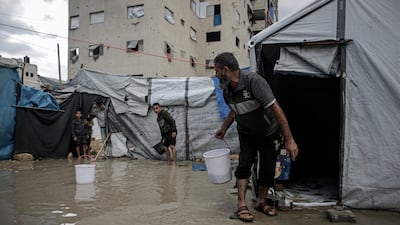

A group of 53 UN member states and other organisations on Thursday urged Israel’s incoming government to open Gaza to unrestricted aid, as shortages of shelter and medical supplies were putting Palestinians at risk of preventable illnesses as winter sets in.
In a joint statement, the group said aid had yet to reach levels required under UN Security Council Resolution 2803, which endorsed the US-backed Board of Peace plan and called for immediate aid deliveries at levels no lower than those agreed to in January 2025.
The appeal at the UN in New York, led by Britain, Qatar and Jordan, called for aid to enter through all available crossings and land routes, and for full and predictable operation of humanitarian corridors through Egypt and Jordan.
“Since the ceasefire, we have seen that progress to improve the humanitarian situation is possible when political will allows,” said Britain’s ambassador Sarah MacIntosh, on behalf of the co-signatories of the Gaza Call to Action on Humanitarian Access and Health.
But she said constraints on the entry of critical shelter items and other life-saving supplies continued to prevent humanitarian organisations from responding at the scale required.
Ms MacIntosh also warned that people without adequate shelter faced hypothermia, respiratory infections, waterborne diseases and other preventable illnesses.
On Wednesday, UN humanitarian chief Tom Fletcher criticised delays in delivering essential winter supplies to Gaza, saying waiting for a new Israeli government to be formed was not an acceptable reason to hold up aid.
“Foreign ministers and partners have assured me of support, but also repeatedly said that progress would be hard until after Israeli elections,” Mr Fletcher said in a statement.
“Now we’re told to wait for the formation of a government. In case anyone has any doubt about international humanitarian law, this is not an acceptable excuse, as the international community and Board of Peace have made clear.”
The UN children's fund estimates that about 1.7 million of Gaza's 2.2 million people live in tents, makeshift shelters or damaged buildings vulnerable to flooding, cold and collapse. Almost one million live in areas at risk of flooding, including about 400,000 in areas where flooding is extremely likely.
The signatories called on Israel to protect health workers, hospitals, medical transport and humanitarian sites, and to speed up accountable criminal investigations into attacks against healthcare and aid workers.
They also called for senior international delegations and journalists to be allowed into Gaza.
On Thursday, Israel bombed Nasser hospital in southern Gaza, killing 10 people. It was the deadliest single strike since Israel's elections last month.
The strike hit a building containing surgery wards at the Nasser Medical Complex in Khan Younis. Israel's military said it had aimed at a senior Hamas commander and accused the militants of using the hospital complex to plan attacks, which the group denied.
While the 2025 ceasefire has largely subdued the fighting, Israel has kept up a steady rate of strikes in the territory. More than 1,600 Palestinians have been killed since the start of the ceasefire, according to the Gaza Ministry of Health.

