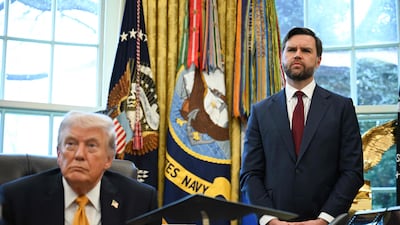

“A blue tsunami”, as political commentators on Wednesday called the decisive victory for Democrats and the resounding loss for US President Donald Trump's party in the midterm elections.
Votes were still being tallied but Democrats were projected to retake the majority of seats in Congress following a series of stunning reversals in Republican-held states.
Texas, long held as a strong Republican state, flipped blue, as Democrats James Talarico won the open Senate seat and Gina Hinojosa the governorship.

In the House of Representatives, Democrats flipped districts Mr Trump had won by double digits only two years ago.
“We were expecting a high tide but this was more like a tsunami, and it's all about Trump,” said Ross Baker, professor of political science at Rutgers University in New Jersey.
“It's an outright rejection of Trump and his policies, it's the tariffs, it's the war in the Middle East, it's the nastiness to our allies, it's the abandonment of Ukraine.”
Mr Trump was not on the ballot but in the weeks leading up to the election he had positioned the vote as a referendum on him – and the results were an resounding rebuke.
-
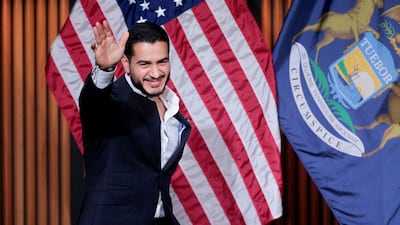
Abdul El-Sayed, who has become the first Muslim to be elected to the US Senate, celebrates his milestone victory in Detroit, Michigan. Reuters -
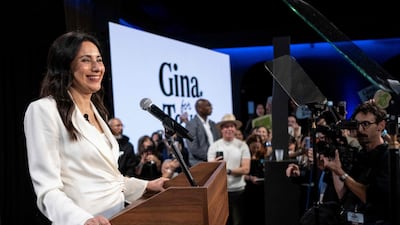
Gina Hinojosa, who has been elected as the first Latina governor of Texas, addresses supporters. AFP -
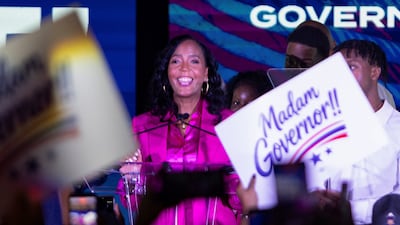
Democrat Keisha Lance Bottoms addresses supporters in Atlanta, Georgia, after becoming the first African American woman to be elected governor of a state. Reuters -
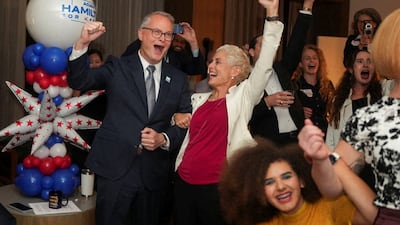
Adam Hamilton, Democratic Senate candidate for Kansas, celebrates in Overland Park as the results pour in. Reuters -
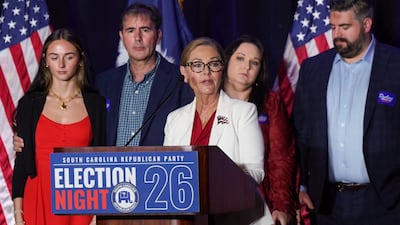
Republican Senator Darline Graham concedes defeat to Annie Andrews in the South Carolina race. AFP -

Annie Andrews, the Democratic Senate candidate for South Carolina, celebrates with her family in Charleston as results pour in. Senate. AFP -
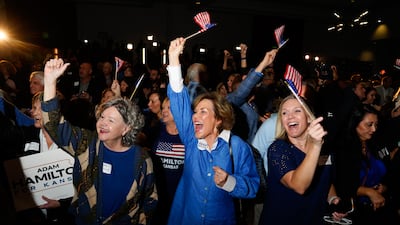
Supporters of Adam Hamilton, the Democratic Senate candidate for Kansas, cheer during an election night event in Overland Park. Bloomberg -

Roy Cooper, Democratic Senate candidate and former North Carolina governor, attends an election night rally. Reuters -
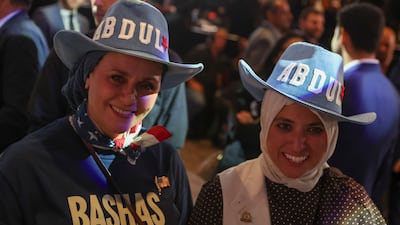
Supporters of US Senate candidate Abdul El-Sayed attend the Michigan Democrats' election night watch party in Detroit. EPA -
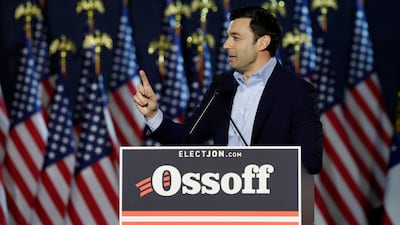
US Senator Jon Ossoff, Democrat from Georgia, speaks in Atlanta after winning re-election. AFP -
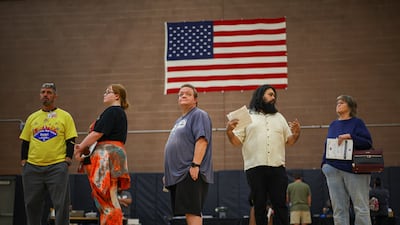
People stand in line to vote in the US midterm elections at Boulder City High School in Boulder City, Nevada. Reuters -
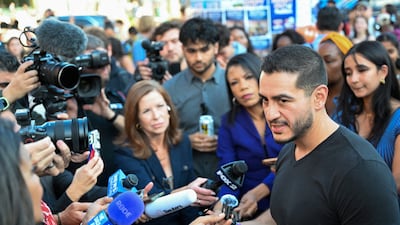
Democratic candidate for US Senate, Abdul El-Sayed, speaks to the media as he visits a polling site in Ann Arbor, Michigan. Reuters -
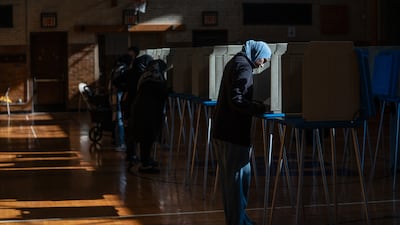
Voter cast their ballots in Dearborn, Michigan. Bloomberg -
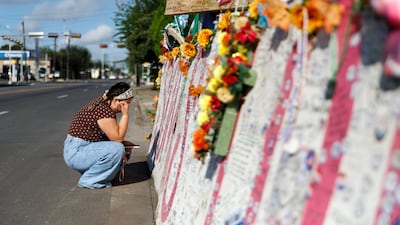
A voter cries after placing their "I Voted" sticker on a memorial for Lorenzo Salgado Araujo, who was shot dead by an Immigration and Customs Enforcement officer in July, in Houston, Texas. Bloomberg -
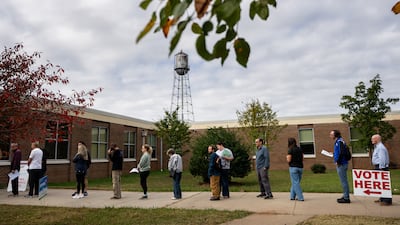
Voters wait in line to cast their ballots in Durham, North Carolina. Bloomberg -
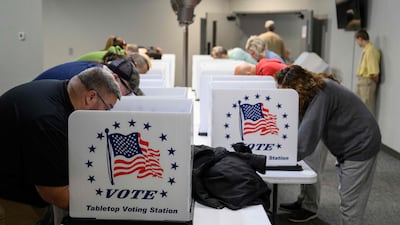
Voters cast their US midterm election ballots at a polling station at the Bridge of Hope Church in Youngstown, Ohio. AFP -
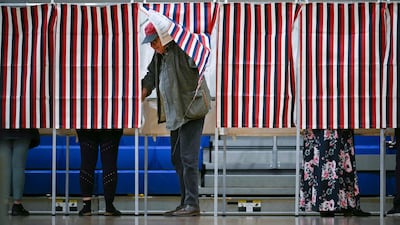
Voters in South Portland, Maine. AFP -
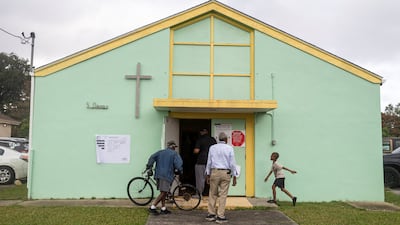
Orleans parish election commissioner Calvin Alexander stands outside St David Baptist Church, as residents arrive to vote in New Orleans, Louisiana. Reuters -
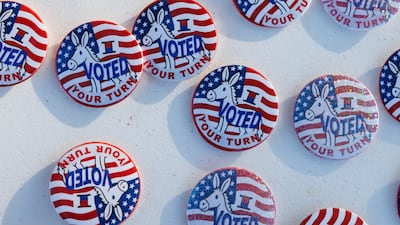
Badges at a polling site in Clayton, North Carolina. Bloomberg -
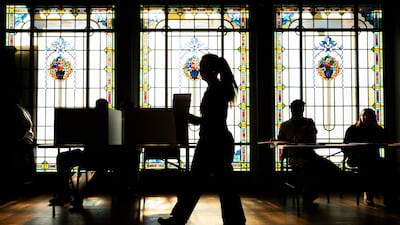
US voters cast their ballots at the Museum of Contemporary Art in Arlington, Virginia. EPA -
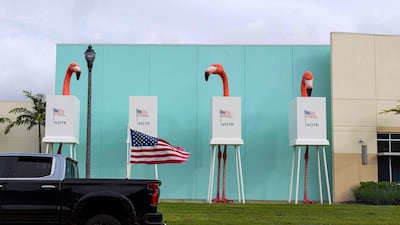
Flamingos created by artist Matthew Mazzotta outside the Supervisor of Elections building in West Palm Beach, Florida. AFP -
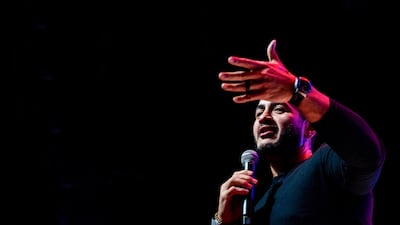
Abdul El-Sayed, Democratic US Senate candidate, from Michigan, speaks during a campaign event at the Majestic Theatre in Detroit. Bloomberg -
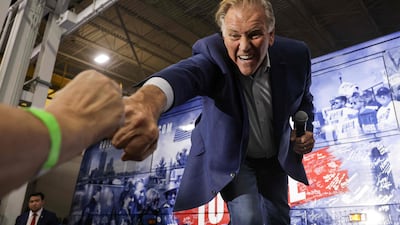
Republican Senate candidate Mike Rogers greets supporters as he takes the stage at a campaign rally in Rochester Hills, Michigan. AFP -
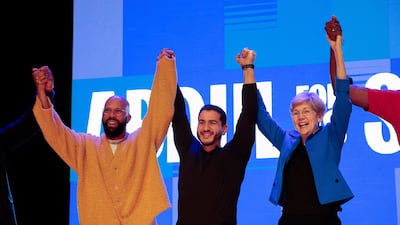
Mr El-Sayed attends a campaign rally with rapper Common and US Senator Elizabeth Warren ahead of the midterm elections, in Detroit, Michigan. Reuters -
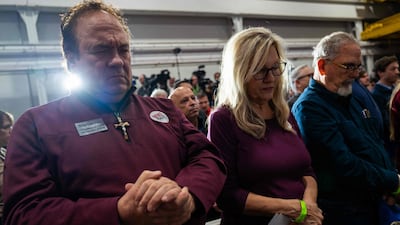
People pray during a rally for Michigan Republican Senate candidate Mike Rogers, in Rochester Hills. AFP -
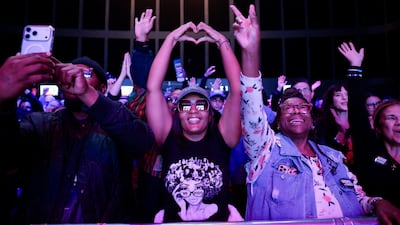
Supporters attend Mr El-Sayed's campaign rally with Common, in Detroit. Reuters -
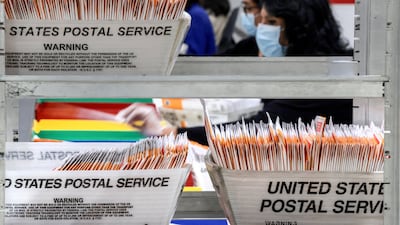
Midterm election ballots are extracted from envelopes at the Los Angeles County Ballot Processing Centre, in City of Industry, California. Reuters -
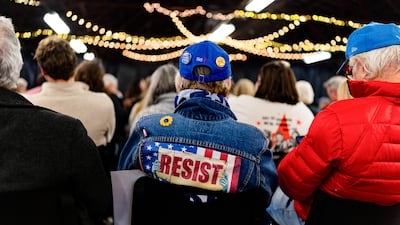
An attendee wears a "Resist" jacket during a campaign event with Abdul El-Sayed, Democratic US Senate candidate from Michigan. Bloomberg -
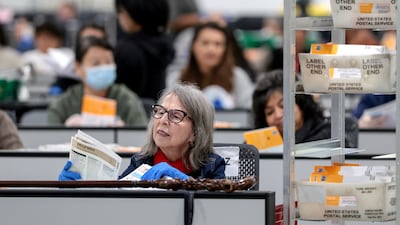
Election staff at work at the LA County Ballot Processing Centre. Reuters -
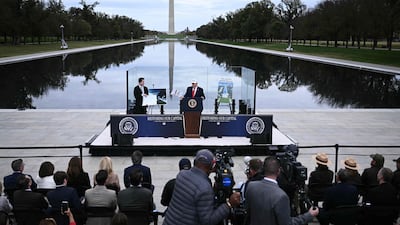
US President Donald Trump delivers a speech marking the end of the midterm election campaign, in Washington DC, the day before voting starts. AFP


With two years left in office, experts say Mr Trump is unlikely to acquiesce to a Democratic agenda in Congress, as his standard response to almost anything is oppositional. “He's not a peacemaker,” Prof Baker said.
Even Republican leaders were on board with the water analogy. “To call it a wave would, I don't think, be fully accurate,” Republican Florida Governor Ron DeSantis said on Wednesday. “It's the political equivalent of a meteor strike that went all around the United States.”
Less Donald Trump
So far, Mr Trump has given conflicting reactions to the losses and sought to shift blame on to others.
He said he was “a little bit surprised” by the outcome but then insisted it was not a personal rebuke, posting on Truth Social: “I wasn’t on the Ballot and if I was, we would have won IN A LANDSLIDE!”
He blamed some Republican candidates for failing to appeal to his supporters, criticised Fox News for giving Democrats airtime and referred to higher petrol prices linked to the Iran war as a factor in the losses.
He also congratulated the Democrats and said he was willing to work with the new congressional majorities, while warning he would veto legislation he considered “insane”.
On Tuesday night, he posted a picture of his trademark Maga red cap bearing the word “veto” on Truth Social.
The message echoed remarks he had made before polls closed, when he called the veto “the ultimate power”. He said should his party lose, he would become “Mr Veto”.
In a post on X, Vice President JD Vance acknowledged that some voters who backed Mr Trump in 2024 had switched to Democrats, citing the Iran war, inflation and US policy towards Israel. “The reason we lost is the war,” he wrote.
Though Democrats won a majority of the Senate, they cannot override a presidential veto, which required a two-thirds majority in both chambers.
“We're probably going to get domestic stalemate moving forwards, which will push the President into the foreign policy realm even more than he already is,” said James Boys, a senior research fellow at University College London. “So what does that mean? Probably doubling down on Iran.”
On Tuesday, the US carried out limited strikes on Iranian missile installations on Qeshm Island and Mr Trump issued more threats.
The latest strikes and threats have raised fears of renewed escalation after the midterms, even as mediators continue trying to reach an agreement.
On-and-off negotiations have focused on reopening the Strait of Hormuz, lifting US sanctions and ending the naval blockade, but it no clearer when the conflict, which started on February 28, could end.
Self-inflicted wounds
In the months leading up to the elections, Mr Trump had urged Republican-led states to redraw congressional districts in an effort to protect the party’s narrow House majority.
The move triggered a nationwide redistricting battle, as Democrats countered with maps of their own.
Some experts said it merely rendered about 35 of the 435 seats less competitive.
The strategy largely failed to deliver the expected gains, despite new boundaries designed to give Republicans an advantage in states such as Texas and Florida, where the Democrats scored sweeping victories.
“Democrats really maxed out what we predicted they would do in the House,” said Todd Belt, professor of political management at George Washington University.
Prof Belt said that Mr Trump was primarily elected to fix the US economy, a goal he has largely failed to deliver on as Americans feel squeezed by persistent high prices, rising energy costs and housing expenses.
Exit polls on Tuesday showed nearly nine in 10 voters considered the cost of living a major factor in their vote, with nearly two thirds blaming Mr Trump for high prices.
“Worse yet, there were two self-inflicted wounds in terms of the tariffs and the war in Iran that people have identified as making their lives worse,” Prof Belt said.
Another recurring theme in the exit polls is the perception Mr Trump is acting in his own interest rather than in the interest of the economy.
Observers note Mr Trump, as well as members of his cabinet, are likely to become the target of corruption investigations that could lead to him being impeached once again.
Still, Prof Belt warned Democrats against getting the “wrong message” from the victory, noting many Americans had voted for Democratic candidates despite disagreeing with some of their policies.
“Democrats will have to figure out a way between now and the next election to put together a platform that will make a difference in people's lives in terms of their economic situation,” Prof Belt said, “instead of just being the party of anti-Trump.”

