
During a rally in Michigan last weekend, US President Donald Trump declared that Muslim-American senatorial candidate Abdul El-Sayed was a “jihadist” looking to implement “Sharia law” in the country.
“I'm here to keep a jihadist Muslim Brotherhood member from becoming a United States senator,” Mr Trump told supporters in Port Huron. “Not going to let that happen.”
No credible evidence exists to suggest Mr El-Sayed has Muslim Brotherhood ties or wants to impose Islamic law on the US.

There has been a growing push among some Republicans to pre-emptively ban Sharia, or Islamic law, and combat the influence of Islamist groups such as the Muslim Brotherhood, and this campaign has strengthened ahead of Tuesday's midterm elections.
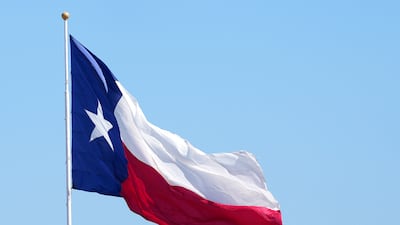
Nowhere has this push reached more of a fever pitch than Texas.
'So goes Texas, so goes the nation'
Last December, representatives Keith Self and Chip Roy launched the Sharia-Free America Caucus, whose aim is a ban on any implementation of Sharia in the US – the central desire, they claimed, of Islamist groups such as the Muslim Brotherhood.
Islamism is a political ideology that holds that Islam should guide public life and the law, as opposed to being a personal faith. There is no known public effort to enact Sharia in any part of the US.

The caucus has grown to about 70 members – around a quarter of whom are from Texas.
Mr Self and Mr Roy, both from Texas, have spearheaded House legislation aimed at blocking groups such as the Muslim Brotherhood from operating in the country and to prevent the institution of Sharia.
In the Senate, Texan John Cornyn introduced the Ban Outsiders Openly Touting (Boot) Sharia Law Act in May, while Ted Cruz led efforts to designate the Muslim Brotherhood as a terrorist organisation. Mr Trump designated three branches of the Muslim Brotherhood as foreign terrorist organisations in January.
During a press conference in February, Mr Self called Texas “ground zero” in the fight against the spread of Islamist ideology.
“As Texas goes, so goes the nation, and as the nation goes, so goes the world,” he said.
Much of the rhetoric surrounding this issue has to do with Epic City, a planned residential development in the town of Josephine, about an hour's drive from downtown Dallas.
Epic City is backed by the East Plano Islamic Centre, with funds raised from the local Muslim community. The planned housing development will include a mosque, a religious school for kindergarten to 12th grade and an assisted living centre, as well as sports facilities.
The project caught the eye last year of Texas Governor Greg Abbott, who described the development as a Muslim-only compound that would be governed by Sharia. In September last year, he signed a law banning “Sharia compounds” that use religion “as a form of segregation”.
“Entities that seek to impose Sharia law are not welcome in Texas, and efforts to create Muslim-only no-go zones have been stopped in their tracks,” Mr Abbott's communications director told The National in a statement. “Governor Abbott will take action against any group that seeks to violate our Constitution and laws.”
The East Plano Islamic Centre has described Epic City as a “role model community” in which thousands of Muslims would live “well-integrated”.
“We are not forming a cult. We're not forming big barriers between the rest of society,” Yasir Qadhi, resident scholar at the Islamic centre, said in February last year. “We're going to be giving back to this state and this country and we're going to be showing what it means to be a Muslim neighbourhood.”
Radicalisation crisis?
Sam Westrop, senior fellow at the Texas Public Policy Foundation, said the rise in scrutiny of perceived Islamist influence in the state was the result of “unease” over the expansion of certain ideological forces.
“It's not like these are a few crackpots running around causing trouble in mosques,” said Mr Westrop, who also heads the Islamist Watch programme at the Middle East Forum. “These are networks with links to powerful foreign states. These are networks with ties to criminal activity.”
He said the policy foundation was tracking about 300 Islamist groups in Texas, which he says is home to a “diversity” of organisations, making it unique from other states. These groups, such as the Muslim Brotherhood and the Jamaat-e-Islami, cannot funnel money to causes through the non-profit system, he claimed.

Texas officials have historically been reluctant to interfere with the activities of religious organisations, and the fact that they are calling out these groups indicates growing unease with what they are seeing on the ground, Mr Westrop said.
“The grassroots notice when mega mosques start to appear in their neighbourhood,” he said. “These are institutions, mosques with ties to extremists at home and also violent extremists overseas. These mosque expansions are driven by money produced by Islamist donors.”
Mr Westrop said that if Islamist groups succeeded in radicalising Muslim communities in Texas and elsewhere, “theocratic, illiberal, anti-Semitic, anti-West” ideas could turn into violence with “just a small prod”.
Earlier this month, Mr Self was the planned target of an alleged ISIS-linked assassination plot by a 17-year-old boy.
“This is a radicalisation crisis in the process,” Mr Westrop said.
The action that Texas is taking to counter Islamist groups could prove to be a “blueprint” for the rest of the country, he said.
'No red line'
But critics view the accusations of Muslim Brotherhood ties and attempts to implement Sharia as more of a response to Muslims' growing political participation.
Mobashra Tazamal is associate director of the Bridge Initiative at Georgetown University in Washington, a research programme aimed at raising awareness of Islamophobia.
“Republicans are reaching for a tried and tested strategy of Islamophobia,” Ms Tazamal said/ She added that Mr Trump's approval rating was low, and this type of rhetoric was being used to whip up the conservative base before the midterm elections.
She said accusations of connections to Islamist groups such as the Muslim Brotherhood were merely attempts by Republican candidates with no good policy ideas to smear Muslim opponents.

This strategy is boosted by a continued general suspicion of the Muslim community among Americans. A Pew survey from this spring showed that 43 per cent of US adults said Muslims were less patriotic than other Americans, and 42 per cent said Muslim Americans had a negative impact on the country.
Texas has historically been a predominantly white, Christian, politically conservative state, but this has changed over the past couple of decades.
The population has increased to roughly 31 million, with a growing influx of Asian, African and other immigrants, according to the Texas Demographics Centre.
Between 2007 and 2024, the number of people professing Christian faith dropped nearly 20 per cent, a report from the Pew Research Centre showed. And while the largest growth was seen in the category of people with no professed religion, the number belonging to other faiths, including Islam, grew from 3 per cent to 6 per cent.
This, coupled with a fast-growing level of civic engagement in the Muslim community in Texas, has made the state “ripe” for a resurgence of white Christian nationalism, Ms Tazamal claimed.
She added that projects like Epic City or mosque expansions were being used as dubious proof of a “nefarious plot” to take over the state.
“This level of rhetoric today is just so hateful … it's been a genuinely scary election season to follow because there's been no red line in terms of the hatred,” Ms Tazamal said.
Bad messaging or hate?
Mr Westrop acknowledged that Republican politicians often get messaging on this issue wrong.
“Too often, they conflate Islam and Islamism. The more concerning point is when they conflate Muslims and Islamists, and of course that undoes the work of a great number of moderate Muslims who are working to fight this threat as well,” he said.
But, he added, “just because it's expressed badly doesn't mean it's not a real threat”.
Ms Tamazal said that blurring the line between non-violent extremism and violent extremism, and labelling Muslim civic action groups critical of US policy as extremist had created the current situation.
She added that far-right groups typically committed more political violence than Muslim actors.
The right-leaning Cato Institute last year published a report that said more than 3,500 people were killed in the US in acts of political violence over the past 50 years, with the largest number killed on 9/11.
Excluding 9/11 and the Oklahoma City bombing – carried out by an anti-government right-wing terrorist in 1995, 45 per cent of people killed in political violence were killed by right-wing actors, and 32 per cent by Islamists.
“I think this election will be almost like a signifier to see if Islamophobia still holds when it comes to election cycles,” Ms Tamazal. “I think this election will be quite telling.”

