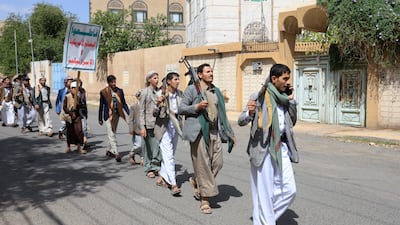

Gulf states at the UN on Thursday “strongly” condemned attacks by the Houthis on Saudi Arabia, warning they posed a direct threat to regional security as the Iran-backed rebels seized Yemen’s strategic Red Sea port city of Mokha.
“We affirm that these continued attacks would constitute a serious escalation and direct threat to the security and stability of the region and its peoples,” Bahrain’s UN ambassador, Jamal Alrowaiei, told an emergency meeting of the Security Council on Yemen.
Mr Alrowaiei was speaking on behalf of the six members of the Gulf Co-operation Council – Bahrain, Kuwait, Oman, Qatar, Saudi Arabia and the UAE.

The GCC also condemned threats by Houthi rebels to maritime security and freedom of navigation, calling them a “blatant challenge to the international community”, which endangered ships, their crews and international trade.
Mr Alrowaiei stressed the need for the international community, in particular the Security Council, to “assume their responsibilities by taking a firm position against these violations, and holding accountable the perpetrators and supporters”.

Houthi rebels took control of Mokha on Thursday, Houthi and Yemeni officials said. The port city is about 80km from the Bab Al Mandeb strait, a key global trade artery connecting the Red Sea and the Gulf of Aden.
The strait’s importance has grown as traffic through the Strait of Hormuz has been effectively closed by Iran during its war with the US and Israel.
UN special envoy for Yemen, Hans Grundberg, warned the Security Council that the country and region were at risk of being dragged back into a prolonged war and a wider regional confrontation after more than four years of relative calm.
“This renewed war should alarm us all,” Mr Grundberg said. “It effectively marks the end of the relative calm that Yemen has experienced for over four years since the UN-brokered truce.”
He said the situation remained “fluid” and that the attacks were raising serious international concerns over freedom of navigation.
“The question for the international community is no longer whether Yemen’s war will resume, but how to address a new and more dangerous phase, one whose consequences, if left unchecked, will not stay within Yemen’s borders."
Mr Grundberg added that Yemen cannot be allowed to slip from the council’s attention.
“It needs the active investment of every member of this body to contain what could be the precipice for a far more dangerous conflict," he said.