Every September, world leaders descend on New York for the UN General Assembly, turning the city into a crowded stage for speeches, private meetings and high-stakes diplomacy.
US President Donald Trump is again expected to loom over high-level week, with his administration’s approach to Iran, Yemen, Ukraine and the UN likely to shape much of the week’s conversations.
A year ago, there was much anxiety surrounding his return to the UN.

“Last year at this meeting, our top line was that the United Nations was in free-fall,” said Richard Gowan, director of global issues at the International Crisis Group. “Serious people were seriously contemplating the possibility that President Trump would use his speech to the 2025 General Assembly to announce that the US would leave the UN, and the US had already imposed incredible budget cuts on the organisation. There was a real sense of chaos.”
The break-up never came. Mr Trump did not announce a US withdrawal, and the world body, although weakened by funding cuts and political pressure, is adjusting to its new reality.
“We would no longer say that the UN is in free-fall, but we would say that it is an organisation that is stuck in an open-ended crisis or permanent crisis, which is probably a marginally better position to be in, but still not great,” Mr Gowan said.
The world body, he added, has “managed to adapt and muddle through” one shock after another. Among them was the emergence of Mr Trump’s Board of Peace, formally established in January as an international organisation with a mandate initially centred on implementing the Gaza peace plan.
The tension between Washington and the multilateral system, however, has not disappeared.
“I don't think the US is happy that China and Iran have been holding up its initiatives in the Security Council over the Gulf,” Mr Gowan said.
The gathering comes more than six months into the US-Iran war, with the Strait of Hormuz still largely closed to normal commercial shipping and Iran-backed Houthi rebels in Yemen increasing attacks on Saudi Arabia and its oil infrastructure. The disruption has helped to push oil prices above $100 a barrel, giving a regional conflict consequences far beyond the Middle East.
“UNGA is not traditionally a summit for major diplomatic breakthroughs,” Daniel Forti, head of UN affairs at the International Crisis Group, told The National. “Many of the formal proceedings are tightly choreographed and reflect long-standing positions. But there's always a chance world leaders take advantage of being crammed in UN conference rooms to talk.”
Last year offered one example. On the sidelines of the gathering, Mr Trump met leaders and senior representatives from eight Arab and Muslim countries, a meeting Mr Forti said helped lay the groundwork for the Gaza ceasefire.
Artificial intelligence will provide another test of the UN’s relevance. For Secretary General Antonio Guterres, nearing the end of his term in office, UNGA offers one of his last opportunities to make the case for greater international co-operation on AI, which he previously described as one of the defining forces of the century.
“It's his last opportunity to push his agenda, which is all about closer international co-operation on artificial intelligence for the benefit of the Global South,” Mr Gowan said.
But governments and technology companies are increasingly pursuing their own approaches.
“We know that the US and EU members are not really engaging with this very much,” Mr Gowan said. “They don't want UN regulation of AI, and instead we're seeing Anthropic … OpenAI … a bunch of companies in the private sector doing their own events about the future of artificial intelligence.”
UNGA 2026 will carry particular significance for Emmanuel Macron, who is expected to attend his final General Assembly high-level week as French President before his term ends in 2027.
France is expected to use its presidency of the Security Council to return attention to the two-state solution, a year after the adoption of a declaration that diplomats described as a road map towards the creation of a Palestinian state alongside Israel.
Some of the most closely watched speeches will come from the leaders at the centre of the region’s conflicts. Israeli Prime Minister Benjamin Netanyahu and Iran’s President Masoud Pezeshkian are both expected to address the assembly.
The race to select the next UN Secretary General will also feature prominently in New York, as candidates court support, especially from the five veto-wielding permanent Security Council members – the US, China, Russia, Britain and France.
Any candidate for UN chief must have the recommendation of the Security Council before being appointed by the General Assembly, meaning any of the five permanent council members can block a candidate.
-
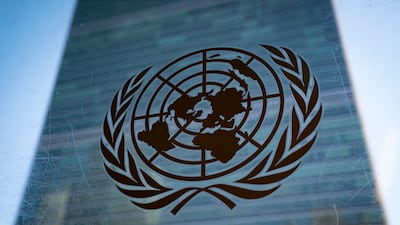
Likened to diplomatic 'speed dating', UN General Assembly gives the world's top diplomats a chance to meet in person. The assembly has played host to a number of famous moments over the years. AP -
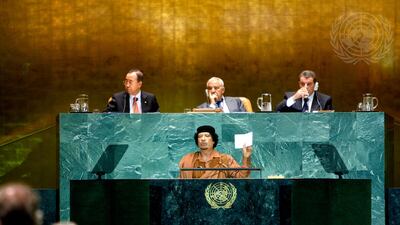
Libyan leader Muammar Qaddafi famously addressed the UNGA for more than 90 minutes in 2009. Photo: UN -
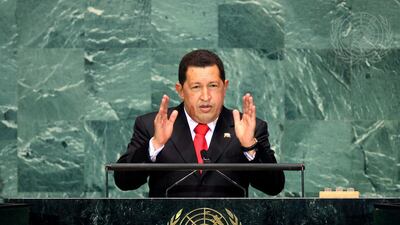
Venezuelan president Hugo Chavez said in 2006 that he could smell sulphur in the UN chamber after George W Bush spoke, likening the US leader to the 'Devil'. Photo: UN -
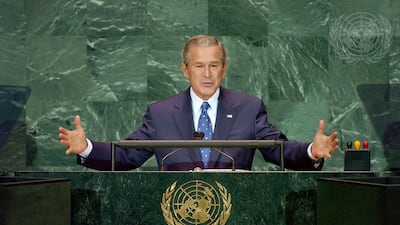
Mr Bush at UNGA in 2005. Photo: UN -
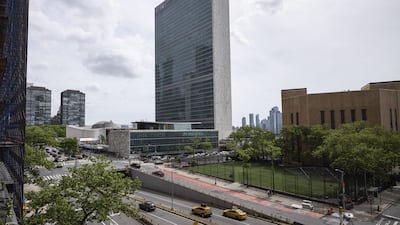
The UN Headquarters in New York. Residents of the Big Apple brace themselves for two weeks of traffic chaos as UNGA takes place. EPA -
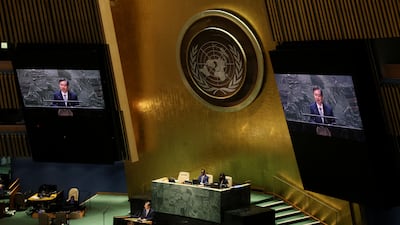
South Korean ambassador to the UN Cho Hyun speaking in the chamber. Reuters -
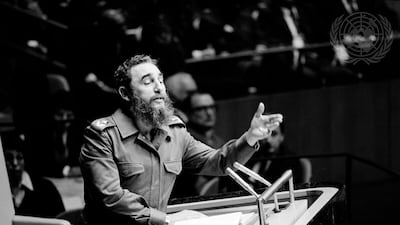
Cuban leader Fidel Castro addressing the General Assembly. Photo: UN -
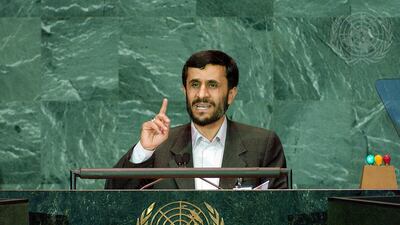
Former Iranian president Mahmoud Ahmadinejad in 2005. Photo: UN -
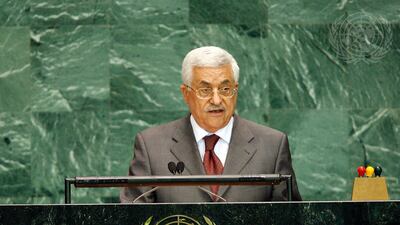
Mahmoud Abbas, President of the Palestinian National Authority, addresses UNGA. Photo: UN


Ben Cohen, a research fellow who focuses on international organisations at the Foundation for Defence of Democracies, said the succession contest said Washington could have concerns about Guyana's Carolyn Rodrigues-Birkett, particularly over her position on China and its territory, Taiwan.
He said five of the eight candidates had visited China over the past two months as part of their campaigns, but singled out Ms Rodrigues-Birkett for her support of a 1971 UN General Assembly resolution that recognised the People’s Republic of China as the only legitimate representative of China at the UN.
“It is alarming, particularly at a time when Taiwan’s security is of great concern in Washington, that we might have a UN Secretary General who is so closely aligned with the Chinese position there,” Mr Cohen said.
“I think right now it’s reasonable to expect that the US would veto Rodrigues-Birkett and that Russia would veto Rafael Grossi of Argentina."
With world leaders preparing to gather in New York for the annual high-level meetings, the succession contest could add another layer of uncertainty, Mr Cohen said.
“I’ve seen a lot of UNGAs come and go,” he said. “I think this one this year is going to be a particularly interesting one.”
Here is a preview of when the UN member states will address the General Assembly:
Tuesday, September 22
Morning: Brazil, US, Jordan, Turkey, Kyrgyzstan, Qatar, Lithuania, Peru, Egypt, Chile, Luxembourg, Finland, France and Tanzania.
Afternoon: Mongolia, Korea, Suriname, Sierra Leone, Angola, Indonesia, Bosnia and Herzegovina, Dominica, Switzerland, Guatemala, Turkmenistan, Morocco, Vietnam, Seychelles, Nauru, Bhutan, UK and Japan.
Wednesday, September 23
Morning: Syria, Latvia, Romania, Zambia, Iran, Paraguay, Czechia, Nigeria, Argentina, Estonia, Timor Leste, Libya, Palau, Cyprus, Dominican Republic, Botswana, Ecuador, Ukraine, Bulgaria, Central African Republic and Panama.
Afternoon: Poland, Namibia, Slovakia, Kenya, Serbia, Mozambique, Burundi, Guinea, Eswatini, Honduras, South Sudan, Uganda, Germany, Spain, Australia, Rwanda and DRC.
Thursday, September 24
Morning: Zimbabwe, Yemen, Madagascar, Ghana, Palestine, Guyana, Somalia, Chad, Comoros, Cameroon, Liberia, Sudan, Marshall Islands, Bolivia, Hungary, EU, Equatorial Guinea, Gambia, Colombia and Israel.
Afternoon: Uruguay, Senegal, Venezuela, Cote d'Ivoire, Kuwait, Barbados, Armenia, Thailand, Portugal, Georgia, Bangladesh, Netherlands, Slovenia, Greece, Andorra, Ireland, Nepal and Moldova.
Friday, September 25
Morning: Kiribati, Fiji, Maldives, Iraq, Lebanon, Croatia, Ethiopia, Monaco, Malta, Togo, Lesotho, Tuvalu, North Macedonia, Solomon Islands, Trinidad and Tobago, Saint Lucia and Albania.
Afternoon: Montenegro, Guinea-Bissau, Vanuatu, Pakistan, Antigua and Barbuda, Jamaica, Saint Kitts and Nevis, Saint Vincent and the Grenadines, Bahamas, Papua New Guinea, Tonga and Haiti.
Saturday, September 26
Morning: China, Micronesia, Belize, Cabo Verde, Holy See, Laos, Liechtenstein, UAE, Cambodia, Italy, Belgium, Samoa, Russia, Cuba, Brunei, Austria, Algeria, Saudi Arabia, Singapore, Iceland and Nicaragua.
Afternoon: San Marino, Sweden, Kazakhstan, Norway, Djibouti, Belarus, Malaysia, Tajikistan, Oman, Tunisia, India, Grenada, Canada, Gabon and Mexico.
Monday, September 28
Morning: Mali, Eritrea, Denmark, Bahrain, Burkina Faso, Niger, Congo, El Salvador, Malawi, South Africa, Mauritania, Azerbaijan, Benin, Costa Rica, Sri Lanka, Jamaica, Mauritius, Democratic Republic of Korea, Myanmar, Uzbekistan, Afghanistan and New Zealand.
The order of nations can change on a daily basis.