
Latest: Iran ready for peace talks if US honours commitments, Pezeshkian claims
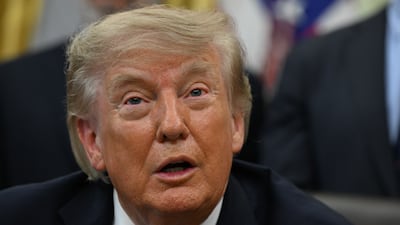
Sweeping new sanctions imposed against Iran were “kicking in really strongly”, US President Donald Trump said as he pledged to respond to Iran’s attack on American forces in Jordan.
He spoke as finance ministers of the G20 countries met in North Carolina, under the shadow of US efforts to intensify economic pressure against Iran.

The US and Iran traded fire for the first time in more than a month overnight. Mr Trump said air defences had intercepted all but one Iranian missile, which was allowed to pass because it was not expected to hit anything significant.
US Treasury Secretary Scott Bessent addressed the sanctions at the G20 meeting, where he was expected to hold discussions with the ministers to join Washington’s economic pressure campaign. He welcomed the EU’s commitment to imposing sanctions on Iran as Washington seeks global support in severing Tehran’s financial lifelines.
He warned that those who engage with Tehran were at risk of being cut off from the dollar-based financial system.

Mr Bessent also said the recent attacks in the region suggested Iran was taking the threat of US sanctions seriously.
“I would think that they are lashing out kinetically because they are losing economically,” he said. Mr Trump told Fox News the US would retaliate.
“We’re going to hit them hard. There will be a response,” he said. However, he hinted there was hope for talks.
“They want to meet so badly,” Mr Trump said. “I just don’t know if you can count on a deal with them. The sanctions are kicking in really strongly.”
Jordan said it had intercepted eight missiles after Iran attacked US bases in the kingdom in retaliation for overnight strikes on an island in the Strait of Hormuz.
The US Central Command said it had taken “limited, precise action” after detecting Iranian preparations to lay new mines in the strait. The incidents were the first direct exchange of fire to have taken place in the Middle East between the US and Iran in more than a month.
Dr Anwar Gargash, diplomatic adviser to President Sheikh Mohamed, said on X that the Iranian attacks on Gulf states and Jordan had “proven to be a failure”.
The Pentagon on Monday said it had signed two "pivotal" agreements aimed at significantly increasing the production of interceptor missiles.
Stockpiles of the critical weapons have been depleted in recent months as the US has fended off Iranian drone and missile attacks on American bases and allies in the region. Missile production is a slow process, and it will take years for the US to replenish its stocks.
In a statement, the Department of Defence said it signed seven-year framework agreements with General Dynamics Ordnance and Tactical Systems and Lockheed Martin to boost production of two major US missile-defence systems.