Live updates: Follow the latest on Israel-Gaza
The US House of Representatives on Saturday approved a foreign aid package that includes $61 billion in funding for the Ukrainian military as it enters a perilous phase in its defence against Russia's invasion.
Legislators also approved $25 billion for Israel and an aid package for Taiwan, as well as a bill that could lead to TikTok being banned in the US.
President Joe Biden, who initially asked for the Ukraine funding in October, welcomed the aid package approval, which came after months of Republican stalling following pressure from former president Donald Trump.
“Members of both parties in the House voted to advance our national security interests and send a clear message about the power of American leadership on the world stage,” Mr Biden said.
“At this critical inflection point, they came together to answer history’s call, passing urgently needed national security legislation that I have fought for months to secure.”
The aid package must now be finalised and approved by the US Senate, which already has voted to support nearly identical measures, before Mr Biden signs it in to law, probably within days.
The Pentagon has plans in place to fast track munitions to Ukraine, including from stockpiles in Europe.
Ukrainian President Volodymyr Zelenskyy said the funding “will keep the war from expanding, save thousands and thousands of lives, and help both of our nations to become stronger”.
“Thank you, America!” he wrote on X.
Ukraine has been forced to ration its bombs and ammunition as the House dithered over the additional funding, and Russia has made steady advances into Ukrainian territory in recent weeks.
“We're already seeing things on the battlefield begin to shift a bit … in Russia's favour. We're seeing them make incremental gains, we're seeing the Ukrainians be challenged in terms of holding the line,” US Defence Secretary Lloyd Austin said this week.
Gregory Meeks, the senior Democrat on the House Foreign Affairs Committee, said the additional funds would allow Ukraine to repel Russian advances, “protect its democratic path, and prove to [Russian President Vladimir] Putin that the West remains united against his territorial ambitions”.
The vote on Ukraine funding was 311-112. Notably, 112 Republicans opposed the legislation, with 101 in support.
The Israel aid bill passed on a 366 to 58 vote, with 37 Democrats and 21 Republicans in opposition.
That bill includes $4 billion for Israel’s missile defences in the wake of last weekend’s drone and missile attacks by Iran. It provides $9 billion in global humanitarian aid including for use in Gaza at the Democrats’ insistence.
“We did our work here, and I think history will judge it well,” said Speaker Mike Johnson, who risked his job by bringing the aid package to a vote over objections from far-right members of his party and Mr Trump.
Politicians also approved about $8 billion for helping US allies in the Indo-Pacific region and countering China.
More than $3.3 billion would go towards submarine infrastructure and development, with an additional $1.9 billion to replenish US weapons provided to Taiwan and other regional allies.
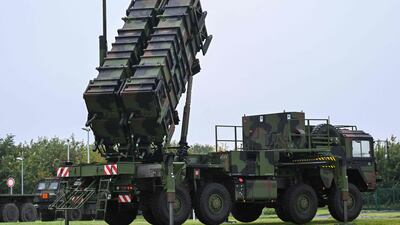
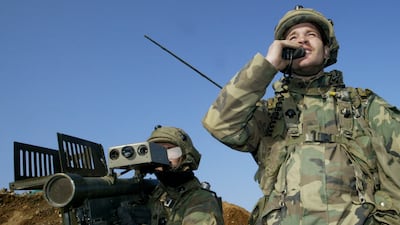
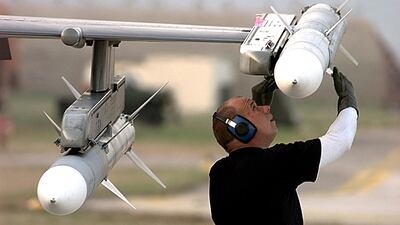
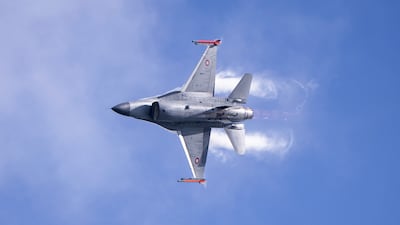
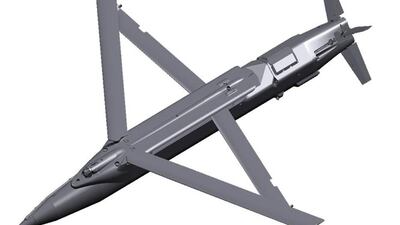
Weapons wanted by Ukraine – in pictures
TikTok ban?
The House also passed legislation that would ban TikTok in the US if the social media platform's China-based owner ByteDance does not sell its stake within a year.
The measure, passed by a 360-58 vote, now goes to the Senate after negotiations that lengthened the timetable for the company to sell to nine months, with a possible additional three months if a sale is in progress.
US politicians have typically taken a hands-off approach to regulating Big Tech, so the focus on TikTok, which has about 170 million users in the US, is unusual.
Members of both parties, along with intelligence officials, worry that Chinese authorities could force ByteDance to hand over American user data or direct the company to suppress or grow TikTok content favourable to its interests.
TikTok has denied assertions that it could be used as a tool of the Chinese government and has said it has not shared US user data with Chinese authorities.
“We will not stop fighting and advocating for you,” TikTok chief executive Shou Zi Chew said in a video that was posted on the platform last month and directed towards the app’s users.
“We will continue to do all we can, including exercising our legal rights, to protect this amazing platform that we have built with you.”
Many TikTok users, including content creators whose income is generated on the app, have been pushing hard against the proposed ban, but lawmakers appear determined to proceed.
The specs
Engine: Four electric motors, one at each wheel
Power: 579hp
Torque: 859Nm
Transmission: Single-speed automatic
Price: From Dh825,900
On sale: Now
A Long Way Home by Peter Carey
Faber & Faber
SPECS
%3Cp%3E%3Cstrong%3EEngine%3A%3C%2Fstrong%3E%20Dual%20electric%20motors%20with%20102kW%20battery%20pack%3C%2Fp%3E%0A%3Cp%3E%3Cstrong%3EPower%3A%20%3C%2Fstrong%3E570hp%3C%2Fp%3E%0A%3Cp%3E%3Cstrong%3ETorque%3A%3C%2Fstrong%3E%20890Nm%3C%2Fp%3E%0A%3Cp%3E%3Cstrong%3ERange%3A%3C%2Fstrong%3E%20Up%20to%20428km%3C%2Fp%3E%0A%3Cp%3E%3Cstrong%3EOn%20sale%3A%3C%2Fstrong%3E%20Now%3C%2Fp%3E%0A%3Cp%3E%3Cstrong%3EPrice%3A%20%3C%2Fstrong%3EFrom%20Dh1%2C700%2C000%3C%2Fp%3E%0A
The specs
Engine: 1.5-litre, 4-cylinder turbo
Transmission: CVT
Power: 170bhp
Torque: 220Nm
Price: Dh98,900
$1,000 award for 1,000 days on madrasa portal
Daily cash awards of $1,000 dollars will sweeten the Madrasa e-learning project by tempting more pupils to an education portal to deepen their understanding of math and sciences.
School children are required to watch an educational video each day and answer a question related to it. They then enter into a raffle draw for the $1,000 prize.
“We are targeting everyone who wants to learn. This will be $1,000 for 1,000 days so there will be a winner every day for 1,000 days,” said Sara Al Nuaimi, project manager of the Madrasa e-learning platform that was launched on Tuesday by the Vice President and Ruler of Dubai, to reach Arab pupils from kindergarten to grade 12 with educational videos.
“The objective of the Madrasa is to become the number one reference for all Arab students in the world. The 5,000 videos we have online is just the beginning, we have big ambitions. Today in the Arab world there are 50 million students. We want to reach everyone who is willing to learn.”
ALRAWABI%20SCHOOL%20FOR%20GIRLS
%3Cp%3ECreator%3A%20Tima%20Shomali%3C%2Fp%3E%0A%3Cp%3EStarring%3A%C2%A0Tara%20Abboud%2C%C2%A0Kira%20Yaghnam%2C%20Tara%20Atalla%3C%2Fp%3E%0A%3Cp%3ERating%3A%204%2F5%3C%2Fp%3E%0A
The five pillars of Islam
Challenge Cup result:
1. UAE 3 faults
2. Ireland 9 faults
3. Brazil 11 faults
4. Spain 15 faults
5. Great Britain 17 faults
6. New Zealand 20 faults
7. Italy 26 faults
WOMAN AND CHILD
Director: Saeed Roustaee
Starring: Parinaz Izadyar, Payman Maadi
Rating: 4/5
Ain Dubai in numbers
126: The length in metres of the legs supporting the structure
1 football pitch: The length of each permanent spoke is longer than a professional soccer pitch
16 A380 Airbuses: The equivalent weight of the wheel rim.
9,000 tonnes: The amount of steel used to construct the project.
5 tonnes: The weight of each permanent spoke that is holding the wheel rim in place
192: The amount of cable wires used to create the wheel. They measure a distance of 2,4000km in total, the equivalent of the distance between Dubai and Cairo.
Euro 2020
Group A: Italy, Switzerland, Wales, Turkey
Group B: Belgium, Russia, Denmark, Finland
Group C: Netherlands, Ukraine, Austria,
Georgia/Kosovo/Belarus/North Macedonia
Group D: England, Croatia, Czech Republic,
Scotland/Israel/Norway/Serbia
Group E: Spain, Poland, Sweden,
N.Ireland/Bosnia/Slovakia/Ireland
Group F: Germany, France, Portugal,
Iceland/Romania/Bulgaria/Hungary
Types of fraud
Phishing: Fraudsters send an unsolicited email that appears to be from a financial institution or online retailer. The hoax email requests that you provide sensitive information, often by clicking on to a link leading to a fake website.
Smishing: The SMS equivalent of phishing. Fraudsters falsify the telephone number through “text spoofing,” so that it appears to be a genuine text from the bank.
Vishing: The telephone equivalent of phishing and smishing. Fraudsters may pose as bank staff, police or government officials. They may persuade the consumer to transfer money or divulge personal information.
SIM swap: Fraudsters duplicate the SIM of your mobile number without your knowledge or authorisation, allowing them to conduct financial transactions with your bank.
Identity theft: Someone illegally obtains your confidential information, through various ways, such as theft of your wallet, bank and utility bill statements, computer intrusion and social networks.
Prize scams: Fraudsters claiming to be authorised representatives from well-known organisations (such as Etisalat, du, Dubai Shopping Festival, Expo2020, Lulu Hypermarket etc) contact victims to tell them they have won a cash prize and request them to share confidential banking details to transfer the prize money.
* Nada El Sawy
MATCH INFO
Uefa Champions League semi-final, first leg
Tottenham 0-1 Ajax, Tuesday
Second leg
Ajax v Tottenham, Wednesday, May 8, 11pm
Game is on BeIN Sports
Mercer, the investment consulting arm of US services company Marsh & McLennan, expects its wealth division to at least double its assets under management (AUM) in the Middle East as wealth in the region continues to grow despite economic headwinds, a company official said.
Mercer Wealth, which globally has $160 billion in AUM, plans to boost its AUM in the region to $2-$3bn in the next 2-3 years from the present $1bn, said Yasir AbuShaban, a Dubai-based principal with Mercer Wealth.
“Within the next two to three years, we are looking at reaching $2 to $3 billion as a conservative estimate and we do see an opportunity to do so,” said Mr AbuShaban.
Mercer does not directly make investments, but allocates clients’ money they have discretion to, to professional asset managers. They also provide advice to clients.
“We have buying power. We can negotiate on their (client’s) behalf with asset managers to provide them lower fees than they otherwise would have to get on their own,” he added.
Mercer Wealth’s clients include sovereign wealth funds, family offices, and insurance companies among others.
From its office in Dubai, Mercer also looks after Africa, India and Turkey, where they also see opportunity for growth.
Wealth creation in Middle East and Africa (MEA) grew 8.5 per cent to $8.1 trillion last year from $7.5tn in 2015, higher than last year’s global average of 6 per cent and the second-highest growth in a region after Asia-Pacific which grew 9.9 per cent, according to consultancy Boston Consulting Group (BCG). In the region, where wealth grew just 1.9 per cent in 2015 compared with 2014, a pickup in oil prices has helped in wealth generation.
BCG is forecasting MEA wealth will rise to $12tn by 2021, growing at an annual average of 8 per cent.
Drivers of wealth generation in the region will be split evenly between new wealth creation and growth of performance of existing assets, according to BCG.
Another general trend in the region is clients’ looking for a comprehensive approach to investing, according to Mr AbuShaban.
“Institutional investors or some of the families are seeing a slowdown in the available capital they have to invest and in that sense they are looking at optimizing the way they manage their portfolios and making sure they are not investing haphazardly and different parts of their investment are working together,” said Mr AbuShaban.
Some clients also have a higher appetite for risk, given the low interest-rate environment that does not provide enough yield for some institutional investors. These clients are keen to invest in illiquid assets, such as private equity and infrastructure.
“What we have seen is a desire for higher returns in what has been a low-return environment specifically in various fixed income or bonds,” he said.
“In this environment, we have seen a de facto increase in the risk that clients are taking in things like illiquid investments, private equity investments, infrastructure and private debt, those kind of investments were higher illiquidity results in incrementally higher returns.”
The Abu Dhabi Investment Authority, one of the largest sovereign wealth funds, said in its 2016 report that has gradually increased its exposure in direct private equity and private credit transactions, mainly in Asian markets and especially in China and India. The authority’s private equity department focused on structured equities owing to “their defensive characteristics.”