


Live updates: Follow the latest on Israel-Gaza
A family of six from Gaza have been granted the right to live in Britain after applying under a scheme for Ukrainian refugees, in what Prime Minister Keir Starmer called a "loophole" to be closed.
Judges said the Palestinian parents and their four children were living in “extreme and life-threatening” conditions in a refugee camp, after their home was destroyed by an air strike during Israel's assault on the enclave. The father's brother has lived in the UK since 2007 and the family won an appeal to be reunited with him under human rights laws protecting “family life”.
Lawyers for Britain's Labour government said granting the family reunion would be “a leap”, given that there is no resettlement scheme for Palestinians equivalent to the 267,000 visas granted to Ukrainians. However, the immigration court dismissed concerns that its decision would open the “floodgates” for refugees from other war zones to move to Britain.
Kemi Badenoch, the leader of Britain's Conservative opposition, called for “radical changes to human rights laws” to prevent courts deciding who can enter the UK. “We cannot have judges simply making up new schemes based on novel and expansive interpretations of human rights law,” she said.
Questioned by Ms Badenoch on Wednesday, Mr Starmer told the House of Commons the decision was "wrong". He said Home Secretary Yvette Cooper "has already got her team working on closing this loophole".

The family acknowledged that it did not qualify under the Ukraine scheme but chose that route to submit its details to the British immigration system. Although rejected as ineligible by the UK's Home Office, the family, living in Nuseirat refugee camp in Gaza, managed to have the case heard by a tribunal that considered European human rights laws rather than the Ukraine issue.
Granting their appeal, immigration judge Hugo Norton-Taylor wrote that the Home Office did not strike a “fair balance” between the public interest and that of the Palestinian family. “Put another way, there are very compelling or exceptional circumstances,” the court said in its verdict.
Risk of death
The ruling put “very significant weight” on the interests of the two younger children, aged seven and nine, who were described as being “at a high risk of death or serious injury on a daily basis” due to the conflict in Gaza. The judges said the children were “living in conditions which are extreme and, on any view, unjustifiably harsh”.
“It is difficult to conceive of a situation more contrary to their best interests than the one they are currently experiencing,” the ruling said. “We conclude that it is self-evidently and overwhelmingly in the best interests of the two children to be in a safe (or safer) environment, together with their parents and siblings.”
A lower judge, Adrian Seelhoff, had ruled that it was “for the government and parliament” to decide whether to open a resettlement route for Gazans, and said it had “not been shown that the failure to make such a policy is unlawful”. However, the second tribunal said the judge made an error by not considering the family's “anti-Hamas profile” and objected to his reference to “floodgates”.
The suggestion that people from other conflict zones “would be able to take advantage” of the ruling in favour of the Palestinian family “is wholly speculative and misconceived”, the tribunal said. It said figures of about 150 applications from Gaza since the war began “do not support” the idea of a “floodgates scenario”.
Palestinians return to northern Gaza – in pictures
-
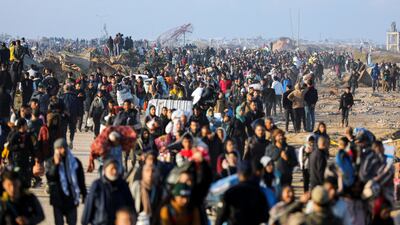
Displaced Palestinians make their way back to their homes in northern Gaza after Israel allowed them to return. Reuters -
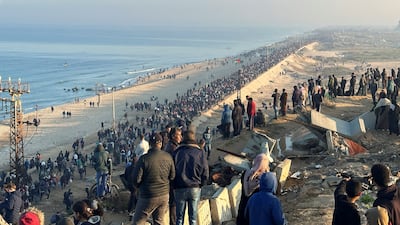
Their return had been held up by a dispute over the release of Israeli hostages held in the enclave. Reuters -
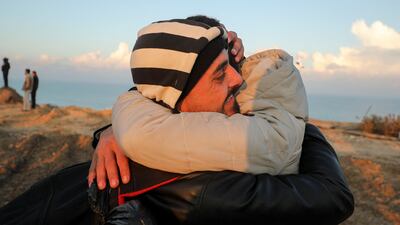
Palestinians are reunited as displaced people return to northern Gaza. Reuters -
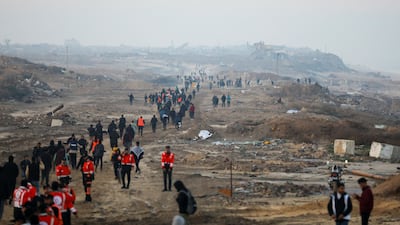
Palestinians in northern Gaza wait to welcome returnees from the south. Reuters -
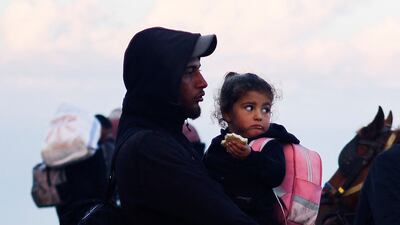
A man and child make their way home, in northern Gaza. Reuters -
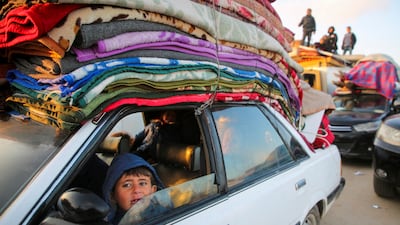
Palestinians on Salah Al Din Road wait to be allowed to return to their homes in northern Gaza. Reuters


The court heard that some family members had worked for the Palestinian Authority, a rival of Hamas, and the brother left Gaza for the UK after the militants took control of the strip in 2007. However, judges said there was “no specific threat” due to their political profile and said they did “not demonstrate the existence of a direct threat of death or serious harm at the hands of Hamas”.
In the Home Office's favour, the judges found that the parents spoke little English and had a relatively modest income. However, they said there was no doubt the brother would do “everything possible to ensure proper financial support” for the family. They said the brother is “fully committed to supporting the appellants for as long as it takes” despite not having seen his relatives for 17 years.
The Home Office said in October there were “no current plans” for a Gaza visa scheme and that Palestinians could apply via existing routes. Ministers last week rejected suggestions by US President Donald Trump that Gazans should be relocated from the strip.

