

Live updates: Follow the latest news on Israel-Gaza
About 700 British troops are being sent to Cyprus, in case an emergency evacuation of UK citizens from Lebanon is required, as fighting between Israel and Hezbollah continues to escalate.
All British nationals have been urged to leave Lebanon but, with airlines suspending flights to the country because of the violence, commercial escape routes could be cut off as the situation deteriorates.
The decision to send troops to Cyprus comes as the UK government begins the first stage of its contingency plan, with the military team supported by Border Force and Foreign Office officials. The Royal Air Force has planes and transport helicopters on standby to provide support if necessary.
Israel and Lebanon cross-border strikes – in pictures
-
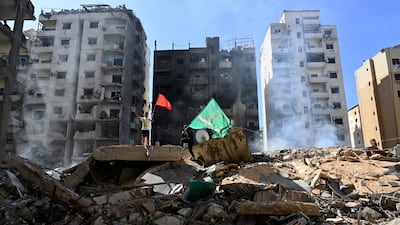
Damage in Beirut after an overnight Israeli strike. EPA -
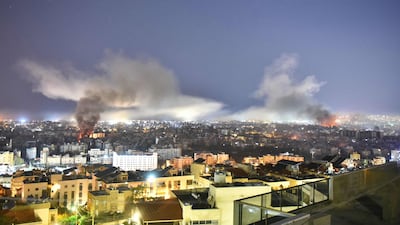
Smoke rises from the site of an Israeli strike in the south of Lebanon's capital. AFP -
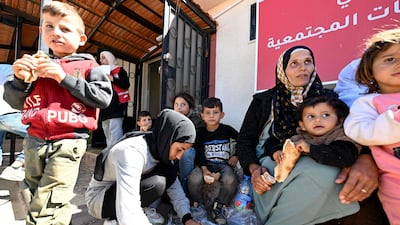
Displaced Syrians and Lebanese enter Syria from Lebanon at the Jusiyah border crossing. AFP -

The site of the Israeli air strike that killed Hezbollah leader Hassan Nasrallah, in Beirut. AP -
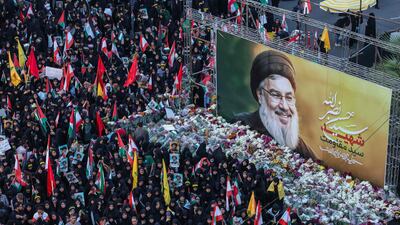
Iranians lay flowers before a portrait of Nasrallah. AFP -

Smoke billows over Tyre, southern Lebanon following an Israeli strike. Reuters -
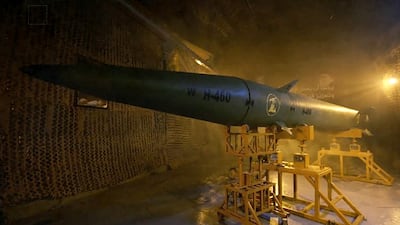
A Qader 1 ballistic missile from Hezbollah's arsenal. AFP -
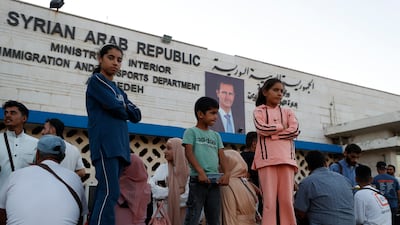
Syrians fleeing the war in Lebanon arrive at the Syrian-Lebanese border crossing in Jdeidet Yabous. AP -
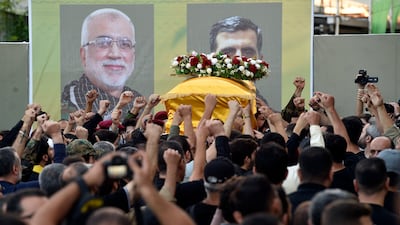
Hezbollah fighters carry the coffin of Hezbollah commander Ibrahim Qubaisi during his funeral in Beirut. EPA -
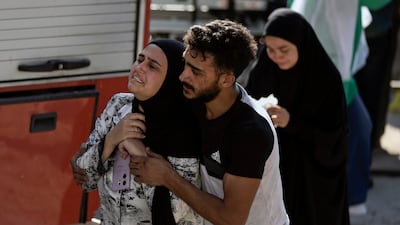
People react at the scene of an Israeli air strike in the town of Maisara, north of Beirut. AP -
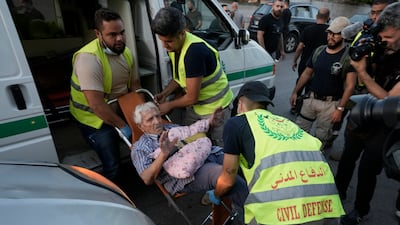
Civil defence workers carry an elderly man who fled from the south of Lebanon, as he arrives at a school turned into a displaced shelter in Beirut. AP -
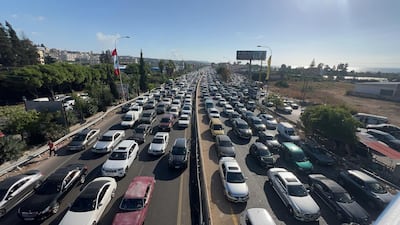
A traffic jam in Ghazieh as people fleeing from the south of Lebanon drive towards Sidon and Beirut. EPA -
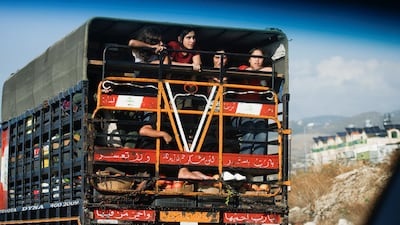
People in heavy traffic drive north from Lebanon's southern coastal city of Sidon, as they flee Israeli bombardment. Reuters -
Smoke billows over southern Lebanon following Israeli strikes, as seen from Tyre. Reuters -
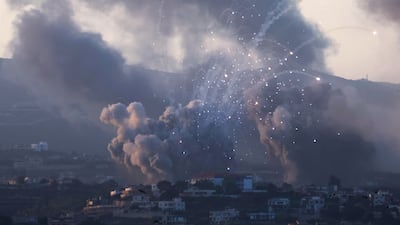
Smoke billows over southern Lebanon following Israeli strikes, as seen from Tyre. Reuters -
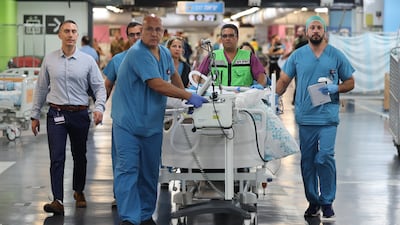
Medics move patients at Rambam Hospital's underground emergency centre, in Haifa, northern Israel. EPA -
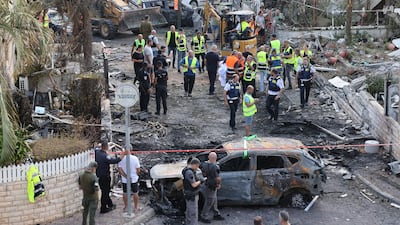
Israeli emergency teams work at the scene of a missile strike on a residential neighbourhood in Kiryat Bialik, northern Israel. EPA -
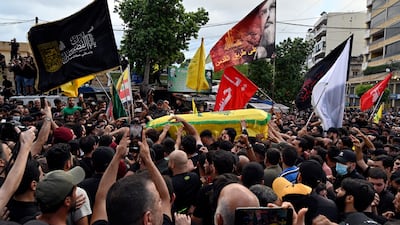
Hezbollah fighters carry the coffin of the group's senior commander Ibrahim Aqil, who was killed in an Israeli strike on September 20, in Beirut. EPA -
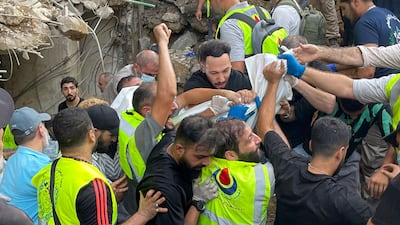
Rescuers carry a body at the scene of a missile strike in the southern suburbs of Beirut. AP


Defence Secretary John Healey announced the movement of troops on Tuesday night after a Cobra emergency meeting earlier in the day.
“Events in the past hours and days have demonstrated how volatile this situation is, which is why our message is clear: British nationals should leave now,” Mr Healey said. “We continue to urge all sides to step back from conflict to prevent further tragic loss of life.
“Our government is ensuring all preparations are in place to support British nationals should the situation deteriorate. I want to thank the British personnel who are deploying in the region for their commitment and professionalism.”
The UK already has a significant diplomatic and military presence in the region, including RAF Akrotiri in Cyprus and British ships RFA Mounts Bay and HMS Duncan, which have remained in the eastern Mediterranean over the summer.
British Prime Minister Keir Starmer has urged Israel and Hezbollah to “pull back from the brink” and urged Britons to board commercial flights out of Lebanon as soon as possible. He will be at the UN General Assembly in New York on Wednesday and Thursday as world leaders try to prevent the fighting in Lebanon from worsening into an all-out war.
“The most important message from me this evening is to British nationals in Lebanon, to leave immediately and I just want to reinforce that,” Mr Starmer told reporters travelling on his plane to New York. “Yes, we are ramping up the contingency plans, I think that you would expect that in light of the escalation. But it is important that we be really, really clear: now is the time to leave.
“More broadly, I am worried about the situation and I think we need to be clear we need de-escalation, we need a ceasefire, we need to pull back from the brink. I think that will be amongst the first topics we discuss in New York.”
The Cobra meeting chaired by Mr Healey was attended by intelligence chiefs and diplomats, and provided an opportunity to test government planning. The need for a contingency plan was underlined when more airlines cancelled flights to Lebanon on Tuesday.
Germany’s Foreign Ministry expressed frustration last week as German citizens remained in Lebanon despite the warnings.
Israel's ambassador says attacks are 'noble'
The Israeli ambassador to the UK, Tzipi Hotovely, spoke at a fringe event during the Labour Party conference on Tuesday evening, saying Hezbollah has to “pay the price” for its rocket attacks on Israel. She told the event hosted by Labour Friends of Israel, attended by the Chancellor Rachel Reeves and other cabinet members, that it was a “noble thing” for the country to restore the 60,000 displaced Israelis back to their homes in the north.
“It’s about time they [Hezbollah] will pay the price for all the evacuation, the towns destroyed, the non-stop firing,” she said. Israel had given Hezbollah the chance of a diplomatic solution but that had been rejected, she added, so “we are fighting back to restore peace and bring those Israelis back home”.
“This threat must be removed,” she said. “What we are doing now is not escalation. Thank you for supporting Israel’s right to do the most noble thing that any country can do, to restore security to the towns of northern Israel.”
Just before the ambassador spoke, Ms Reeves told the gathering: “In me you will always have a friend, I am proud to stand with you always.”
Evacuations in 2006
An evacuation from Beirut to Cyprus could resemble the 2006 Royal Navy evacuations from Lebanon, which were code-named Operation Highbrow.
In 2006, the Foreign Office correctly estimated that about a quarter of the 22,000 British citizens in Lebanon (including 10,000 dual nationals), would seek evacuation.
About 4,500 people were evacuated by British forces from Lebanon to Limassol in Cyprus, mostly by sea. The evacuees were then flown from Cyprus to the UK on chartered planes. Five naval ships were deployed at short notice, as well as a Royal Fleet Auxiliary supply vessel – in a move that surprised diplomats at the time.
HMS Illustrious Commodore and HMS Gloucester were both on a security mission in the Indian Ocean when they were diverted by Operation Highbrow in the Mediterranean. HMS Bulwark was diverted from its journey home to Britain after a six-month tour through the coast of Pakistan and the Red Sea.
An Israeli sea blockade meant that the warships had to navigate carefully on an overnight journey from the Beirut port to Limassol in Cyprus. The first evacuees were flown to Cyprus by RAF Chinook helicopters, or on to the evacuating warships, because of the blockade.
The remaining people were shuttled in buses from a hangar near the Beirut port on to the ships.
The 2006 evacuation was offered to both British citizens and dual citizens, as well as the families of Britons. About 2,200 people evacuated to Cyprus came to the UK, and 1,040 were British citizens, according to a debriefing document.

