


British Prime Minister Rishi Sunak asked if his election rival Keir Starmer was planning to make a deal with the ayatollahs in Iran or Taliban in Afghanistan to send back asylum seekers rejected by the UK, during the leaders' last televised debate before next week's general polls.
The migrants are coming from Iran, Syria and Afghanistan, Mr Sunak said.
“Will you sit down with the ayatollahs? Are you going to try to do a deal with the Taliban? It’s completely nonsensical – you are taking people for fools,” he said.
“The Rwanda plan is a deterrent, you just have to listen to what the illegal migrants themselves are saying.
"One of them just said, ‘Most of us are still in France due to the fear we have about Rwanda’.".
“Another one said, ‘I won’t cross the Channel until the Rwanda plan is destroyed’.
"If Labour win, the people smugglers are going to need a bigger boat. Don’t surrender our borders to the Labour Party.”
Rishi Sunak through the years - in pictures
-
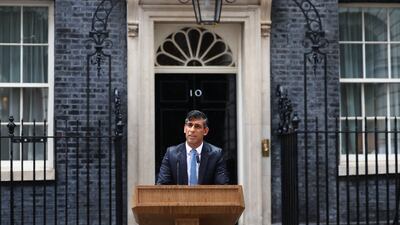
British Prime Minister Rishi Sunak announces July 4 as the date for the 2024 general election at No 10 Downing Street. Here, The National looks back at his political career. Getty Images -
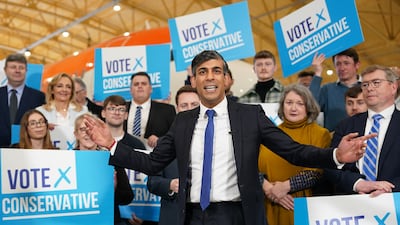
Mr Sunak during local election campaigning in Teesside in May 2024. Getty Images -
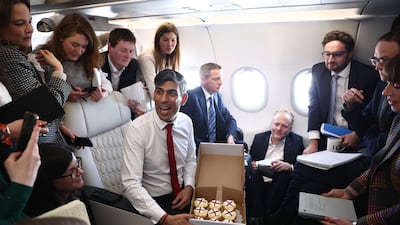
Mr Sunak presents cupcakes to journalists on board a plane on the way to Warsaw in April 2024. Getty Images -
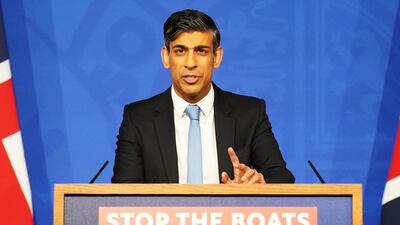
Mr Sunak during a press conference in Downing Street in January after the Safety of Rwanda Bill passed its third reading in the House of Commons. Getty Images -
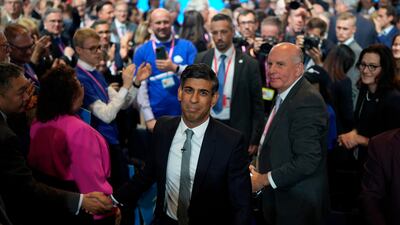
Being applauded after his speech at the Conservative Party conference in October 2023. Getty Images -
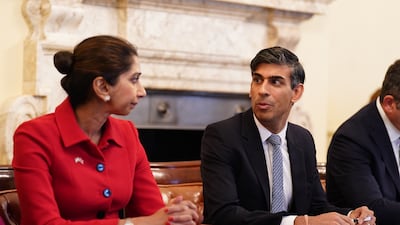
Looking pensive alongside then-home secretary Suella Braverman at No 10 in October 2023. She didn't last much longer in the cabinet. Getty Images -
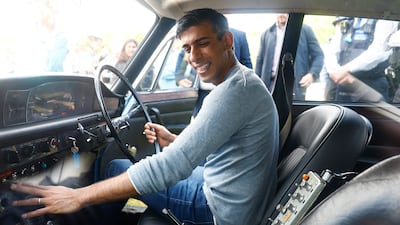
Mr Sunak sits in an old Special Branch police vehicle which was used to transport former prime minister Margaret Thatcher, in July 2023. Getty Images -

On board Border Agency cutter HMC Seeker during a visit to Dover in June 2023. Getty Images -
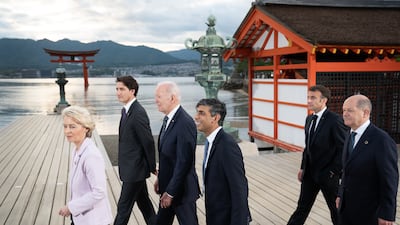
Mr Sunak alongside European Commission President Ursula von der Leyen, Canada's Prime Minister Justin Trudeau, US President Joe Biden, French President Emmanuel Macron and German Chancellor Olaf Scholz during the G7 Summit in May 2023. Getty Images -
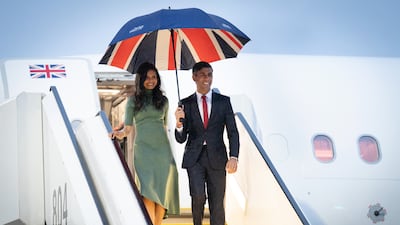
Mr Sunak and his wife Akshata Murty arriving in Japan ahead of the G7 Summit in May 2023. Getty Images -
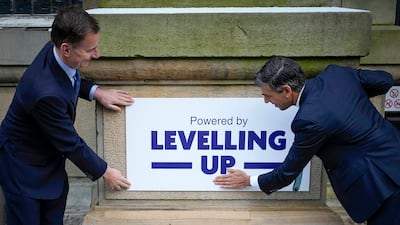
Mr Sunak and Chancellor Jeremy Hunt sending a message at Accrington Market Hall in January 2023. Getty Images -
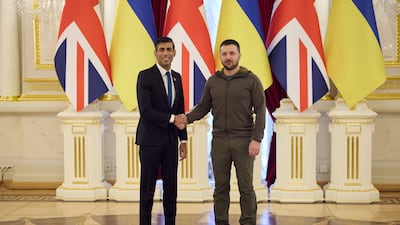
Mr Sunak and Ukrainian President Volodymyr Zelenskyy meet in Ukraine's capital Kyiv in November 2022. Getty Images -

King Charles III welcomes Mr Sunak during an audience at Buckingham Palace, where he invited the newly elected leader of the Conservative Party to become Prime Minister and form a new government in October 2022. Getty Images -
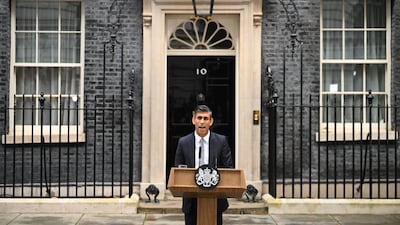
Mr Sunak makes a statement outside No 10 in October 2022 after taking office. Getty Images -
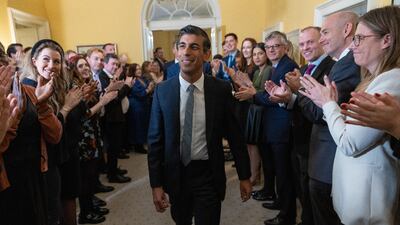
Mr Sunak arrives inside Number 10 in October 2022. Photo: Simon Walker/ No 10 Downing Street -
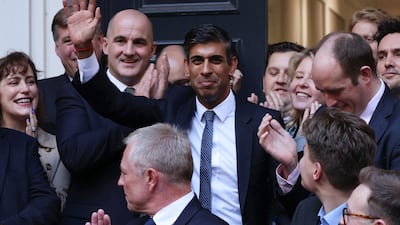
Greeted by colleagues at Conservative Party HQ after having been announced winner of the leadership contest in October 2022. Getty Images -
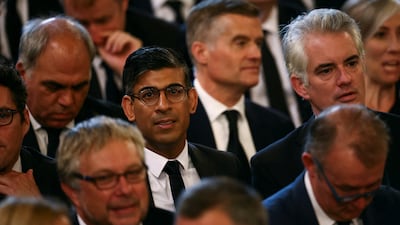
Mr Sunak at Westminster Hall in London following the death of Queen Elizabeth II in September 2022. PA -

Mr Sunak visits his family's old business, Bassett Pharmacy, on the campaign trail in August 2022. Getty Images -
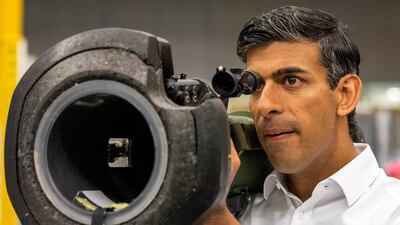
Mr Sunak looks at an NLAW anti-tank launcher during a visit to the Thales Defence System plant in Belfast in August 2022. Getty Images -
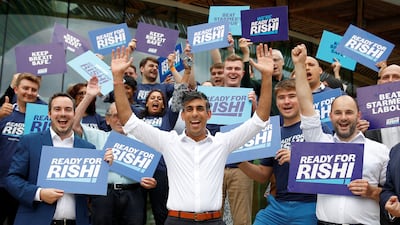
At a hustings event in Exeter in August 2022. Getty Images -
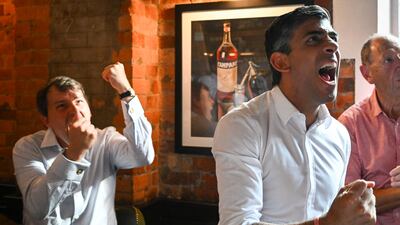
Celebrates England's first goal as he watches the Women's Euro 2022 final in Salisbury in July 2022. Getty Images -
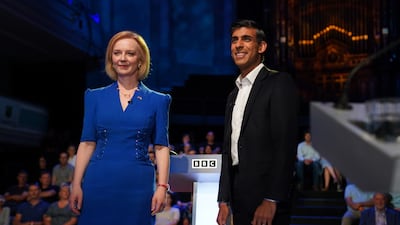
Mr Sunak and Ms Truss take part in the BBC Leadership debate at Victoria Hall, Hanley, in July 2022. Getty Images -
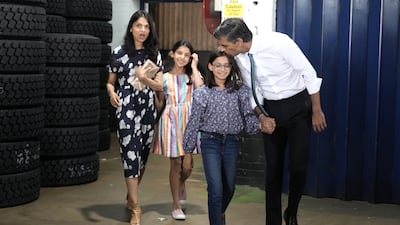
With daughters Krisna and Anoushka and wife Akshata Murthy in July 2022. Getty Images -
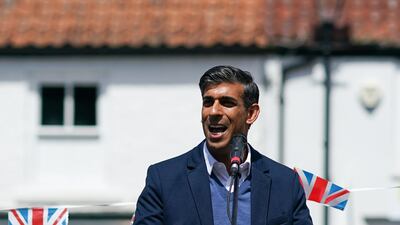
Opening the Great Ayton Village Fete during the queen’s Platinum Jubilee celebrations in June 2022. Getty Images -
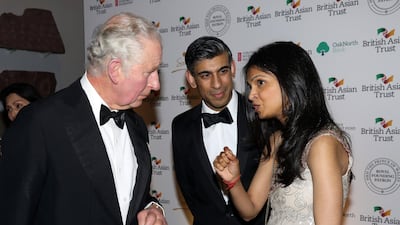
Mr Sunak and Ms Murthy speak to then-Prince Charles at a British Asian Trust event in February 2022. Getty Images -
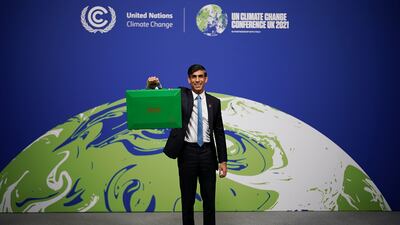
Mr Sunak arrives at COP26 in Glasgow in November 2021 when he was chancellor. Getty Images -
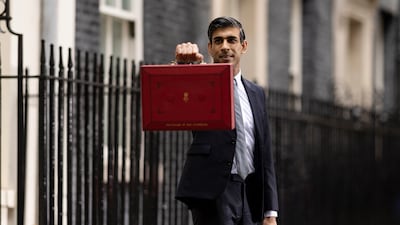
Holding the budget box as he departs 11 Downing Street to deliver his Autumn Budget in October 2021. Getty Images -
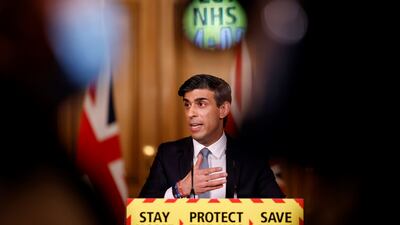
At a press conference on the 2021 Budget in London in March 2021. Getty Images -
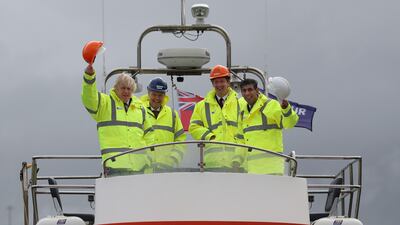
With former prime minister Boris Johnson during a visit to PD Ports on the River Tees in March 2021. Getty Images -
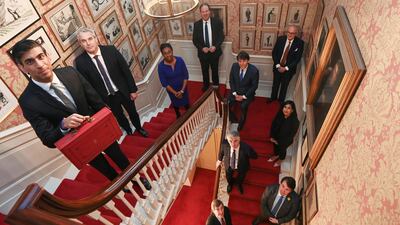
Mr Sunak poses with the budget box at 11 Downing Street in March 2021. Getty Images -
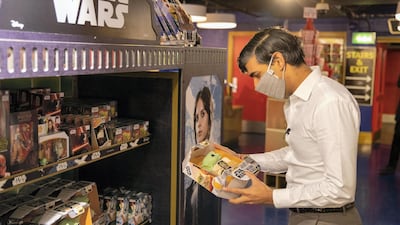
Meeting staff back at work after being furloughed at Hamleys toy shop in London, December 2020. Photo: HM Treasury -
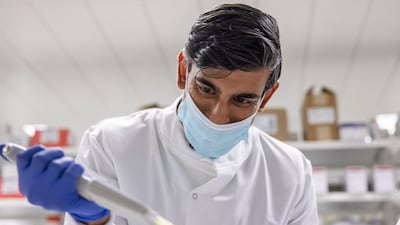
Mr Sunak visits the Imperial Clinic Research Facility at Hammersmith Hospital, London, in November 2020. Getty Images -
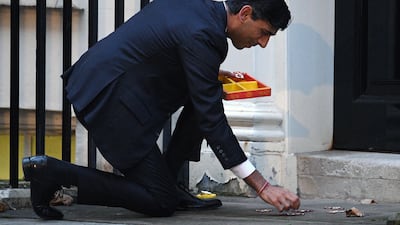
Lighting a candle for Diwali on Downing Street, November 2020. Getty Images -
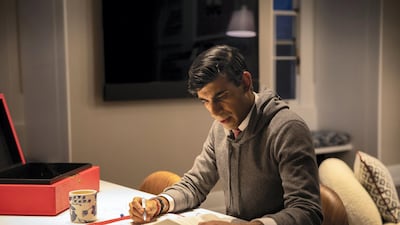
Working on a speech in his flat above 11 Downing Street in November 2020. Photo: HM Treasury -
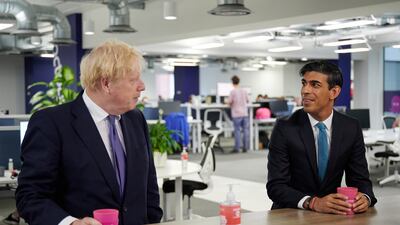
Mr Johnson and Mr Sunak visit the headquarters of Octopus Energy in London in October 2020. Getty Images -
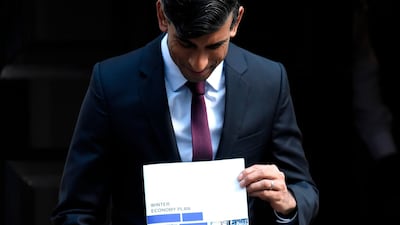
With his 'Winter Economy Plan' outside 11 Downing Street in September 2020. AFP -
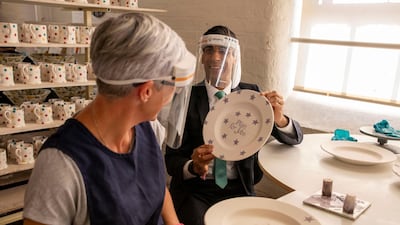
Decorating a plate at Emma Bridgewater pottery in Stoke pottery in September 2020. Getty Images -
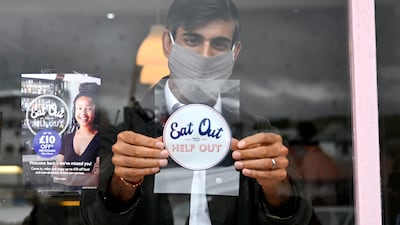
Promoting 'eat out to help out' on the Isle of Bute, Scotland, in August 2020. Getty Images -
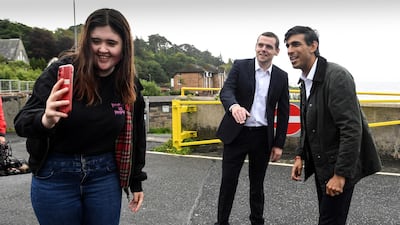
A member of the public takes a selfie with Rishi Sunak during a visit to Scotland in August 2020. AFP -

Visiting a Wagamama restaurant in central London in July 2020. Photo: HM Treasury -
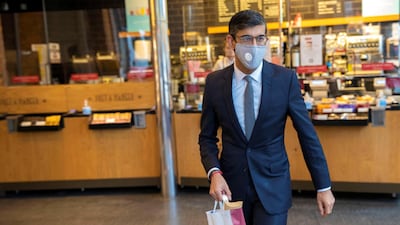
Rishi Sunak visits a Pret A Manger in Westminster in July 2020. HM Treasury -
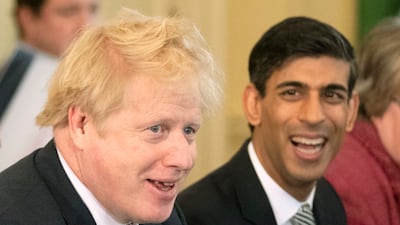
With Mr Johnson at his first Cabinet meeting after a reshuffle at 10 Downing Street in February 2020. Getty Images -
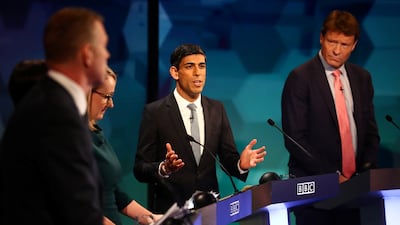
Mr Sunak speaks during a general election debate in Cardiff in November 2019. Getty Images


Mr Starmer responded: “Record numbers coming across the Channel and he says it’s a deterrent.
"There are a few hundred that will go on a flight to Rwanda, a huge expense to taxpayers.
"There are tens of thousands, 15,000 people have come since Rishi Sunak has been Prime Minister.”
Mr Starmer criticised Mr Sunak over the Westminster betting scandal, accusing him of being bullied into responding to the issue.
“You have to lead from the front on issues like this," the opposition leader said.
"I think that in the last 14 years, politics has become too much about self entitlement and MPs thinking about what they could get for themselves.
“The instinct of these people to think the first thing they should do is try to make money. That was the wrong instinct, and we have to change that.
“What I did, when one of my team was alleged to have been involved and investigated by the Gambling Commission, they were suspended within minutes, because I knew it made it really important to be swift.
"The Prime Minister delayed and delayed and delayed until eventually he was bullied into taking action.”
Keir Starmer through the years - in pictures
-
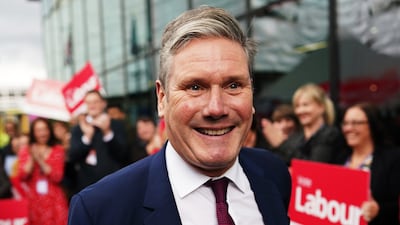
Keir Starmer has been the Labour party's leader since 2020, and is now the UK's prime minister. Here The National looks back through his political career. Getty Images -
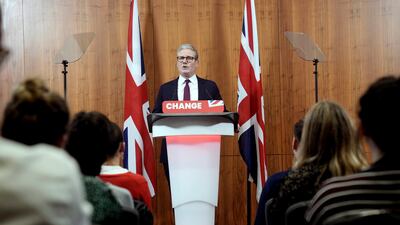
Mr Starmer speaking in Westminster, London, in May after Rishi Sunak announced the general election for July 4. AP -
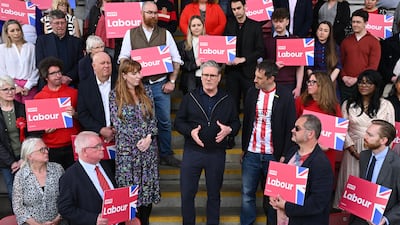
Mr Starmer speaks to Labour supporters at Harlow Town Football Club's stadium in Essex, on the eve of local elections in May. Getty Images -
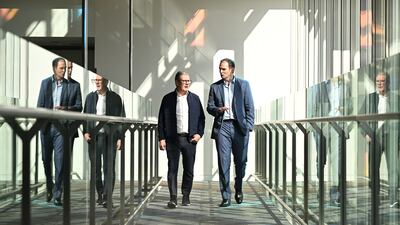
Mr Starmer talks to Dan Poulter at the Francis Crick Institute in London in April, after the MP had defected from the Conservative Party to Labour. Getty Images -

Mayor of London Sadiq Khan and Mr Starmer during the launch of Mr Khan's mayoral re-election campaign in March, which proved successful. Getty Images -
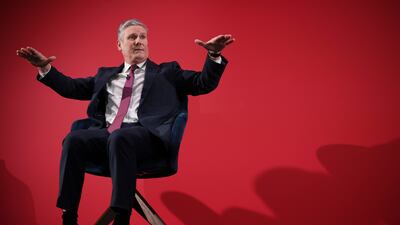
Mr Starmer addresses the Labour Business Conference in London in February. Getty Images -
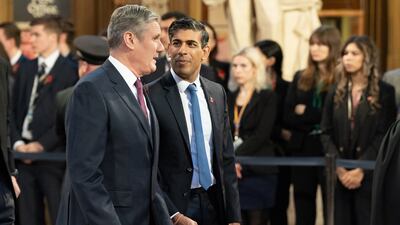
Mr Starmer and Mr Sunak at the Palace of Westminster for the State Opening of Parliament in November 2023. Getty Images -
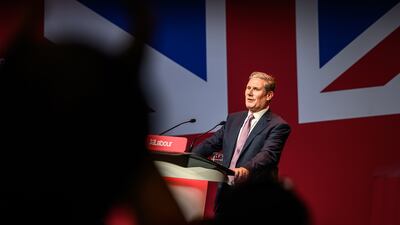
Mr Starmer addresses delegates at the National Annual Women's Conference in Liverpool in October 2023. Getty Images -
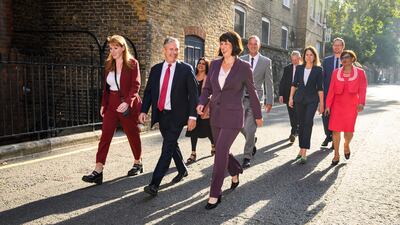
Mr Starmer with his shadow cabinet in London in September 2023. Getty Images -
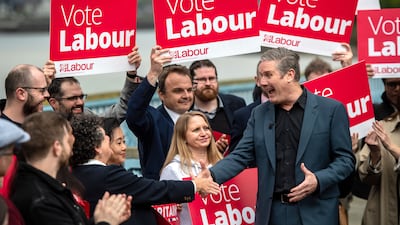
Mr Starmer speaks to supporters in Chatham after a Labour win in local elections in May 2023. Getty Images -
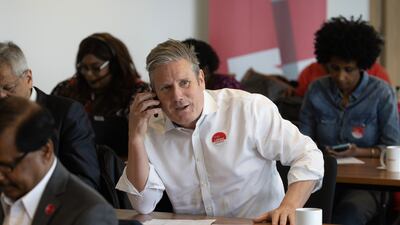
Joining party activists at a national phone bank on local elections day in London in May 2023. Getty Images -
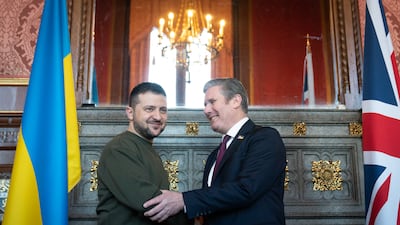
Mr Starmer meets Ukrainian President Volodymyr Zelenskyy at Speaker's House in the Palace of Westminster, London, in February 2023. Getty Images -
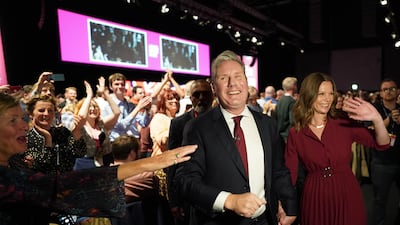
The Labour leader and his wife Victoria leave the stage after his speech at the party conference in Liverpool in September 2022. Getty Images -
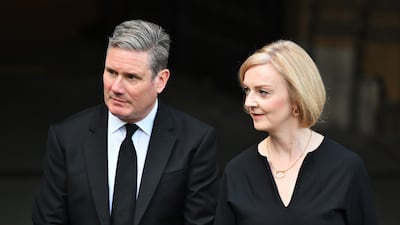
Mr Starmer and then-UK prime minister Liz Truss leave the Palace of Westminster in September 2022. Getty Images -
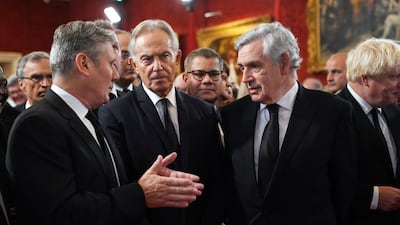
With former Labour prime ministers Tony Blair, centre, and Gordon Brown, right, at St James's Palace, London, where King Charles III was formally proclaimed monarch in September 2022. Getty Images -
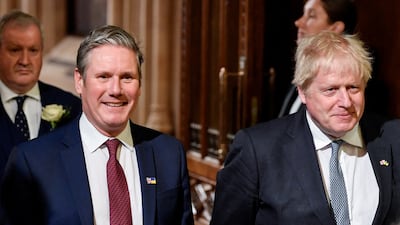
Mr Starmer and then-prime minister Boris Johnson attend the State Opening of Parliament in May 2022. Getty Images -
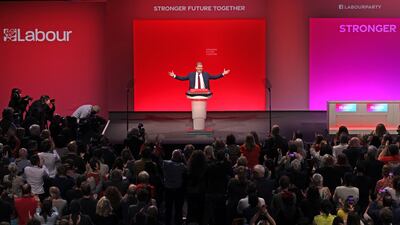
Mr Starmer makes his keynote speech to the Labour conference for the first time as party leader in September 2021 in Brighton. Getty Images -
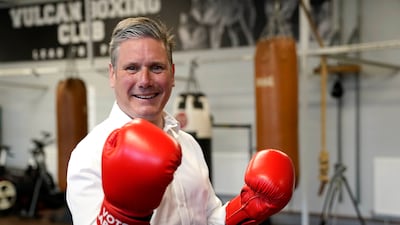
The gloves are on during a visit to the Vulcan Boxing Club in Hull, East Yorkshire, in April 2021. Getty Images -
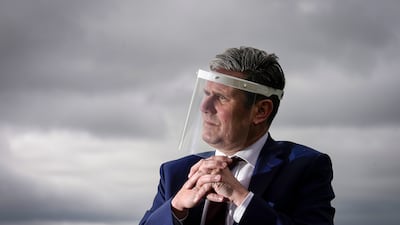
Mr Starmer in talks with care home workers and family members of residents at Cafe 1899 in Gedling Country Park during the Covid-19 pandemic in July 2020. Getty Images -
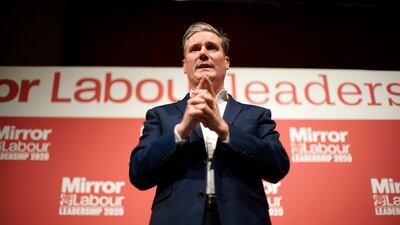
Mr Starmer, then-shadow secretary of state for exiting the EU, addresses the audience at a hustings in March 2020 in Dudley. Getty Images -
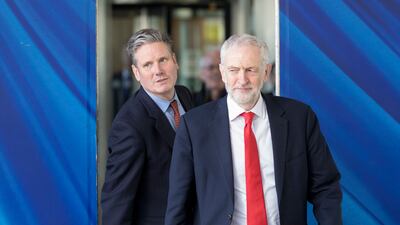
Mr Starmer and then-Labour leader Jeremy Corbyn talk to the media at the EU Commission headquarters in March 2019 in Brussels. Getty Images -
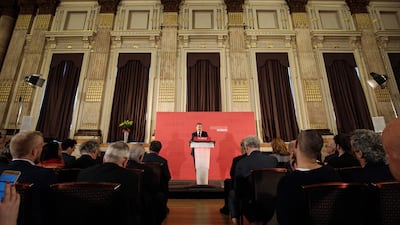
Mr Starmer delivers a speech on Labour's Brexit policy at the Institute of Civil Engineers in London in April 2017. Getty Images -

Holding a press conference as Director of Public Prosecutions to outline new guidelines on assisted suicide, in London in September 2009. Getty Images -
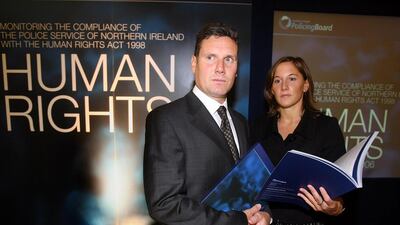
Human rights advisers Mr Starmer and Jane Gordon with the Northern Ireland Policing Board annual human rights report 2006, at the Dunadry Hotel in Co Antrim. Getty Images


Mr Sunak replied: “It was important to me, that given the seriousness and the sensitivity of the matters at hand that they were dealt with properly, and that’s what I’ve done."
A member of the audience asked: “Are you two really the best we’ve got to be the next prime minister of our great country?”
Mr Starmer said: “I’m not surprised after 14 years of this that people feel this way because the country is in such a state.
“They’ve had loads of promises made in the last election about what will happen which haven’t been delivered on. That does beat the hope out of people.
“The very first question was about integrity in politics, and again people haven’t seen that integrity.
"They’ve had partygate, they’ve had breach of Covid rules, you’ve had the contracts for Covid – the instinct of some people is to think the first thing in Covid I’m going to do is try to make money.
“So, this is an opportunity to restore that hope. I don’t think we can do that by making sort of grand promises of things that can’t be delivered.”
Rather, he said, it is “the ordinary hope of getting on yourself, getting on for your family, getting on for your community, your country.
"It has to be rooted, if we’re going to restore hope in my view, in returning politics to service, the sense that you come into politics to serve."
During the debate, Mr Sunak pointed to a media report that the shadow chief secretary to the Treasury, Darren Jones, said Labour’s net-zero plans would cost “hundreds of billions”.
“Just go online, go to the Telegraph website, because we’ve just found a recording they’ve put out there from the deputy chancellor from the Labour Party admitting that their plan would cost hundreds of billions of pounds,” Mr Sunak said.
“Do not surrender to their tax rises."
The BBC moderator jumped in to explain that Mr Sunak was referring to an article saying that it had obtained a recording of Darren Jones saying decarbonising the economy would cost that much.
“Yes, it is absolutely right that we want to get investors to come in alongside that government money," Mr Starmer said.
"It won’t surprise you we’ve been talking to global investors for the best part of two years to say, ‘If we put down this amount of money in our manifesto, will you come alongside it and put down many more billions of pounds so that in partnership we make the change that we need?’”
Early in the debate, Mr Starmer took a swipe at the Conservative Party leader, accusing Mr Sunak of being “out of touch” when it comes to welfare benefits.
To applause from the studio audience, the Labour leader said: “If you listen to the people in the audience, across the country, more often, you might not be quite so out of touch.”
There was no winner in the BBC prime ministerial debate, according to a YouGov snap poll.
In a survey of 1,716 viewers, 47 per cent said Mr Starmer won, 47 per cent said Mr Sunak did, and 6 per cent said they did not know.
Throughout the televised debate, the sound of a protest outside the BBC venue could be heard in the background.
Pro-Palestine demonstrators were among those standing outside the Nottingham Trent University building.
Mishal Hussain, the presenter, confirmed to the audience that the demonstration was taking place.

