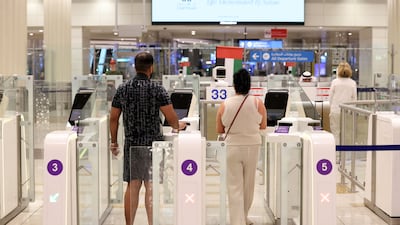
New Zealand has lifted its official guidance warning against non-essential travel to the UAE, delivering a boost to the tourism sector as it seeks to rebound from the challenges of the Iran war.
The New Zealand government has lowered the travel advisory from Level 3 – avoid non-essential travel – to Level 2, which calls for people to exercise increased caution.
New Zealand operates a four-scale travel system, with 1 advising travellers to adopt normal safety and security precautions and 4 urging people to not travel.

The advice, updated on the government's Safe Travel website on Tuesday, was welcomed by Richard Kay, New Zealand's ambassador to the UAE.
“New Zealanders can once again travel to or transit through the UAE,” the envoy said on X. “Travellers should remain vigilant and continue to follow local advice at all times, as security conditions can change quickly.”
Emirates operates flights to New Zealand's harbour city of Auckland and to Christchurch, the largest city on the country's South Island.
A Comprehensive Economic Partnership Agreement (Cepa) between the UAE and New Zealand came into effect last August, after being signed in January 2025. It is expected to boost annual bilateral trade to more than $5 billion by 2032, up from an average yearly $1.5 billion recorded from 2019 to 2023.
Easing travel plans
The UAE is working with other countries to secure removal from their travel advisory lists, as tourism figures show signs of recovery after months of disruption because of the conflict.
Australia advises people to reconsider their need to travel due the security situation in the UAE and the Middle East, having loosened its “do not travel” advice in June.
The UK removed the UAE from a list of countries to which citizens are advised against travelling in June but states that the situation remains unpredictable.
The US Department of State places its travel advice at Level 3, which calls for people to reconsider travel. This is one step below the highest rating of 4, which tells people not to travel.
India – the UAE's largest source of tourism – does not offer guidance regarding travel to the Emirates.
Cause for optimism

The number of international overnight visitors to Dubai reached 869,000 last month, the highest figure since February, according to government figures released last week.
Hotel occupancy reached 66 per cent in August in the emirate compared with 36 per cent in March, the first full month of the Iran war.
Dubai welcomed 6.97 million international visitors in the first eight months of this year. In 2025, visitor numbers hit 19.59 million. It was widely expected to hit a long-time target of 20 million this year were it not for the conflict.
Issam Kazim, chief executive of the Dubai Department of Tourism and Commerce Marketing, said lifting the warnings could have a knock-on effect for visitor numbers.
“We’re trying to remove Dubai and the UAE from the travel advisories because that would then help from the insurance side, which then will encourage the international carriers to come back again,” Mr Kazim said in an interview at the Arabian Travel Market (ATM) conference in Dubai last week.
Appetite for travel
The ATM Travel Trends Report 2026, produced in association with Tourism Economics, forecasts international visitor spending in the Middle East will increase by $116 billion, or 57 per cent, between 2025 and 2030.
Siddharth Sudhakar, general manager for the Middle East and North Africa at Trip.com, says demand for travel to the UAE “remains very strong, with particularly significant growth on demand from its neighbours”.
“The UK remains our leading international source market for bookings to the UAE, followed by Russia, France, the US and India,” Mr Sudhakar said.
“Overall, the data points to a very healthy and diversified inbound market for the UAE and, importantly, the growth is extending beyond flights into hotels, attractions and experiences.”
Dave Goodger, managing director for European, Middle East and North Africa at Tourism Economics, offered an upbeat assessment at the ATM event.
“This year is disrupted by an uncertain economic and geopolitical backdrop but consumers are treating travel as essential,” he said. “People are prioritising experiences over things and that, combined with favourable demographics, rising wealth and sustained investment in capacity, underpins our confidence in the region's long-term momentum.”

