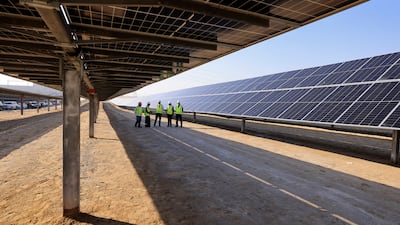
Abu Dhabi's water and electricity company has outlined plans to cut carbon emissions by nearly half by 2035, even as power demand surges by 70 per cent.
Emirates Water and Electricity Company (EWEC) marked Zero Emissions Day by publishing its long-term outlook for Abu Dhabi's power and water network.
The company forecast total carbon emissions from power and water production would fall from about 42 million tonnes in 2019 to 23 million tonnes in 2035 – a reduction of more than 45 per cent.

The projected decline comes despite estimates that annual electricity demand will rise by around 70 per cent between 2026 and 2033, driven by economic and population growth across the UAE.
Mohamed Almarzooqi, chief assets officer of EWEC, said the company's strategic planning was designed to ensure infrastructure expansion and emissions reduction could be achieved simultaneously.
“Through this transformation, EWEC is enabling the UAE and Abu Dhabi to build a highly diversified, resilient and low-carbon system that seamlessly meets rising demand while strengthening water and energy security,” Mr Almarzooqi said.
Solar and desalination
The expansion of renewable energy and a shift towards reverse-osmosis desalination are identified as the principal drivers behind the projected emissions cuts.
EWEC is scaling Abu Dhabi's solar capacity to 14 gigawatts by 2030 and more than 35 gigawatts by 2035, supported by up to 15 gigawatts of battery storage capacity. As that infrastructure comes online, the company expects reliance on gas-fired generation to decline.
Within the water sector, reverse osmosis is forecast to account for more than 95 per cent of total water production by 2035. The shift away from thermally intensive desalination methods is expected to contribute significantly to overall emissions reductions.
EWEC said its efforts directly support the Abu Dhabi Department of Energy's Clean Energy Strategic Target 2035 and the UAE's broader Net Zero by 2050 Strategy.

