


Cutting-edge companies primed to launch air taxis and autonomous cargo drones into the skies have hailed the UAE for providing a launch pad for success.
Experts at the Umex conference in Abu Dhabi, an exhibition that aims to shape the future of unmanned systems and defence strategy, said a strict licensing framework has allowed an emerging aerial public transport industry to take off in the Emirates.
Testing at a reduced scale has helped to iron out any operational flaws, said Rashid Al Manai, chief executive of Lodd Autonomous, which aims to launch AI-driven drone cargo operations in the UAE.
“We have taken the full aircraft size and created a 30 per cent subscale to test avionics, software and autonomous algorithms,” said Mr Al Manai, who was on a Umex panel on how autonomous drones will impact everyday life.
Once the technology has reached the required level, it is moved into full-sized testing, he added.

“Currently, we are flying to verify all the requirements that we have designed the aircraft to do and validate all the failure cases that you want the aircraft to avoid," Mr Al Manai said.
“There is always a risk in developing new technology, but how you can mitigate and take a risk-based approach is the more balanced approach they have here in the UAE.”
Meanwhile, US firm Archer Aviation is gearing up for lift-off for two of its piloted Midnight flying taxis this year, after extensive testing.
Dr Talib Alhinai, the UAE lead for Archer Aviation, said the company's latest aircraft was the culmination of years of vigorous safety checks and had accelerated due to rapidly evolving battery technology.
Umex 2026 - in pictures
-
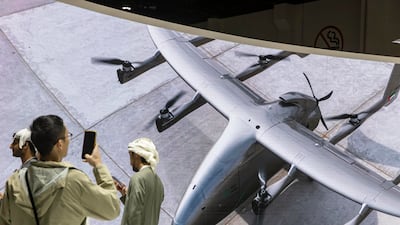
The LODD stand displaying unmanned aerial vehicles at UMEX 2026, an exhibition for drones, robotics and unmanned systems, at Abu Dhabi National Exhibitions Centre. Antonie Robertson/The National -
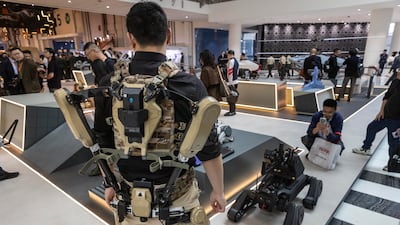
The International Golden Group stand. Antonie Robertson/The National -
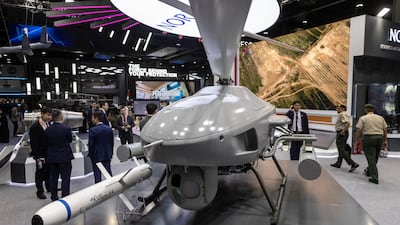
The Norinco Stand. Antonie Robertson/The National -
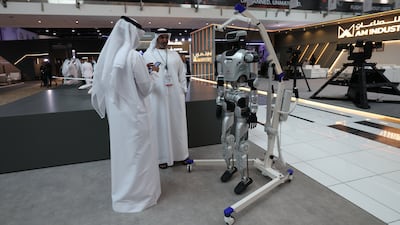
Visitors inspect the exhibition at the 7th UMEX and SimTEX in Abu Dhabi. EPA -
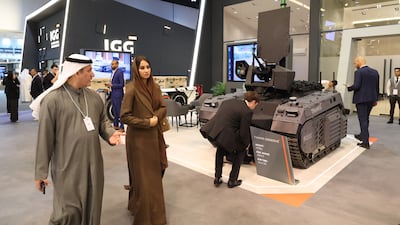
Visitors inspect the THeMIS Observe at Milrem Robotics during the event. EPA -
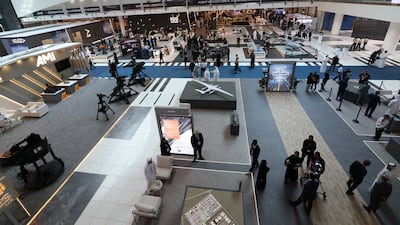
The exhibitions run until January 22. EPA -
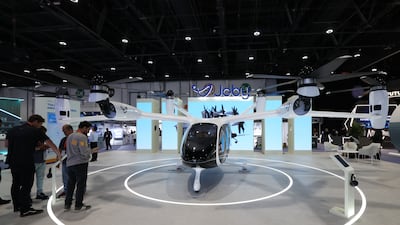
Visitors inspect the JOBY section at the event. EPA -
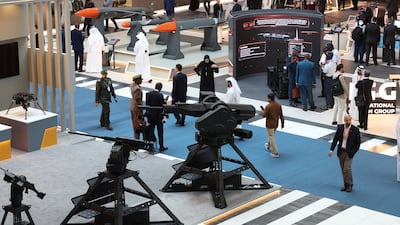
Visitors tour the event. EPA -
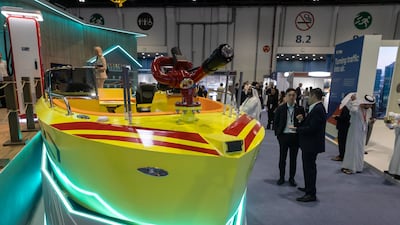
The K2 autonomous firefighting boat on display. Antonie Robertson/The National -
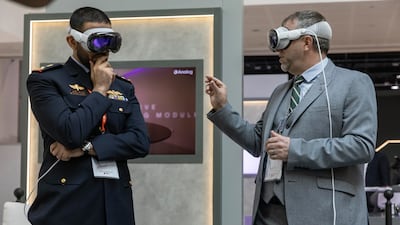
Visitors view TAWAZUN VR training goggles at the event. Antonie Robertson/The National


“We wanted to design an aircraft that is fitting with the mode of electric air taxis or urban air mobility, so it needed to feel much more like you're stepping into a car than stepping up into a helicopter,” said Dr Alhinai.
“Since July 2025, we've flown in Abu Dhabi – and as the next stage, we'll be bringing over our pilot and aircraft to the UAE this summer, where we're also going to focus on in-country tests in advance of starting our passenger operations.
“The UAE is a great test bed for this because the regulator, the ecosystem and partners are all working together to allow the UAE to be the first place for passenger operators.
“When we look at designing the aircraft, aviation safety culture is at the top of the hierarchy, everything comes after that. It's very important for the industry.”
Helipad charging
Sufficient charging infrastructure is critical to a successful roll-out of operations. Archer’s Midnight passenger is drone compatible with existing heliports that can be developed to supply 350-kilowatt battery chargers, similar to high-speed Tesla Superchargers for road cars.
Ten vertiports are planned for Abu Dhabi as infrastructure for coming air taxi and eVTOLs (electric vertical take-off and landing aircraft) services develop, with similar testing under way in Dubai.
In partnership with Etihad Aviation Training and Abu Dhabi Aviation, Archer has started training and recruiting pilots for commercial air taxi operations, as well as testing and certification of its aircraft.
Test flights have taken place across the country and the General Civil Aviation Authority (GCAA) is crucial to approving new regulations to allow operations to get under way, experts said.
Autonomous boats

The Umex show featured multiple applications of the latest drone technology, including surveillance, transport and emergency services.
One prototype on show was a next-generation maritime firefighting vessel.
Developed with Abu Dhabi Civil Defence Authority, the Firesight autonomous sea craft will be tested this year and is a potential new weapon in the fight to bring ship fires under control.
Its inbuilt system draws seawater into a bow-mounted canon with a range of 70 metres. The nine-metre-long vessel is fitted with multiple perception sensors so it can be deployed and operate autonomously.
“Collaborating with the Abu Dhabi Civil Defence Authority allows us to test our technology in mission-critical scenarios, ensuring it delivers tangible value where safety, reliability, and speed truly matter,” said Sean Teo, director-manager at K2, the Abu Dhabi company working to develop Firesight.
“This project reflects our commitment to building autonomous solutions that are not only innovative but operationally ready and aligned with Abu Dhabi’s vision for advanced public safety capabilities.”

