


Three female Dubai Police officers are ready to lay down the law to referee elite crime-fighting squads from around the world in this year's UAE Swat Challenge
The officers are part of a team of 33 officials, 28 from Dubai Police joined by five experts from the US, who will help to oversee five days of action, which got under way on Saturday.
The sixth annual Swat Challenge will bring together 120 special forces squads from 50 countries competing for a total of Dh1 million in prizes at Dubai Police training centre in Al Ruwayyah.
The three Dubai Police officers know the gruelling event well, having taking part in it themselves.
Embracing new role
Lt Fatma Al Mamari, 41, has served for 20 years. Having started her career in the VIP Protection Department, she competed in the challenge but took a break last year to focus on other competitions, including the Ministry of Interior Tactical Shooting Championship.
This year, she returns to the event in a different capacity. “I was unable to dedicate the necessary time to training for this year’s competition due to my involvement in Dubai Games,” she said.

“However, I am fully prepared to serve as a referee, especially after completing a tactical pistol and rifle course from the Ministry of Interior.”
Lt Al Mamari understands the rigorous demands of the competition and is determined to ensure fair play.
“There will be no favouritism towards the Dubai Police women’s team, even though I was once part of it,” she said. “The strongest will prevail.”
“Every year, the teams get stronger. The women’s team, in particular, has improved significantly due to their intensive training.
UAE Swat Challenge 2025 - in pictures
-
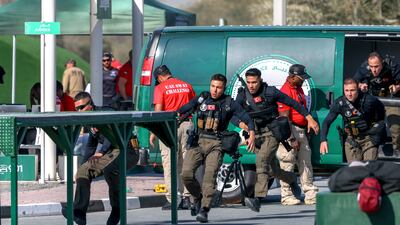
Team Turkey in action at this year's UAE Swat Challenge. All photos: Victor Besa / The National -
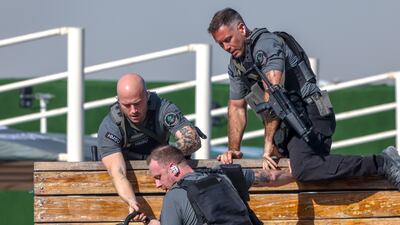
Northern Ireland's Swat team -

A participant from Turkey -
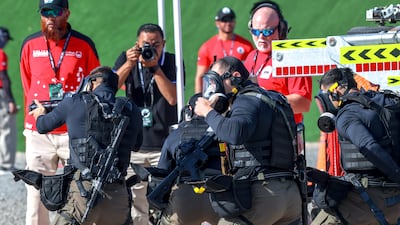
Turkey's team -
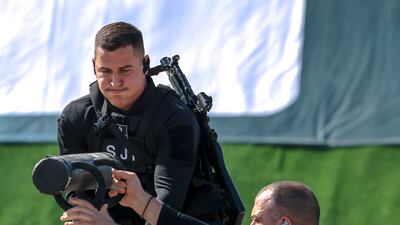
Kyrgyzstan's team -
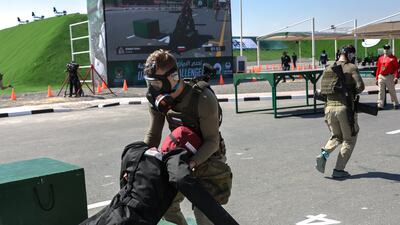
The Bulgarian team -
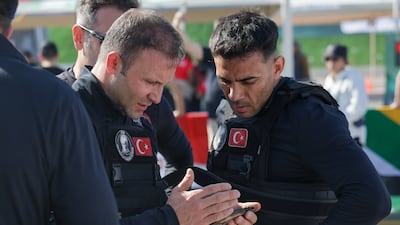
Members of Turkey's team view their performance on an iPhone -
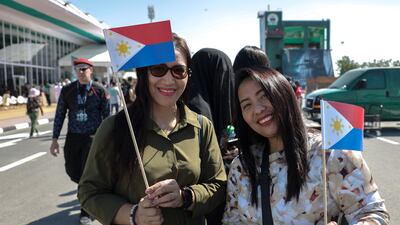
Fans arrive to show their support -

The Kuwait National Guard -
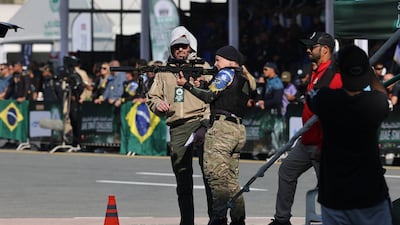
Sau Paulo's women's team -
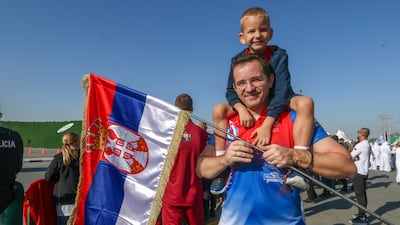
Serbian fans -

The South African team -

Peru police general Carlos Romero -

Philippine team members in action -
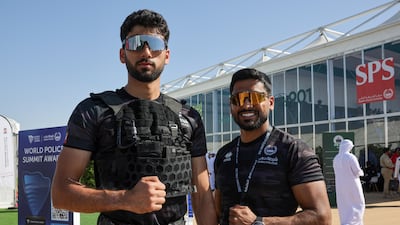
UAE Swat snipers -
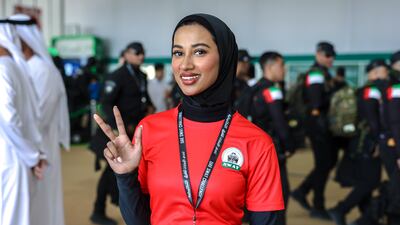
Dubai Police officer Afraa Al Nuaimi is enthusiastic about being a referee in this year's competition. Photo: Victor Besa / The National


“Sometimes, their training includes competing alongside and against male teams. This environment pushes female officers to challenge themselves and elevate their performance.”
“The competition keeps getting stronger,” she said. “And so do we.”
Rising to the challenge
Fellow referee Fatima Al Bandari, 37, has served with Dubai Police for 13 years. She began her career in the VIP Protection team as part of the motorcycle unit before moving into competitive shooting.
Her talent has taken her to competitions in Thailand, Malaysia, and the Netherlands, where her team won third place.
Domestically, her team dominated the Ministry of Interior Tactical Teams Championship for five years in a row.
She was unable to compete in this year’s Swat Challenge because of other commitments.
“I had a competition in Singapore and was on an official mission in Ethiopia for a month and a half,” she said.
“This prevented me from training adequately for the Swat Challenge or even participating in the local championship in December.”
Despite stepping away from competition, she remains committed to the event.
“There is no leniency in refereeing, even for my former team,” she said. “I hope my team wins, but I will not overlook any mistakes. The competition is fair and honourable.”
She spoke of her pride at the UAE's efforts to empower women, allowing them the opportunity to thrive in a variety of fields.
“The UAE has empowered women in all fields, even in space exploration,” she said. “Being in this field is an honour.”
Pursuing passions

Afraa Al Nuaimi, 28, the former head of Dubai Police’s women’s team, joined the force in 2016 and currently works in the specialised training division at the Dubai Police Academy.
She chose to step away from competition this year to complete her master’s degree. “My passion for the challenge led me to join the refereeing panel,” she said.
“I am familiar with all aspects of the challenge, from procedures to regulations and penalties.”
“Serving as a referee allows me to remain involved in an event that I love, even though I couldn’t compete this year.”
She sees the increasing participation of female teams as a testament to the competition’s success.
“The growing presence of female teams highlights the event’s impact, not just as a competition but as a platform for experience-sharing and skill-building,” she said.
She also spoke of the continued progress of the Dubai Police women’s team.
“Their progress is due to strong institutional support. Dubai Police has provided us with an optimal training environment and expert coaches in shooting, obstacle courses, and physical fitness.”
The UAE Swat Challenge, launched in 2019, is organised by Dubai Police and held under the patronage of Sheikh Saif bin Zayed, Deputy Prime Minister and Minister of Interior.
The event tests skills such as hostage rescue, tower assault, and endurance courses.
The 120 elite tactical teams on show, include five women’s teams, and eight debutant squads.
Six student teams, including three from the Dubai Police Academy, will take part, mark the first time academy students have joined the competition.

